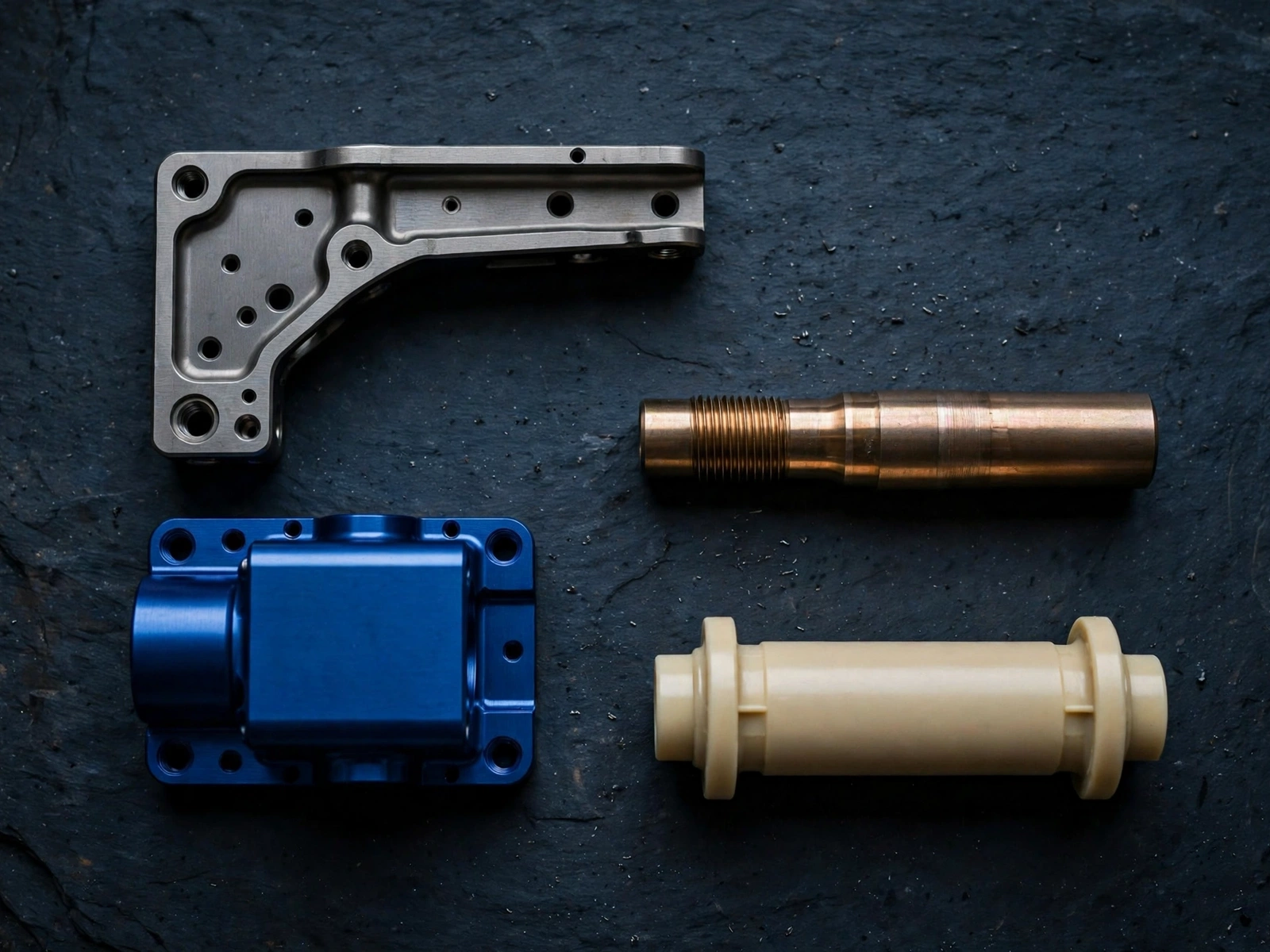
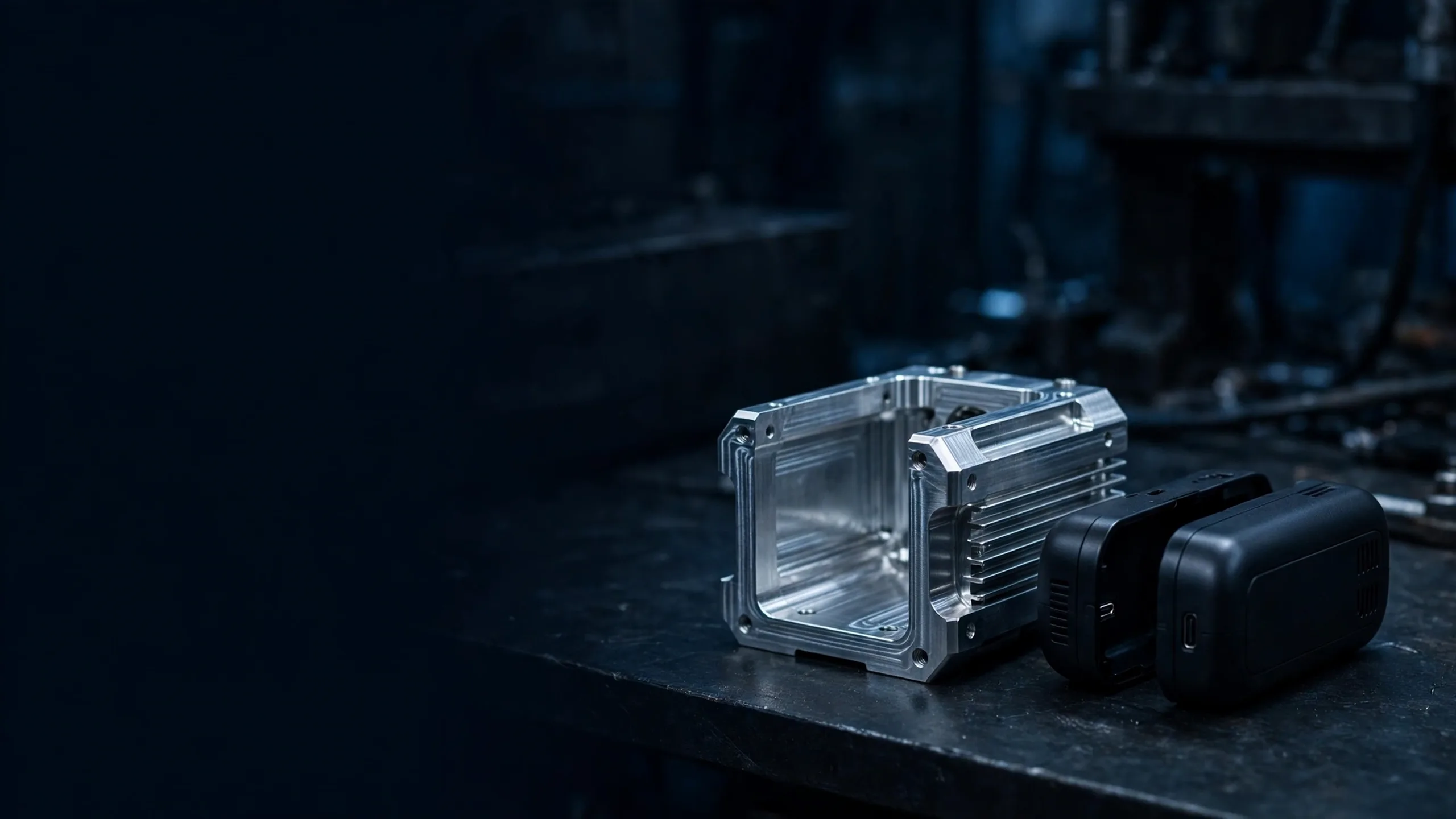
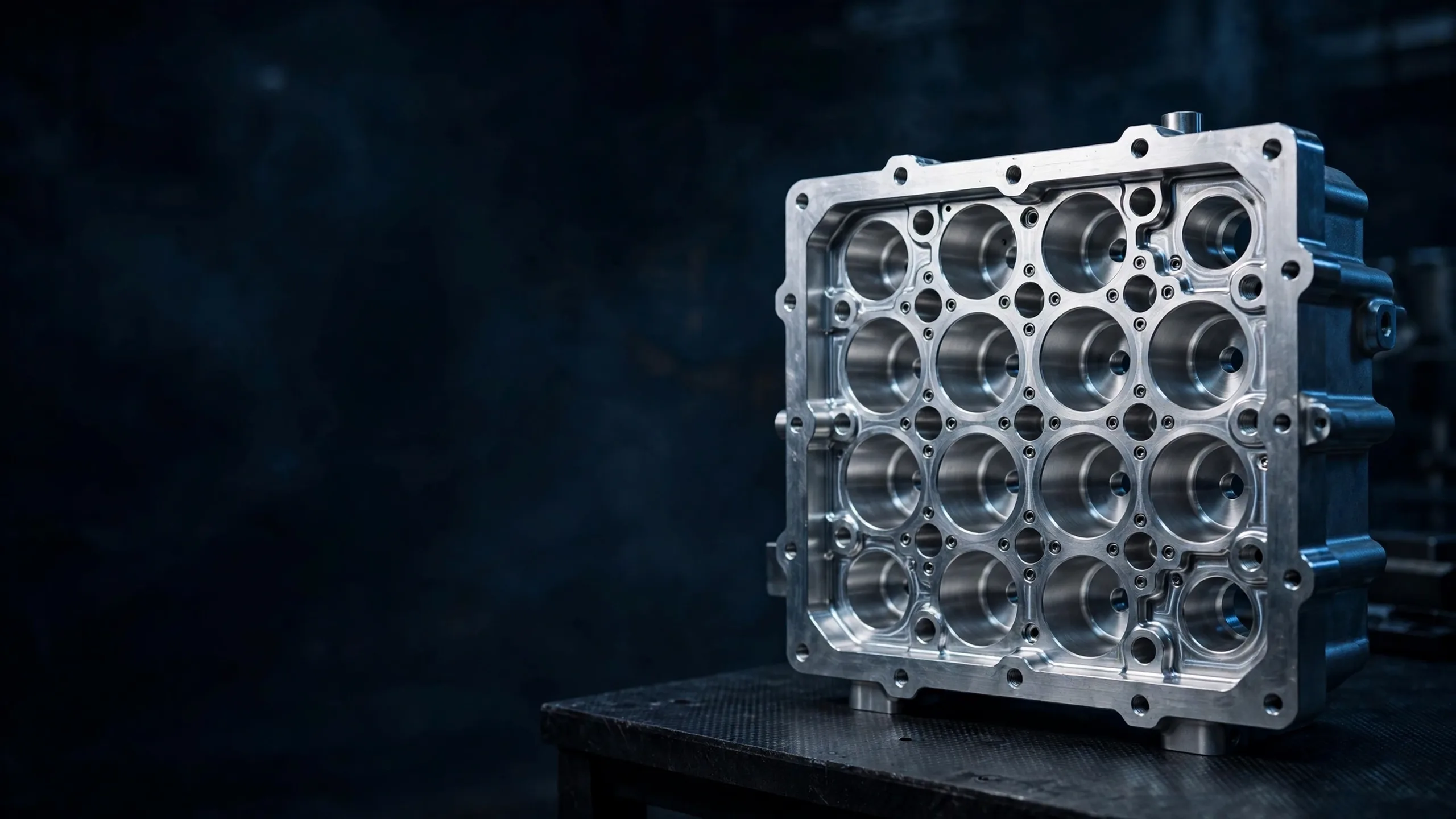
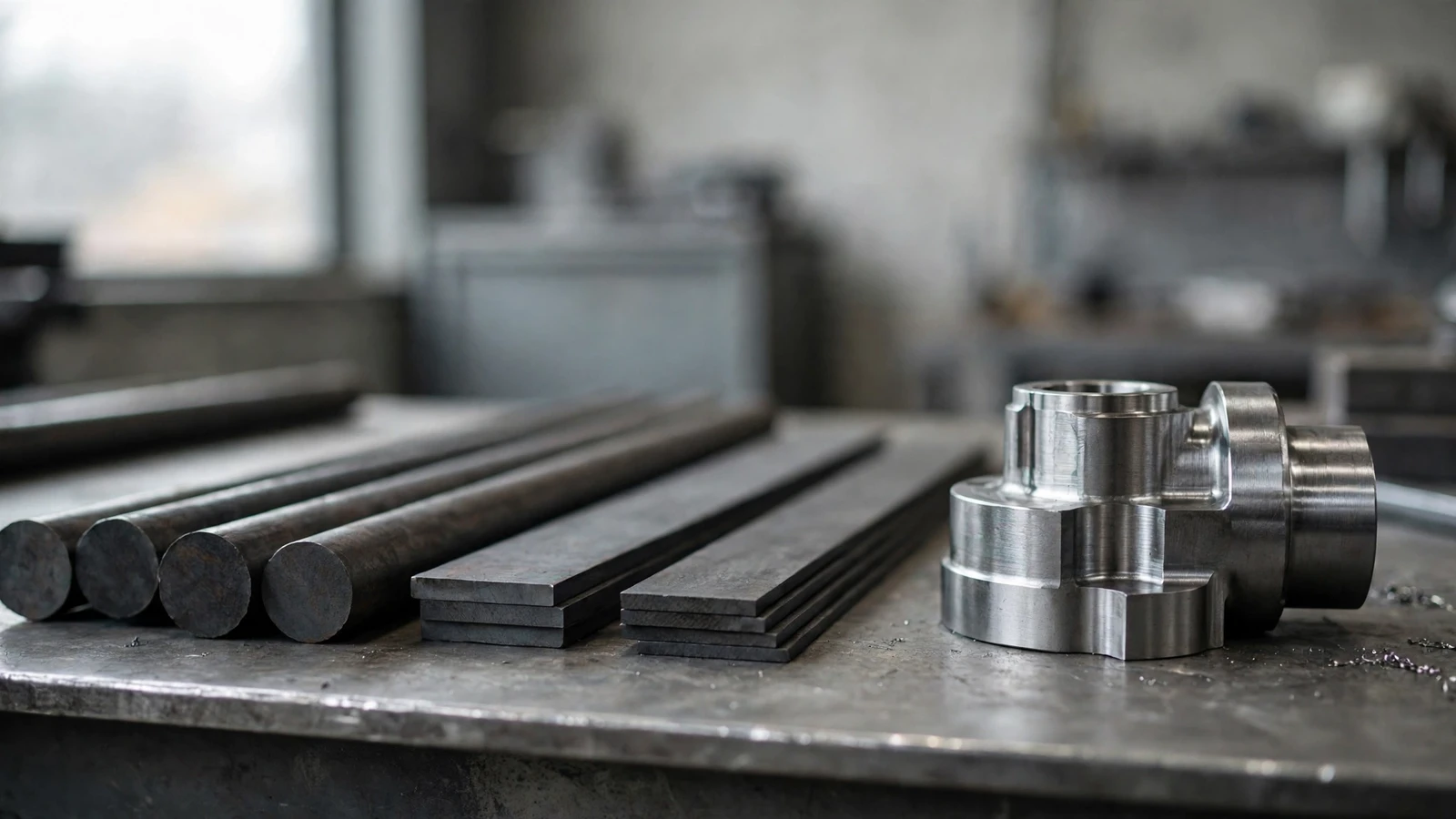
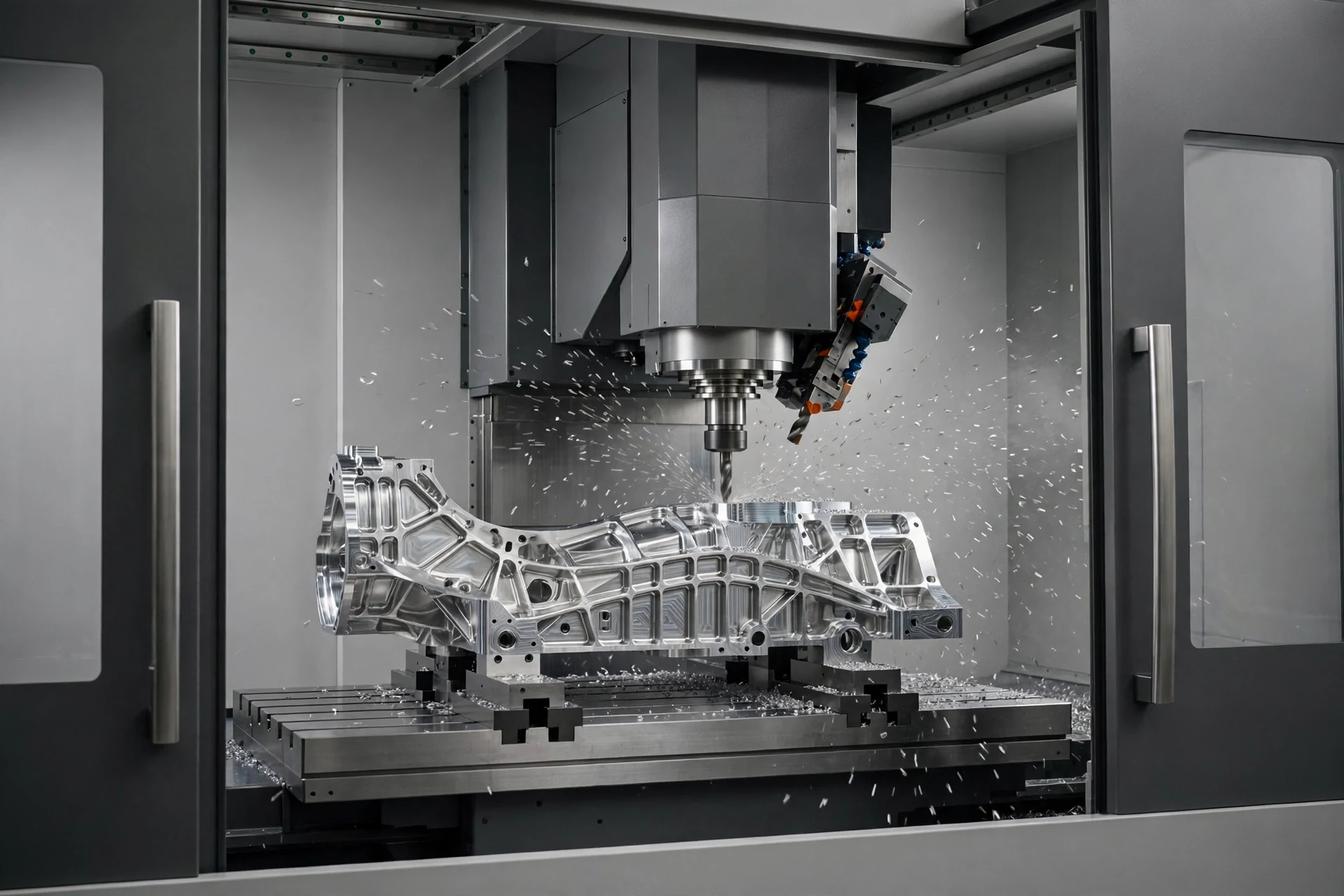
Tuowei Precision provides aerospace machining for prototypes, low-volume builds and production runs. Our AS9100D-certified team machines aluminum, Ti-6Al-4V, stainless steel and Inconel to ±0.005 mm, with inspection reports and material certificates shipped with every order.
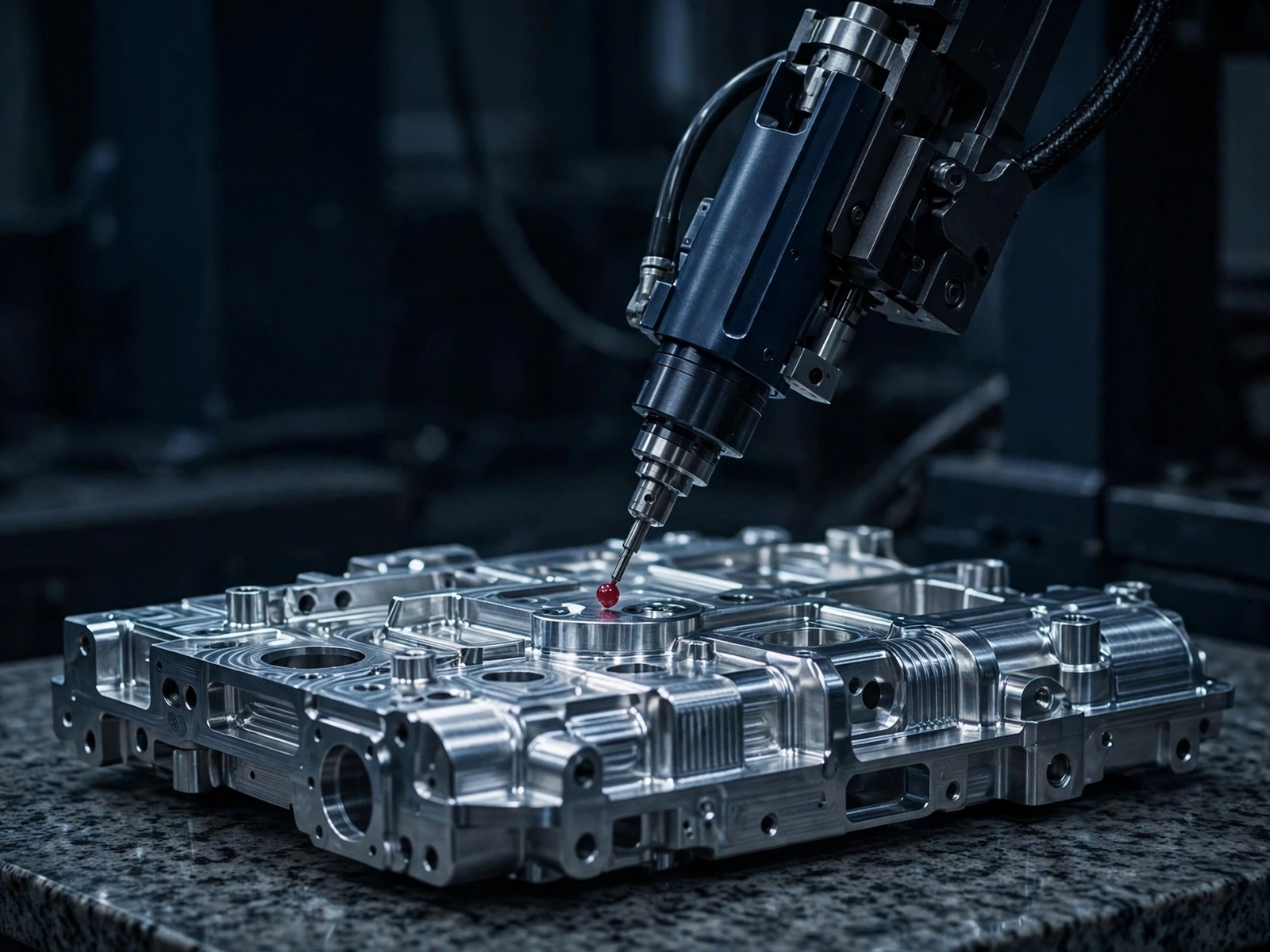
Buyers in the aerospace industry rarely worry whether a shop can cut metal. What worries them is drift: a part that measures right on the first article and wanders out of tolerance by lot three, or a certificate that does not match the heat number on the bar. Our process is built to stop both problems. Every job runs under an AS9100D quality system, critical dimensions are checked on a CMM, and the material trail runs from mill certificate to finished part.
We handle simple brackets and complex multi-feature housings alike, and the same engineers who quote your part review it for machinability before any chip is cut. If a wall is too thin to hold flatness in 7050, or a deep pocket will chatter, we tell you at the quote stage rather than after the first scrap batch. That level of precision in planning is what keeps a program on schedule and gives you high-quality parts with optimal performance in service.
Our Shenzhen plant keeps the machining equipment for milling, turning and 5-axis work alongside finishing and inspection, under one roof. Parts move from raw bar to packed shipment without leaving our control. Every CNC machine runs to a documented setup sheet, and every machinist works to the same inspection plan, so high precision does not depend on who is on shift.
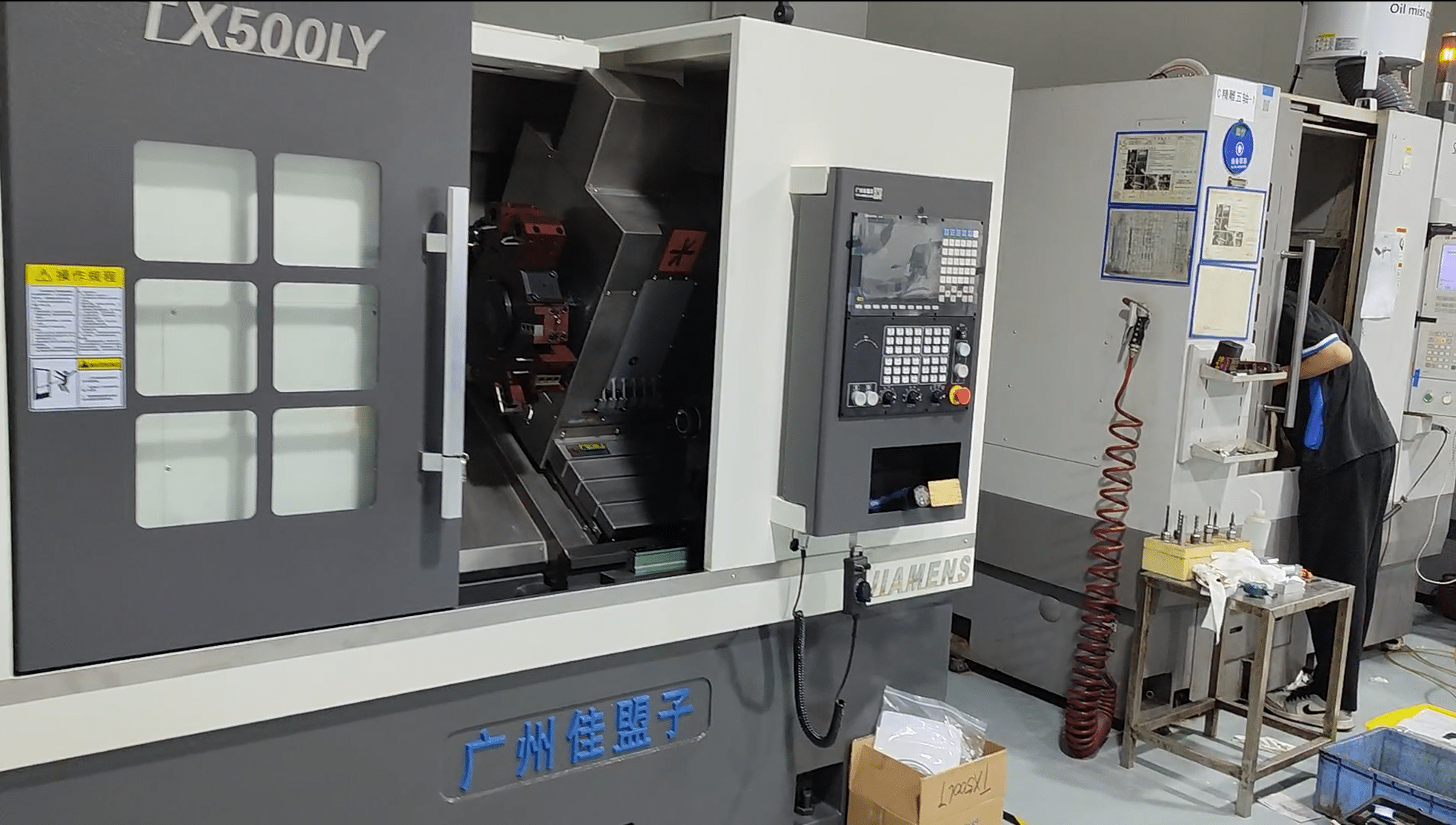
High-tech facility for exacting CNC manufacturing with utmost accuracy and efficiency.

Dedicated space for streamlined production using cutting-edge CNC technology.
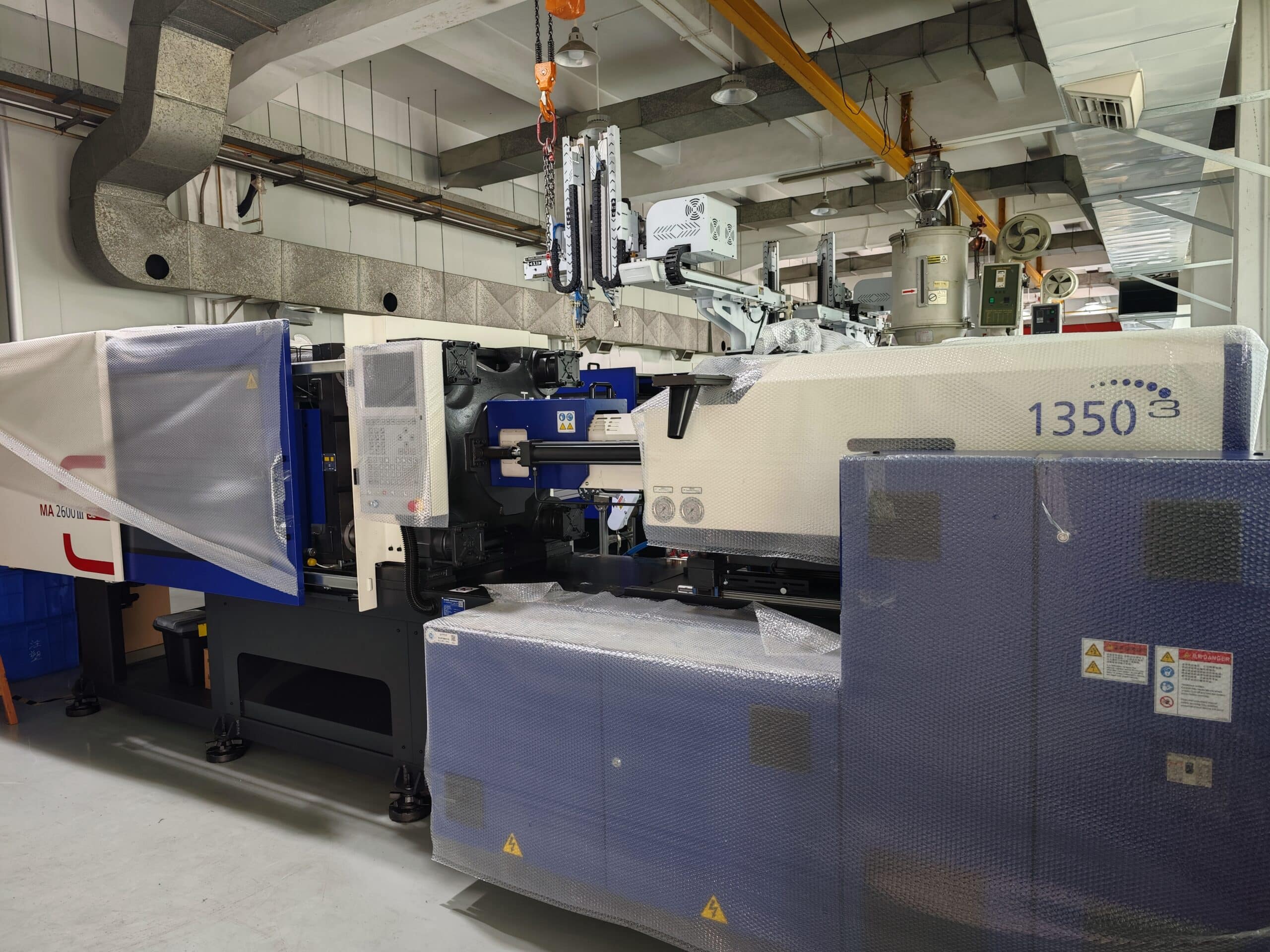
Centralized facility equipped for intricate CNC component fabrication and assembly.

Fully automated workshop for precise, rapid CNC machining operations.

Dynamic space optimized for delivering top-tier CNC machining performance.
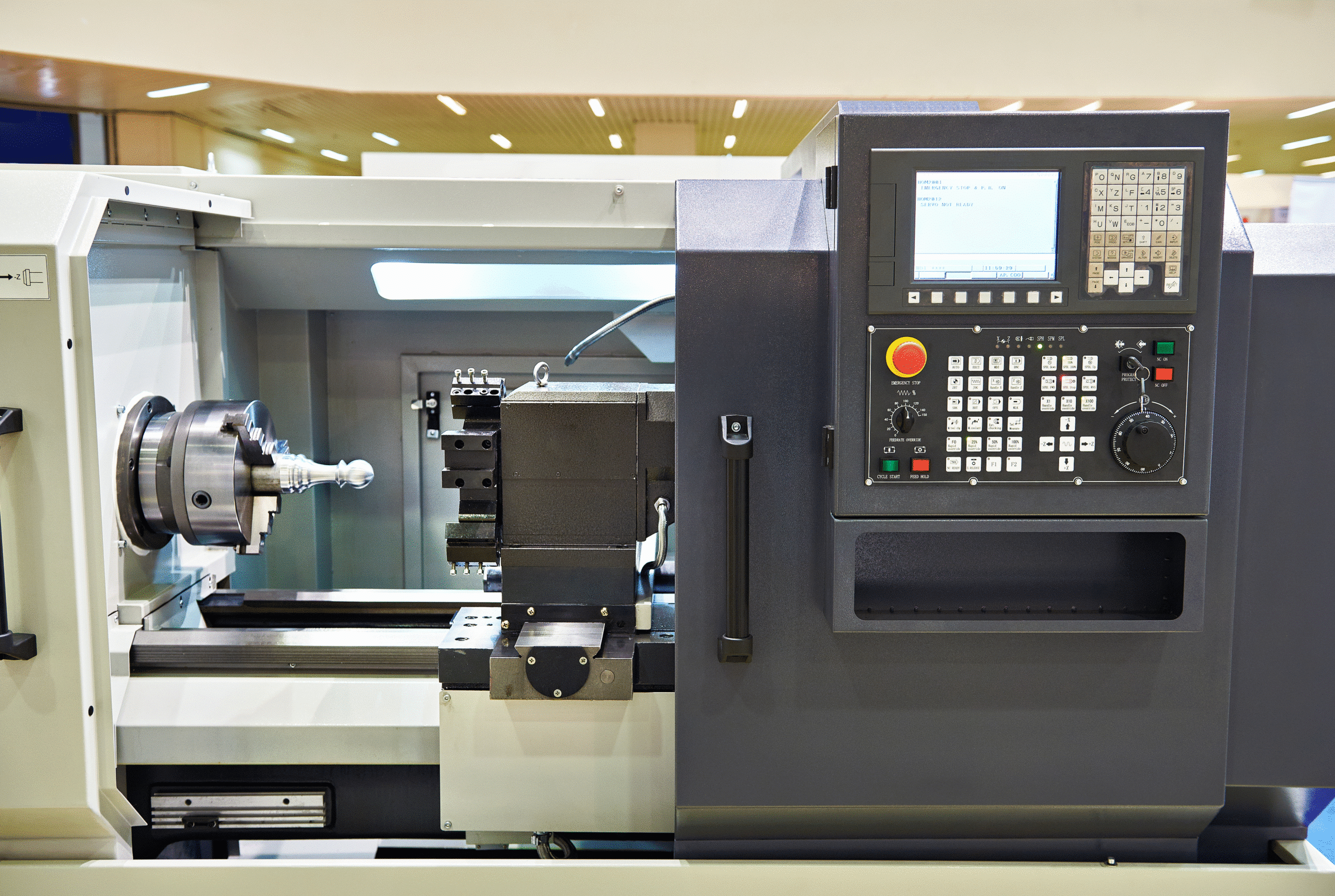
Comprehensive facility integrating CNC processes for seamless manufacturing workflow.
Take a closer look at our facilities.
Early prototyping is about learning fast. We machine first-look parts from production-intent alloys or lower-cost stand-ins, so your team can check fit, form and assembly before committing to tooling or a large material buy.
EVT parts must survive real tests, so we machine them in the specified alloy and temper and report every critical dimension. If a test reveals a weak feature, we revise the program and turn the next iteration quickly.
At DVT the part has to look and perform like the final product. We apply the production finish, such as anodizing, passivation or electroless nickel, so coating thickness and fit are validated together.
Before volume production, we run a controlled pilot lot to confirm fixtures, cutting programs and inspection plans. A first article inspection report documents the results, so your quality team signs off on data instead of promises.
Once the process is locked, we scale up with the same programs, fixtures and inspection plan approved at PVT. Low-volume orders typically ship in 5 to 15 business days and larger runs in 2 to 4 weeks, depending on quantity and finish.
As one of the precision aerospace CNC machining parts manufacturers serving OEMs and tier suppliers, we make flight hardware, ground support equipment and tooling for aircraft and spacecraft. Common parts include:
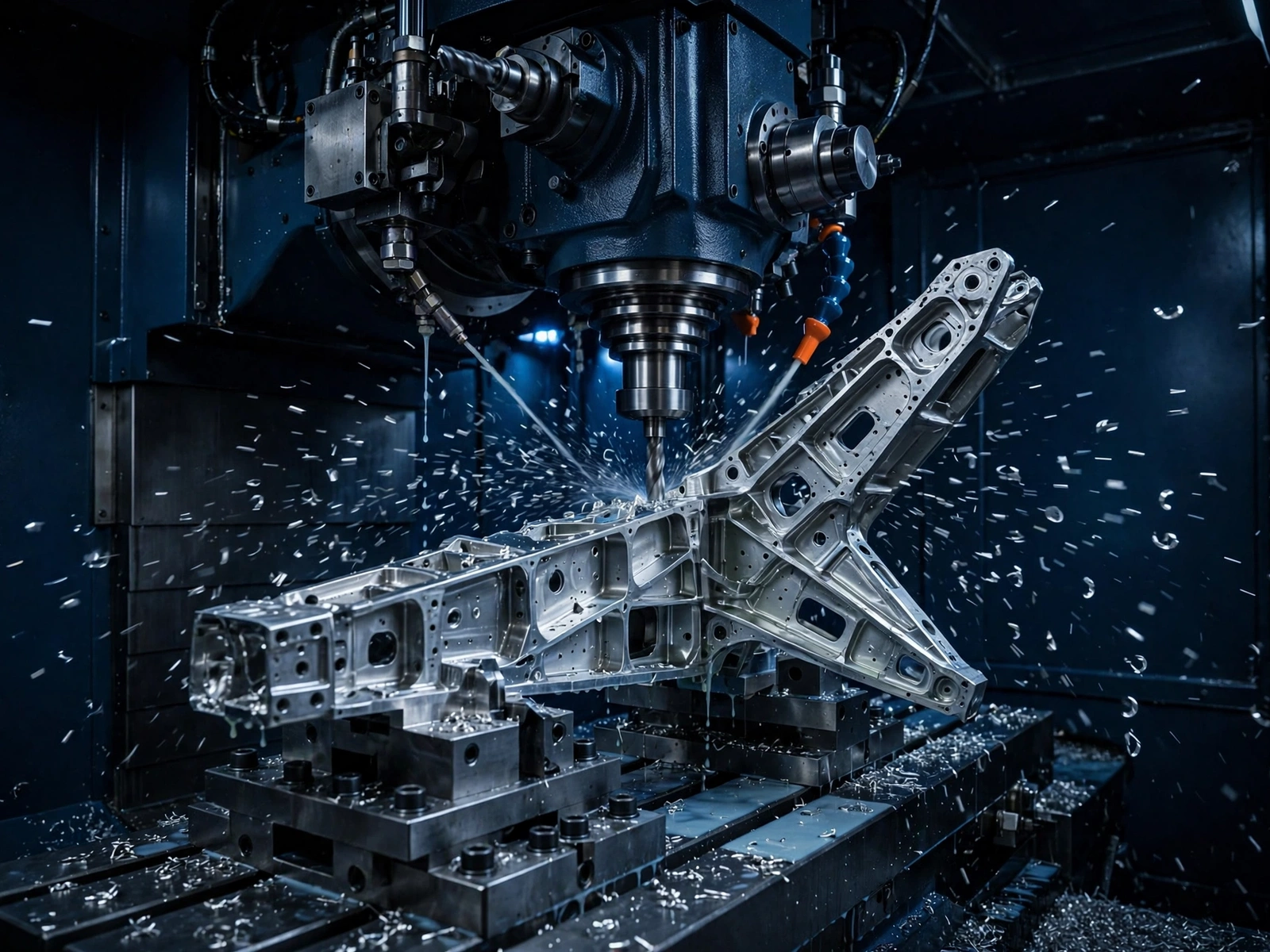
Prismatic parts such as housings, brackets and manifolds run on a CNC mill or 5-axis machining center, where one setup reaches five faces and keeps feature-to-feature positions tight. Round parts, including shafts, bushings and connector bodies, are made on CNC turning centers that hold diameters to ±0.01 mm. Many aircraft components need both, so we plan the route around the datum scheme on your drawing rather than around whichever machine happens to be free.
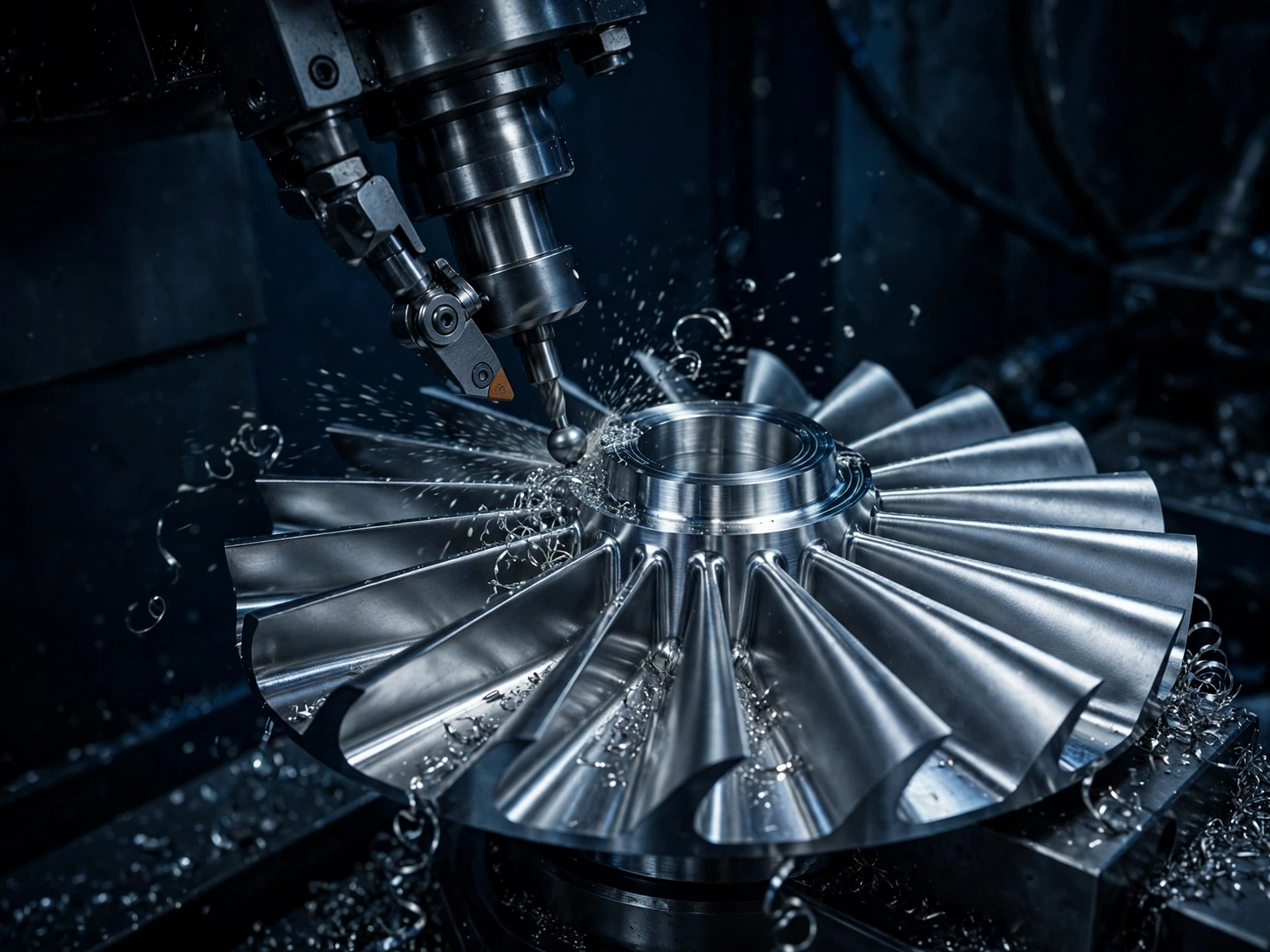
Turbine blades and impellers combine thin airfoil sections with tight profile tolerances, which makes them some of the hardest high-precision components to produce. Simultaneous 5-axis toolpaths keep the cutting tool normal to the surface, while light finishing passes control deflection on thin edges. We agree on the inspection method, such as CMM profile scanning, before quoting, because the measurement plan drives the price as much as cycle time.
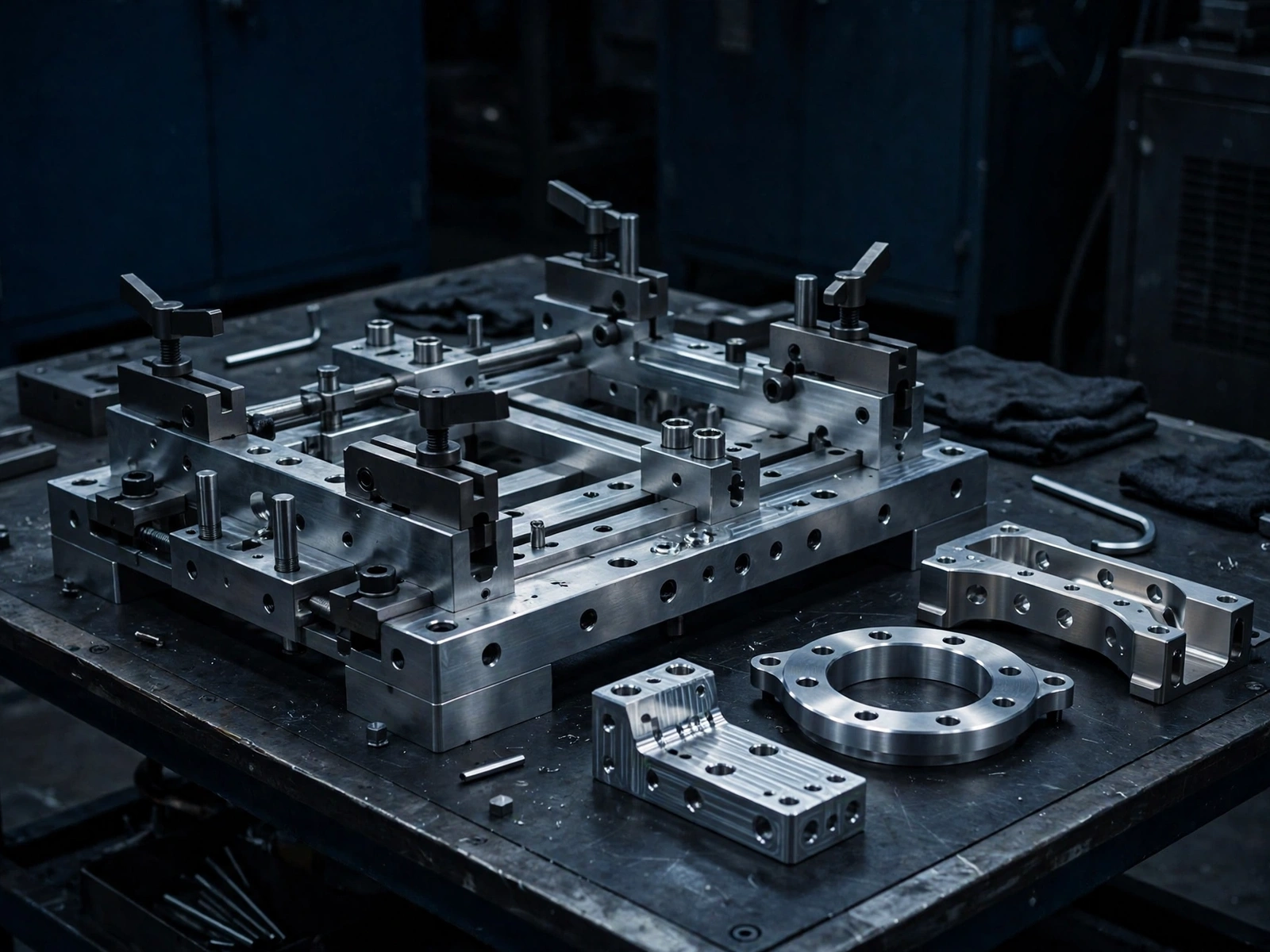
Not every part we make flies. Assembly jigs, drill templates, check fixtures and handling tooling keep production lines accurate, and they are often needed on short notice. We machine them from aluminum, tool steel or engineering plastics and inspect them against the same drawing standards as flight parts.
We machine 30+ metals and high-performance plastics, from prototype quantities through full production. Material choice drives weight, fatigue life, corrosion behavior and cost, so our engineers will suggest a cost-effective alternative when a cheaper alloy meets your requirements.
Among aluminum alloys, 2024 offers good fatigue resistance for skins and fittings, 7050 brings high strength and resistance to stress corrosion for thick bulkheads and fuselage frames, and 2014 suits forged and machined fittings. Aluminum cuts fast, which keeps cost down, but thin-walled 7xxx parts can move after roughing. We rough, release stress, then finish to keep flatness under control. See our aluminum CNC machining service for alloy details.
Grade 5 (Ti-6Al-4V) is the workhorse among titanium alloys, giving strength at elevated temperature with less weight than steel. Machining it calls for sharp tools, steady chip loads and high-pressure coolant, because heat stays in the cutting zone and wears the edge quickly. Expect longer cycle times than aluminum, which is the trade-off for the weight savings. Learn more on our titanium CNC machining page.
Inconel 718 keeps its strength in hot engine sections, and the same property makes it slow and tool-hungry to cut. It work-hardens if the cutter rubs, so we use rigid setups, constant-engagement toolpaths and tooling matched to each operation. If your part does not see high heat, we will tell you whether 17-4PH stainless could do the job for less.
17-4PH and 316L cover fittings, valve parts and fasteners that need corrosion resistance. For weight-sensitive interiors, insulators and electrical parts, we machine PEEK, Ultem 9085, PA 12 and PTFE, which hold their dimensions under heat and resist aviation fluids. Composite panels are usually trimmed by the laminator, so we focus on the metal and plastic inserts, brackets and fittings that attach to them.
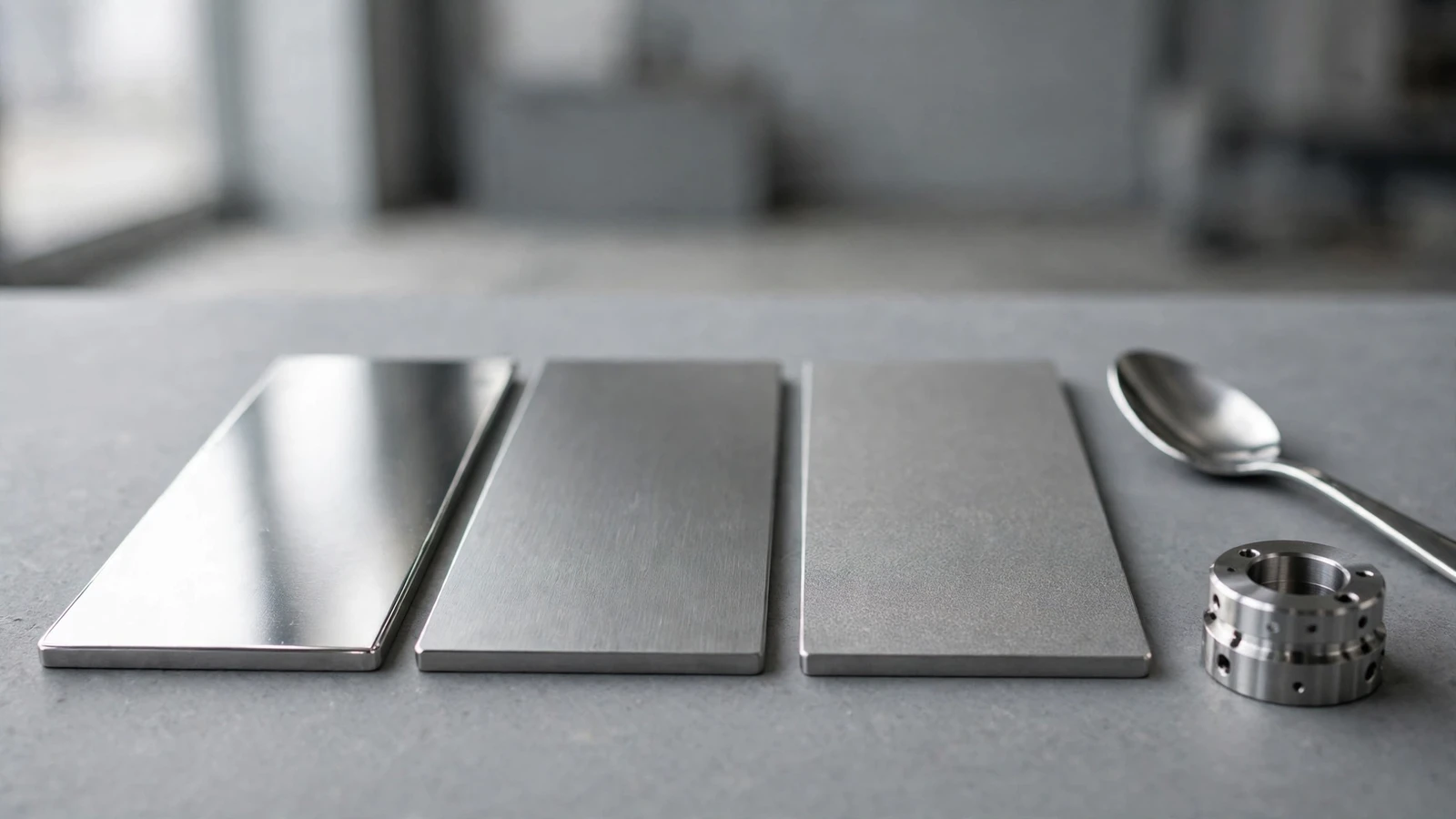
Anodizing protects aluminum from corrosion and adds a hard surface, while chromate conversion coating keeps electrical conductivity for grounding points. Electropolishing and electroless nickel plating suit stainless and steel parts. Coatings add thickness, so we machine critical bores and threads with the finish allowance built in.