High carbon steel is plain carbon steel containing roughly 0.60% to 1.00% carbon, with some definitions extending to 1.5%. After quenching and tempering it becomes very hard and wear resistant, which is why it is used for springs, cutting tools, blades and high-strength wire. The trade-off is lower ductility, poor weldability and no real rust resistance.
Quick answer: Steel is called high-carbon when its carbon content is above about 0.6%. Common grades include 1060, 1080 and 1095. It can be hardened to around 60 HRC and holds an edge well, but it is brittle when fully hardened, rusts easily and is harder to weld and machine than low or medium carbon steel.
Most guides stop at definitions. This one also covers what the term does not include, how the common grades differ, and what to put on a drawing if you need machined parts made from it.
Carbon is the single most powerful hardening element in steel, and carbon content is the main differentiating factor between one type of steel and another. As the amount of carbon rises, steel can be heat treated to higher strength and hardness, but it loses ductility, toughness and weldability.
A higher carbon content makes the steel harder and more brittle and less ductile, so the carbon content of steel decides what it can be used for. Engineers group plain carbon steels by carbon content because those properties change so sharply across the range.
Plain carbon steels contain only small amounts of other elements: manganese up to about 1%, plus trace silicon, phosphorus and sulfur. That distinguishes them from alloy steels, which add chromium, molybdenum, nickel or vanadium in deliberate amounts.
In the four-digit AISI/SAE system, developed by the American Iron and Steel Institute and SAE, a “10xx” grade is plain carbon steel, and the last two digits give the nominal carbon in hundredths of a percent. So 1095 has about 0.95% carbon, and 1080 has about 0.80%.
The exact boundary for “high” varies by source. Some references start at 0.55%, most at 0.60%, and the upper limit is quoted anywhere from 1.0% to 1.5%. Steels above about 1.0% are often called ultra-high-carbon steels.
The clearest way to understand this class is to compare it with its neighbors. This table summarizes the classes most engineers use.
| Class | Carbon content (approx.) | Example grades | Max hardness after quench | Weldability | Machinability | Typical uses |
|---|---|---|---|---|---|---|
| Low carbon steel (mild steel) | Up to 0.30% | 1008, 1018, 1020 | Low; not hardenable by quench alone | Excellent | Good | Sheet metal, brackets, structural shapes, case-hardened parts |
| Medium carbon steel | 0.30–0.60% | 1040, 1045, 1050 | Moderate | Fair, often needs preheat | Fair to good | Shafts, gears, axles, crankshafts |
| High-carbon steel | 0.60–1.00% | 1060, 1075, 1080, 1095 | High, about 55–65 HRC | Poor | Fair in annealed state | Springs, blades, cutting tools, high-strength wire |
| Ultra-high-carbon steel | Above 1.0% | Specialty grades | Very high | Very poor | Difficult | Specialty blades, experimental alloys |
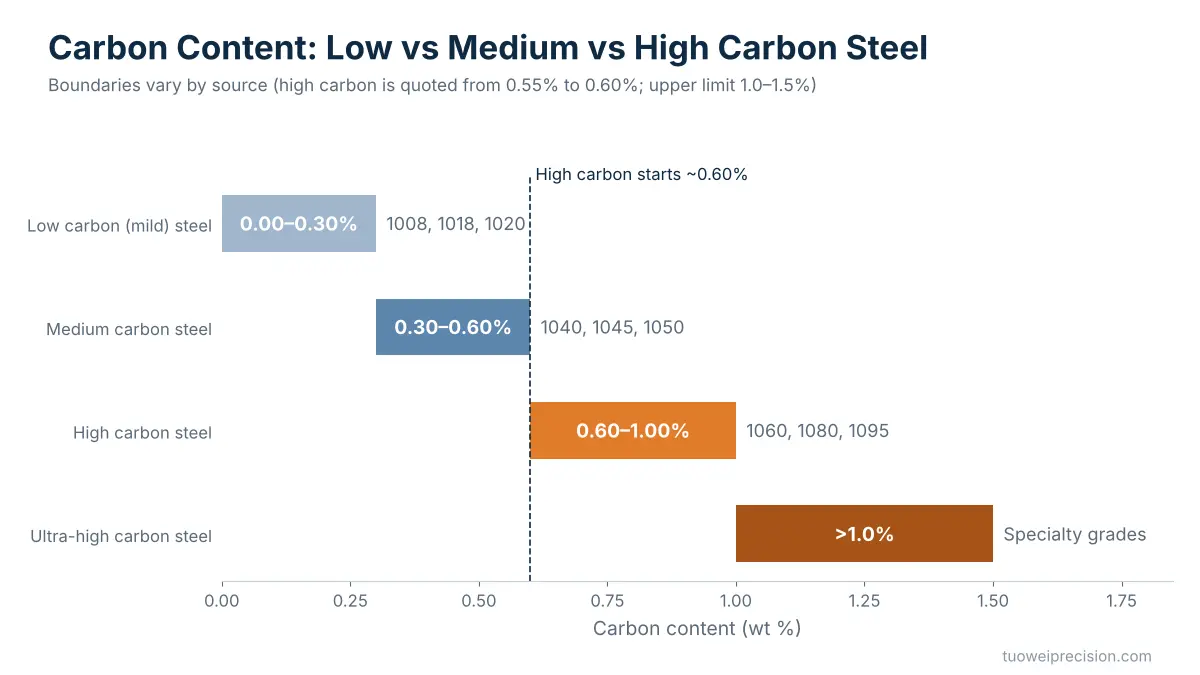
Low-carbon steel is the default for fabricated parts because it bends, welds and machines easily. The middle class adds strength for shafts and gears. High-carbon grades are chosen only when hardness or spring behavior is the main requirement.
These are the carbon steel grades buyers and makers ask about most often. Carbon ranges follow common SAE limits; check the exact standard for your material.
| Grade | Carbon (approx. %) | Character | Common uses |
|---|---|---|---|
| 1060 | 0.55–0.65 | Tough, moderate hardness | Swords, springs, agricultural blades |
| 1070 / 1075 | 0.65–0.80 | Good balance of toughness and hardness | Springs, saw blades, machetes |
| 1080 / 1084 | 0.75–0.93 | Easy to heat treat, popular with blacksmiths | Knives, springs, hand tools |
| 1095 | 0.90–1.03 | Highest hardness of the common plain grades | Knives, cutting tools, springs, music wire |
| W1 / W2 | About 0.9–1.1 | Water-hardening tool steels, close relatives | Chisels, punches, files |
Notice that W1 and W2 are classed as tool steels even though their chemistry is close to plain 10xx steel. The line between “high-carbon steel” and “carbon tool steel” is partly a matter of how the steel is made and certified.
Mechanical properties and thermal properties both depend heavily on heat treatment, and high-carbon steel has many trade-offs between strength and toughness. Because of its high carbon content, the same bar of 1095 steel can be soft enough to machine or hard enough to file glass.
Several competing articles blur these lines, and the confusion causes real ordering mistakes.
It is not 4140. 4140 is a chromium-molybdenum alloy steel with about 0.38–0.43% carbon, which places it in the medium carbon range. It is tough and widely used for shafts and holders, but it does not belong in the high-carbon class.
It is not high-speed steel. Grades such as M2 are highly alloyed with tungsten, molybdenum and vanadium so they keep hardness at cutting temperatures. Calling M2 a plain carbon steel misses what actually makes it work.
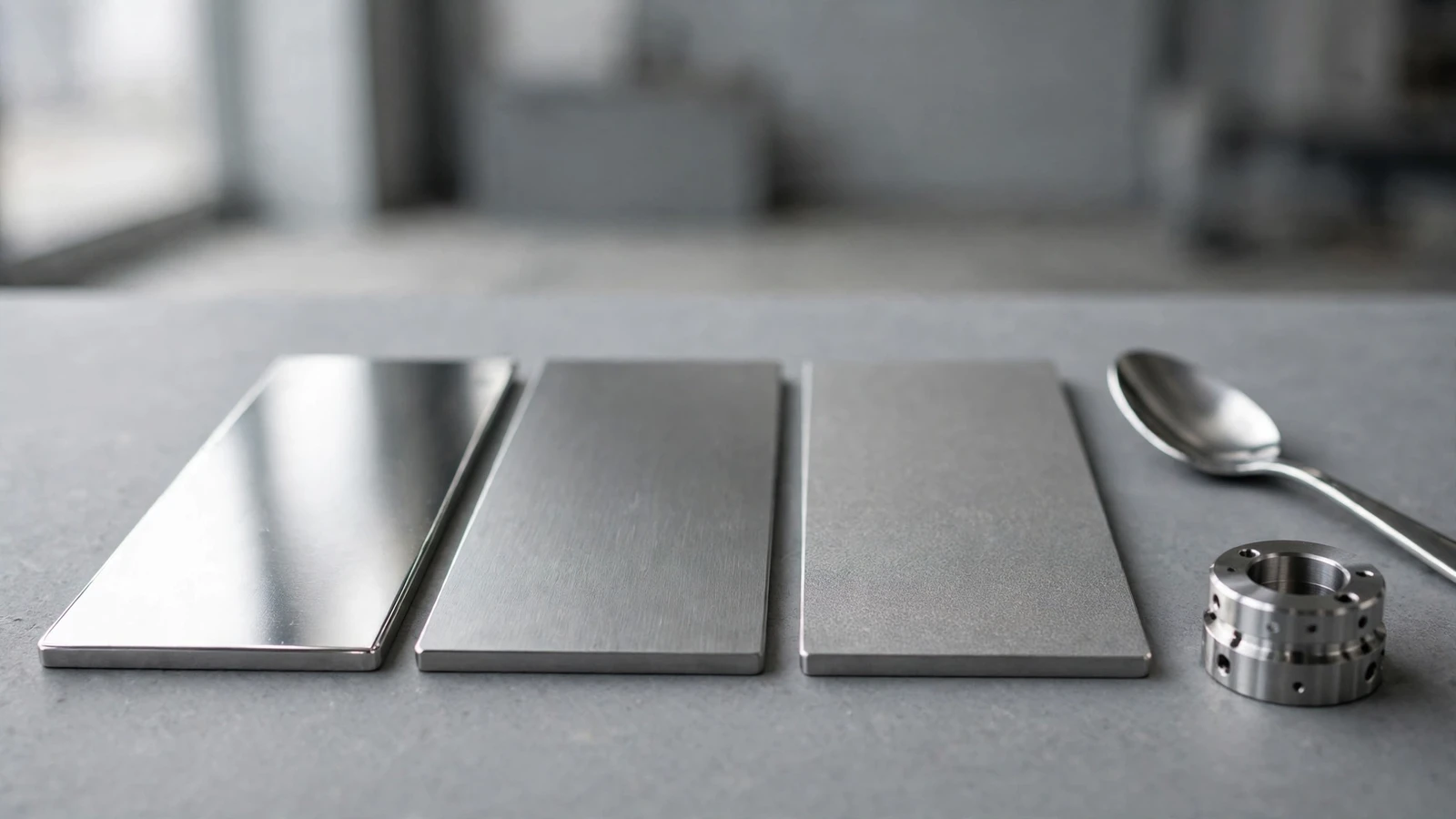
It is not stainless. “High carbon stainless” is a real marketing term, but it describes martensitic stainless grades such as 420HC or 440C, which contain 13–18% chromium. Plain high-carbon steel has no meaningful chromium and rusts easily.
The real difference between carbon steel and stainless steel is chromium content. A steel is stainless steel only when it carries roughly 10.5% chromium or more, which gives it resistance to corrosion. Tool steels with a high chromium content, such as D2 steel at about 12%, still fall short of full stainless behavior because much of that chromium is locked in carbides.
Kitchen knives and tools are often labeled high carbon stainless steel, so it is worth comparing that label with plain carbon grades directly.
| Factor | Plain high-carbon steel (e.g., 1095) | High carbon stainless steel (e.g., 440C) |
|---|---|---|
| Chromium | Negligible | About 16–18% |
| Rust resistance | Poor | Good |
| Edge sharpness | Excellent, very fine edge | Very good |
| Ease of sharpening | Easy | Moderate |
| Toughness | Good when tempered correctly | Moderate |
| Care needed | Dry and oil after use | Minimal |
| Cost | Lower | Higher |
For industrial parts the decision is usually simple: if the part will see moisture and cannot be coated, use a stainless grade.
Heat treatment unlocks the properties that justify choosing these grades. A typical sequence looks like this:
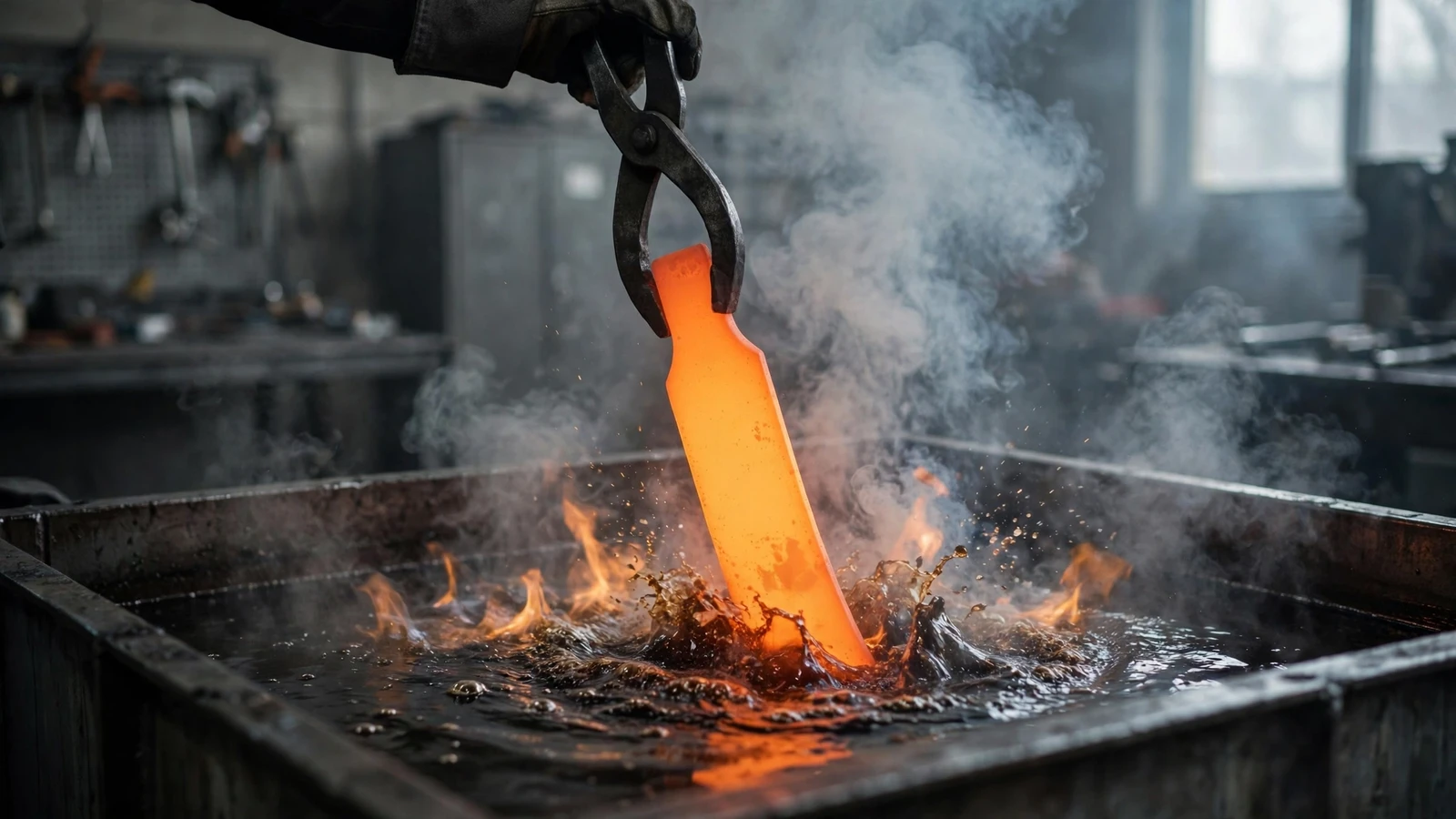
Quench cracking is the classic failure. Thin edges next to thick sections, sharp internal corners, and water quenching of oil-hardening grades all raise the risk. Uniform sections and generous radii help as much as correct temperatures.
Hardening works because, at high temperature, iron dissolves carbon into austenite. When the steel is rapidly cooled, the carbon within that structure is trapped as martensite, the hard form of steel that gives these grades their edge. The chemical composition sets how hard that martensite can get.
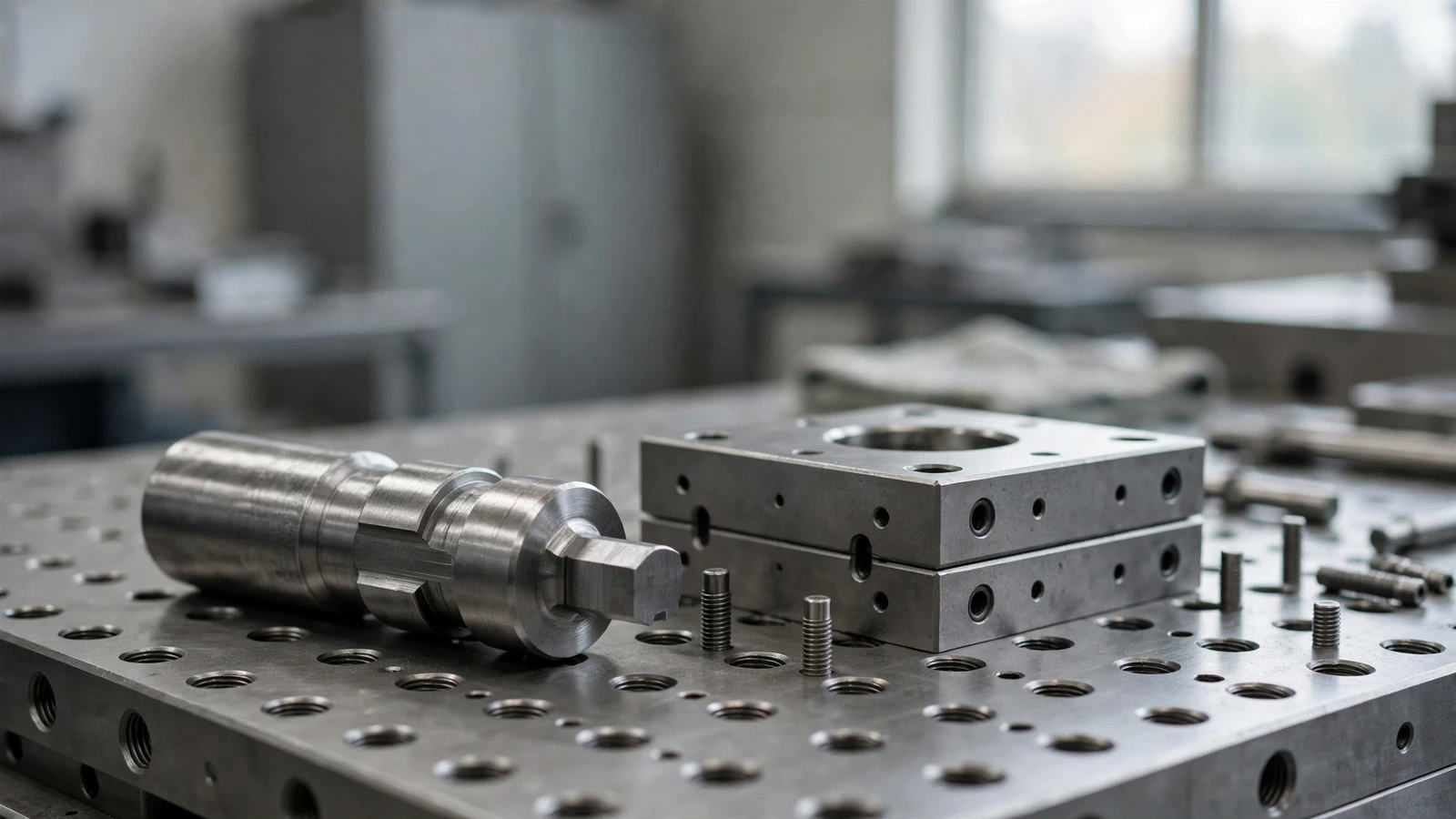
Machining. In the annealed condition, these grades machine reasonably well, though more slowly than low carbon steel and with faster tool wear. Hardened parts are usually finished by grinding or hard turning. We plan machining so that all heavy cuts happen before hardening, leaving a small allowance for grinding after.
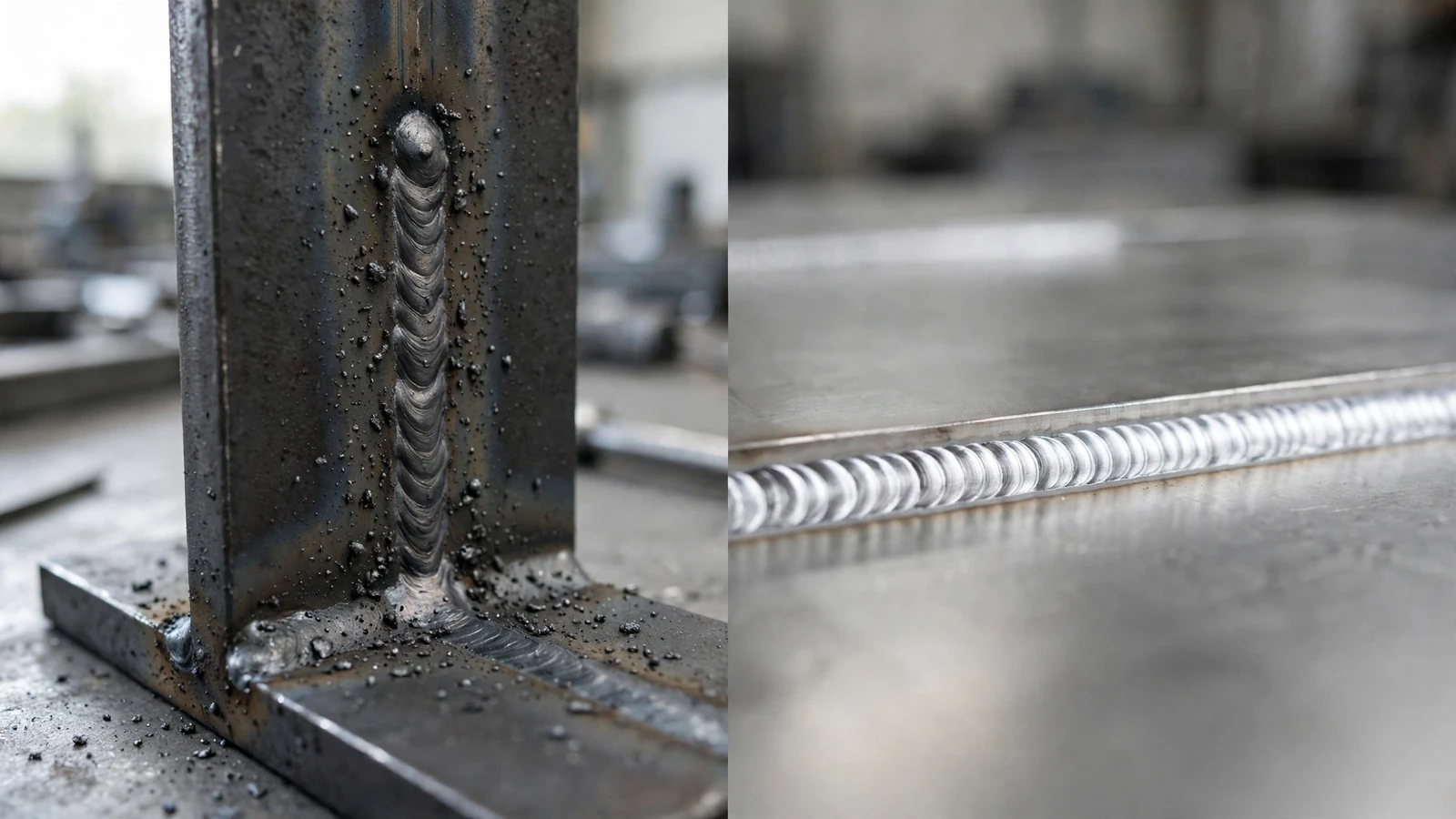
Welding. Avoid it where possible. If welding is unavoidable, it needs preheating, low-hydrogen filler, controlled cooling and often post-weld heat treatment. For assemblies, a better approach is usually to make the welded frame in low or medium carbon steel and attach hardened high-carbon wear parts mechanically.
Rust protection. Common options include black oxide with oil, phosphate coating, plating, or simply oiling stored parts. Black oxide is popular for tools because it adds almost no thickness, but it only resists rust while the oil film is maintained.
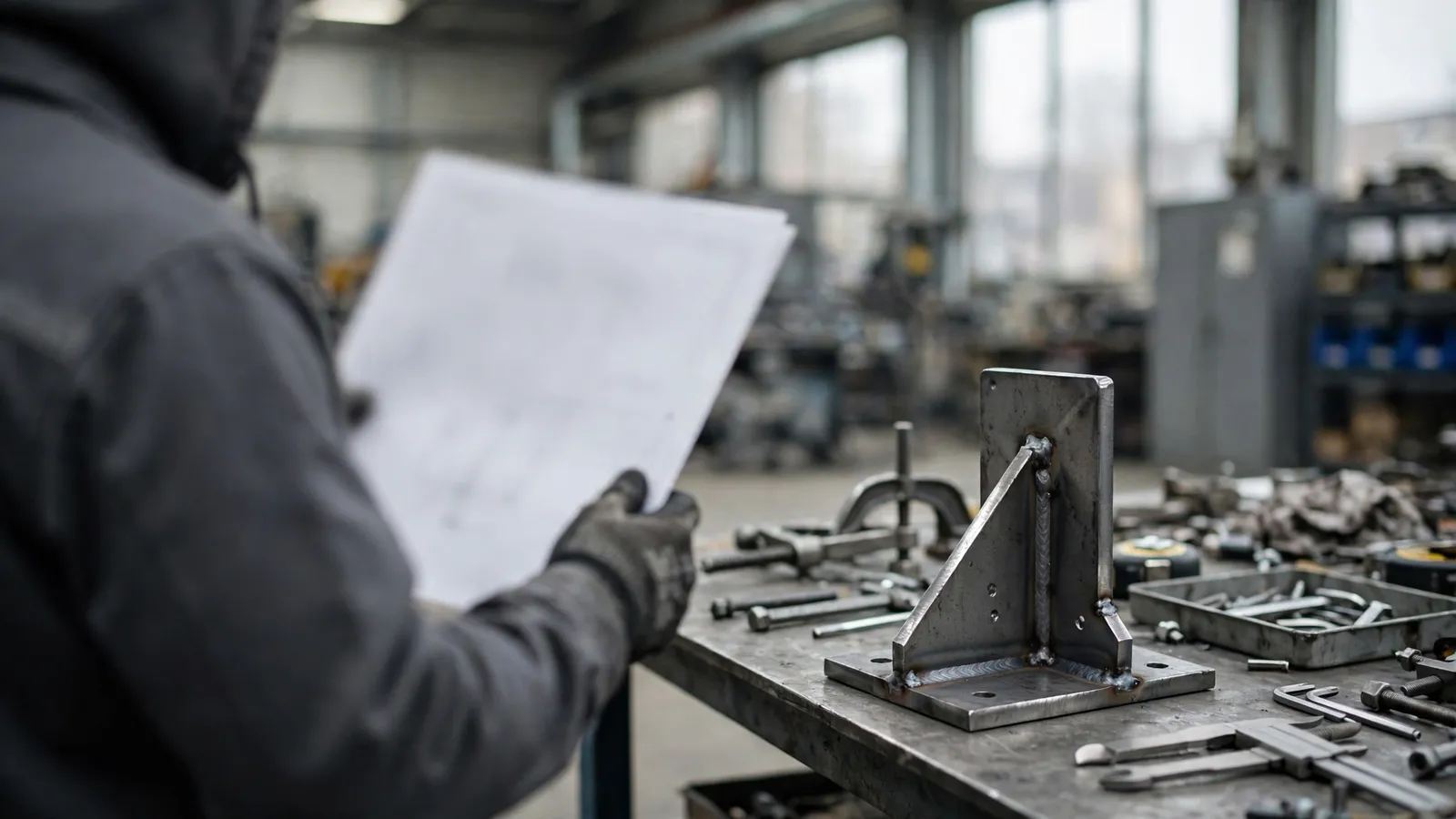
Writing only a carbon class in the material block leaves too much to interpretation. A supplier could choose 1060 or 1095, and the two behave very differently. These lines remove the guesswork:
A spring part and a cutting tool can be made from the same grade, yet need completely different hardness ranges. Stating the range is what tells the heat treater which part you are actually ordering.
Spring steel is usually a high-carbon or silicon-manganese steel tempered to a lower hardness, around 44–50 HRC, so it can flex repeatedly without breaking. Tool steels add alloying elements and tighter process control for consistent hardening. Plain 10xx grades sit underneath both: cheaper and widely available, but less forgiving in heat treatment.
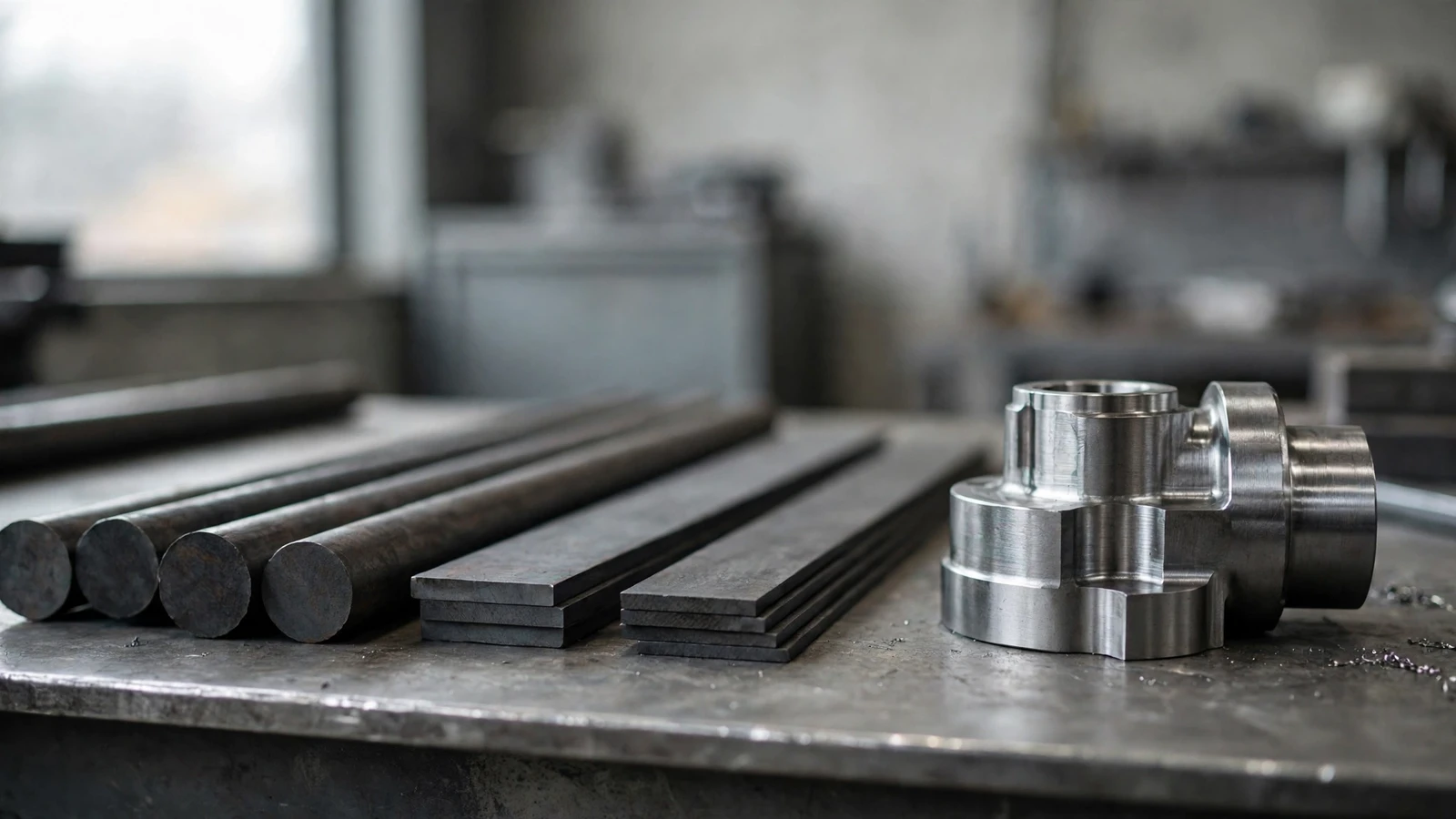
Plain carbon grades are among the least expensive steels to buy, and 1060, 1080 and 1095 are widely stocked as bar, flat stock and strip. The higher cost usually comes later: heat treatment, grinding after hardening, protective finishing, and scrap from quench cracking. On small parts, those steps can cost more than the material itself, so it is worth asking whether a prehardened alloy steel or a medium carbon grade with surface hardening would do the job for less.
Every strength of these grades comes with a cost, and these are the ones that cause the most trouble in practice:
None of these rule it out. They simply mean the material should be chosen deliberately for hardness, wear or spring behavior, not as a general-purpose steel. Mild steel has low tensile strength by comparison but bends instead of snapping, and ordinary steel gives a better balance of ductility and strength. When you need wear resistance and toughness together, a tool steel is usually the better route.
In the high range, carbon steel is often used where high strength and wear resistance matter more than formability: automotive leaf springs, woodworking drill bits, light-duty gear parts, blades and wire.
| Application | Why it fits |
|---|---|
| Springs (leaf, coil, flat) | High yield strength and elastic recovery |
| Music wire and high-strength wire | Very high tensile strength when cold drawn |
| Knives and blades | Takes a fine, hard edge |
| Chisels, punches and hand tools | Hardness and wear resistance |
| Saw blades and cutting tools | Edge retention at low cost |
| Wear strips and agricultural parts | Abrasion resistance |
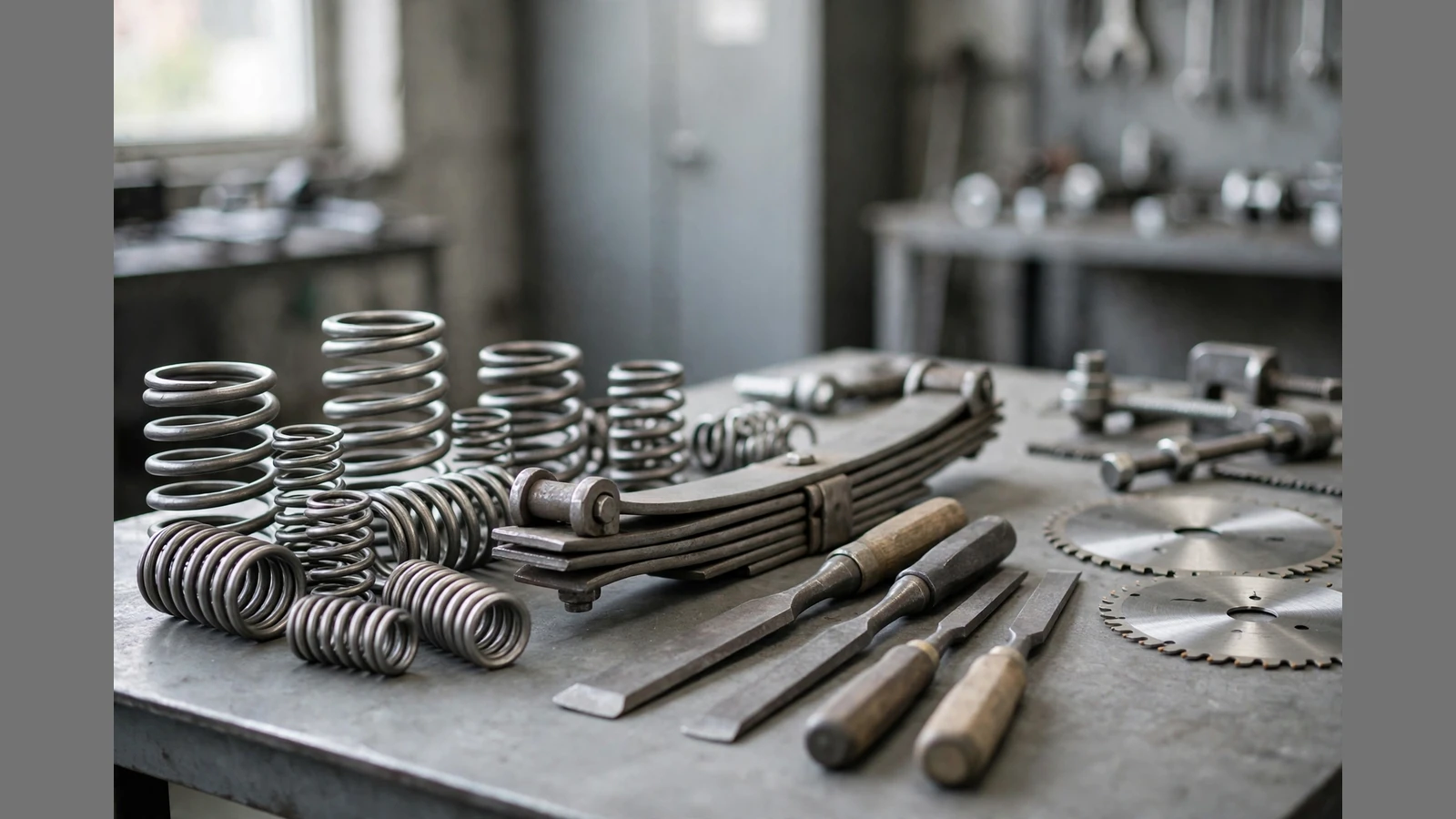
It is plain carbon steel with roughly 0.6% to 1.0% carbon, and up to 1.5% by some definitions. The high carbon allows heat treatment to high hardness and wear resistance. Common grades include 1060, 1080 and 1095. It is used for springs, blades and cutting tools where hardness matters more than ductility or weldability.
No. 4140 contains about 0.38–0.43% carbon, which makes it a medium carbon alloy steel. Its chromium and molybdenum give it good hardenability and toughness, so it is widely used for shafts, gears and tool holders. Engineers needing high hardness and wear resistance usually choose 1095, a tool steel or a bearing steel instead.
It depends on the job. High-carbon steel takes a finer edge, sharpens easily and usually costs less, so many knife makers prefer it. Stainless steel resists rust far better and needs little care. For parts exposed to moisture, food or chemicals, stainless is the better choice; for dry, high-wear tools, plain carbon grades often win.
Yes, readily. Plain high-carbon steel has no meaningful chromium, so it rusts in humid air, from fingerprints, or after contact with water. Protection options include oiling, black oxide, phosphate coating or plating. If a part must resist corrosion without maintenance, specify a stainless or coated alternative rather than relying on care.
Yes, though only with a careful procedure. High carbon raises the risk of hard, brittle zones and cracking next to the weld. Welding requires preheating, low-hydrogen filler, slow cooling and often post-weld heat treatment. Many designers avoid it by welding the frame in mild steel and bolting on hardened high-carbon parts.
Choose high carbon steel when hardness, wear resistance or spring behavior is the real requirement, and plan around its weaknesses from the start. On the drawing, name the exact grade, the hardness range after heat treatment, which features are finished after hardening, and the protective finish. Those four lines prevent most disputes.
Our team machines carbon and alloy steels in the annealed state, coordinates hardening and tempering, and applies finishes such as black oxide. Explore our steel CNC machining service, black oxide finishing and precision machining capabilities. For related reading, see what black oxide coating does and tensile strength vs yield strength.
Upload a drawing for a quote or visit Tuowei Precision to see the full range of materials we machine.
Sources and further reading
Carbon ranges, temperatures and hardness values are typical figures for reference. Confirm exact values with the applicable standard, your steel supplier and your heat treater.