
Tuowei Precision provides aerospace sheet metal fabrication for brackets, enclosures, panels, chassis and ground support parts. We laser cut, form, weld, insert hardware and finish in one Shenzhen facility, so your parts move from flat pattern to inspected assembly without changing suppliers.
Sheet metal is everywhere on an aircraft that does not need a machined block: avionics trays, electrical boxes, brackets, access covers, ducting supports and ground equipment. Aerospace OEMs and tier suppliers across the aerospace sector rely on these metal components every day, and many aerospace applications depend on them. The parts look simple, but small errors stack fast. A flange that is 0.5 mm long throws off a hole pattern, and a bend that springs back two degrees stops an enclosure lid from closing.
Our engineers check each flat pattern, K factor and bend sequence before cutting, and the same team handles forming, welding and finishing. As an aerospace sheet metal fabricator working under an AS9100D and ISO 9001 quality system, we keep the material certification, first article data and inspection records with every lot.
Unlike many sheet metal fabrication companies that send work out, our integrated fabrication and assembly line keeps every step in one place, so each aerospace component moves through cutting, forming, joining and finishing under the same inspection plan. These fabrication capabilities combine advanced manufacturing equipment with proven precision metal fabrication methods.
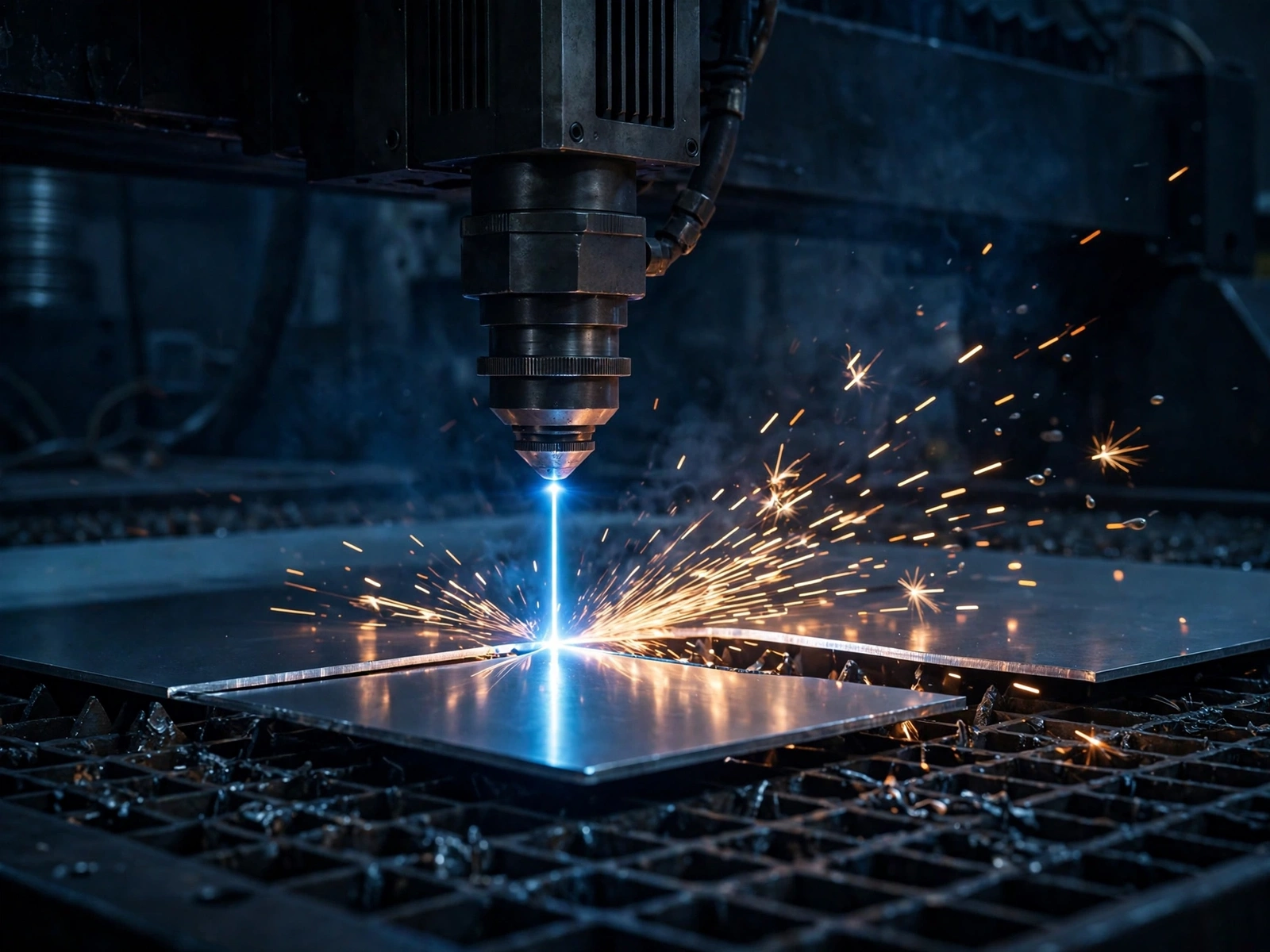
Fiber lasers cut aluminum, stainless steel and copper cleanly, CO2 lasers handle plastics and gaskets, and Nd:YAG lasers take on thicker, harder alloys. Clean, low-distortion edges need little deburring before forming, which matters on thin aerospace-grade aluminum. For repeated hole patterns at volume, punching can be faster. Read more on our laser cutting page.
CNC press brakes form flanges, channels and boxes using air bending, bottoming or coining, depending on how tightly the angle must be held, with springback compensation built into the CNC program. Our metal bending capacity covers sheet and plate up to 60 mm thick with up to 1,000 tons of force, so the same shop handles thin enclosures and heavy ground support brackets.
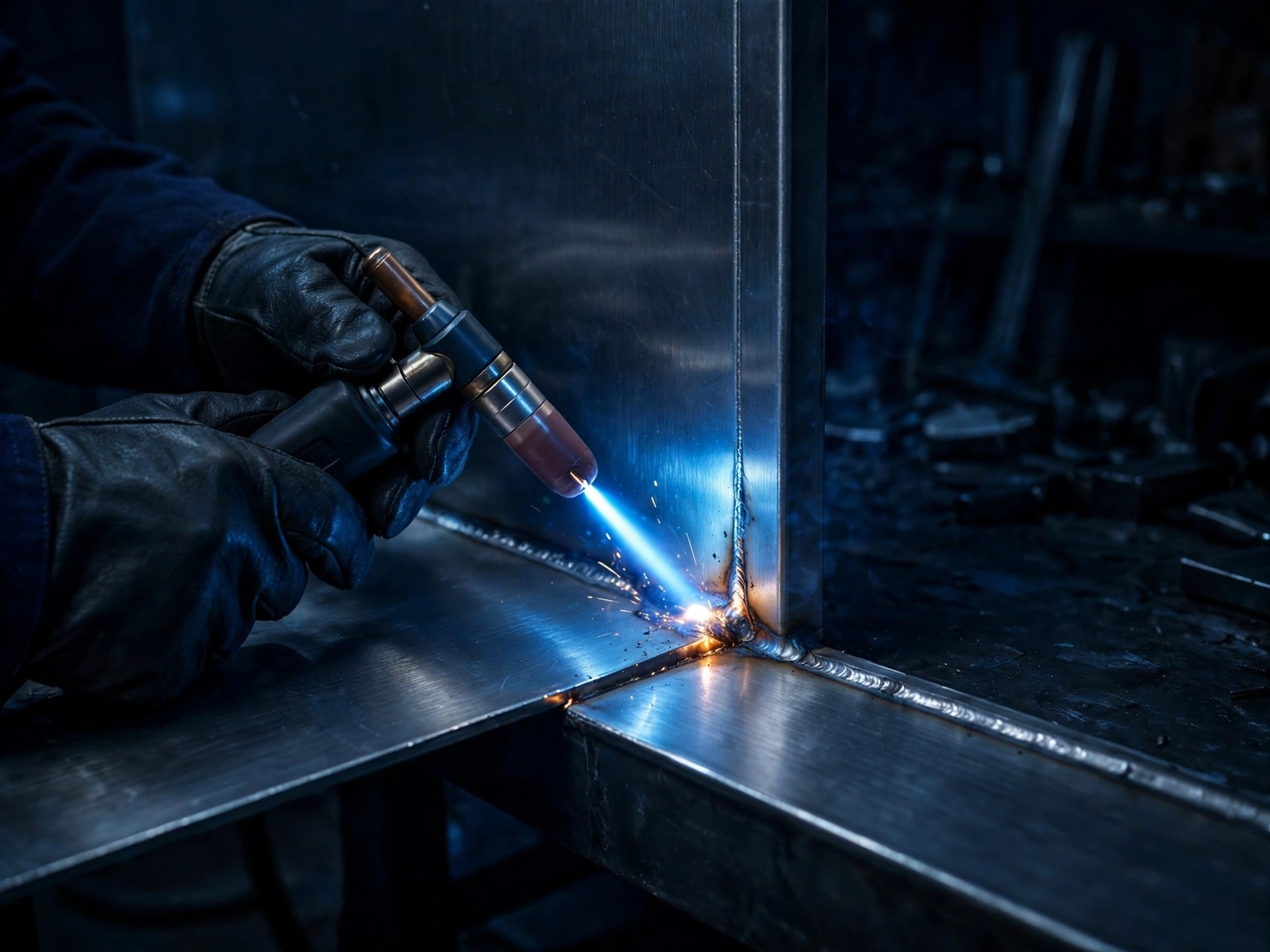
TIG welding joins thin aluminum and stainless parts with low heat input to limit distortion, MIG suits thicker structural joints, and spot welding is used on overlapping sheet. We also press in self-clinching nuts, studs and standoffs, then assemble sub-components before inspection.
Anodizing and chromate conversion coating protect aluminum, passivation and electropolishing suit stainless parts, and powder coating covers ground equipment and enclosures. Finishing is applied after forming so the coating does not crack at the bends.
Choosing materials for aerospace parts starts with formability, weight and corrosion behavior, and each alloy behaves differently on the press brake. These aluminum alloys and steels are the grades most often specified for sheet metal used in aerospace work:
| Material | Why it is used | Forming note |
|---|---|---|
| Aluminum 5052-H32 | Good corrosion resistance, easy to bend | First choice for enclosures and covers |
| Aluminum 6061-T6 | Higher strength, weldable | Needs larger bend radii to avoid cracking |
| Aluminum 2024 and 7075 | Highest strength-to-weight ratio | Hard to form; often machined from plate instead |
| Stainless steel 304 and 316 | Heat and corrosion protection | Springs back more; we compensate in the program |
| Cold rolled and galvanized steel | Low cost for ground equipment | Painted or powder coated for protection |
If your drawing calls for 7075 in a formed shape, we will tell you at the quote stage whether it can be bent without cracking or should be machined instead.
These sheet metal aerospace components cover critical aerospace systems as well as the support hardware around them.
Large airframe skins made by stretch forming or hydroforming need specialized equipment and long-bed tooling. We focus on the brackets, enclosures, panels and assemblies that support those structures, where our cutting, bending and welding capacity is a strong fit for custom aerospace jobs.
Most extra cost in aircraft sheet metal comes from features that fight the fabrication process. A few rules keep parts cheaper and more accurate:
Our free DFM review flags these issues before the first part is cut, along with any feature that would be better as a machined detail.
Every aerospace order follows our AS9100D quality management system, which aligns our work with industry standards, aerospace quality management requirements and the quality standards on your purchase order. Depending on your requirements, we supply material certificates, first article inspection reports, dimensional reports on critical features and lot traceability. Special processes such as anodizing are documented with the finish specification on your drawing. This documentation is what lets precision and reliability be proven, not just promised. See our quality assurance page for inspection details.
Many sheet metal assemblies include machined or printed details, and aerospace manufacturers and aerospace companies often prefer one source for all of them. We can make those details in the same order: