18/8 stainless steel is austenitic stainless steel containing roughly 18% chromium and 8% nickel. The label describes a family of 300-series grades, most often 304, rather than one exact alloy. 18/10 has about 10% nickel, and 18/0 has almost none, which makes it magnetic and cheaper but less corrosion resistant.
Quick answer: The two numbers are the approximate chromium and nickel percentages. 18/8 and 18/10 are both austenitic grades in the 304 family: non-magnetic when annealed, easy to weld, and safe for food contact. 18/0 is usually grade 430, a ferritic steel that is magnetic, nickel-free, and lower in cost.
Those labels started in cookware and fastener catalogs, not in material standards, and 18-8 steel is still sold that way today. That matters when you order machined parts, because a drawing should name a real grade, not a ratio. This guide explains what each label means, how they map to 304, 316 and 430, and how to make sure you receive what you paid for.
Chromium is what makes steel “stainless.” Above roughly 10.5% chromium, the metal forms a thin, self-repairing chromium oxide film that stops rust from spreading. More chromium generally means a tougher film and a more corrosion-resistant steel.
Nickel does a different job. It changes the crystal structure of the steel to austenite, a face-centered cubic structure that is tough, ductile, easy to form, and non-magnetic in the annealed condition. Nickel also improves resistance to some acids.
So 18/8, meaning 18 percent chromium and 8 percent nickel, tells you two things at once: there is enough chromium for good corrosion resistance, and enough nickel to make the steel austenitic. In the fastener trade, “18-8” covers several closely related grades: 302, 303, 304, 304L and 305. They share the same base chemistry but differ in carbon, sulfur, or nickel content for specific jobs.
Compared to other stainless families, this kind of stainless steel offers the best mix of ductility, weldability and corrosion resistance for various applications. Stainless steel’s popularity in fasteners, kitchens and factories comes from that balance, and it is the stainless steel you’ll find on most hardware store shelves.
That family definition is the first trap. A screw marked 18-8 could be 304, or it could be 303, which machines more easily but resists corrosion less well. For general hardware made from 18-8 stainless steel, that difference rarely matters. For a sealed medical or food-processing part, it can.
Buyers searching for 18/8 composition usually want the real ranges, not the rounded ratio. The values below are the typical limits for grade 304 in ASTM A240, the most common material sold as 18-8, with 316 and 430 alongside for comparison. Small shifts in these material compositions are what separate the different grades.
| Element (wt %) | 304 (18/8) | 316 | 430 (18/0) |
|---|---|---|---|
| Chromium (Cr) | 18.0–20.0 | 16.0–18.0 | 16.0–18.0 |
| Nickel (Ni) | 8.0–10.5 | 10.0–14.0 | 0.75 max |
| Molybdenum (Mo) | None specified | 2.0–3.0 | None specified |
| Carbon (C) | 0.07–0.08 max | 0.08 max | 0.12 max |
| Manganese (Mn) | 2.0 max | 2.0 max | 1.0 max |
| Silicon (Si) | 0.75–1.0 max | 0.75–1.0 max | 1.0 max |
| Iron (Fe) | Balance | Balance | Balance |
Mechanical properties matter more than chemistry once you start designing a part. These are typical annealed values; cold-worked bar, wire and fasteners will be stronger.
| Property (annealed, typical) | 304 (18/8) | 316 | 430 (18/0) |
|---|---|---|---|
| Tensile strength, minimum | 515 MPa (75 ksi) | 515 MPa (75 ksi) | 450 MPa (65 ksi) |
| Yield strength, minimum | 205 MPa (30 ksi) | 205 MPa (30 ksi) | 205 MPa (30 ksi) |
| Elongation, minimum | 40% | 40% | 22% |
| Density | about 8.0 g/cm³ | about 8.0 g/cm³ | about 7.7 g/cm³ |
| Melting range | about 1,400–1,450 °C | about 1,375–1,400 °C | about 1,425–1,510 °C |
| Magnetic response | None to slight | None to slight | Strong |
Notice that 304 and 316 have the same minimum strength. Choosing 316 buys corrosion resistance, not extra load capacity. If your part needs higher strength, look at cold-worked condition, a precipitation-hardening grade such as 17-4 PH, or a different design.
Most 304 stainless steel starts as scrap and ferroalloys melted in an electric arc furnace, then refined, cast into slab or billet, hot rolled, and pickled to remove scale. Because 18-8 cannot be hardened by heat treatment, it is hardened through cold working instead, which raises strength but costs some ductility.
Yes, when it is genuinely 304 or another true 18-8 grade. It is the workhorse of the stainless steel world for good reasons: it resists corrosion in most everyday environments, forms and welds easily, polishes well, and holds up to repeated cleaning.
That mix of durability and corrosion resistance is why stainless steel pots and pans, a stock pot, a frying pan or a simple spoon so often carry an 18/8 stamp. The metal is easy to clean, does not tarnish over time, and gives excellent corrosion resistance against everyday foods.
Quality problems usually come from what is sold under the label rather than the grade itself. Three patterns cause most complaints:
In other words, 18/8 is a sound material. Whether a specific product or part is good quality depends on the supplier’s grade control and finishing, which is why certificates matter.
This comparison table is the fastest way to see how the three labels differ.
| Property | 18/8 | 18/10 | 18/0 |
|---|---|---|---|
| Chromium (approx.) | 18% | 18% | 16–18% |
| Nickel (approx.) | 8% | 10% | Less than 0.75% |
| Usual standard grade | 304 (or other 18-8 family grades) | 304 at the high end of its nickel range | 430 |
| Crystal structure | Austenitic | Austenitic | Ferritic |
| Magnetic (annealed) | No | No | Yes |
| Corrosion resistance | Good | Good, slightly better in acidic use | Fair |
| Polish and luster | Good | Best | Good, slightly duller |
| Weldability | Excellent | Excellent | Limited |
| Hardenable by heat treatment | No (cold work only) | No (cold work only) | No |
| Relative cost | Medium | Highest of the three | Lowest |
| Typical uses | Fasteners, machined parts, tanks, kitchen equipment | Premium cookware and flatware | Budget flatware, appliance trim, induction cookware bases |
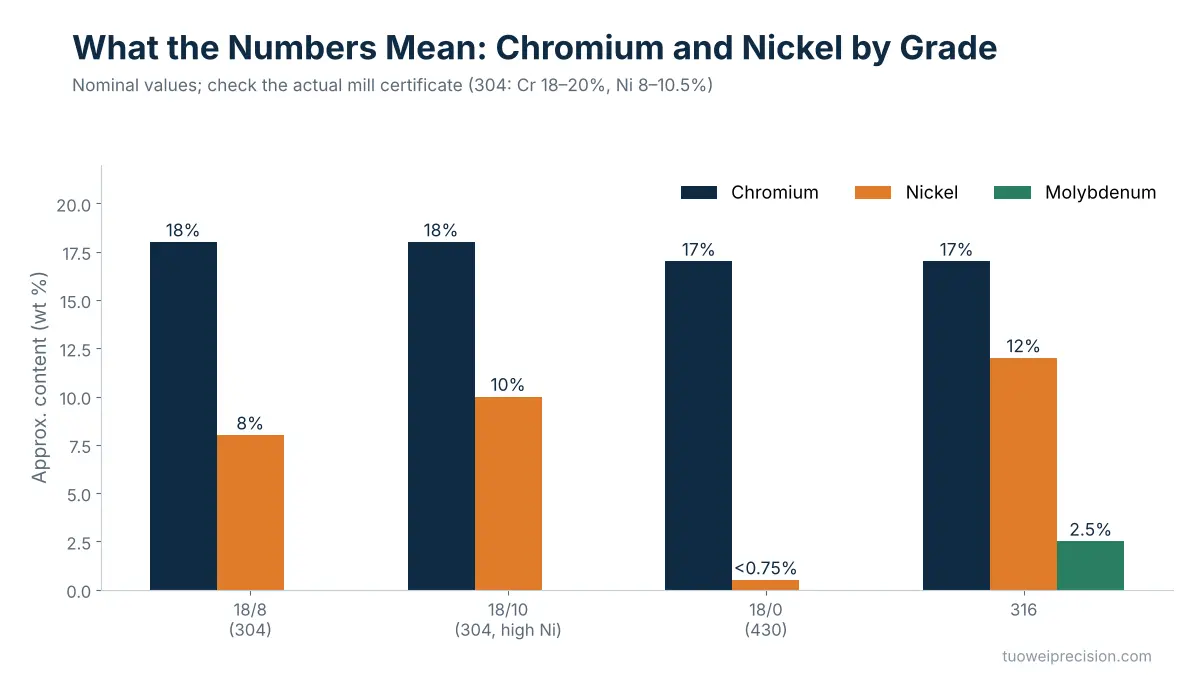
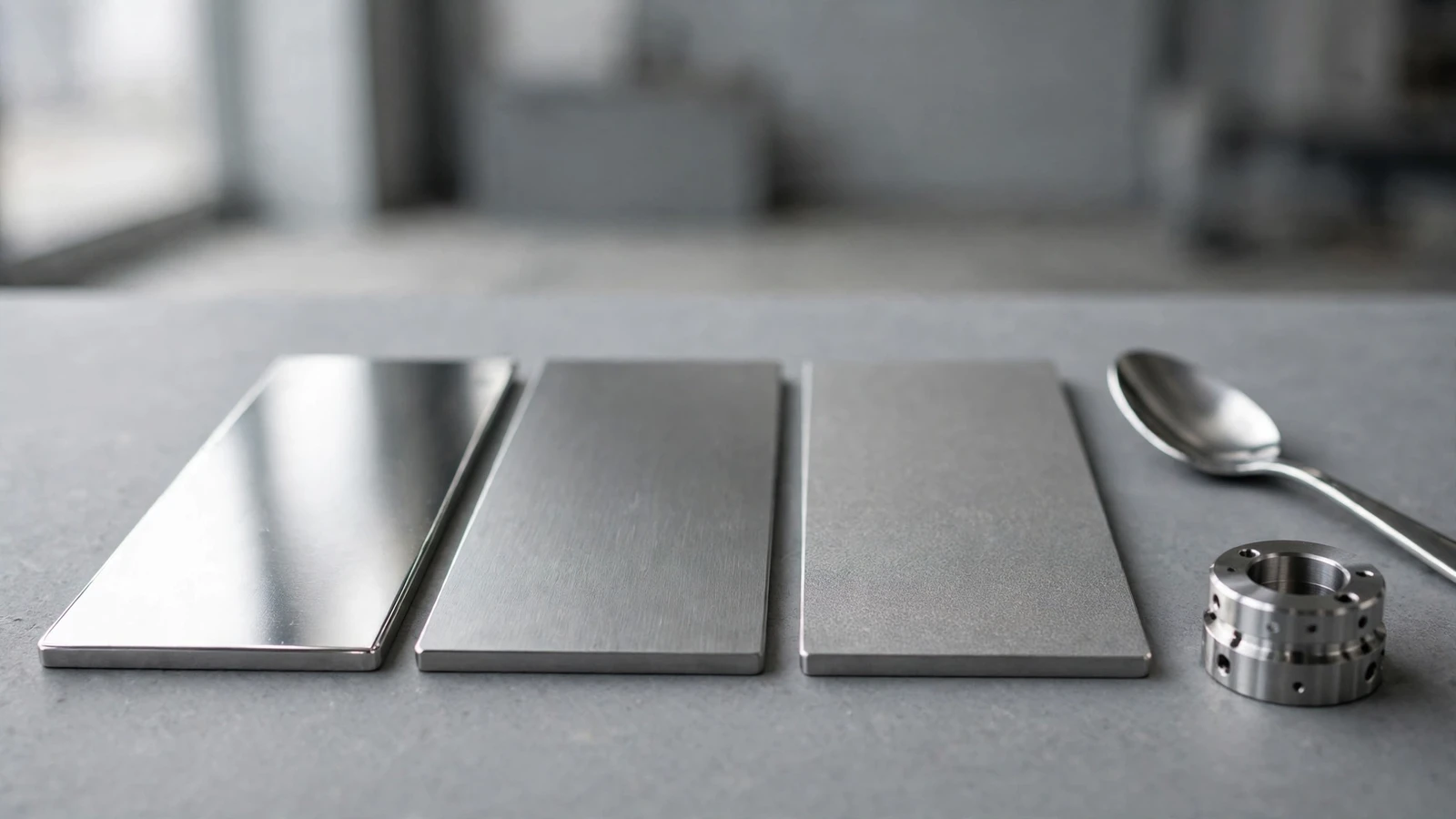
The practical gap between 18/8 and 18/10 is small. Two percent more nickel gives a slightly brighter finish and marginally better resistance to acidic foods. The gap between either of them and 18/0 is much larger, because removing nickel changes the steel’s structure entirely.
18/10 stainless steel is not a separate grade in ASTM or ISO standards. It is a commercial label for 304-type steel melted toward the top of 304’s allowed nickel range, which runs from 8.0% to 10.5%. Manufacturers use it mostly for cookware and flatware, where the extra shine helps sell the product.
For an engineered part, specifying “18/10” adds little. If you need more corrosion resistance than 304, the real step up is 316, which adds molybdenum.
18/0 stainless steel is usually grade 430, a ferritic stainless with 16–18% chromium and almost no nickel. It is magnetic, which is why it is used in induction-compatible cookware bases and in appliances. It is also the common choice for people avoiding nickel, and the lack of nickel is the main reason it costs less.
The trade-off is corrosion resistance. In salty, acidic or chloride-rich environments, 430 shows surface rust far sooner than 304. It also welds poorly compared with austenitic grades, so we rarely recommend it for welded assemblies.
In most catalogs, 18-8 stainless steel is the same as 304 stainless steel, and clearly different from 316 stainless steel. The 18-8 vs 304 question comes up constantly, and the difference between 18-8 and 304 is mostly one of naming; 304 vs 316, by contrast, is a real material choice. The table below maps the trade labels to the grade numbers used on drawings and mill certificates.
| Trade label | Common grade | UNS | EN number | ISO 3506 fastener class | Key chemistry difference |
|---|---|---|---|---|---|
| 18-8 / 18/8 | 304 | S30400 | 1.4301 | A2 | Cr 18–20%, Ni 8–10.5% |
| 18-8 (low carbon) | 304L | S30403 | 1.4307 | A2L | Carbon 0.03% max, better for welding |
| 18-8 (free machining) | 303 | S30300 | 1.4305 | A1 | Added sulfur for machinability |
| 18/10 | 304 (high nickel) | S30400 | 1.4301 | A2 | Nickel near 10% |
| Marine grade | 316 | S31600 | 1.4401 | A4 | Ni 10–14% plus 2–3% molybdenum |
| 18/0 | 430 | S43000 | 1.4016 | F1 | Ferritic, nickel under 0.75% |
The jump from 304 to 316 is the important one. Molybdenum improves corrosion resistance against chlorides, giving 316 superior corrosion resistance in marine environments and other harsh environments where chloride-induced pitting is the main risk, such as seawater, de-icing salt, and some cleaning chemicals. 316 is also noticeably more expensive, so it should be specified where chlorides are actually present, not by default.
Fastener buyers will also see ASTM F593, the US specification for stainless steel bolts and studs, which groups 18-8 type alloys together. If thread strength matters, name the property class, such as A2-70 under ISO 3506, rather than just “18-8.”
In the annealed condition, 18/8 stainless is essentially non-magnetic because austenite is not ferromagnetic. However, cold working such as bending, deep drawing, thread rolling, or heavy machining can transform part of the austenite into martensite, which is magnetic. That is why threads on an 18-8 bolt or the corners of a formed sink often attract a magnet slightly.
This leads to the most common myth we hear from buyers: “It’s magnetic, so it isn’t real stainless.” A light pull on a cold-worked 304 part is normal. A strong pull across the whole part suggests a ferritic grade like 430, or a mislabeled material.
The reverse test does not work either. A magnet cannot tell 304 stainless steel from 316, because both are non-magnetic when annealed. Only a chemical test separates them.
All three resist ordinary indoor humidity and tap water well, and that resistance to rust is why stainless steel is chosen over carbon steel in the first place. The ability to resist rust is shared, so rust and corrosion resistance only start to separate the grades in corrosive environments.
One common cause of “rusting stainless” has nothing to do with grade at all. Iron particles from carbon steel tools, wire brushes or grinding dust can embed in the surface and rust on top of it. Passivation or electropolishing after machining removes that contamination and restores the protective film.
The same alloy shows up in very different products. This is where 18/8 stainless earns its place, and where buyers usually move to another grade.
| Industry | Typical 18-8 parts | When to switch grade |
|---|---|---|
| Food and beverage | Tanks, fittings, conveyor parts, bottles, utensils | 316 for brines, sauces with salt, or aggressive cleaning chemicals |
| Medical and laboratory | Instrument housings, trays, fixtures | 316L for implants or chloride sterilants; 17-4 PH for higher strength |
| Electronics and enclosures | Brackets, shields, panels, fasteners | 430 when magnetic shielding or lower cost matters more than corrosion |
| Automation and robotics | Shafts, pins, spacers, sensor mounts | 303 for complex turned parts; 17-4 PH for wear and strength |
| Architecture and outdoor hardware | Railings, cladding fixings, signage | 316 within a few miles of the coast or where de-icing salt is used |
| Fasteners | Screws, bolts, nuts, washers | A4 (316) for marine use; check the property class, not just “18-8” |
A useful rule from the fastener world: match the fastener grade to the parts it joins. A 304 screw in a 316 marine fitting becomes the weak point.
Stainless steel also appears in heat exchangers, chemical processing equipment and the fabrication of tanks and hoppers, where 316 or duplex grades usually take over from 18-8 in the more aggressive duties.
Exact prices move with the nickel and molybdenum markets, so treat any fixed number with caution. The relative order is stable, though:
For machined parts, raw material is only part of the bill. 304 work hardens and wears tools faster than 303, and 316 is slightly tougher to cut again. On a small, complex part, machining time can outweigh the material difference. That is why we suggest choosing the grade by environment first, then checking whether a free-machining option such as 303 is acceptable.
This is where the family definition matters most for our customers, and where most consumer-focused guides stop short.
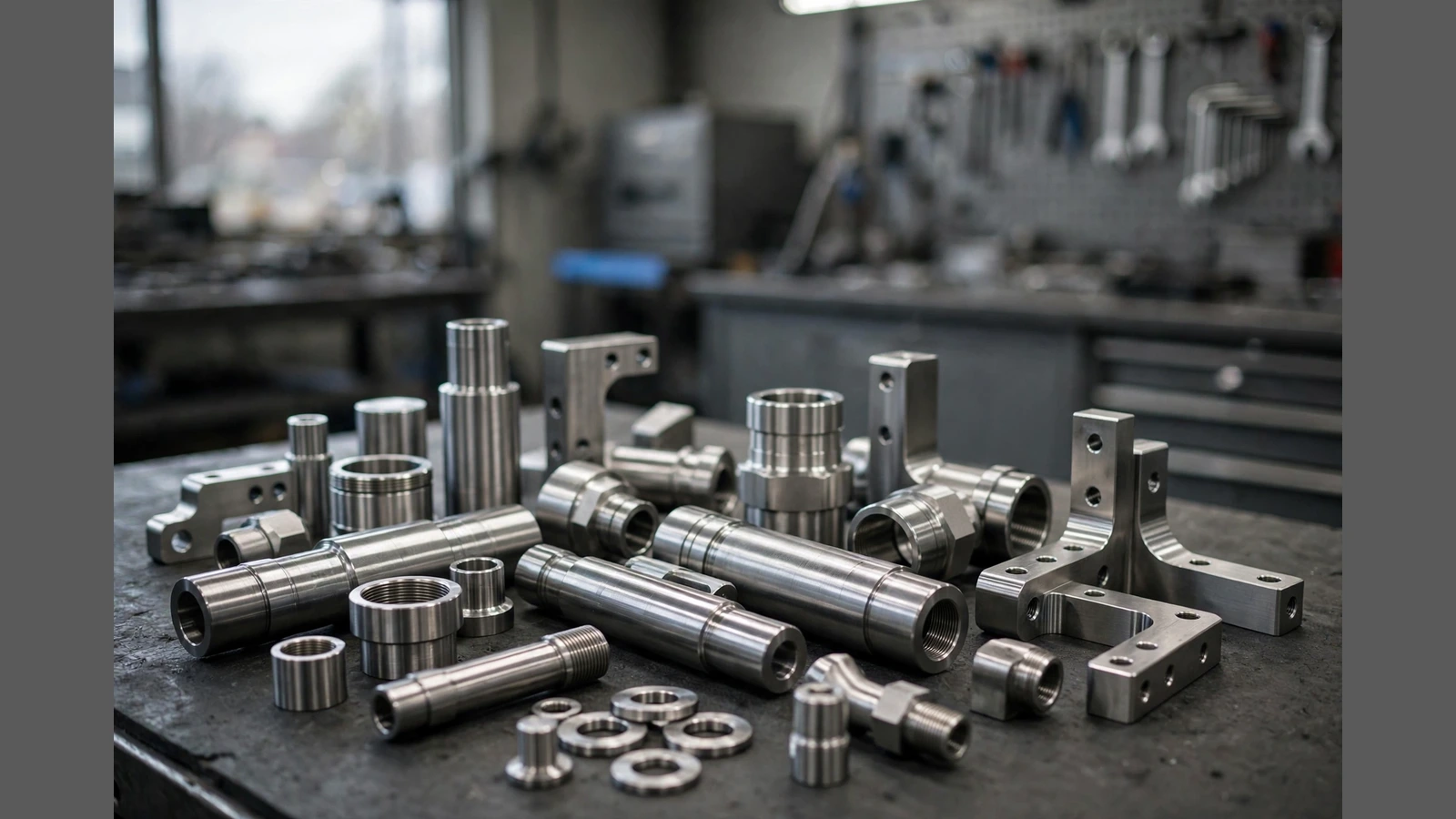
304 work hardens quickly. If a tool rubs instead of cutting, the surface hardens and the next pass gets harder. Sharp carbide tools, positive rake angles, rigid setups and a steady feed that keeps the tool under the hardened layer all help. Stopping a tool in the cut is a frequent cause of glazed, hardened spots.
303 machines far more easily. Its added sulfur breaks chips cleanly, so it suits complex turned parts, small threads and high-volume screw-machine work. The cost is lower corrosion resistance and poor weldability. We recommend 303 only when the part will not be welded and will not see chlorides.
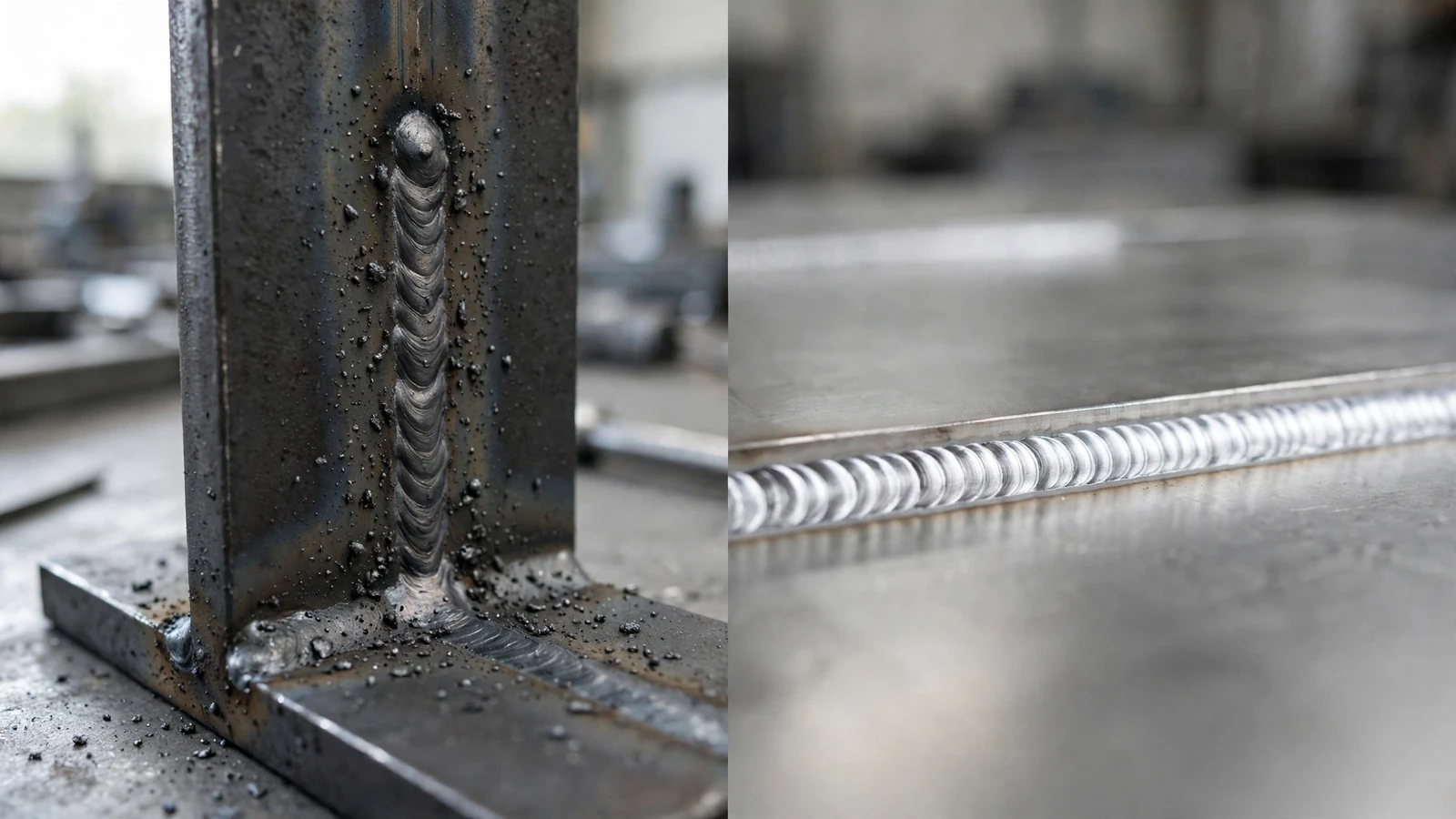
304L is the better choice for welded parts. Its lower carbon reduces chromium carbide formation at the weld, which helps keep the heat-affected zone corrosion resistant.
From a quoting point of view, a 304 part usually takes longer to machine than the same part in 303, and tool wear is higher. On tight-tolerance work that difference can show up in cycle time and price, so it is worth deciding the grade before you request quotes.
Labels like 18/8 are easy to print on a box. For production stainless steel parts, ask for proof.
Most quality problems we see in this area come from substitution: 201 stainless, which replaces much of the nickel with manganese, supplied as “18/8.” Grade 201 costs less but corrodes faster in humid or salty conditions.
| If your part is… | Our stainless steel recommendation | Why |
|---|---|---|
| A general machined component, indoor use | 304 (18/8) | Best balance of cost, corrosion resistance and weldability |
| A complex turned part, no welding | 303 | Much faster machining |
| A welded assembly | 304L | Lower carbon protects the weld zone |
| Exposed to seawater, salt or chlorides | 316 or 316L | Molybdenum resists pitting |
| A cookware or flatware product sold on appearance | 18/10 | Brighter finish, marketable label |
| Low-cost, magnetic, or nickel-free | 430 (18/0) | Cheapest, magnetic, no nickel |
If you are unsure, default to 304 for indoor parts and 316 for anything outdoors near the coast. Choosing 316 everywhere wastes money; choosing 304 near salt water invites warranty claims.
Annealed 18/8 is essentially non-magnetic because its austenitic structure is not ferromagnetic. Cold working, such as bending, thread rolling or heavy machining, can make areas slightly magnetic by forming martensite. A strong pull across a whole part suggests a ferritic grade such as 430 rather than true 18/8.
For most engineered parts the two perform almost the same. 18/10 has roughly 2% more nickel, giving a brighter finish and slightly better resistance to acidic foods, so it suits premium cookware. For machined or structural parts, choose 304 by grade name, or step up to 316 if chlorides are present.
Yes, for normal use. 304-type 18/8 is one of the most widely used materials for food processing equipment, cookware and utensils because it resists corrosion and does not react with most foods. People with a nickel allergy sometimes prefer 18/0, which contains almost no nickel, though it resists corrosion less well.
They are usually the same material. 18-8 is a family name covering grades 302, 303, 304, 304L and 305, all with about 18% chromium and 8% nickel. Most 18-8 material is 304 stainless steel, but fasteners or turned parts may be 303. If the grade matters, specify 304 and request a mill certificate.
It depends on the environment. 316 stainless steel adds 2–3% molybdenum, which greatly improves resistance to chlorides, so it is better near seawater, salt or pool chemicals. Indoors, 18/8 performs nearly as well at lower cost. Both have the same minimum strength, so 316 does not make a part stronger.
It resists rust well indoors and in mild outdoor air. In salt spray, pool chemicals or de-icing salt it can pit or show tea-colored staining, where 316 is the better choice. Embedded iron particles from carbon steel tools also cause surface rust, which passivation after machining removes.
The ratio on a label is a starting point, not a specification. For parts that must perform, name the grade on the drawing, match it to the environment, and ask for a certificate. Most of the problems we see trace back to a drawing that said “18-8” and a supplier who picked the cheapest member of the family.
If you are machining 18/8 stainless steel parts, our team can advise on 303 versus 304 versus 316 before you commit. See our steel CNC machining service, our wider CNC machining services, and precision machining capabilities. For related material choices, read our guides on aluminum vs stainless steel for CNC parts and how electropolishing improves stainless steel.
Ready to quote? Upload your drawing or explore Tuowei Precision for our full range of manufacturing services.
Sources and further reading
Composition ranges are typical values for reference. Always confirm the exact chemistry and properties against the standard and edition named on your drawing.