
Tuowei Precision provides aerospace CNC milling and turning for housings, brackets, manifolds, shafts, pins and fittings. Our Shenzhen shop runs 3-axis, 4-axis and 5-axis milling machines alongside CNC lathes, so prismatic and round features can be machined in one workflow and inspected against your drawing before shipping.
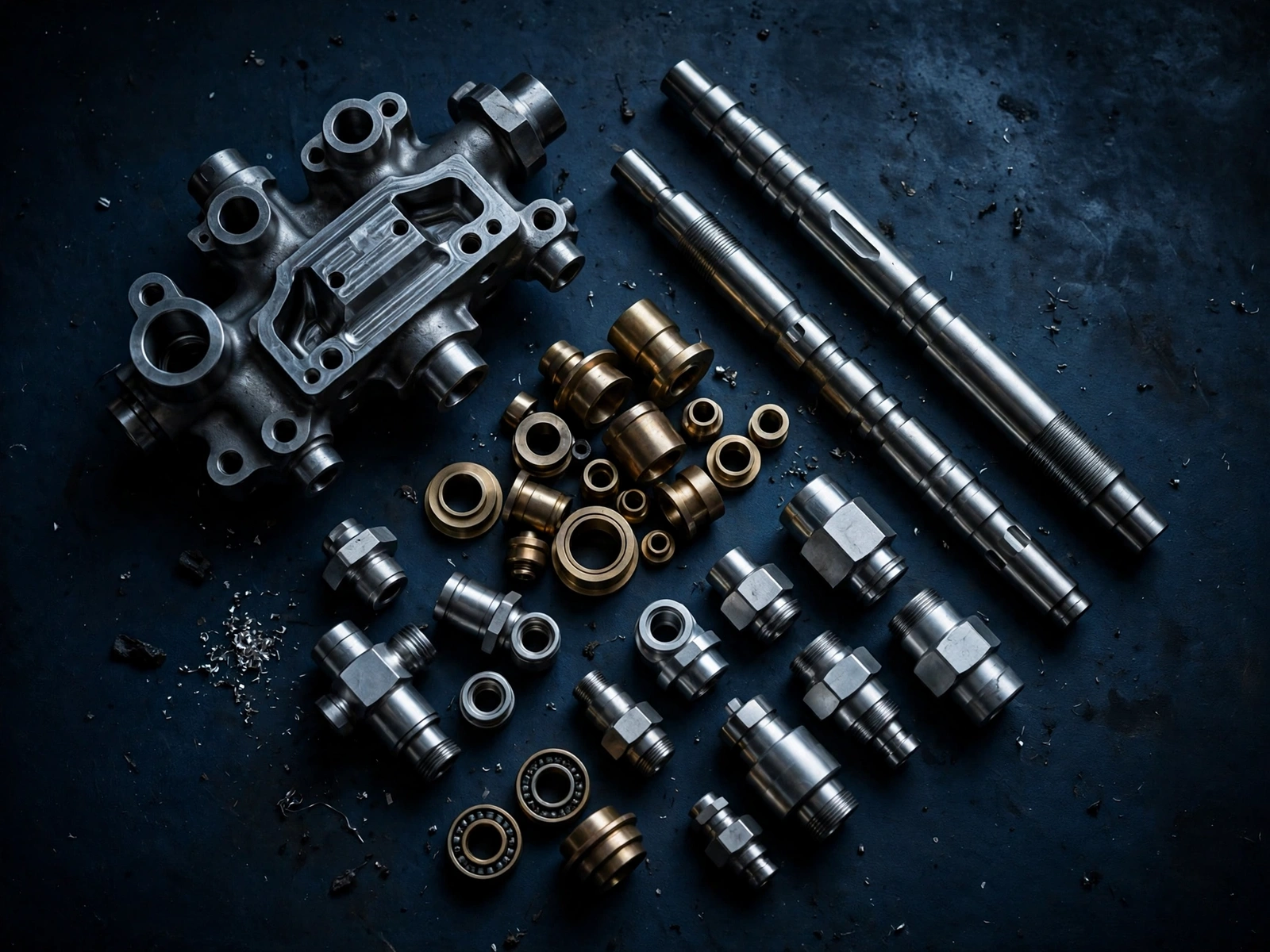
CNC machining plays a central role in the aerospace industry because flight hardware demands parts with high precision, certified materials and repeatable results. A CNC machine follows a programmed toolpath to within microns, every time, which is why machining is essential for structural, engine and avionics hardware.
Milling and turning are the two core processes behind most flight hardware. On a milling machine the cutter spins and moves while the workpiece stays clamped, which suits flat faces, pockets, slots and hole patterns. On a lathe the workpiece spins against a fixed tool, which suits diameters, bores, grooves and threads. Many aerospace components need both, and planning the route around the drawing datums is what keeps feature-to-feature positions tight.
| Feature | Milling | Turning |
|---|---|---|
| Best for | Housings, brackets, plates, manifolds | Shafts, pins, bushings, connectors |
| Machine | 3-, 4- and 5-axis milling machines | CNC lathes |
| Typical features | Pockets, slots, faces, hole patterns | Diameters, bores, grooves, threads |
| Standard tolerance | ±0.127 mm (±0.005 in) | ±0.01 mm on turned diameters |
| Precision tolerance | ±0.025 mm (±0.001 in), down to ±0.005 mm | Down to ±0.005 mm on critical features |
This page covers the two processes in detail. For the full picture of materials, quality and markets in aerospace manufacturing, see our aerospace machining hub page.
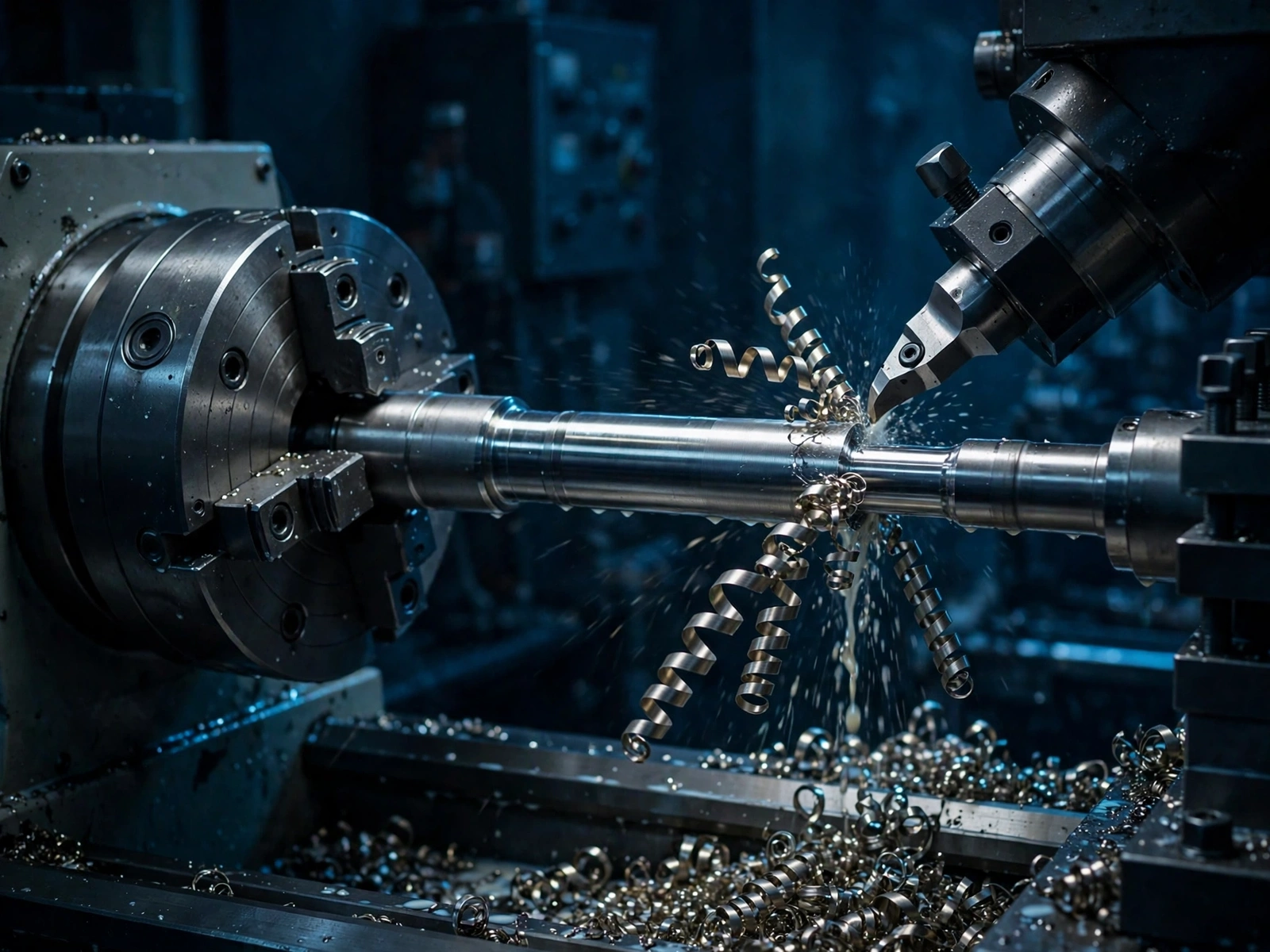
This machining process is the same for a single prototype and a production batch, which is why parts made in the first order match parts made a year later.
CNC machining in aerospace offers three things other methods struggle to match: full wrought material properties, tight tolerances and fast changeovers between designs. Precision CNC machining is the default manufacturing process for parts for the aerospace industry that carry load or need sealing faces, and advanced CNC machining such as 5-axis CNC machining lets one machine finish complex parts in a single setup. The trade-off is waste: a part machined from solid can turn most of the bar into chips, so for complex low-load shapes we may suggest printing or casting instead.
Our milling cells cover face milling, end milling, drilling, boring, tapping and slotting. The right CNC machine depends on part geometry and how many faces need features, and choosing the right machine is often the biggest lever on cost.
A 3-axis CNC machine is the most cost-effective machine choice for plates, covers and brackets with features on one or two faces. Simple parts run fast and the setup is easy to repeat.
A rotary axis lets the CNC machine reach several sides of a part in one clamping. That reduces setups on parts such as actuator bodies and cylindrical housings with features around their circumference.
Simultaneous 5-axis machining keeps the tool normal to curved surfaces and reaches five faces in a single setup. It is the standard method for impellers, blisks, turbine blade prototypes, aerospace brackets with compound angles and thin-wall structural parts.
Learn more on our CNC milling and 5 axis machining pages.
CNC turning produces round parts with tight concentricity and smooth finishes. Each CNC lathe in our shop handles straight and taper turning, facing, grooving, boring, drilling and threading, and holds turned diameters to ±0.01 mm.
When a turned part also needs flats, cross holes or slots, we turn the diameters first and then mill the remaining features, so every datum carries through. See our CNC turning page for capacities.
Each material behaves differently on the machine, and the cutting tool, speed and coolant change with it. Choosing the right machine and tool for each alloy is what separates aerospace machining companies from general job shops.
Before any part goes on a CNC machine, our engineers check machinability during the free DFM review, and suggest a different grade or process when a drawing would be slow or risky to machine.
Tight tolerances only matter if they are measured, and the requirements of the aerospace industry leave little room for guesswork. Critical dimensions are checked on a CMM once parts come off the machine, threads are gauged, and surface roughness is verified when the drawing calls for it. Our AS9100D quality system supports first article inspection, dimensional reports, material certificates and lot traceability. Visit our quality assurance page for inspection details.
A practical tip: tolerance every feature to what its function needs. A ±0.005 mm callout on non-critical dimensions can double machining and inspection time without improving the part.
Some features cannot be reached with a cutter, such as sharp internal corners, narrow slots or very hard materials. A wire EDM machine cuts these features with no cutting force, which protects thin walls. We pair EDM with milling and turning when a drawing calls for it, and a CMM verifies the result. Having every machine under one roof means a part never waits on an outside supplier between operations.
These parts for aircraft, spacecraft and UAVs all start on the same CNC machine platforms, which keeps quality consistent across aerospace projects.