
Tuowei Precision provides aerospace prototyping for engineers who need to test fit, form and function before committing to tooling. We make prototypes by CNC machining, 3D printing, vacuum casting, metal fabrication and rapid tooling, often in the production alloy, so test results carry over to the final part. These methods cover nearly every part in modern aerospace systems.

Prototyping is crucial in aviation. A design flaw found on a prototype costs a few hundred dollars. The same flaw found in later stages of development, after tooling, qualification or first flight, can cost months. Rapid prototyping lets aerospace engineers validate geometry, check assembly with mating parts and run load or vibration tests early, then refine the model, optimize the design and iterate within days. That is the core of rapid prototyping in aerospace industry programs: shorter development cycles and lower development time and costs.
Prototyping also has limits worth knowing. A 3D printed part does not behave exactly like a forged or machined one, so a prototype made by a different process can pass a test the final part would fail. For structural and flight test articles, we recommend prototyping in the production material and process whenever the budget allows.
| Method | Best for | Typical lead time | Notes |
|---|---|---|---|
| Machining | Functional metal and plastic prototypes | From 1 day | Production materials, down to ±0.005 mm |
| 3D printing | Complex shapes, early design checks | A few days | Lattices and internal channels; metal or plastic |
| Vacuum casting | 20 to 200 plastic parts | Under 5 days for simple parts | Urethane parts that mimic ABS, PP or rubber |
| Metal fabrication | Brackets, enclosures, panels | As little as 3 days | Same process as production |
| Rapid tooling | Molded or cast samples before steel tooling | A few weeks | Aluminum molds for qualification parts |
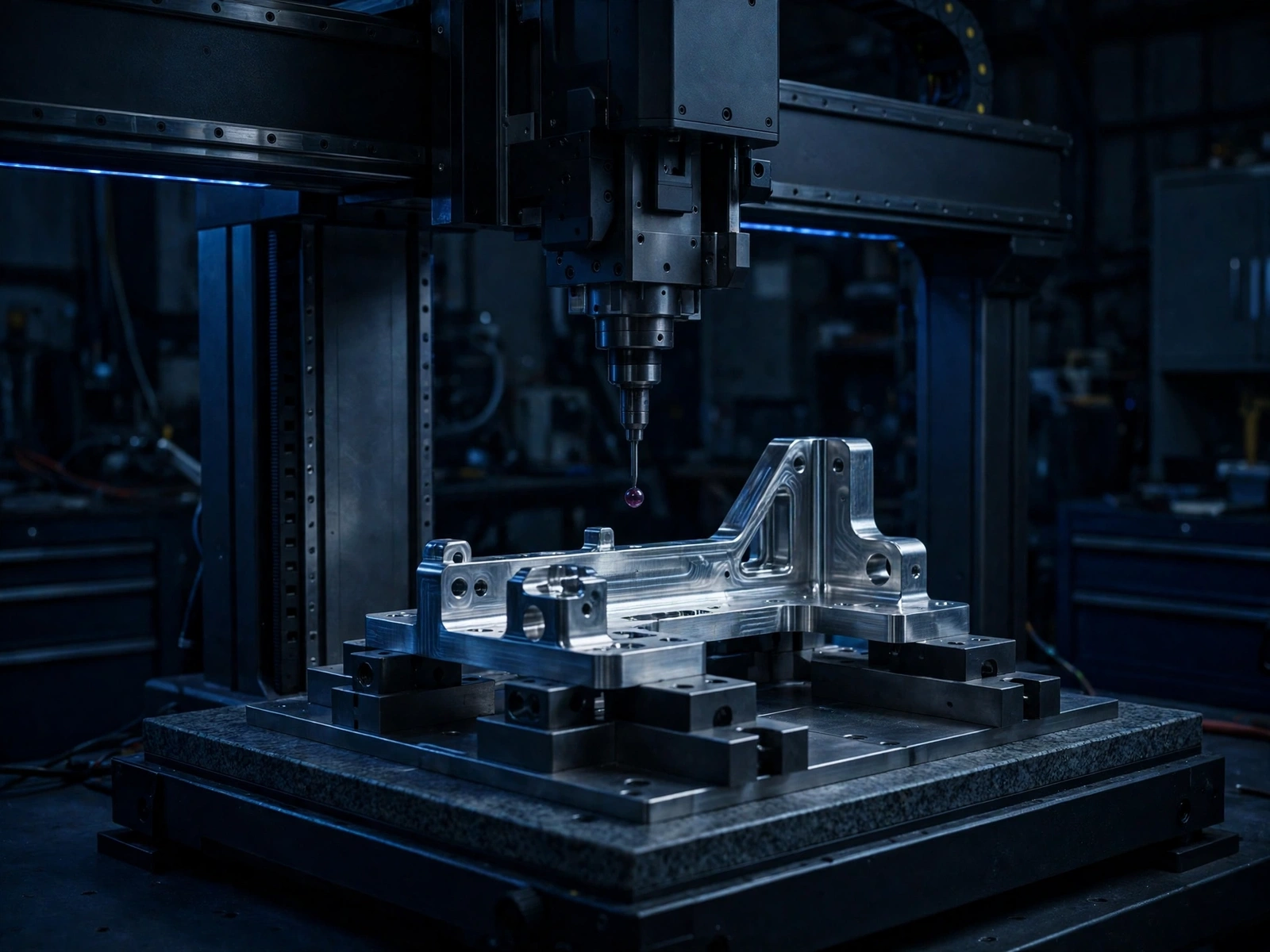
Machining makes working prototypes in aluminum, titanium, stainless steel and engineering plastics, so test data reflects the real material. It is our first recommendation for any bracket, housing or fitting that will become machined parts in production. See our aerospace CNC milling and turning page for machine details.
For complex shapes and fast design loops, 3D printing in aerospace lets you print and test several versions in a week. Our additive manufacturing aerospace service covers advanced 3D printing in metal and plastic. Metal 3D printing covers stainless steel, aluminum and titanium; plastics cover nylon, PEI and resins.
When you need dozens of plastic parts for a test fleet or customer samples, vacuum casting and aluminum bridge tools bridge the gap between one-off prototypes and full-scale production, giving cost-effective low-volume production before a hard tool is built.
Aerospace companies, startups and tier suppliers use these prototyping applications daily. For defense projects, we handle each file under confidentiality and only use it for your order.
For aerospace components, prototypes are only useful for design and testing if you know exactly what you tested. Our AS9100D and ISO 9001 quality system covers prototype orders as well as production. We can supply material certificates, dimensional inspection reports and first article inspection, so validation results can be tied to measured parts. Machined prototypes hold a tolerance down to ±0.005 mm on critical features depending on material and geometry.
In the prototyping process, the most common mistake is using a cheap method and then being surprised when the production part behaves differently. The second is skipping the drawing: a STEP file without tolerances leaves the shop guessing which features matter. Send a drawing with critical dimensions flagged, tell us what the prototype will be tested for, and we will pick the method that gives meaningful results at the lowest cost.
When the design is frozen, we move it from prototyping technologies to the manufacturing processes that fit your volume, using the same advanced manufacturing capabilities for full-scale manufacturing and component production: