By Owen Lin, Engineer, Tuowei Precision · November 2026
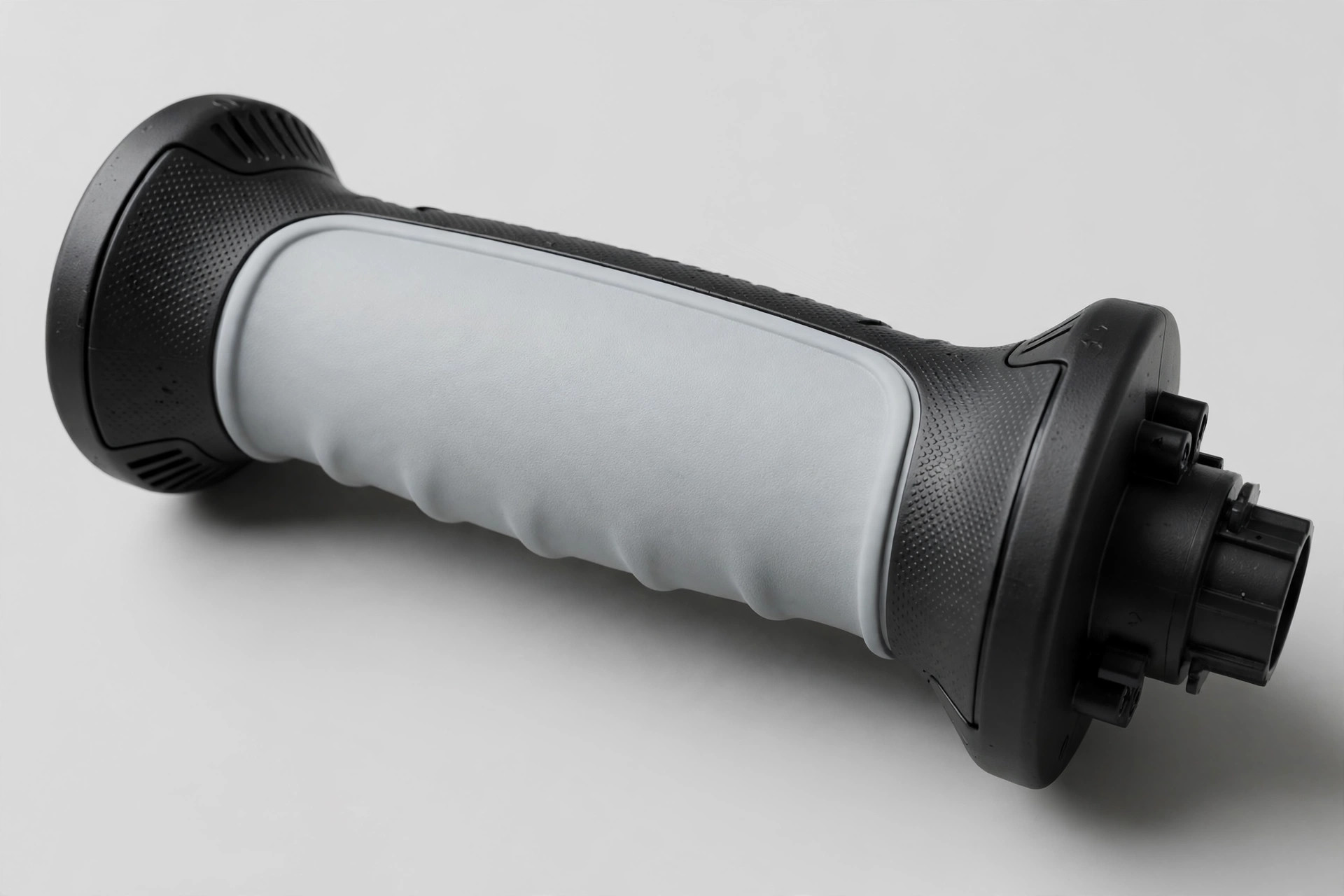
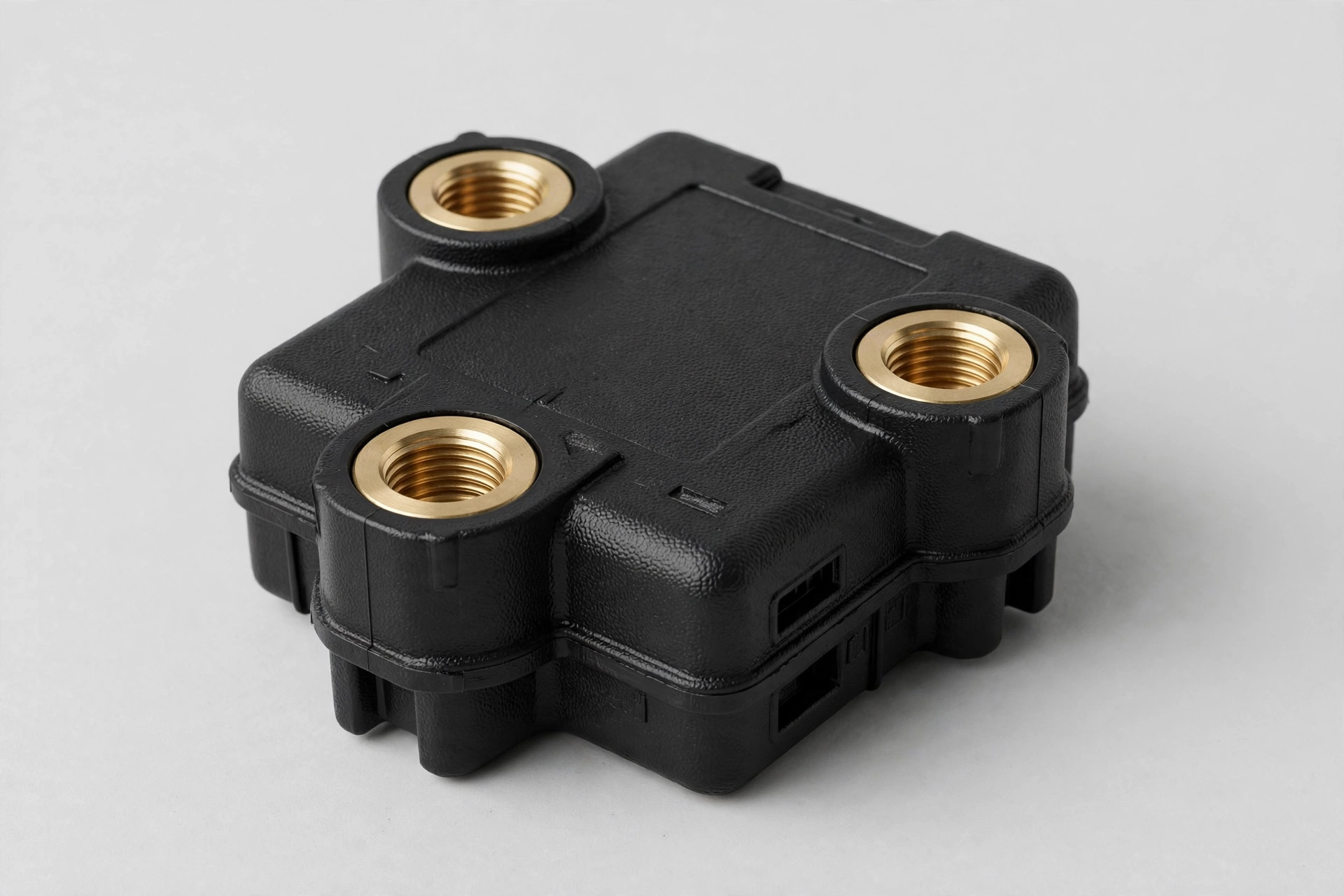
What is insert molding? It is an injection molding process in which a pre-made component, called the insert, is placed in the mold before plastic is injected. The molten plastic flows around the insert and locks it in place, so the part comes out as one piece with the insert permanently built in.
Most inserts are metal: threaded brass nuts, steel bushings, pins, electrical contacts and terminals. The process gives a plastic part metal strength or conductivity exactly where it is needed, without a separate assembly step. This guide explains how the process works, what inserts are used, how the mold holds them, the design rules that prevent loose or cracked inserts, and when adding inserts after molding is the cheaper choice.
Short answer: Insert molding places a pre-formed insert, usually metal, into an injection mold cavity and molds plastic around it in one cycle. The plastic encapsulates and mechanically locks the insert, producing a single part with metal threads, contacts or reinforcement inside. It is used for threaded bosses, connectors, sensors, knobs and medical device components.
An insert is any component placed in the mold before injection so that it ends up inside the finished part. The plastic does the joining, so no screws, glue or press fit are needed afterwards.
Common inserts include:
The cycle is a standard injection molding cycle with one extra step at the start.
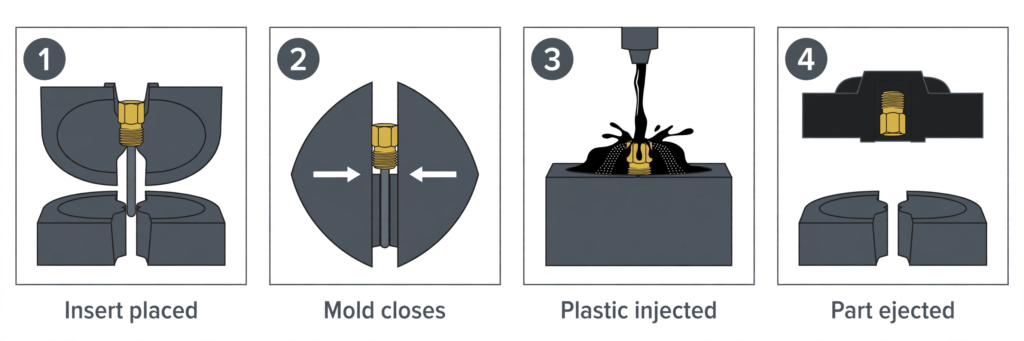
Loading is where the process differs most from standard molding, and it drives both cost and quality.
Small details matter here. Bowl feeders, insert orientation and part checks with sensors often decide whether a production run holds its scrap rate.
The insert must not move when plastic hits it at injection pressure. A shifted insert means scrap, and often a damaged mold.
Inserts need tight, consistent positioning in the mold for reliable results, so the inserts themselves must be made to tight, consistent dimensions. An insert that varies by a tenth of a millimeter from batch to batch causes flash or crushed inserts.
Good insert design is mostly about three things: locking the insert, protecting it from flash, and giving the plastic enough strength around it.
Our view: specify inserts that are designed for molding from a reputable supplier, and lock their dimensions on the drawing. Most problems we see come from switching insert suppliers mid-project, not from the molding itself.
Insert molding is not the only way to put metal threads in plastic. Inserts can also be pressed in after molding with heat (heat staking), ultrasonic vibration or simple press fits.
| Factor | Insert molding | Post-mold insertion |
|---|---|---|
| Pull-out and torque strength | Highest | Good with heat or ultrasonic methods |
| Sealing around the insert | Fully encapsulated | Possible gaps |
| Tooling | Mold needs insert seats and shut-offs | Standard mold plus a simple fixture |
| Cycle time | Longer, due to loading | Molding is faster; insertion is a separate step |
| Best volume | Medium to high | Prototypes to medium |
| Flexibility | Insert design is fixed in the tool | Easy to change insert type later |
At low volumes, molding a plain boss and adding heat-set inserts afterwards is often cheaper and easier to change. Choose insert molding when the part needs the strongest possible joint, must be sealed around a contact or pin, or will run in volumes where removing a secondary step pays back the tooling.
Most thermoplastics work well around inserts. Common choices are nylon, PBT, POM (acetal), PC, ABS and PP, plus glass-filled grades for strength. Thermosets such as epoxy and phenolic are used for some electrical parts.
For inserts, brass is the most common because it machines easily, resists corrosion and conducts well. Stainless steel, steel, aluminum and copper alloys are also used. Match the plastic and the insert to the part’s job: a glass-filled nylon with brass inserts suits a structural bracket, while PBT with copper terminals suits a connector. Our plastic injection molding page lists the resins we mold.
Parts with inserts hold tolerances similar to standard molded parts, plus the positional variation of the insert itself. ISO 20457 sets out tolerances for plastic molded parts, while insert positions are best controlled with geometric tolerances under ASME Y14.5. These are the tolerances we work to:
| Work type | Typical tolerance |
|---|---|
| Standard molding with inserts | ±0.005 in (±0.127 mm) |
| High-precision work | ±0.002 in (±0.051 mm) |
| Parts with metal inserts | ±0.003 in (±0.076 mm) |
| Mass production | ±0.005 in (±0.127 mm) |
Four things set the price of a part with inserts. The first is the mold: every insert needs a seat, a locating pin or magnet and a shut-off, which adds machining and fitting time to the tool. The second is loading, which adds seconds to every cycle unless a robot does it.
The third is the insert itself. A standard brass threaded insert is cheap, but a custom machined contact or a stamped lead frame can cost more than the plastic around it. The fourth is scrap. When a part fails inspection, both the plastic and the insert are lost.
The practical lesson is to standardize. Use catalog inserts where you can, keep the number of inserts per part low, and design them so they can only be loaded one way.
| Advantages | Disadvantages |
|---|---|
| Strong metal threads and contacts in plastic parts | Mold needs insert seats, pins and shut-offs |
| Removes a secondary assembly step | Loading slows the cycle |
| Insert is sealed and cannot loosen easily | Risk of cracks around inserts in some resins |
| Lighter than an all-metal part | Insert supply and tolerances must be controlled |
| Combines metal conductivity with plastic insulation | A defect scraps both the insert and the plastic |
| Reliable at high volumes with automation | Insert changes after tooling are costly |
A molding insert is a pre-made component, usually metal, that is placed in an injection mold before plastic is injected. The plastic flows around it and locks it in place. Typical examples are threaded brass nuts, bushings, pins and electrical contacts. The term can also mean a replaceable steel block inside a mold.
Insert molding molds plastic around a pre-made insert, usually metal, in one shot to add strength or function. Overmolding molds a second material, often a soft elastomer, over a molded plastic substrate to add grip or sealing. Insert molding needs one mold; overmolding usually needs two shots.
Lists vary, but the three most commonly cited plastic molding processes are injection molding, blow molding and compression molding. Insert molding and overmolding are variations of injection molding. Rotational molding and thermoforming are also widely used, so the answer depends on which processes a source groups together.
Molded-in inserts usually give the highest pull-out and torque resistance of any threaded insert method, because the plastic shrinks around knurls and grooves. Actual strength depends on the insert design, the resin and the wall around it, so specify pull-out and torque tests for critical joints.
Yes. A pre-molded plastic part can be placed in a mold and covered with a second plastic, although that is usually called overmolding. The insert must withstand the melt temperature without softening, and the two materials should be compatible or mechanically locked so they stay joined in service.
At Tuowei Precision, we build insert molds in aluminum for quick-turn prototypes and in hardened steel for production. We manage the full route from insert specification to molded part, so insert dimensions and mold seats are coordinated from the start.
For an accurate quote, send STEP files for the part and the insert, the insert part number or drawing, your resin, annual volume and any pull-out or torque requirements. Our engineers review insert locking, wall thickness around the insert and loading method before tooling. Start on our insert molding services page.
Owen Lin is an engineer at Tuowei Precision. He plans tooling and production processes and works with the quality team to keep every batch consistent.