Need expert machining solutions? Our team at Tuowei Precision is here to assist with all your manufacturing needs. Get in touch today for a quote on your ongoing or upcoming projects!
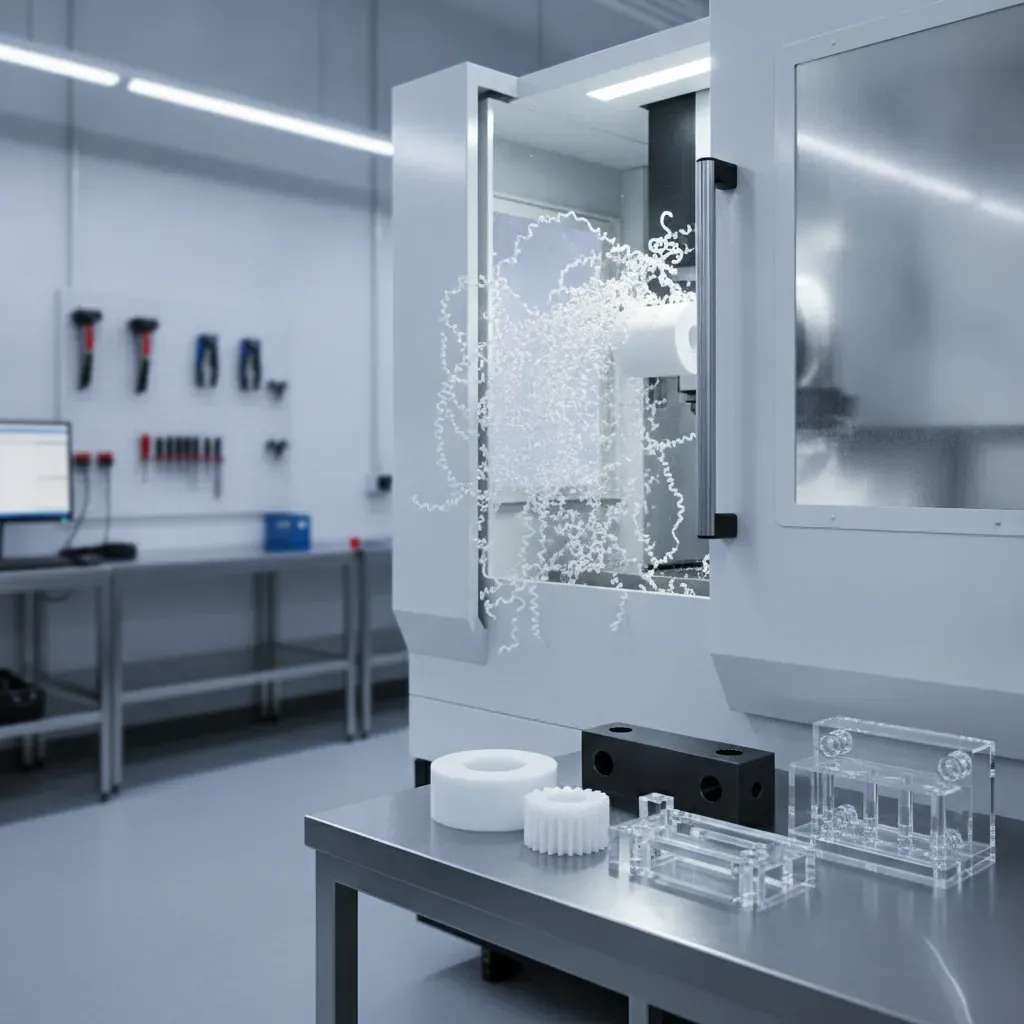
Plastic machining services produce precision polymer parts by CNC milling, turning and drilling — no mold required. For prototypes, low-to-mid volumes, and high-performance materials like PEEK that are costly to mold, machining is usually the fastest and most economical route. But plastics behave nothing like metals on a machine: they expand with heat, spring away from the tool, and warp when internal stresses are released. This page covers the materials we machine, the tolerances that are realistic for each, how deformation is controlled, and when machining beats molding.
| Parameter | Capability |
|---|---|
| Processes | 3/4/5-axis CNC milling, turning, drilling & tapping |
| Part size | Up to 1,500 × 1,000 × 500 mm plates; Ø600 mm turned |
| Standard tolerance | ±0.05 mm (POM, PEEK) |
| Tight tolerance | ±0.02 mm with annealing and stabilized measurement |
| Surface finish | Ra 0.8–1.6 µm machined; polished optical finish on PMMA/PC |
| Quantities | 1 to ~5,000 parts (beyond that, consider injection molding) |
| Material | Strengths | Watch-outs | Typical parts |
|---|---|---|---|
| POM / Acetal (Delrin) | Most machinable; stiff, stable, low friction | Hard to glue | Gears, bushings, jigs — see POM/Delrin CNC machining |
| PEEK | 250 °C continuous use, chemical resistance, strength | Expensive; glass-filled grades abrasive | Semiconductor, medical, aerospace |
| PTFE (Teflon) | Lowest friction, inert, 260 °C | Soft, creeps under load — loose tolerances | Seals, valve seats, insulators |
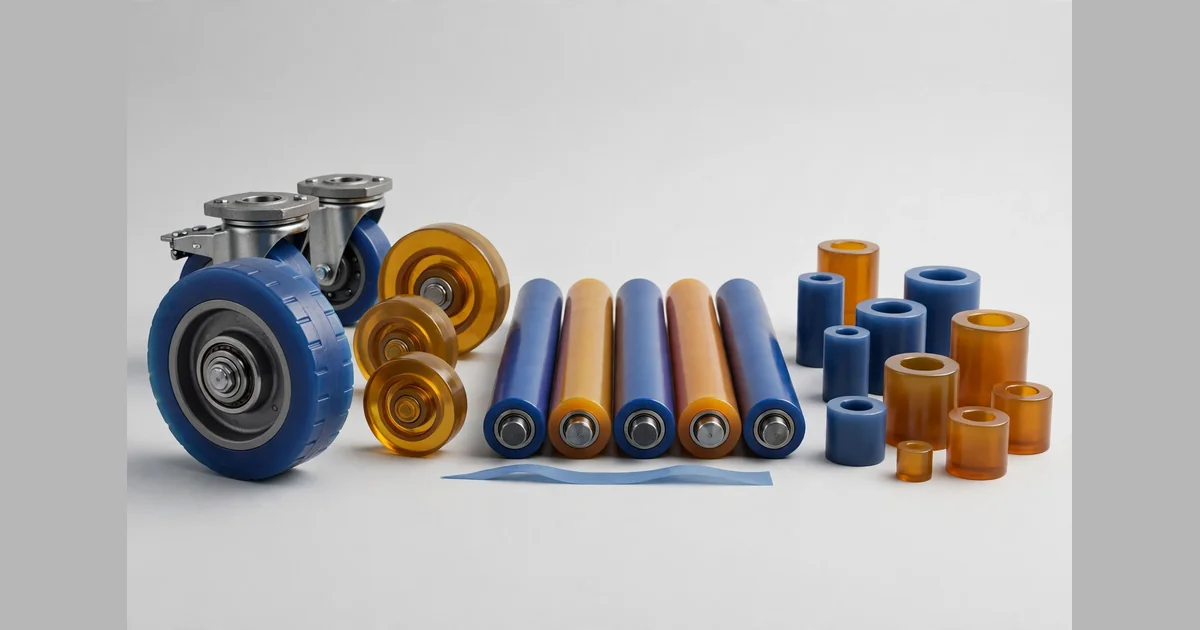
| Nylon (PA6/PA66) | Tough, wear-resistant, economical | Absorbs moisture — dimensions drift ±0.2% | Rollers, wear pads, sprockets |
| Polycarbonate (PC) | Transparent, impact-resistant | Stress-cracks with aggressive coolants | Guards, sight windows |
| PMMA (Acrylic) | Optical clarity, polishes beautifully | Brittle — sharp tools, gentle clamping | Light guides, displays, manifolds |
| UHMW-PE | Best abrasion resistance, cheap | Flexible — hard to hold flat tolerances | Chute liners, wear strips |
| Ultem (PEI) | Flame rated, 170 °C, strong | Costly; notch-sensitive | Aerospace interiors, sterilizable trays |
| Material | Standard | Achievable (annealed, 20 °C measured) |
|---|---|---|
| POM, PEEK | ±0.05 mm | ±0.02 mm |
| PC, PMMA, Ultem | ±0.1 mm | ±0.05 mm |
| Nylon (dried) | ±0.1 mm | ±0.05 mm |
| PTFE, UHMW | ±0.1–0.2 mm | ±0.05 mm small features |
Specifying metal-like tolerances (±0.01 mm) on plastics drives cost and scrap without improving function — plastics expand ~5–10× more than steel per °C, so a POM part measured at 26 °C can read 0.03 mm larger per 100 mm than at 20 °C.
| Factor | CNC machining | Injection molding |
|---|---|---|
| Tooling cost | None | Mold: $3,000–$50,000+ |
| Lead time (first parts) | 3–7 days | 4–8 weeks |
| Unit cost at 100 pcs | Low | Very high (mold amortized) |
| Unit cost at 50,000 pcs | High | Very low |
| Material options | Any extruded stock incl. PEEK, PTFE | Injectable grades only |
| Typical break-even | ~2,000–10,000 parts depending on size and mold complexity | |
Many programs start machined, then shift to molding at volume — often keeping machining for post-mold critical features.
POM (Delrin) is the gold standard: rigid, stable and fast-cutting with excellent tolerances. PEEK machines well for high-temperature service; PTFE and UHMW machine easily but hold looser tolerances due to softness.
±0.05 mm is standard on stable polymers like POM and PEEK; ±0.02 mm is achievable with annealing and controlled measurement. Soft materials like PTFE are realistic at ±0.1 mm.
Nylon absorbs up to 2–3% moisture, growing roughly 0.2% in dimension. Precision nylon parts should be machined from dried stock and specified with moisture-conditioned tolerances.
Below a few thousand parts, machining wins (no mold cost, days not weeks). Above ~5,000–10,000 parts of a stable design, molding’s lower unit price pays back the mold.
Tuowei Precision machines POM, PEEK, PTFE, Nylon, PC, PMMA, UHMW and Ultem on 3- to 5-axis CNC centers, with stress-relief annealing and temperature-stabilized inspection reports. Pair plastic parts with metal components from our CNC machining services, or move to volume with contract machining. For tiny polymer components, see micro machined parts. Upload your STEP file for a quote in 24 hours.
Written by Andy, Manufacturing Engineer at TUOWEI Precision. Andy specializes in CNC machining, precision manufacturing, and production engineering, with hands-on experience supporting projects from rapid prototyping through full-scale production. He works closely with engineering and manufacturing teams to evaluate materials, tolerances, machining processes, and design manufacturability. His articles provide practical, technically informed insights to help engineers and buyers make better manufacturing decisions, optimize production efficiency, and achieve consistent part quality. Explore TUOWEI Precision’s CNC machining and custom manufacturing solutions for your next project.
From rapid prototypes to scalable production, Tuowei Precision delivers reliable CNC machining with accuracy and consistency at every step. Start your project today.
Read our latest guides on CNC machining, materials, finishing and industry trends to make better production decisions.