¿Necesitas soluciones de mecanizado especializadas? El equipo de Tuowei Precision está a tu disposición para ayudarte con todas tus necesidades de fabricación. ¡Ponte en contacto con nosotros hoy mismo para solicitar un presupuesto para tus proyectos actuales o futuros!
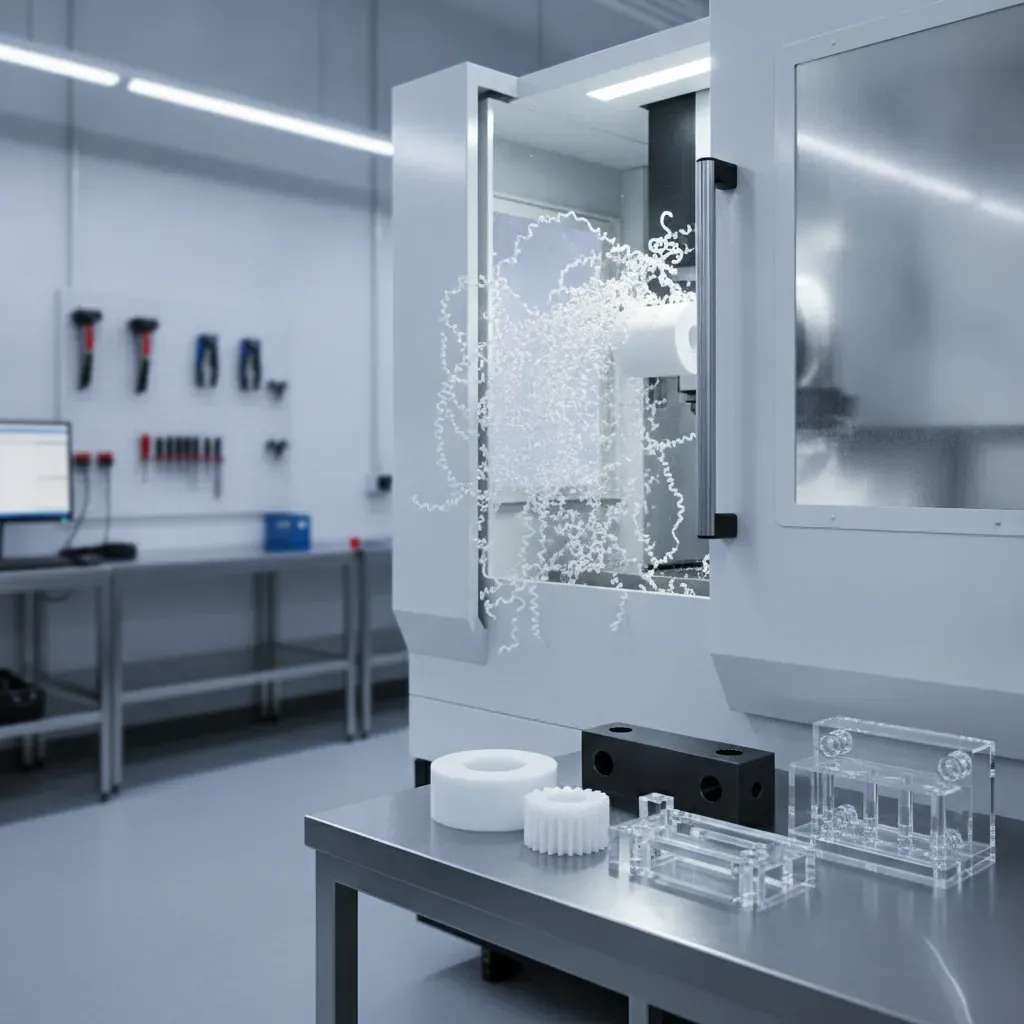
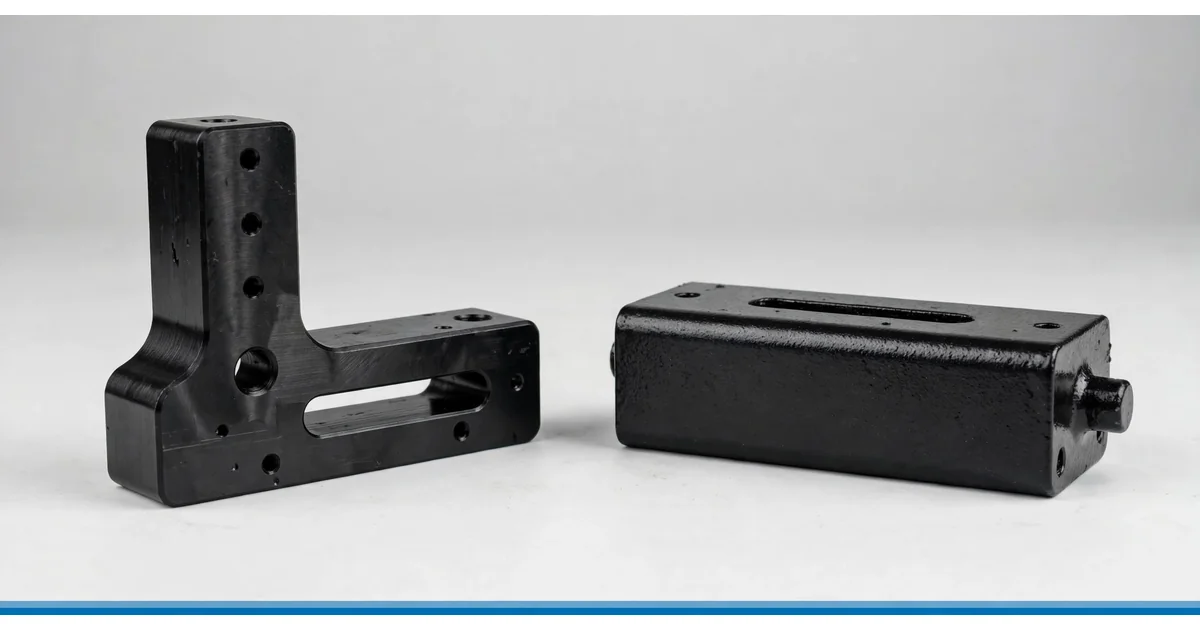
Plastic machining services produce precision polymer parts by CNC milling, turning and drilling — no mold required. For prototypes, low-to-mid volumes, and high-performance materials like PEEK that are costly to mold, machining is usually the fastest and most economical route. But plastics behave nothing like metals on a machine: they expand with heat, spring away from the tool, and warp when internal stresses are released. This page covers the materials we machine, the tolerances that are realistic for each, how deformation is controlled, and when machining beats molding.
| Parameter | Capacidad |
|---|---|
| Procesos | 3/4/5-axis CNC milling, turning, drilling & tapping |
| Tamaño de la pieza | Up to 1,500 × 1,000 × 500 mm plates; Ø600 mm turned |
| Tolerancia estándar | ±0.05 mm (POM, PEEK) |
| Tolerancia estrecha | ±0.02 mm with annealing and stabilized measurement |
| Acabado de la superficie | Ra 0.8–1.6 µm machined; polished optical finish on PMMA/PC |
| Quantities | 1 to ~5,000 parts (beyond that, consider injection molding) |
| Material | Puntos fuertes | Aspectos a tener en cuenta | Piezas habituales |
|---|---|---|---|
| POM / Acetal (Delrin) | Most machinable; stiff, stable, low friction | Hard to glue | Gears, bushings, jigs — see POM/Delrin CNC machining |
| PEEK | 250 °C continuous use, chemical resistance, strength | Expensive; glass-filled grades abrasive | Semiconductor, medical, aerospace |
| PTFE (teflón) | Lowest friction, inert, 260 °C | Soft, creeps under load — loose tolerances | Seals, valve seats, insulators |
| Nylon (PA6/PA66) | Tough, wear-resistant, economical | Absorbs moisture — dimensions drift ±0.2% | Rollers, wear pads, sprockets |
| Policarbonato (PC) | Transparent, impact-resistant | Stress-cracks with aggressive coolants | Guards, sight windows |
| PMMA (acrílico) | Optical clarity, polishes beautifully | Brittle — sharp tools, gentle clamping | Light guides, displays, manifolds |
| UHMW-PE | Best abrasion resistance, cheap | Flexible — hard to hold flat tolerances | Chute liners, wear strips |
| Ultem (PEI) | Flame rated, 170 °C, strong | Costly; notch-sensitive | Aerospace interiors, sterilizable trays |
| Material | Estándar | Achievable (annealed, 20 °C measured) |
|---|---|---|
| POM, PEEK | ±0,05 mm | ±0,02 mm |
| PC, PMMA, Ultem | ±0,1 mm | ±0,05 mm |
| Nylon (dried) | ±0,1 mm | ±0,05 mm |
| PTFE, UHMW | ±0.1–0.2 mm | ±0.05 mm small features |
Specifying metal-like tolerances (±0.01 mm) on plastics drives cost and scrap without improving function — plastics expand ~5–10× more than steel per °C, so a POM part measured at 26 °C can read 0.03 mm larger per 100 mm than at 20 °C.
| Factor | Mecanizado CNC | Moldeo por inyección |
|---|---|---|
| Coste de los utillajes | Ninguno | Mold: $3,000–$50,000+ |
| Lead time (first parts) | 3–7 days | 4–8 weeks |
| Unit cost at 100 pcs | Bajo | Very high (mold amortized) |
| Unit cost at 50,000 pcs | Alta | Muy bajo |
| Material options | Any extruded stock incl. PEEK, PTFE | Injectable grades only |
| Typical break-even | ~2,000–10,000 parts depending on size and mold complexity | |
Many programs start machined, then shift to molding at volume — often keeping machining for post-mold critical features.
POM (Delrin) is the gold standard: rigid, stable and fast-cutting with excellent tolerances. PEEK machines well for high-temperature service; PTFE and UHMW machine easily but hold looser tolerances due to softness.
±0.05 mm is standard on stable polymers like POM and PEEK; ±0.02 mm is achievable with annealing and controlled measurement. Soft materials like PTFE are realistic at ±0.1 mm.
Nylon absorbs up to 2–3% moisture, growing roughly 0.2% in dimension. Precision nylon parts should be machined from dried stock and specified with moisture-conditioned tolerances.
Below a few thousand parts, machining wins (no mold cost, days not weeks). Above ~5,000–10,000 parts of a stable design, molding’s lower unit price pays back the mold.
Tuowei Precision machines POM, PEEK, PTFE, Nylon, PC, PMMA, UHMW and Ultem on 3- to 5-axis CNC centers, with stress-relief annealing and temperature-stabilized inspection reports. Pair plastic parts with metal components from our Servicios de mecanizado CNC, or move to volume with contract machining. For tiny polymer components, see micro machined parts. Upload your STEP file for a quote in 24 hours.
Escrito por Andy, ingeniero de fabricación en TUOWEI Precision. Andy está especializado en mecanizado CNC, fabricación de precisión e ingeniería de producción, y cuenta con experiencia práctica en el apoyo a proyectos que abarcan desde la creación rápida de prototipos hasta la producción a gran escala. Trabaja en estrecha colaboración con los equipos de ingeniería y fabricación para evaluar materiales, tolerancias, procesos de mecanizado y la facilidad de fabricación de los diseños. Sus artículos ofrecen información práctica y con base técnica para ayudar a ingenieros y compradores a tomar mejores decisiones de fabricación, optimizar la eficiencia de la producción y lograr una calidad constante de las piezas. Descubre las soluciones de mecanizado CNC y fabricación a medida de TUOWEI Precision para tu próximo proyecto.
Desde prototipos rápidos hasta la producción a gran escala, Tuowei Precision ofrece un mecanizado CNC fiable, con precisión y uniformidad en cada paso. Empieza tu proyecto hoy mismo.
Lee nuestras últimas guías sobre mecanizado CNC, materiales, acabados y tendencias del sector para tomar mejores decisiones de producción.