Need expert machining solutions? Our team at Tuowei Proto is here to assist with all your manufacturing needs. Get in touch today for a quote on your ongoing or upcoming projects!

The choice between CNC machining and injection molding is mostly a volume decision. Machining has almost no upfront cost and a high cost per part. Injection molding has a large upfront tooling cost and a very low cost per part. Below a few hundred pieces, machining is usually cheaper. Above a few thousand, molding usually wins by a wide margin.
That is the summary. The useful part is knowing where your specific part crosses over, and recognising the cases where volume is not the deciding factor at all. Tolerance requirements, material properties, cosmetic expectations, and how likely your design is to change can all override the cost maths.
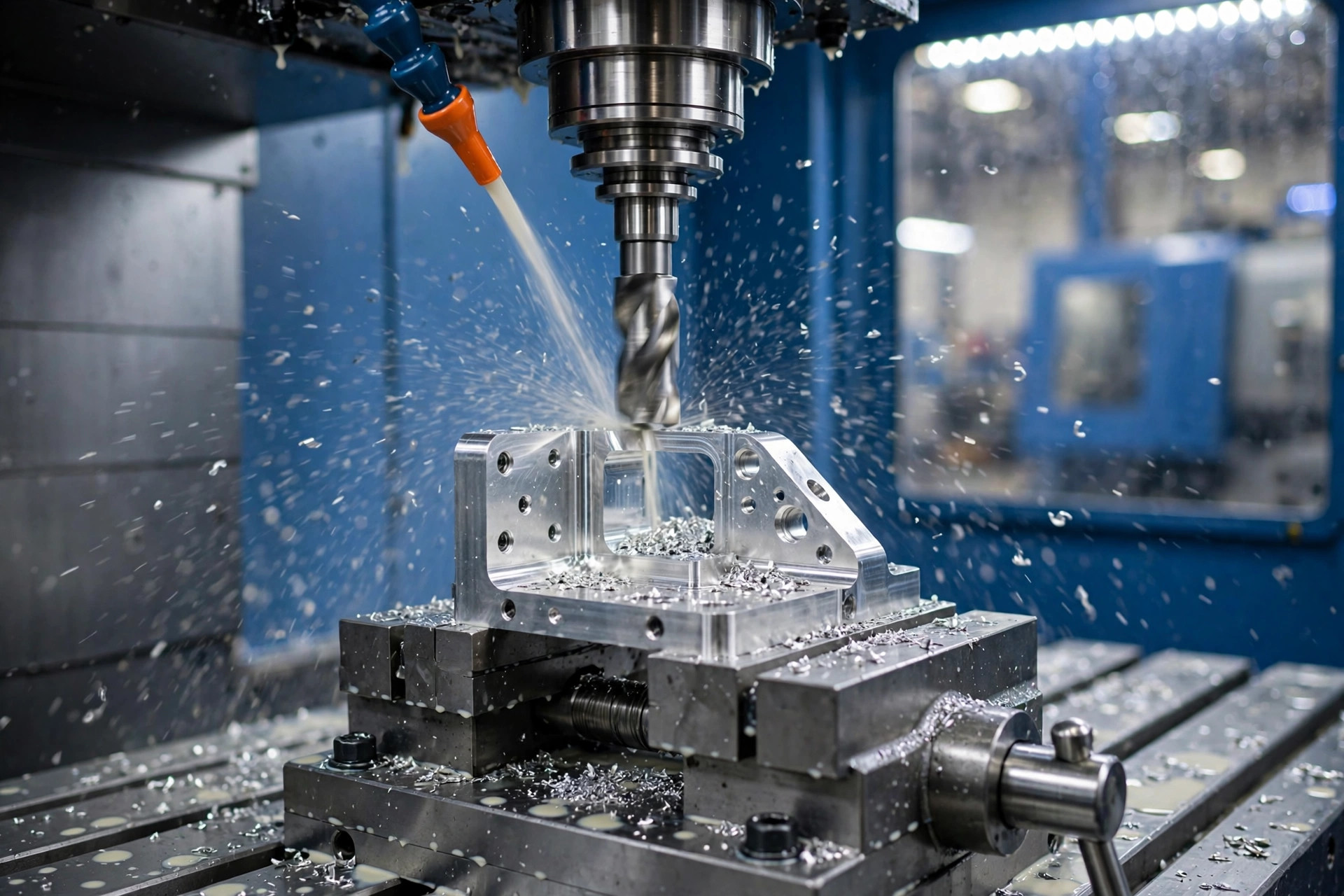
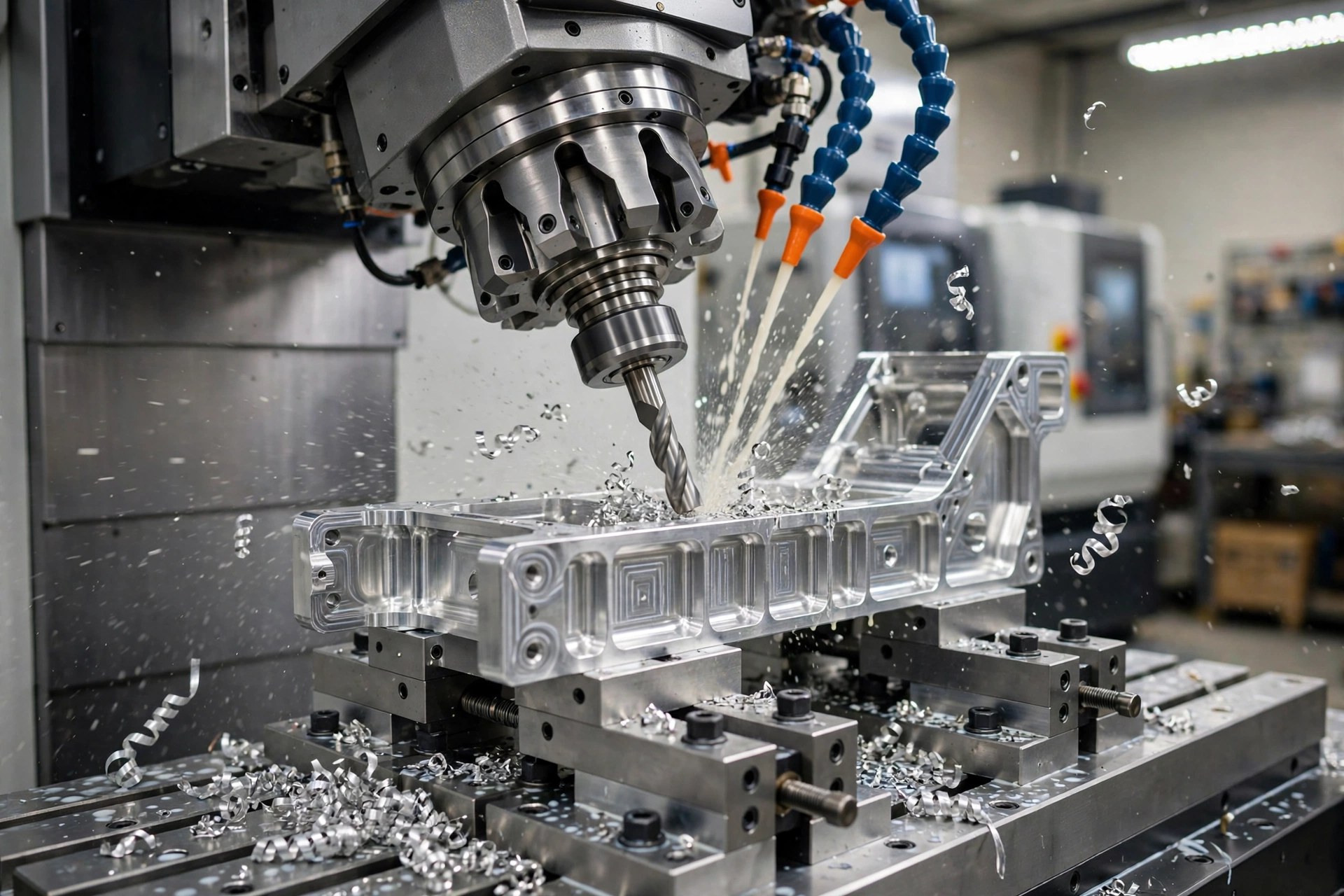
CNC machining is subtractive. A cutting tool removes material from a solid block until the part remains. Every piece takes roughly the same amount of machine time, so the tenth part costs about what the first one did.
Injection molding is formative. Molten plastic is injected under pressure into a steel or aluminum mold, cooled, and ejected. The mold is expensive and slow to build. Once it exists, each part takes seconds and costs very little.
Everything else in this comparison follows from that single structural difference.
| Factor | CNC machining | Injection molding |
| Upfront tooling cost | Minimal or none | Substantial, scales with complexity |
| Cost per part | High, roughly flat across quantity | Low, falls as volume rises |
| Typical economical volume | 1 to a few thousand | Thousands to millions |
| Lead time to first part | Days | Weeks for tooling, then days |
| Design change cost | Reprogram and recut, low cost | Mold modification, high cost |
| Achievable tolerance | ±0.025 mm typical, ±0.005 mm on controlled features | Typically ±0.05 mm to ±0.2 mm depending on size and resin |
| Materials | Metals and machinable plastics | Thermoplastics, thermosets, elastomers |
| Geometric limits | Tool must physically reach every feature | Part must fill, cool evenly, and eject |
| Part-to-part consistency | Very high | Very high once the process is stable |
| Waste | Significant chip and offcut volume | Minimal, runners often reground |
A machined part’s price is dominated by machine time. Cycle time is driven by how much material has to be removed, how hard that material is, how many finishing passes the surface and tolerance callouts demand, and how many times the part has to be re-clamped.
Programming and setup are one-time costs per revision, so unit price drops sharply from one piece to a hundred. After that, the curve flattens. Going from 500 pieces to 5,000 pieces reduces the unit price a little through better tooling economics and scheduling, but not dramatically, because the machine still has to cut every part individually.
A molded part’s price splits into two very different numbers. The mold is a precision tool in its own right, machined from hardened or pre-hardened steel, with cooling channels, ejection systems, and often side actions for undercuts. Building it takes weeks and costs a fixed amount regardless of how many parts you later run.
The per-part cost is then material, cycle time measured in seconds, and machine rate. It is typically a small fraction of a machined equivalent.
The variables that move injection mold tooling cost most are cavity count, tool steel grade and expected tool life, part size, surface texture requirements, and whether the geometry needs side actions or lifters to release undercuts. A part redesigned to avoid a side action is often meaningfully cheaper to tool.
The numbers below are illustrative, not quoted prices. Use the structure, not the values.
Assume a molded part costs $2 per piece with a $12,000 mold, and the machined equivalent costs $28 per piece with no tooling.
| Quantity | Machining total | Molding total |
| 100 | $2,800 | $12,200 |
| 250 | $7,000 | $12,500 |
| 500 | $14,000 | $13,000 |
| 1,000 | $28,000 | $14,000 |
| 5,000 | $140,000 | $22,000 |
The crossover in this example sits somewhere around 460 pieces. Change the tooling cost or the machined unit price and it moves substantially. A simple part with a cheap aluminum mold might break even in the low hundreds. A complex multi-cavity steel tool for a large part might not break even until several thousand pieces.
Run this calculation with real quotes before deciding. It takes ten minutes and settles most arguments.
Rough guidance based on how these processes are typically used:
Two things shift these ranges. If the design is still changing, machining stays competitive far longer because a revision costs a reprogram instead of a mold modification. If the part is large and thick-walled, molding cycle times rise and machining removal volume rises too, which compresses the gap.
This is where the two processes diverge in a way that cost tables do not capture.
Machined parts are cut to size. What the machine measures is what you get, and tolerances down to ±0.005 mm are achievable on controlled features. Because material is removed from stable stock, there is no shrinkage to predict.
Molded parts shrink as they cool, and the amount depends on the resin, the wall thickness, the fill pattern, and the process settings. Semi-crystalline materials such as nylon and acetal shrink more and less predictably than amorphous ones such as ABS and polycarbonate. Mold designers compensate for expected shrinkage when cutting the cavity, but the compensation is a prediction, and it is validated by measuring the first shots.
The practical consequences:
If your drawing carries several features tighter than about ±0.05 mm, expect a secondary machining operation on molded parts or plan on machining the part outright. Understanding how CNC machining achieves its tolerances helps clarify which features genuinely need it.
Machining works with metals and with plastics that are available as stock shapes. Injection molding works only with materials that flow and set in a mold, but the range within that is wide, including filled and reinforced compounds that are not sold as machinable stock.
A few points that matter in practice:
If the part must be metal, molding is off the table for most applications, and the comparison becomes machining against casting or metal injection molding instead. A review of available machinable metals and plastics is a practical starting point when the material is not yet fixed.
Molded parts come out of the tool with their final surface. Textures, gloss levels, and logos are cut into the mold, so every part is identical and no post-processing is needed. This is a genuine advantage for consumer-facing products.
Machined parts show tool marks. As-machined surface roughness is typically in the 1.6 to 3.2 µm Ra range, and achieving a molded-looking cosmetic surface requires secondary operations such as bead blasting, polishing, or anodizing. Those add cost per part, which compounds at volume.
For enclosures and visible components in quantity, this factor alone often decides the process.
Machining delivers first parts in days. Prototypes commonly ship within a week, and low-volume production runs in one to three weeks.
Injection molding requires the mold first. Tool build typically runs several weeks depending on complexity, followed by sampling, dimensional validation, and often a round of tool adjustment before approval. Once the tool is signed off, production is fast.
The gap matters most when a launch date is fixed. Many programs use rapid prototyping and low-volume machining to supply the first market units while the production tool is being built, then switch over when it is ready. This bridge approach costs more per part in the short term and protects the schedule, which is usually the more expensive thing to lose.
A part designed for one process rarely transfers cleanly to the other. This is a common and expensive surprise.
Injection molding demands:
CNC machining demands:
The practical implication: if you plan to move to molding later, design for molding now and machine those prototypes. A part designed purely for machining will need reworking before it can be tooled, and reworking after the design is validated wastes the validation.
The two are complementary more often than they are alternatives.
Machined prototypes before cutting steel. Validating fit, function, and assembly on machined parts in the intended resin costs a fraction of a tool modification. Steel is expensive to change and cheap to get right the first time.
Bridge production. Machined or 3D printed parts cover initial demand while tooling is built, so launch is not gated by the tool schedule.
Post-mold machining. Molded parts get machined afterwards for tight-tolerance bores, flat sealing faces, or threads that could not be molded reliably.
Mold manufacture itself. Injection molds are made by CNC machining and EDM. The tool that makes the molded parts is a precision machined assembly, which is why suppliers offering both CNC machining services and molding can move a program between the two without changing vendors.
Answer these in order:
If the answers conflict, weight the ones tied to schedule and technical risk above the ones tied to unit price. Unit price differences are recoverable. A tool cut to a design that later changes is not.
The honest position is that neither process is better. They solve different problems, and the mistake most teams make is committing to tooling too early, before the design is settled, because the per-part cost looked attractive on a spreadsheet.
Machine while the design is moving. Tool when it stops moving and the volume justifies it. Run the break-even calculation with real quotes rather than assumptions, and factor in secondary operations on both sides, because the machined part may need finishing and the molded part may need machining.
Tuowei Precision works across both processes, from machined prototypes and low-volume runs through to plastic injection molding for production volumes, which makes it possible to validate a design on machined parts and move the same geometry into tooling without redesigning it for a different supplier.
Q: At what quantity does injection molding become cheaper than CNC machining?
A: Commonly somewhere between 500 and 5,000 pieces, though the exact point depends on tooling cost and machined unit price. Divide the tooling cost by the per-part saving to find your own break-even before deciding.
Q: Can injection molded parts hold the same tolerances as machined parts?
A: Generally no. Molded parts shrink as they cool, so tolerances typically range from ±0.05 mm to ±0.2 mm. Features requiring tighter control are usually machined after molding rather than held in the tool.
Q: Can I machine a prototype and then mold the same design?
A: Yes, provided the part is designed for molding from the start with uniform walls, draft angles, and ribs. A design optimized only for machining usually needs significant rework before it can be tooled.
Q: Why are injection molds so expensive?
A: The mold is a precision steel assembly with cooling circuits, ejection systems, and often side actions, machined and finished to tight tolerances. Cost scales with part size, cavity count, tool steel grade, surface texture, and undercut complexity.
Q: Which process is better for plastic enclosures?
A: Molding, once volume justifies the tool, because the cosmetic surface and texture come straight from the mold. For fewer than a few hundred units, machining or a bridge process is usually faster and cheaper overall.

Written by Andy, Manufacturing Engineer at TUOWEI Precision. Andy specializes in CNC machining, precision manufacturing, and production engineering, with hands-on experience supporting projects from rapid prototyping through full-scale production. He works closely with engineering and manufacturing teams to evaluate materials, tolerances, machining processes, and design manufacturability. His articles provide practical, technically informed insights to help engineers and buyers make better manufacturing decisions, optimize production efficiency, and achieve consistent part quality. Explore TUOWEI Precision’s CNC machining and custom manufacturing solutions for your next project.
From rapid prototypes to scalable production, Tuowei Precision delivers reliable CNC machining with accuracy and consistency at every step. Start your project today.
Keep updated on the real CNC machining, industry trends, and production insights in Tuowei Precision, but is installed to enable you to make better production decisions.