
Tuowei Precision manufactures the metal parts inside network hardware: filter and cavity housings, outdoor radio enclosures, heat sinks, chassis and mounting hardware. Telecommunications OEMs and their ODM teams use us for CNC machining, die casting and sheet metal fabrication under one roof, from first prototype to repeat production.
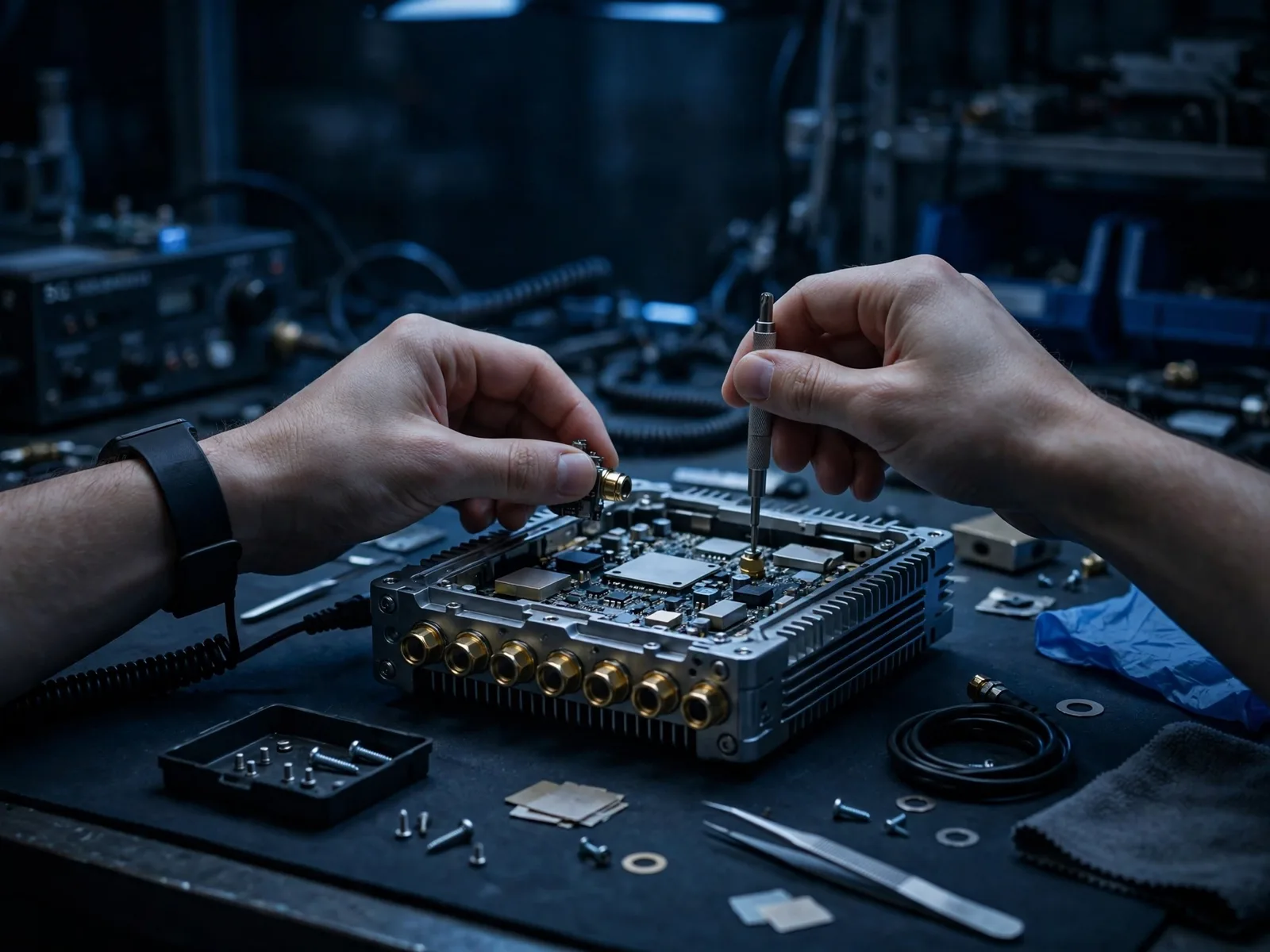
We are not a network equipment provider (NEP), and we do not build routers, a modem or base stations under our own name. We make the high-quality parts and sub-assemblies those products depend on, to your specification, for OEMs, ODM manufacturers and other equipment suppliers in the telecommunications sector, from enterprise networking hardware to carrier infrastructure and cloud computing data centers.
That focus matters. A telecommunications housing that warps, a filter cavity that is out of position or a heat sink with a rough mounting face can fail a product in the field. Our engineers review every part for the features that affect sealing, heat transfer and RF performance, and tell you early when a design will be expensive to make, so cost comes down through design optimization rather than late fixes.
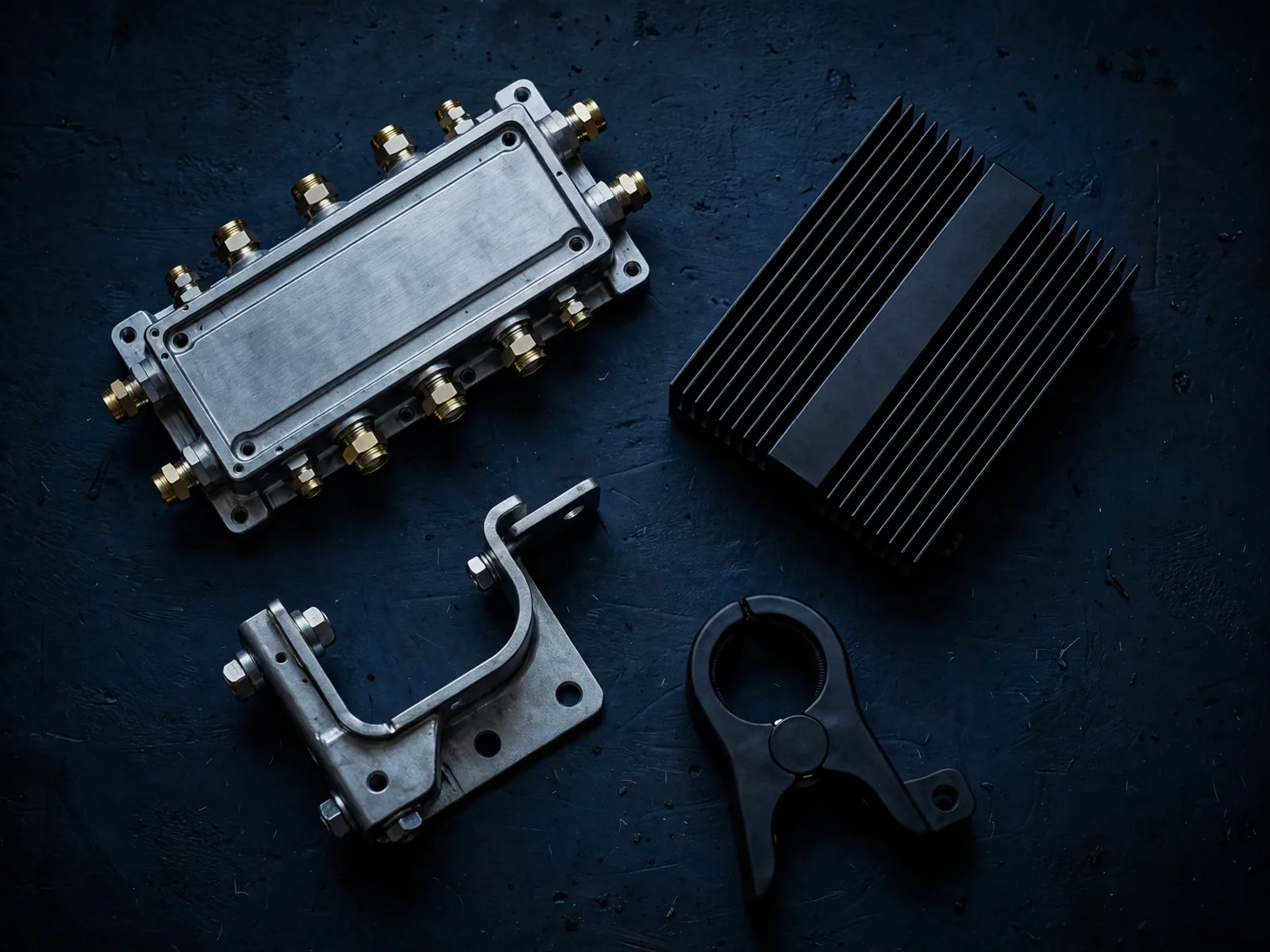
RF filters and combiners rely on cavity size and position. We machine these blocks from aluminum on multi-axis CNC milling centers, control surface finish inside each cavity and hold flatness on lid faces so they seal against RF leakage.
Remote radio units, wireless small cells and outdoor terminals need housings that survive sun, rain and temperature swings. We die cast or machine these housings with sealing grooves for gaskets, then add a weather-resistant finish.
Indoor network infrastructure equipment uses sheet metal chassis, 19-inch rack enclosures, panels and brackets. Our sheet metal fabrication covers laser cutting, bending, welding and hardware insertion.
Amplifiers and processors in high-speed network equipment run hot. We make machined and die cast heat sinks with thin fins and flat contact faces for good thermal transfer.
Microwave links use waveguide sections, flanges and mounting hardware. We machine these from aluminum and copper alloys with accurate internal dimensions.
Coaxial connector bodies and pins for radios, cable and wire interfaces are turned on Swiss-type lathes. See our custom RF connector manufacturing service and our guide to RF connector types.
| Process | Best for | Notes |
|---|---|---|
| CNC machining | Filter blocks, waveguides, prototypes, precision housings | Tightest tolerances; full material properties |
| Die casting | Outdoor radio housings, heat sinks, router cases in volume | Low cost per part at volume; critical faces machined after casting |
| Sheet metal fabrication | Chassis, rack enclosures, panels, brackets | Low tooling cost; fast design changes |
| CNC turning | Connector parts, standoffs, pins | Swiss-type for small, slender parts |
Many telecommunications and network products combine all four: a die cast housing, a machined filter, a sheet metal bracket and turned connector parts. Keeping them in-house with one supplier avoids tolerance stack-up between vendors and keeps the supply chain short. See our die casting services for alloys and process details.
Telecommunications and network enclosures must keep interference in and weather out. We machine gasket grooves to tight tolerances, keep seams continuous, and use finishes that stay conductive where needed, such as chromate conversion coating on aluminum. For shielded boxes and covers, see our RF shielding enclosure page.
Networks keep changing, from telephony and internet protocol to 5G and optical broadband, and virtualization moves more functions into software. The network hardware still needs metal, and after significant consolidation among vendors, buyers expect high-quality telecommunications parts from fewer suppliers. New radios pack more electronics into smaller housings, which raises heat density and tightens tolerances on filters. Equipment brands, from Nokia and Cisco to smaller vendors, and the telecom companies that buy from them expect carrier-grade reliability on every piece of telecommunication equipment, so parts must match from the first lot to the last.
Price is only one line in the comparison. Ask whether the manufacturer can machine, cast and fabricate in one place, whether it understands RF and thermal requirements, and whether it can hold quality across a full rollout. A shop that meets those demands can deliver on schedule even when requirements change. We help hardware teams work through design challenges and specifications, from the first sample to full deployment.
Our quality management system is certified to ISO 9001:2015, AS9100D and ISO 13485. We provide first article inspection, CMM reports on critical features, material certificates and lot traceability. Settings are locked after first article approval so repeat orders match the approved part. See our quality assurance page.