
Tuowei Precision is a precision RF manufacturing partner for OEM teams and connector brands that need custom connectors or RF components made to their drawings. We turn connector bodies, center contacts, coupling nuts and PTFE insulators on Swiss-type and CNC lathes, plate them to specification, and inspect every critical dimension, from prototype to production.
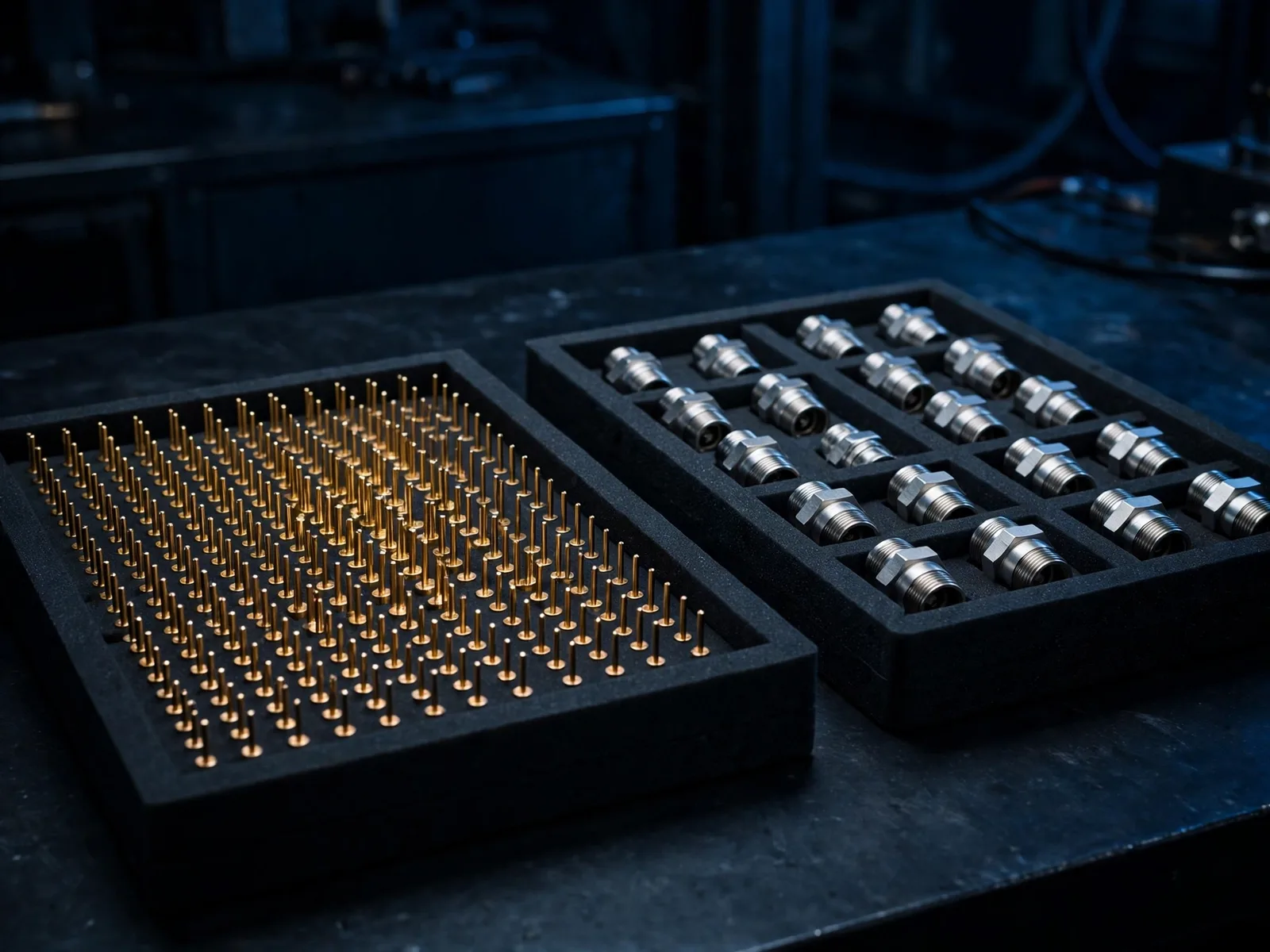
A standard catalog part covers most needs, but not all. Engineering teams come to us when a standard part will not fit the board height, the panel cut-out, the cable or the frequency band, or when an unusual interface has to mate with existing electronic systems. Modifying a connector is often cheaper than redesigning a housing or a PCB, and it keeps your supply chain to one source.
RF parts are unforgiving at high frequencies. A center pin that is a few hundredths of a millimeter off, or an insulator with the wrong diameter, changes impedance and degrades signal integrity for RF signals. That is why we treat connector drawings as high-precision CNC machining work, not general turning.
Not sure which interface you need? Our guide to RF connector types compares sizes and frequency limits of common RF coaxial connectors.
| Part | Common material | Why |
|---|---|---|
| Body and coupling nut | Brass C360 or stainless 303 / 304 | Machinability, strength, corrosion resistance |
| Center contact | Beryllium copper C172 or brass | Spring properties and conductivity |
| Insulator | PTFE | Low loss, stable dielectric constant |
| Flange and housing | Aluminum 6061 | Light weight for panel mounts |
Plating protects the part and sets contact resistance. Common choices are nickel or white bronze alloy on bodies and gold over nickel on contacts. We offer electroless nickel and electroplating, and quote other plating systems to your drawing. See our surface finishes for options.
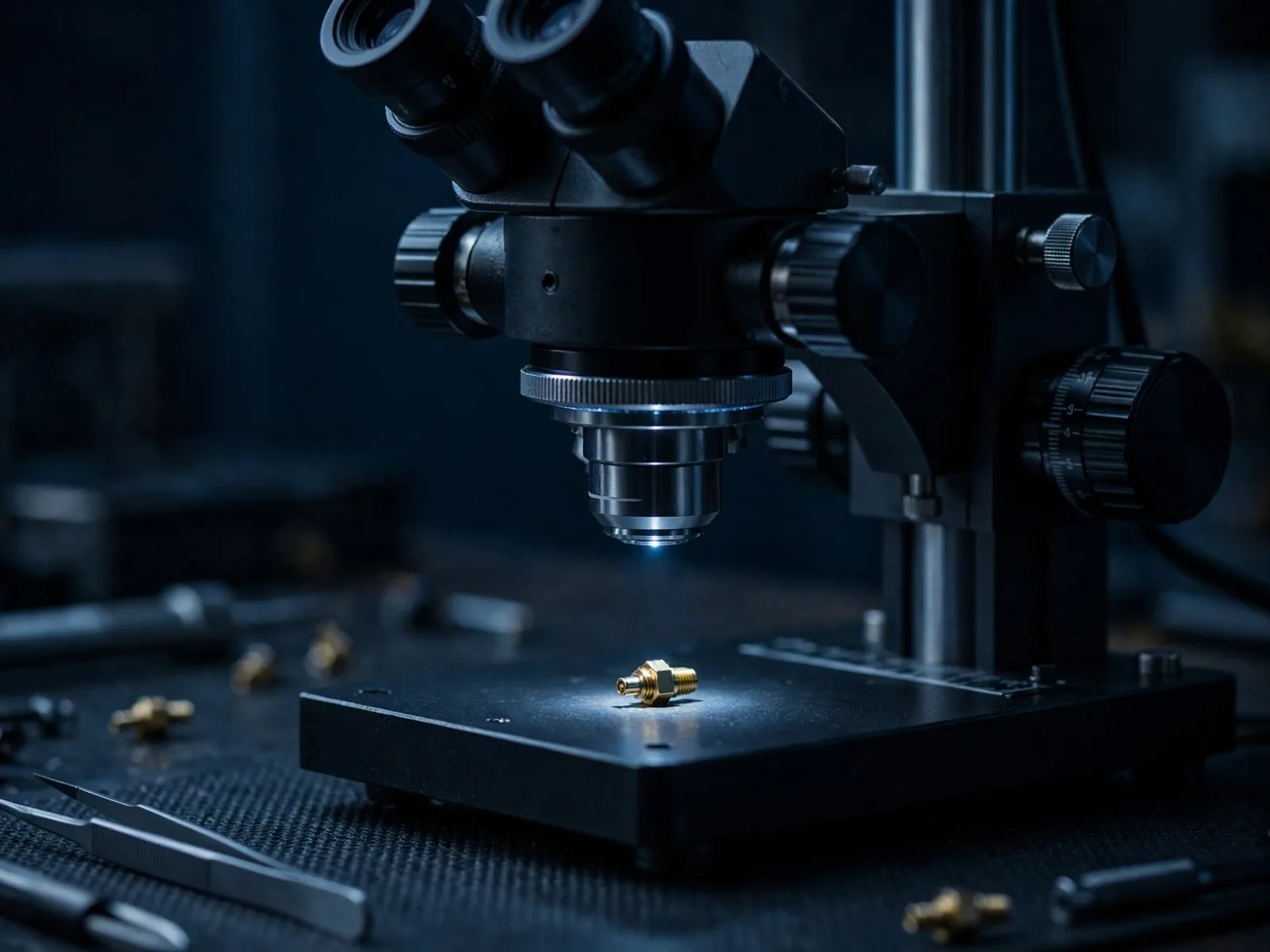
Our quality system holds ISO 9001:2015 and AS9100D certification. Every lot gets first article inspection, CMM and optical measurement of critical diameters and lengths, thread gauging and plating thickness checks when specified. We do not run RF performance tests such as VSWR in-house; most customers test assembled connectors in their own labs, and we supply dimensional data so results can be traced to the parts.
For the housings and enclosures that carry these connectors, see our telecom equipment manufacturing page, or go back to our communication CNC machining hub.