
- Home
- »
- Aluminum CNC Machining Services
Aluminum CNC Machining Service
Get custom aluminum parts machined to your drawing, from one prototype to a full production run. Ten alloys in stock, with anodizing, powder coating and polishing done in house. For the full machining process, see our complete guide to aluminum CNC machining.
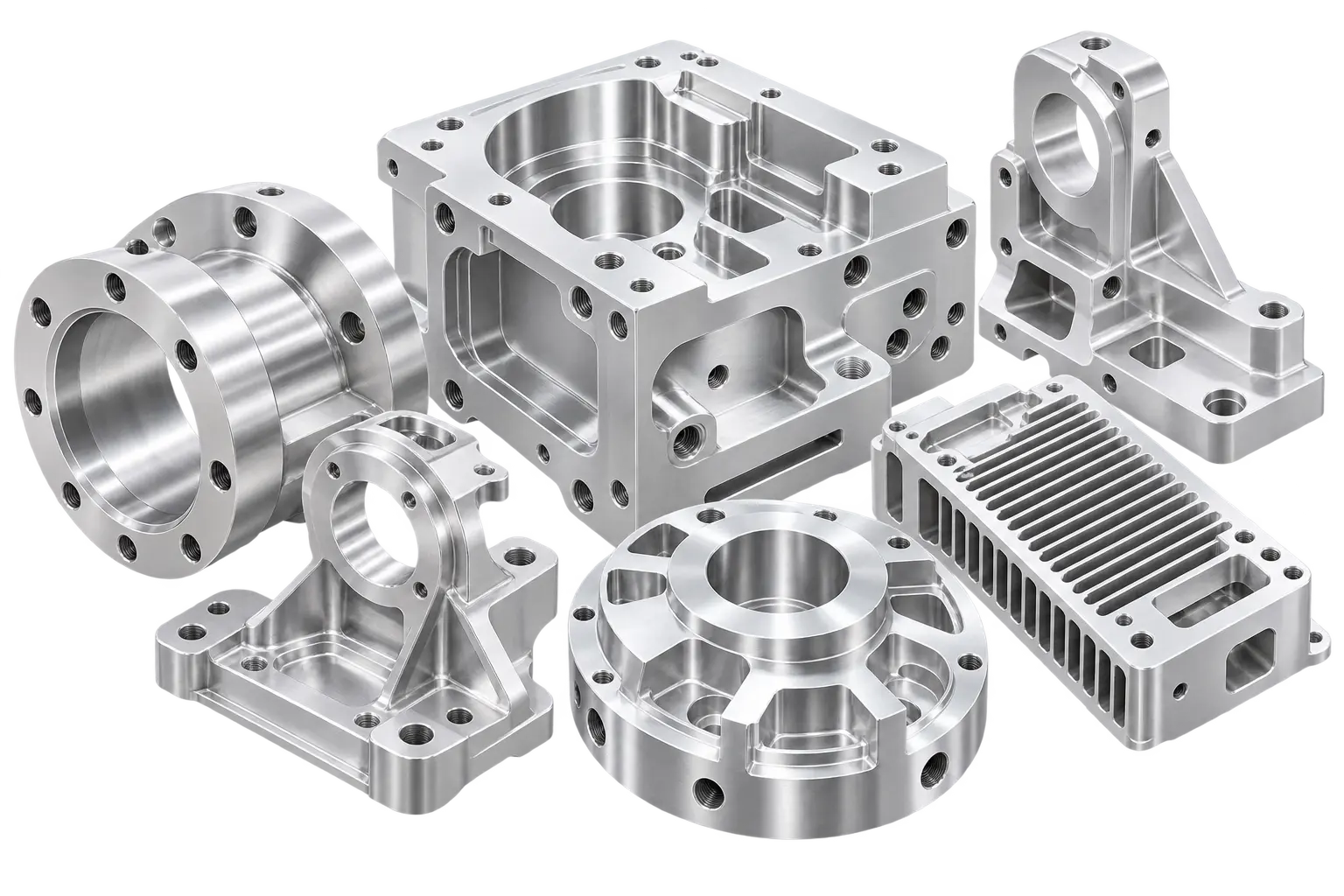
Aluminum in CNC Machining
Aluminum cuts faster than steel, which keeps machine time and cost down. It weighs about a third as much at 2.7 g/cm³, conducts heat and electricity well, and forms its own oxide layer against corrosion. It also anodizes cleanly, so you can add hardness and color without a separate coating. For most parts that need metal strength without the weight, aluminum is the first alloy worth pricing.
| Alloys available | 6061, 6061-T6, 6063, 6082, 5052, 5083, 2024, 7075, 7075-T6, ADC12 |
| Price | $ |
| Lead time | Under 10 days |
| Wall thickness | 0.75 mm |
| Tolerances | ±0.125 mm (±0.005 in) |
| Max part size | 200 x 80 x 100 cm |
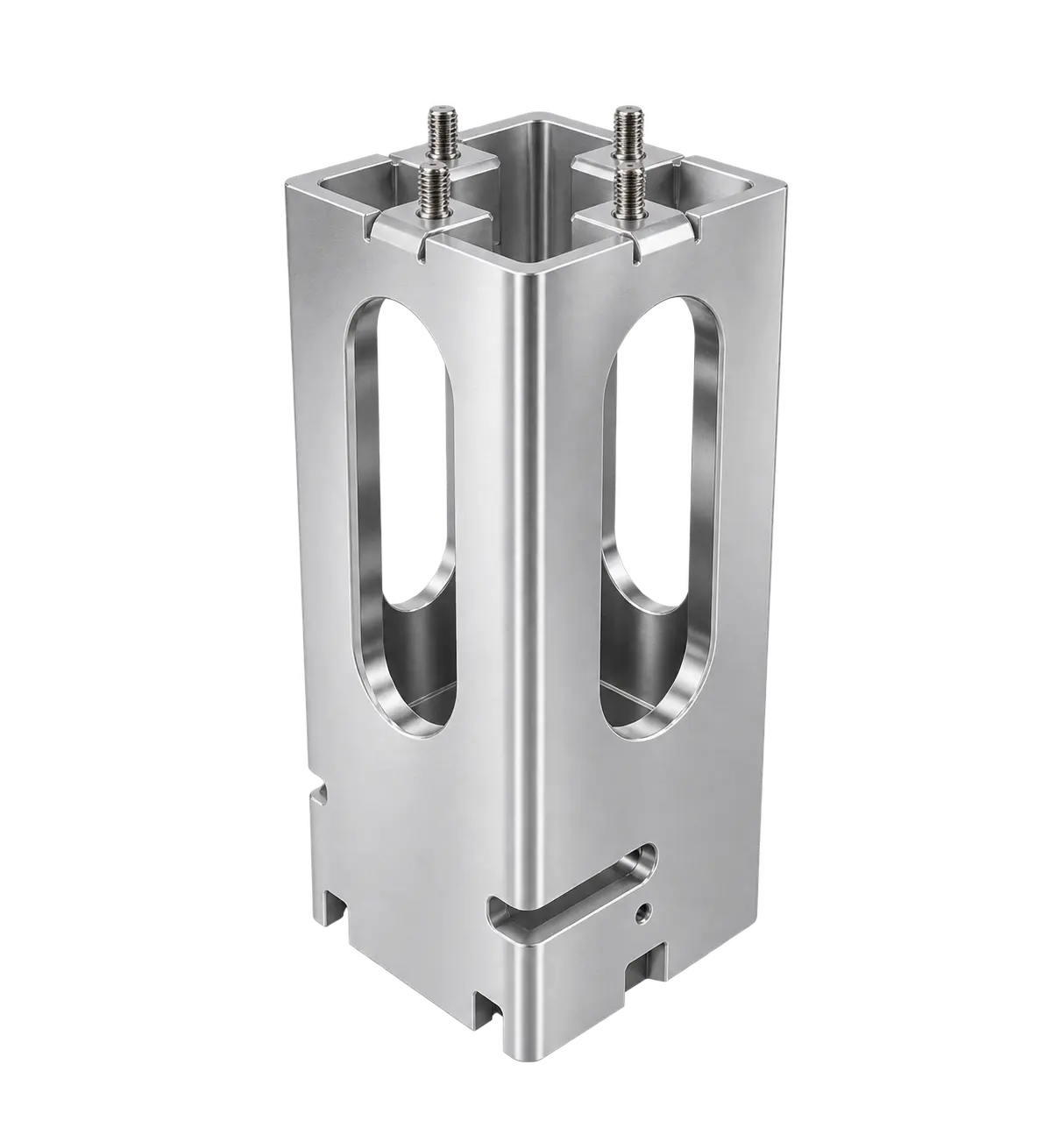
Aluminum Alloys We Machine
We stock ten aluminum alloys for CNC milling and turning, from general-purpose 6061 to high-strength 7075. Each one below is described as it machines, with its typical uses and a property table for side-by-side comparison.
6061 Aluminum CNC Machining
The default choice for most parts. 6061 aluminum CNC machining is straightforward: it cuts cleanly at high speeds, holds tight tolerances and is kind to tooling. It welds well and anodizes evenly, and it is used for brackets, housings, frames and general structural work. Our guide to machining 6061 aluminum covers cutting speeds, tolerances and finishes in detail.
2024 Aluminum CNC Machining
Machining 2024 aluminum suits high-fatigue parts: 2024-T3 and T351 are the usual tempers for aircraft structures, wing skins and truck wheels. It cuts well but corrodes more readily than 6061 or 7075, so parts usually need anodizing or an Alodine conversion coating for protection. A grade-by-grade comparison of 2024, 6061 and 7075 covers the trade-offs in more depth.
5052 Aluminum CNC Machining
The marine alloy. Excellent saltwater corrosion resistance and easy to form, though strength is lower. Common in tanks, enclosures and sheet work.
5083 Aluminum CNC Machining
Stronger than 5052 with the same corrosion resistance. Holds its properties at cryogenic temperatures, so it suits pressure vessels and cold storage equipment.
6061-T6 Aluminum CNC Machining
Heat treated 6061. Machining 6061-T6 keeps the same easy machinability with higher yield strength, for parts that carry real load. Slightly less ductile.
6063 Aluminum CNC Machining
Softer than 6061 and chosen for appearance rather than strength. Takes the best anodized finish of any alloy here, so it suits trim, window frames and visible panels.
6082 Aluminum CNC Machining
Structural alloy with better corrosion resistance than 6061. Common on European drawings for bridges, cranes and marine parts.
7075 Aluminum CNC Machining
Close to steel strength at aluminum weight. Machining 7075 aluminum needs sharp carbide tooling and rigid fixturing, and care with residual stress: the T6 temper can distort after heavy cuts, so stress-relieved T7351 is the safer choice for thin or asymmetric parts. It costs more and machines slower than 6061, but it is the standard for aerospace fittings, gears and high stress structural parts. It can be anodized, but it does not weld well.
7075-T6 Aluminum CNC Machining
Heat treated 7075, the strongest alloy on this list. Used in aircraft structures, climbing hardware and performance automotive parts where failure is not an option.
ADC12 (A380) Aluminum CNC Machining
A die casting alloy rather than a billet alloy. Good casting properties and corrosion resistance, machined for automotive parts, electronic housings and machinery components that start life as castings.
Aluminum Properties at a Glance
Generalized published values for comparison only. Figures are standard alloy datasheet values. A technical comparison of 7075 and 6061 lists the same headline values for those two alloys. Exact values vary by temper, product form and batch.
| Alloy | Tensile yield (MPa) | Ultimate tensile (MPa) | Elongation (%) | Hardness (Brinell) | Density (g/cm³) |
|---|---|---|---|---|---|
| 2024-T3 | 345 | 483 | 18 | 120 | 2.78 |
| 5052-H32 | 193 | 228 | 12 | 60 | 2.68 |
| 5083-H116 | 228 | 317 | 16 | 85 | 2.66 |
| 6061-T6 | 276 | 310 | 17 | 95 | 2.70 |
| 6063-T6 | 214 | 241 | 12 | 73 | 2.70 |
| 6082-T6 | 260 | 310 | 10 | 95 | 2.70 |
| 7075-T6 | 503 | 572 | 11 | 150 | 2.81 |
| ADC12 | 165 | 310 | 3.5 | 80 | 2.70 |
6061 vs 7075 Aluminum: Which Should You Choose?
6061 and 7075 are the two alloys engineers ask about most, and they suit different jobs. 6061 is the general-purpose choice: strong enough for most brackets, housings and frames, easy to weld, and kind to tooling. 7075 is the performance choice: nearly twice the yield strength, but harder on tools, harder to weld, and more expensive per kilogram.
| 6061-T6 | 7075-T6 | |
|---|---|---|
| Tensile yield | 276 MPa | 503 MPa |
| Ultimate tensile | 310 MPa | 572 MPa |
| Fatigue strength | 96.5 MPa | 159 MPa |
| Elongation | 17% | 11% |
| Hardness (Brinell) | 95 | 150 |
| Density | 2.70 g/cm³ | 2.81 g/cm³ |
| Weldability | Good | Poor |
| Corrosion resistance | Good | Fair — usually needs a coating |
| Relative cost | Lower | Higher |
| Machining speed | Faster | Slower |
Choose 6061 when the part carries ordinary loads, needs welding, or will be anodized for appearance. Choose 7075 when the part must survive high stress or fatigue at minimum weight — aircraft fittings, gears and performance automotive parts are the usual cases. For a prototype, 6061 is almost always the cheaper way to prove the design before committing to 7075. Independent comparisons of 6061 and 7075 reach the same conclusion.
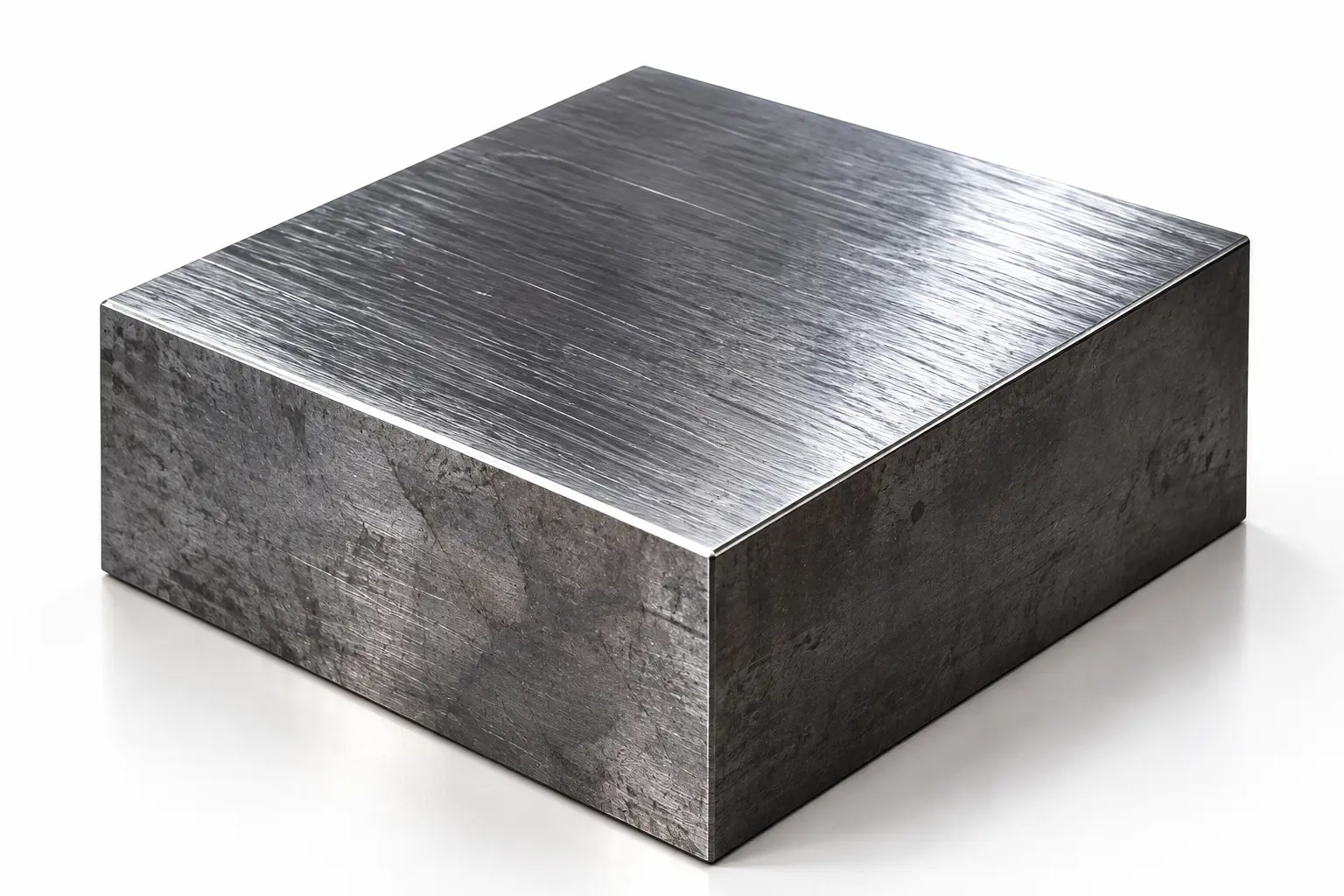
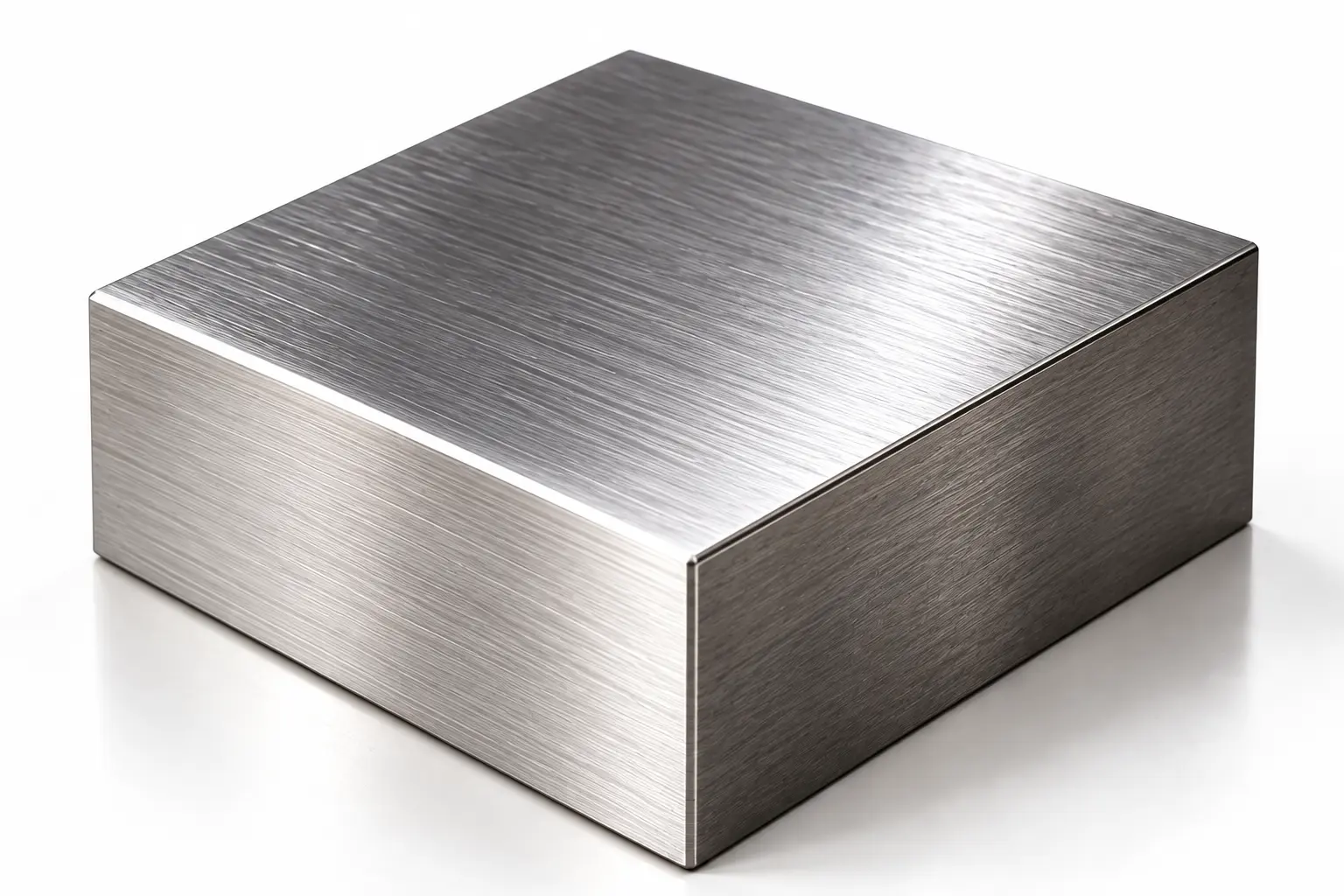
Where Aluminum Wins — and Where It Doesn't
Aluminum suits most machined parts, but it isn’t the right answer for everything. Here’s where it wins and where it falls short.
- Light. At 2.7 g/cm³ it weighs roughly a third of steel, which matters in anything that moves or flies.
- Corrosion resistant. It forms its own oxide layer, and anodizing thickens that layer further.
- Conducts heat and electricity. Close enough to copper for heat sinks, enclosures and electrical housings.
- Cuts fast. Higher feed rates mean less machine time, which shows up directly in your unit price.
- Takes a finish. Anodizing, powder coating and polishing all work well, so cosmetic parts need no extra material.
- Holds up in the cold. Unlike steel, it keeps its toughness at sub zero temperatures, which is why it’s used in cryogenic work.
- Weldable and formable. 6061, 5052 and 6063 weld and form readily.
- Soft. Pure aluminum marks easily, which is why parts are machined from alloys rather than the pure metal.
- Costs more than steel. It has to be refined from bauxite, so raw stock prices sit above mild steel.
- Scratches show. The soft surface picks up handling marks, and a polished or anodized finish makes them more visible.
- Loses strength with heat. Above roughly 200°C it softens, so it’s the wrong choice near engines, exhausts or furnaces.
- Lower strength and stiffness than steel. Not for high-load structures unless you step up to 7075.
- Some alloys weld poorly (7075) or corrode without coating (2024).
- Thin walls can deflect under cutting pressure. Needs careful fixturing.
Partner with Tuowei Precision to Shape Your Vision
From rapid prototypes to scalable production, Tuowei Precision delivers reliable CNC machining with accuracy and consistency at every step. Start your project today.
- Established engineering skills.
- Global project support
- Advanced CNC solutions
- Co-creation of products.
- Expandable capacity of production.
- All uploads are secure and confidential
Aluminum CNC Machining Tolerances
These are the tolerances we work to on machined aluminum parts. Tighter values are possible on specific features — ask when you send the drawing.
| Feature Type | Typical Tolerance |
|---|---|
| General Dimensional Tolerance | ±0.025 mm (±0.001″) |
| High Precision Tolerance | ±0.005 mm (±0.0002″) |
| Hole Diameter (Drilled) | ±0.05 mm (±0.002″) |
| Hole Diameter (Reamed/Bored) | ±0.01 mm (±0.0004″) |
| Shaft Diameter (Turned) | ±0.01 mm (±0.0004″) |
| Flatness | 0.02 mm per 100 mm |
| Parallelism | ±0.02 mm |
| Perpendicularity | ±0.02 mm |
| Surface Roughness (Ra) | 1.6–3.2 μm (63–125 μin) |
| Positional Tolerance | ±0.01 mm to ±0.02 mm |
| Thread Tolerance (Cut) | 6H / 6g (ISO) or Class 2A/2B (ANSI) |
| Minimum Feature Size | 0.5 mm (0.020″) |
| Repeatability | ±0.005 mm (±0.0002″) |
Surface Finishing for Aluminum Parts
Most aluminum parts leave the machine with a clean as-machined finish, but a surface treatment usually follows. Anodizing is the standard choice: Type II anodizing adds color and corrosion resistance, while hard-coat (Type III) anodizing adds wear resistance for parts that see friction. Our guide to what anodizing is explains how the process works. Powder coating and polishing are also done in house.
Bead blasting gives a uniform matte surface before anodizing, and chemical conversion coating (chromate) is the usual pretreatment where paint adhesion or electrical grounding matters. Tell us the finish on the drawing and we will machine the part to the right pre-finish size, since anodizing adds a thin layer to every surface.
What Drives the Cost of CNC Machined Aluminum Parts?
There is no fixed price per part, because cost follows the drawing. The alloy is the first driver: 7075 costs more per kilogram than 6061 and machines slower, so the same part in 7075 costs more. Tolerances are the second: holding ±0.005 mm costs more than ±0.05 mm, because it needs slower passes, better fixturing and more inspection.
Quantity, wall thickness and finishing matter too. Thin walls and deep pockets slow the cut and raise scrap risk, while larger batches spread setup cost across more parts. Upload your CAD file for an itemized quote and our engineers will flag the features that drive your price before you commit.
Where Aluminum Parts Are Used
Aluminum covers more industries than any other metal we machine. These are the typical applications for machined aluminum parts, by industry.
- Aerospace: brackets, housings, fittings and structural parts (6061, 7075).
- Automotive: frames, housings, performance parts and heat sinks.
- Electronics: enclosures, chassis and heat sinks.
- Medical: device housings and instrument parts.
- Marine: tanks, enclosures and fittings in 5052 and 5083.
- Industrial: machine frames, jigs, fixtures and automation parts.
How to Choose the Right Aluminum Alloy
Start from the job, not the alloy. If the part carries ordinary loads and must be welded or anodized, 6061 is the safe default. If it must survive high fatigue or minimum weight, step up to 7075. If it lives in saltwater, pick 5052 or 5083. And if it is a prototype, prove the design in 6061 first — the machining is faster and the material is cheaper.
Keep tolerances only as tight as the part needs, avoid deep thin-walled pockets, and standardize hole sizes so one tool covers several features. For aluminum prototype machining, CNC beats 3D printing when the part must be tested in the real alloy — and the same design then moves straight to a production run. See our rapid prototyping guide for when each process fits. Our engineers review every drawing before the first cut.
Aluminum CNC Machining FAQs
How much does it cost to CNC machine aluminum?
It depends on the alloy, tolerances, quantity and finishing. 7075 costs more than 6061, tight tolerances cost more than standard ones, and larger batches spread setup cost. Upload your CAD file for an itemized quote — our engineers flag the cost-driving features before you commit.
Which aluminum alloy is best for CNC machining — 6061 or 7075?
6061 is the best all-round choice: strong, weldable, easy to machine and easy to anodize. 7075 is the better choice only when the part needs maximum strength or fatigue resistance at minimum weight. For most parts, and for almost every prototype, 6061 is the right starting point.
Is 7075 harder to machine than 6061?
Yes. 7075 is harder and stronger, so it wears tools faster, needs slower feeds and costs more per part. That is the trade for nearly twice the yield strength — worth it for high-stress parts, not for general work.
Why is 7075 not weldable?
7075 welds poorly because its high zinc content makes welds prone to cracking and weakens the metal around the weld. Bolted or bonded joints are used instead of welding for 7075 parts. If a part must be welded, choose 6061, which welds well.
What is the difference between 6061 and 6061-T6 aluminum?
6061-T6 is 6061 after solution heat treatment and artificial aging. The treatment raises yield strength from about 55 MPa to 276 MPa, at the cost of slightly lower ductility. For load-bearing parts, order 6061-T6; for parts that need forming after machining, plain 6061 is the better choice.
Can aluminum parts be anodized after CNC machining?
Yes. Anodizing is the standard finish for machined aluminum: Type II adds color and corrosion resistance, hard-coat (Type III) adds wear resistance. 6063 takes the best anodized finish of the alloys we stock. Design for the added layer — anodizing grows each surface slightly.
What tolerances can you hold on machined aluminum parts?
General dimensional tolerance is ±0.025 mm, high-precision work is held to ±0.005 mm, and repeatability is ±0.005 mm. Hole, shaft, flatness and surface-finish tolerances are listed in the table above. Tighter values on specific features are possible — ask when you send the drawing.
Is aluminum easily machinable?
Yes — aluminum is one of the easiest metals to machine. It cuts at high speeds with low cutting forces, which keeps cycle times and tool wear down. Within aluminum, 6061 machines more easily than 7075.
What is the hardest metal to machine?
There is no single hardest metal, but titanium and nickel-based superalloys are among the hardest to machine. They need far slower speeds and specialized tooling, and they wear tools fast. Aluminum, by comparison, is one of the easiest metals to machine.
Can you machine 7075 aluminum?
Yes. Any rigid machining center with a high-speed spindle handles it, and 5-axis machines suit complex 7075 parts. Use sharp carbide tooling, rigid fixturing and lighter finishing passes: the T6 temper holds residual stress that can distort thin parts, so stress-relieved T7351 is the safer choice there. It anodizes well and suits aerospace fittings, gears and other high-stress parts.
Is 6061 aluminum free-machining?
No. Free-machining aluminum grades such as 2011 contain chip-breaking additives that 6061 does not, so 6061 forms longer chips. It still machines easily — published comparisons rate its machinability good to excellent — but it is not classed as a free-machining alloy.
Is 2024 aluminum harder than 6061?
Yes. 2024-T3 has an ultimate tensile strength of 483 MPa against 310 MPa for 6061-T6, and a Brinell hardness of 120 against 95. It is the fatigue specialist here, but it corrodes more readily, so it usually needs anodizing or an Alodine coating. Against 7075 it is weaker — 7075-T6 reaches 572 MPa — and both need corrosion protection. It also bends poorly in the T3 temper, so tight bends are formed before heat treatment.