Tungsten is harder, denser and far more heat resistant than titanium. Titanium is tougher, about four times lighter and much stronger for its weight. So in the tungsten vs titanium question, “stronger” depends on what you mean: tungsten wins on hardness, stiffness and melting point, while titanium wins on strength-to-weight ratio, ductility and corrosion resistance.
That one paragraph covers the key differences between tungsten and titanium. The rest of this guide is for engineers, buyers and makers who need numbers, a clear call for their application, and an honest view of what each metal is like to machine.
Quick answer: Choose tungsten (or a tungsten heavy alloy) when you need mass in a small space, extreme heat resistance or radiation shielding. Choose titanium when the part must be light, tough, corrosion resistant or biocompatible. For a ring, tungsten carbide resists scratches better, and titanium is lighter and will not shatter.
Titanium and tungsten are both “premium” metals, but they behave almost like opposites. Read the titanium vs tungsten table below row by row; for most parts, deciding titanium or tungsten takes only one or two rows. The table below compares commercially pure titanium, the Ti-6Al-4V alloy (Grade 5) that most machined titanium parts use, and pure tungsten.
| Property | Pure tungsten (W) | Titanium, Grade 2 (CP) | Titanium, Grade 5 (Ti-6Al-4V) |
|---|---|---|---|
| Density | 19.25 g/cm³ | 4.51 g/cm³ | 4.43 g/cm³ |
| Melting point | 3,422 °C (6,192 °F) | 1,668 °C (3,034 °F) | approx. 1,604 to 1,660 °C |
| Minimum tensile strength (bar) | varies widely with form and processing | 345 MPa (50 ksi) | 895 MPa (130 ksi) |
| Elastic modulus | approx. 411 GPa | approx. 105 GPa | approx. 114 GPa |
| Mohs hardness | 7.5 | 6 | about 6 |
| Thermal conductivity | approx. 173 W/m·K | approx. 22 W/m·K | approx. 6.7 W/m·K |
| Thermal expansion | approx. 4.5 µm/m·K | approx. 8.6 µm/m·K | approx. 8.6 µm/m·K |
| Room-temperature behavior | brittle | ductile | ductile |
| Corrosion resistance | good in many acids, oxidizes above about 500 °C | excellent (passive oxide film) | excellent |
Titanium tensile minimums are from ASTM B348 bar grades. Tungsten values are typical handbook figures; check the supplier certificate for your exact form, because sintered, swaged and wire tungsten differ a lot.
Yes and no. Engineers use “strength” for at least four different properties, and the two metals trade wins across them.
Hardness (resistance to scratching and denting). Tungsten wins, and it is clearly harder than titanium. On the Mohs hardness scale pure tungsten sits around 7.5, and tungsten carbide (the material in most “tungsten” rings and cutting tools) rates about 9 on the Mohs scale. Titanium is about 6, which is why a titanium surface shows wear sooner.
Stiffness (how much it flexes under load). Tungsten wins by a wide margin. Its elastic modulus is roughly 3.5 to 4 times higher than titanium’s, so a tungsten bar deflects far less under the same load.
Tensile strength. It depends on the form. Worked tungsten wire and rod can reach very high tensile strength, but sintered tungsten is much lower and almost no ductility comes with it. Ti-6Al-4V bar has a specified minimum of 895 MPa and stretches before it fails, which is what most designers actually need.
Strength-to-weight ratio. Titanium wins clearly. Divide Grade 5’s 895 MPa by its density of 4.43 g/cm³ and you get about 202 kN·m/kg. Even a generous 1,000 MPa for tungsten divided by 19.25 g/cm³ gives only about 52 kN·m/kg. Titanium carries roughly four times more load per kilogram.
Toughness (resistance to cracking). Titanium wins. Tungsten is more brittle: it has a ductile-to-brittle transition well above room temperature, so at normal temperatures it tends to chip or crack instead of bending. Titanium bends, dents and keeps going.
Our position: if a part will be hit, bent, vibrated or loaded in tension, titanium is the safer choice. If it will be worn, heated or used for its mass, tungsten is the better fit.
Tungsten’s high density is its defining trait: it is about 4.3 times denser than titanium and about 1.7 times denser than lead. A tungsten part the size of a matchbox weighs as much as a titanium part the size of a paperback.
That density is the main reason people buy tungsten. It packs maximum weight into minimum space:
Titanium’s lower density points the other way, and in practice titanium is lighter than steel by roughly 40%. Aerospace brackets, bicycle frames, prosthetics and high-end fasteners use it to remove mass without giving up strength.
A practical check before you choose: work out the part volume and multiply by density. A 50 cm³ part weighs about 963 g in tungsten and about 222 g in Grade 5 titanium. That difference alone often settles the decision.
Tungsten has the highest melting point of any metal, at 3,422 °C. That is why it is used for:
There is a catch most comparison articles skip. Tungsten oxidizes in air above roughly 500 °C, so high-temperature tungsten parts run in vacuum, inert gas or hydrogen, or they get a protective coating.
Titanium melts at 1,668 °C, still high, but its useful service limit is much lower. Ti-6Al-4V is generally used up to about 400 °C. Above that, it loses strength and absorbs oxygen, which embrittles the surface. For hot sections of jet engines, engineers move to nickel superalloys rather than titanium.
Titanium is the more corrosion-resistant metal, and its resistance to corrosion is the reason it dominates marine and medical work. Titanium forms a thin, stable oxide film the moment it meets air. That film makes it extremely resistant to seawater, chlorides and many industrial chemicals, and it is why titanium is a standard material for:
Biocompatibility is the other half of the story. Titanium is hypoallergenic for almost everyone, which is why it is used inside the body and is considered safe to wear on the skin all day.
Tungsten resists many acids at room temperature, but it is not a biocompatible implant material. At high temperature in air it oxidizes to tungsten trioxide, a yellow oxide that flakes away instead of protecting the metal tungsten underneath. In wet environments, tungsten heavy alloys can also corrode at the nickel-iron binder, so plating or sealing is common.
If the part touches skin, bone, saltwater or process chemicals, titanium is the default. Tungsten needs a specific reason to be there.
This is where many buyers get confused, and where most comparison pages stop short. A part described as “made of tungsten” on a drawing or product page can mean three very different materials. The same is true on the other side: “titanium” can mean commercially pure metal or a titanium alloy such as Ti-6Al-4V, and the form of titanium changes strength by a factor of two or more.
| Material | What it is | Typical density | Machinable with normal tools? | Common uses |
|---|---|---|---|---|
| Pure tungsten | 99.9%+ W, sintered or worked | 19.25 g/cm³ | Difficult; brittle, chips easily | Electrodes, filaments, heat shields |
| Tungsten heavy alloy (WHA) | 90 to 97% W with Ni-Fe or Ni-Cu binder | about 17 to 18.5 g/cm³ | Yes, similar to hard steel | Counterweights, shielding, tool holders |
| Tungsten carbide (WC) | Tungsten-carbon compound, usually cobalt-bonded | about 14 to 15.6 g/cm³ | No; ground with diamond or cut by EDM | Cutting tools, wear parts, rings |
Tungsten heavy alloys are covered by ASTM B777, which defines classes by tungsten content and density. If you need tungsten’s weight in a machined part, a heavy alloy is almost always the right request. It keeps most of the density and becomes practical to turn, mill, drill and tap.
Tungsten carbide vs titanium is a different comparison. Carbide is much harder and far more wear resistant than titanium, but it is brittle and cannot be bent, so it belongs in wear surfaces and tool inserts rather than structural parts.
Both metals cost more to machine than steel or aluminum, but for different reasons.
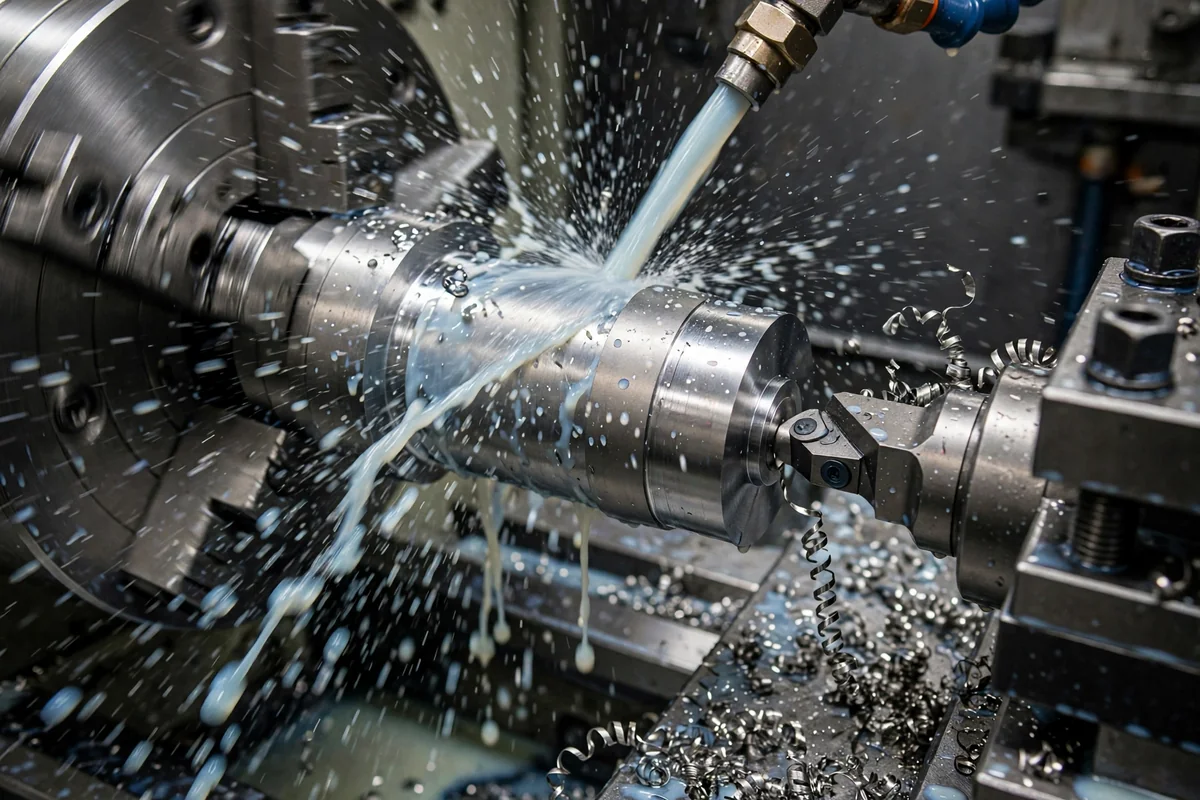
Titanium has very low thermal conductivity, so heat stays at the tool tip instead of leaving with the chip. It also has a low elastic modulus, so thin walls spring away from the tool. Shops handle it with sharp carbide tools, lower cutting speeds, steady feeds, high-pressure coolant and rigid workholding. Stopping a tool in the cut causes work hardening and galling. Fine titanium chips and swarf can also burn, so chip control and housekeeping matter. Our article on why titanium is difficult to machine goes deeper on tooling and parameters.
Pure tungsten is brittle at room temperature. Sharp corners and thin edges chip during cutting, so designs should add chamfers and generous radii. Shops use carbide tooling at low speeds and light depths of cut, and they often preheat for heavier operations. Tight features in pure tungsten are frequently made by grinding or wire EDM instead of milling.
Tungsten heavy alloy machines much like a hard alloy steel and accepts threads, which is why it is the usual choice for machined weights.
Tungsten carbide is finished by diamond grinding, EDM or lapping. Quoting a milled carbide part is a common mistake.
What clients most often get wrong: specifying “tungsten” for a machined counterweight when a heavy alloy would do. Pure tungsten can raise cost and scrap rates considerably for the same function. If you send us your drawing through our CNC machining services page, we will flag the material choice before quoting.
Joining is often the deciding factor that nobody checks until the first prototype.
Titanium welds well, but only with excellent shielding. Gas tungsten arc welding (TIG) is the standard method. The weld pool, the hot bead and the back side of the joint all need argon coverage until the metal cools below roughly 400 °C, which is why welders use trailing shields and back purging. Weld color is the quick quality check: bright silver or light straw is acceptable on most specs, while blue, gray or white oxide signals contamination and a brittle joint. Grade 2 and Grade 5 can both be welded, and Grade 5 is often stress relieved afterward.
Pure tungsten is close to unweldable in practice. Fusion welding leaves a coarse, brittle grain structure that cracks easily. Designers join tungsten mechanically (threaded inserts, press fits, shrink fits) or by brazing with high-temperature filler alloys in a controlled atmosphere. Electron beam welding is used in specialist cases.
Tungsten heavy alloys are usually bolted, pressed or brazed into a steel or titanium housing rather than welded.
So if your design depends on a welded assembly, titanium keeps that option open. A tungsten part should be designed from the start for mechanical fastening or brazing.
Parts get mixed up in stores, scrap bins and incoming inspection more often than you would think. Four quick checks separate them:
For certified parts, the only check that counts is a positive material identification (PMI) using an XRF analyzer, backed by the mill certificate.
| Industry | Typical tungsten use | Typical titanium use |
|---|---|---|
| Aerospace | Control surface balance weights, gyroscope rotors | Airframe brackets, fasteners, engine fan and compressor parts |
| Medical | X-ray collimators, radiation shielding, syringe shields | Bone screws, plates, dental implants, surgical instruments |
| Automotive and motorsport | Crankshaft and chassis balance weights | Valves, connecting rods, exhaust systems, fasteners |
| Energy | Furnace parts, sputtering targets, nuclear shielding | Heat exchangers, offshore and geothermal piping |
| Manufacturing | Carbide cutting tools, TIG electrodes, wear parts | Lightweight robot arm parts, fixtures for chemical lines |
| Consumer | Ring blanks, darts, fishing weights | Watch cases, eyeglass frames, bicycle parts |
The pattern is consistent. Tungsten shows up where mass, heat or wear is the problem. Titanium shows up where weight, corrosion or the human body is the problem.
Additive manufacturing has changed the comparison for low-volume and complex parts.
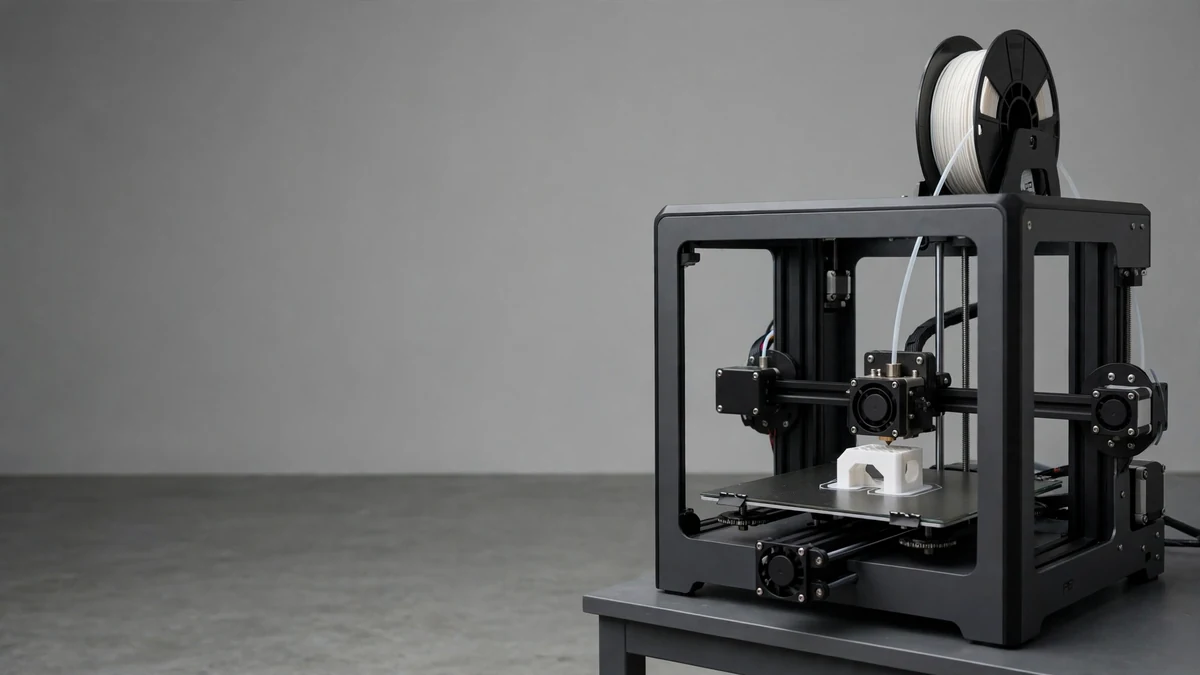
Titanium is one of the most mature metal 3D printing materials. Ti-6Al-4V is printed every day by laser powder bed fusion (often called DMLS or SLM) and by electron beam melting. Printed titanium is used for lattice-structured medical implants, aerospace brackets and lightweight robot parts. Printed parts are usually stress relieved or hot isostatically pressed, then CNC machined on critical faces and holes to reach final tolerances.
Tungsten is far harder to print. Its very high melting point and brittleness cause cracking in laser powder bed fusion, so printed pure tungsten is still a specialist process used mainly for radiation collimators and some medical imaging parts. Binder jetting followed by sintering and infiltration is another route for complex tungsten shapes.
In practice: if you want a printed metal part with good mechanical properties and a short lead time, titanium is the realistic option. If you need tungsten, plan on a machined heavy alloy or a specialist printing supplier, and expect longer lead times.
From quote requests we review, these errors come up repeatedly:
Neither metal is cheap, and both prices move with the market, so treat any fixed per-pound figure online with caution.
Tungsten is also one of the “3TG” conflict minerals (tin, tantalum, tungsten and gold) covered by U.S. supply-chain disclosure rules under Section 1502 of the Dodd-Frank Act. If you sell into regulated markets, ask your supplier for smelter and origin documentation. The USGS tungsten statistics page and USGS titanium statistics page publish current supply and price data.
A large share of searches for these two metals are about a titanium and tungsten wedding band choice, so here is the short, honest version. Most tungsten carbide rings are not pure metal: they are tungsten carbide bonded with cobalt or nickel.
| Factor | Tungsten carbide ring | Titanium ring |
|---|---|---|
| Scratch resistance | Excellent; keeps its polish for years | Good, but shows fine scratches |
| Weight on the hand | Heavy, noticeable | Very light |
| Impact behavior | Can crack or shatter if struck hard on stone or tile | Dents or bends rather than breaking |
| Resizing | Not possible | Limited, depends on design |
| Emergency removal | Cracked off with locking pliers | Cut off with a ring cutter |
| Skin sensitivity | Depends on binder; choose nickel-free (cobalt or nickel-free grades) | Very low reactivity |
Durability and everyday wear. A tungsten carbide ring is extremely scratch-resistant, so it keeps its polish through everyday wear. The trade-off is that it is hard but brittle and prone to cracking if it hits stone or tile. A titanium wedding ring scratches more easily, but it will not shatter, and a brushed finish hides fine marks well.
Weight and comfort. The lightweight nature of titanium is the main reason people choose it. Tungsten feels heavy, closer to a platinum ring.
Skin sensitivity. Titanium is hypoallergenic and a safe choice for sensitive skin. Some cheaper tungsten carbide bands use small amounts of nickel as the binder, which can cause an allergic reaction in people with a nickel allergy, so look for cobalt-free and nickel-free grades if that matters. Both metals have good hypoallergenic properties when the right grade is chosen.
Size changes and removal. Neither metal is easy to resize. Plan your ring size carefully. In an emergency, medical staff can remove a titanium ring with a heavy-duty cutter, while a tungsten ring is cracked off with locking pliers.
Colors. Both come in natural gray, polished silver tones, gunmetal and black. Black titanium is usually an oxide or coating, while black tungsten rings are usually coated carbide.
Our view on ring choice: for people who work with their hands, titanium is the safer wedding ring because it bends rather than breaks. If you want a band that looks new for years and you like some weight, tungsten carbide is the better pick. Suitability really comes down to lifestyle.
Use this as a starting point, then confirm with your engineer and supplier.
Choose tungsten or a tungsten heavy alloy when:
Choose titanium when:
A common hybrid: titanium for the structure and a tungsten heavy alloy insert where mass is needed. Racing and aerospace teams use this approach to place weight exactly where it helps.
In short, choose titanium for anything that flexes, and tungsten for anything that must stay put. For titanium grade selection, see our comparison of Grade 2 vs Grade 5 titanium for CNC machining, or explore our titanium CNC machining service.
Tungsten is harder and stiffer, and it resists heat far better. Titanium has a much higher strength-to-weight ratio and is tougher, so it bends instead of cracking. For structural parts that carry loads or take impacts, titanium is usually the stronger practical choice. For wear and heat, tungsten wins.
Yes, much heavier. Tungsten’s density is about 19.25 g/cm³ and titanium’s is about 4.5 g/cm³, so tungsten weighs roughly 4.3 times more for the same volume. A tungsten ring, for example, feels noticeably heavy, while a titanium ring of the same size feels very light.
Both can. Titanium is machined with sharp carbide tools, low speeds and strong coolant because heat builds at the tool tip. Pure tungsten is brittle, so it needs light cuts, chamfered edges and often grinding or EDM. Tungsten heavy alloys machine much more easily, similar to hard steel.
Neither rusts, because rust is iron oxide. Titanium is protected by a stable oxide film and handles seawater and chemicals very well. Tungsten resists most acids at room temperature but oxidizes above about 500 °C in air. Tungsten heavy alloys can corrode at their binder in wet conditions.
No. Tungsten carbide is a compound of tungsten and carbon, usually bonded with cobalt or nickel. It is harder and more brittle than pure tungsten and slightly less dense. Most tungsten rings, drill bits and end mills are tungsten carbide, not pure tungsten metal.
The tungsten vs titanium decision comes down to one question: do you need mass and heat resistance, or light weight and toughness? Tungsten and its heavy alloys put the most weight into the smallest space and survive temperatures no other metal can. Titanium gives you high strength at low weight, excellent corrosion resistance and a part that will not shatter.
Not sure which fits your design? Send your drawing to our team at Tuowei Precision or get an instant quote, and we will review the material, tolerances and machining route before you commit.