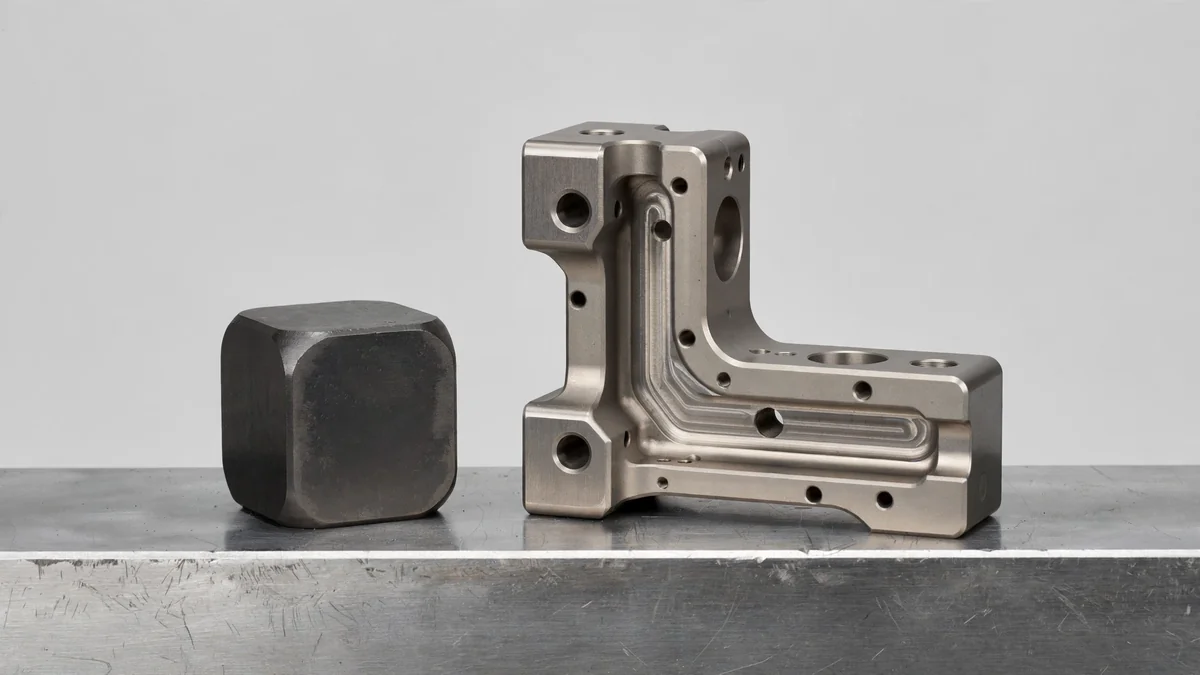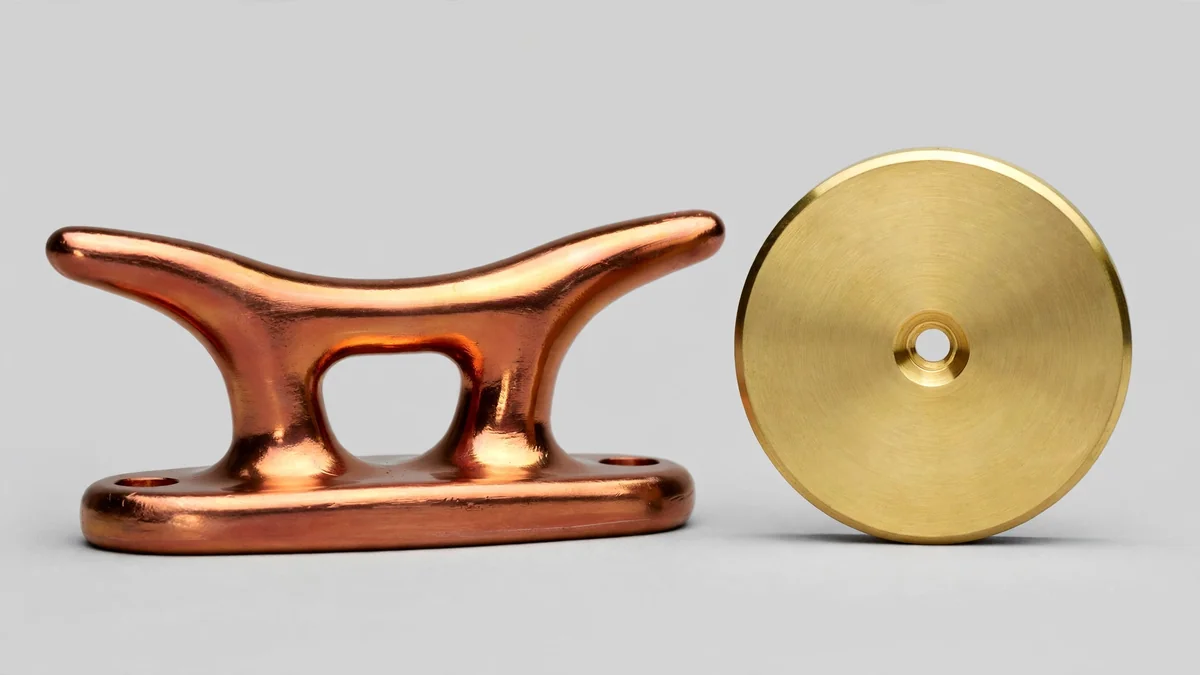
The silicon bronze vs manganese bronze choice is corrosion versus strength. Silicon bronze, copper with about 3 to 4% silicon and almost no zinc, resists seawater, welds and casts well. Manganese bronze is really a high-strength brass with 20 to 40% zinc: much stronger, but it can dezincify in seawater. Pick silicon for corrosion and welding, manganese for heavy loads.
Both alloys share a name, a golden color and a reputation for marine applications, so they get swapped more often than they should. Bronze is a broad group of alloys made primarily of copper, and the specific alloy you choose matters more than the name. This guide compares the two with real numbers and explains where each one fails.
This is a copper-based alloy family that uses silicon, typically 2.8 to 5%, as the main alloying element, with small amounts of manganese, iron or zinc. Its alloy composition gives it excellent corrosion resistance and easy welding. Common grades include:
You may also see trade names such as Everdur and Herculoy. The alloy has a warm reddish-gold color, ages to a brown and green patina, and is the favorite casting metal of art foundries because it flows well and fills fine detail.
Manganese bronze is a cast copper-zinc alloy that, despite the name, contains a lot of zinc. Metallurgically each manganese bronze alloy is a high-tensile brass, and the Copper Development Association describes it that way. Typical alloys include:
Manganese bronze is yellow to brassy gold. The manganese itself is usually only 0.1 to 5%. Aluminum and iron do much of the strengthening work, which is why some suppliers sell it as “high-tensile brass.”
The table below compares the mechanical properties of the most common cast grade of each family, plus C86300 for heavy-duty use. Values are typical figures for sand castings; your supplier’s certificate takes priority.
| Property | Silicon bronze C87300 | Manganese bronze C86500 | High-strength Mn bronze C86300 |
|---|---|---|---|
| Copper | about 94% min | 55 to 60% | 60 to 66% |
| Zinc | 0.25% max | 36 to 42% | 22 to 28% |
| Silicon | 3.5 to 5% | none | none |
| Other main elements | Mn 0.8 to 1.5% | Fe, Al, Mn about 0.5 to 2% each | Al 5 to 7.5%, Fe 2 to 4%, Mn 2.5 to 5% |
| Tensile strength | about 350 MPa | about 490 MPa | about 820 MPa |
| Yield strength | about 140 MPa | about 190 MPa | about 460 MPa |
| Elongation | about 20% | about 30% | about 18% |
| Brinell hardness | about 70 to 85 | about 100 to 130 | about 225 |
| Density | about 8.4 to 8.6 g/cm³ | about 8.3 g/cm³ | about 7.8 g/cm³ |
| Dezincification risk in seawater | very low | yes | yes |
Two numbers explain most of the decision. High-strength manganese bronze is more than twice as strong as silicon bronze, and silicon bronze has almost no zinc to lose. Everything else follows from that trade.
If the part carries a heavy load, manganese bronze is the stronger choice. C86300 has a tensile strength around 820 MPa, well above mild carbon steel and in the range of many alloy steels, while keeping copper’s natural lubricity and good wear behavior against steel shafts. That mix of strength and wear resistance, plus good impact resistance, defines the applications of manganese bronze.
That combination is why manganese bronze shows up in:
The silicon alloy is moderately strong, enough for rigging hardware, fasteners and pump parts, but it is not a heavy bearing alloy. Where it shines is strength and corrosion resistance together, in harsh environments where manganese bronze would slowly lose zinc. One practical advantage it does have: it is ductile and tends to stretch or bend visibly before it breaks, which gives a warning on hardware you can inspect.
This is the most important difference and the one most bronze articles never mention.
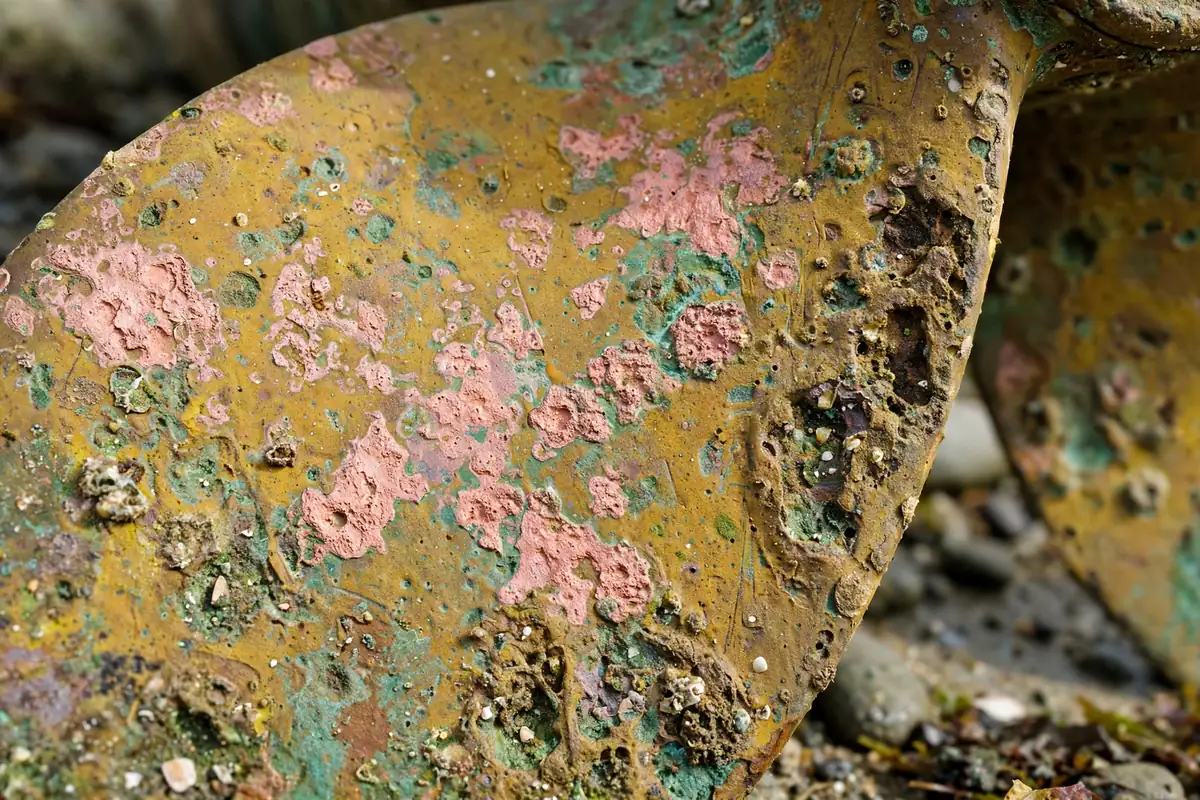
Dezincification is a form of corrosion where seawater leaches zinc out of a brass, leaving a weak, porous copper sponge that still looks like a solid part. You often cannot see it until the part cracks. Because manganese bronze contains 20 to 40% zinc, it is vulnerable. The Copper Development Association notes that high-tensile brass (manganese bronze) needs cathodic protection to avoid dezincification in seawater.
The silicon alloy contains almost no zinc, so dezincification is not a practical concern. It offers good corrosion resistance in general and forms a protective patina over time, and its resistance to corrosion is why it is so widely used in marine applications. It is the traditional choice for marine hardware such as:
A practical warning: underwater manganese bronze parts, especially propellers and through-hulls, need zinc or aluminum sacrificial anodes and regular inspection. A pink or coppery color on the surface is a classic early sign of dezincification. The Copper Development Association’s seawater corrosion guidance covers how different copper alloys perform.
For above-waterline and splash-zone hardware such as chainplates, cleats and fasteners, silicon bronze is the better choice. It resists corrosion without relying on anodes, does not dezincify and shows visible distortion before failure.
Manganese bronze can make sense for a highly loaded part where strength matters most, such as some propellers and rudder components, but only with proper cathodic protection and inspection. If the part sits in seawater for years and nobody will check it, choose a zinc-free alloy (silicon bronze, aluminum bronze or nickel aluminum bronze) instead.
Weldability is the other big gap between the two alloys.
The silicon alloy welds very well. It is one of the easiest copper alloys to join by TIG or MIG, and silicon bronze filler (AWS ERCuSi-A) is one of the most common welding wires and TIG rods in fabrication shops. That filler is widely used for:
Manganese bronze is hard to weld. When it melts, the zinc boils off as fumes, which leaves porosity in the weld and creates a health hazard. Repairs are usually done by brazing instead. Low-fuming “manganese bronze” brazing rods (a bronze-type filler, not the same as the cast alloy) are a classic choice for brazing cast iron and steel with an oxyacetylene torch.
Fume safety applies to both. Zinc oxide fumes can cause metal fume fever, and copper and manganese fumes are also regulated, so use local exhaust ventilation and the correct respirator. For process background, see our MIG vs TIG welding guide.
Neither alloy is as easy to machine as free-cutting brass, which is the industry baseline for machinability of copper alloys at a rating of 100. This is one of the practical differences between bronze and brass on the shop floor.
For bronze casting, the silicon alloy is the easier metal to work with. It flows well, captures fine detail and is the standard for lost-wax art casting. Manganese bronze castings need good gating because of dross from the aluminum content, and shrinkage defects are common if risers are undersized. Our guide to casting defects and how to fix them covers porosity, shrinkage and cold shuts in more detail.
Manganese bronze usually costs less per kilogram than silicon bronze because zinc is cheaper than copper and it replaces a large share of the copper. Silicon bronze carries a premium for its high copper content.
Availability depends on form. Silicon bronze is easy to find as rod, bar, sheet, fasteners and welding wire. Manganese bronze is mostly supplied as continuous-cast bar, tube and custom sand castings. Prices for both track the copper market, so ask for a current quote rather than relying on old price lists.
If you have an unmarked part, these checks help:
Bronze is used across dozens of industries, and each type of bronze is tuned for one job. Bronze is also often confused with brass. For context, here is how both alloys fit among the main alloy families:
| Alloy family | Main addition | Best known for |
|---|---|---|
| Silicon bronze | Silicon | Corrosion resistance, welding, art casting |
| Manganese bronze | Zinc with Al, Fe, Mn | High strength, heavy bearings, gears |
| Phosphor bronze (tin bronze) | Tin plus phosphorus | Springs, electrical contacts, bushing stock |
| Aluminum bronze | Aluminum, often with nickel and iron | Seawater strength, propellers, pump parts |
| Leaded tin bronze (bearing bronze) | Tin and lead | Self-lubricating bearings and bushings |
A common follow-up question is aluminum bronze vs silicon bronze. If you need both high strength and saltwater resistance, nickel aluminum bronze offers superior corrosion resistance at high strength and is usually the better answer than either alloy in this comparison. For chemical processing equipment and other chemical environments, aluminum bronze and silicon bronze both perform well; manganese bronze is the weakest of the group there. Electrical conductivity is low for all of these alloys compared with pure copper, and none keeps its strength well at elevated service: their properties at higher temperatures drop off above roughly 200 °C.
Yes. Common manganese bronze C86500 is roughly 40% stronger in tension than cast silicon bronze, and high-strength C86300 is more than twice as strong, around 820 MPa. Silicon bronze is more ductile and far more corrosion resistant in seawater, so the stronger alloy is not always the better choice.
Technically, yes. Manganese bronze contains 20 to 40% zinc, which makes it a high-tensile brass in metallurgical terms. The bronze name is historical. This matters because, like other brasses, it can suffer dezincification in seawater unless it is protected with sacrificial anodes or cathodic protection.
Yes. Silicon bronze filler, often sold as ERCuSi-A TIG rod or MIG wire, joins steel, galvanized steel, copper alloys and cast iron at relatively low heat. It is technically a braze-weld on steel because the steel does not fully melt. Clean surfaces and good gas coverage give the best results.
The silicon alloy is the safest general choice for fasteners, chainplates and deck hardware because it contains almost no zinc and does not dezincify. For highly loaded underwater parts, nickel aluminum bronze is often preferred. Use manganese bronze underwater only with sacrificial anodes and regular inspection.
It does not rust, because rust is iron oxide. Outdoors or near saltwater it darkens to brown and can develop a green patina of copper compounds. That layer is mostly cosmetic and slows further corrosion. It can be polished off or preserved with wax or lacquer.
The silicon bronze vs manganese bronze decision is a trade between corrosion resistance and strength. Choose silicon bronze when the part lives in or near seawater, needs welding or must be cast with fine detail. Choose manganese bronze when the part must carry heavy loads, resist wear and stay out of long-term seawater immersion.
Tuowei Precision machines both families to tight tolerances. Explore our bronze CNC machining service, compare options with our brass CNC machining and copper CNC machining pages, or send your drawing for an instant quote. You can also start from the Tuowei Precision homepage.