Need expert machining solutions? Our team at Tuowei Precision is here to assist with all your manufacturing needs. Get in touch today for a quote on your ongoing or upcoming projects!
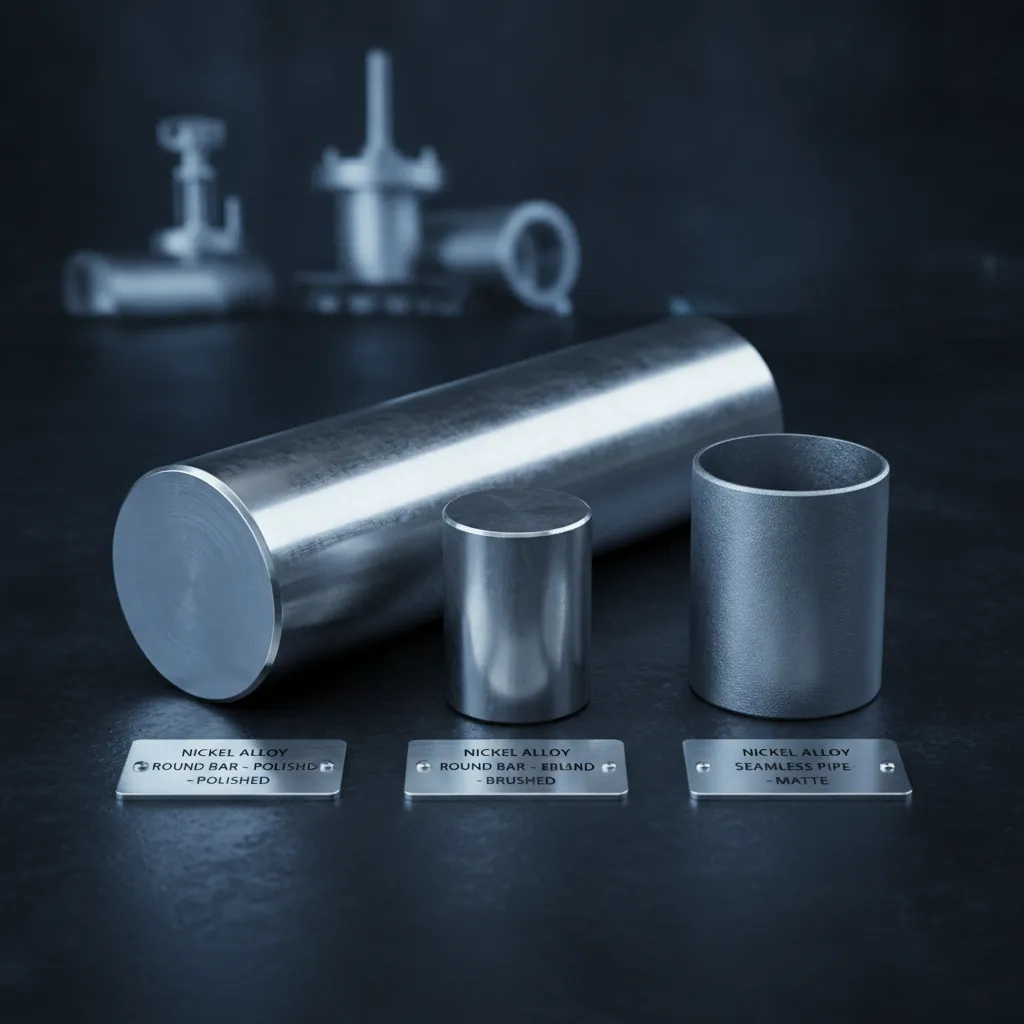
Monel, Inconel and Hastelloy are the three nickel-alloy families engineers reach for when stainless steel gives up — in seawater, hot acids, or jet-engine heat. They are often discussed as if interchangeable; they are not. Monel is a nickel-copper alloy built for seawater and hydrofluoric acid. Inconel is nickel-chromium, built for extreme heat. Hastelloy is nickel-chromium-molybdenum, built for the nastiest chemical environments. This guide compares them with actual numbers — composition, temperature limits, strength by grade, price and machinability — the data most comparison articles leave out.
| Monel | Inconel | Hastelloy | |
|---|---|---|---|
| Base system | Ni–Cu (~67% Ni, 28–34% Cu) | Ni–Cr (50–72% Ni, 14–23% Cr) | Ni–Cr–Mo (~57% Ni, 15–22% Cr, 13–16% Mo) |
| Signature strength | Seawater, brine, HF acid | High-temperature strength and oxidation | Universal wet corrosion: acids, chlorides, mixed media |
| Max service temp (approx.) | ~480 °C (900 °F) | ~980–1100 °C (1800–2000 °F) grade-dependent | ~870 °C (1600 °F), best below 650 °C in service |
| Common grades | 400, K-500, R-405 | 600, 625, 718, X-750 | C-276, C-22, B-3, X |
| Relative price (vs 316 SS = 1×) | ~3–5× | ~4–8× | ~6–10× |
| Grade | Nominal composition | Tensile (annealed) | Yield | Notes |
|---|---|---|---|---|
| Monel 400 | Ni 63–70%, Cu 28–34%, Fe ≤2.5% | 480–620 MPa | 170–350 MPa | The seawater workhorse; work-hardens only |
| Monel K-500 | 400 + Al 2.3–3.15%, Ti 0.35–0.85% | ~965–1100 MPa (aged) | ~690–790 MPa | Age-hardenable: pump shafts, valve stems |
| Inconel 600 | Ni ≥72%, Cr 14–17%, Fe 6–10% | 550–690 MPa | 240–345 MPa | Furnace and heat-treat fixtures |
| Inconel 625 | Ni ≥58%, Cr 20–23%, Mo 8–10%, Nb 3.15–4.15% | 830–1030 MPa | 415–655 MPa | Best all-rounder: strength + corrosion, weldable |
| Inconel 718 | Ni 50–55%, Cr 17–21%, Nb ~5%, Mo ~3% | ~1240–1400 MPa (aged) | ~1035–1170 MPa | The aerospace standard; age-hardenable to ~700 °C service |
| Hastelloy C-276 | Ni ~57%, Cr 15–16.5%, Mo 15–17%, W 3–4.5% | 690–790 MPa | 283–410 MPa | The chemical-industry default |
| Hastelloy C-22 | Ni ~56%, Cr 20–22.5%, Mo 12.5–14.5%, W 2.5–3.5% | ~690–800 MPa | ~310–415 MPa | More chromium → better in oxidizing acids than C-276 |
| Alloy | Continuous service limit | Where it holds strength |
|---|---|---|
| Monel 400 | ~480 °C | Cryogenic to warm — loses little toughness at −200 °C |
| Inconel 600 | ~1090 °C (oxidation limit) | Structural to ~650 °C |
| Inconel 625 | ~980 °C | Structural to ~700 °C; creep-resistant |
| Inconel 718 | ~700 °C (aged condition) | Highest strength of the group below 700 °C |
| Hastelloy C-276 | ~870 °C (oxidation) | Chemical service usually ≤450 °C where corrosion is the limit |
All three machine hard — they work-harden, run hot, and chew tools — but they rank differently:
We machine all three families routinely for aerospace and chemical-processing customers — see our aerospace machining capabilities and precision machining process.
Raw-material cost typically runs: Monel 400 < Inconel 600 < Inconel 625 ≈ 718 < Hastelloy C-276 < C-22. As a rough 2026 guide, Monel 400 bar trades around 3–5× the price of 316 stainless, Inconel 625/718 at 4–8×, and Hastelloy C-family at 6–10× — all swinging with nickel and molybdenum markets. Hastelloy’s defenders argue lifecycle cost: in severe chemical service it can outlast 316L many times over, making the expensive alloy the cheap option per year of service.
| If your environment is… | Choose |
|---|---|
| Seawater hardware, desalination, HF service | Monel 400 (K-500 if you need shaft-grade strength) |
| Jet engines, turbochargers, furnace parts, hot fasteners | Inconel 718 (strength) or 625/600 (corrosion+heat) |
| Chemical reactors, scrubbers, wet chlorine, mixed acids | Hastelloy C-276 (C-22 for oxidizing media) |
| General marine + moderate chemistry on a budget | Try duplex or super-austenitic stainless first — the nickel premium may be unnecessary |
No. Monel is a nickel-copper alloy for marine and acid service at modest temperatures; Inconel is a nickel-chromium alloy whose purpose is strength and oxidation resistance at extreme heat. Their chemistries, properties and applications barely overlap.
Only above roughly 500 °C, where Monel cannot go. Below that, in seawater or hydrofluoric acid, Monel outperforms Inconel at two-thirds the price. “Better” is entirely environment-dependent.
It is roughly two-thirds nickel plus one-third copper — both exchange-traded metals — and it is produced in far smaller volumes than stainless steel. Machining difficulty adds further cost to finished parts.
Barely or not at all. Monel 400 is weakly ferromagnetic near room temperature (its Curie point sits around 20–50 °C, shifting with exact composition), so a magnet may faintly attract a cold part and ignore a warm one. Inconel and Hastelloy are reliably non-magnetic.
From Monel seawater fittings to Inconel 718 engine components, we deliver machined nickel-alloy parts with material certs and full dimensional reports through our CNC machining services and contract machining programs. Send your drawing for a 24-hour quote.

Written by Andy, Manufacturing Engineer at TUOWEI Precision. Andy specializes in CNC machining, precision manufacturing, and production engineering, with hands-on experience supporting projects from rapid prototyping through full-scale production. He works closely with engineering and manufacturing teams to evaluate materials, tolerances, machining processes, and design manufacturability. His articles provide practical, technically informed insights to help engineers and buyers make better manufacturing decisions, optimize production efficiency, and achieve consistent part quality. Explore TUOWEI Precision’s CNC machining and custom manufacturing solutions for your next project.
From rapid prototypes to scalable production, Tuowei Precision delivers reliable CNC machining with accuracy and consistency at every step. Start your project today.
Read our latest guides on CNC machining, materials, finishing and industry trends to make better production decisions.