需要专业的机械加工解决方案吗?拓维模型的团队随时准备为您提供全方位的制造支持。立即联系我们,获取您正在进行或即将开展的项目的报价!
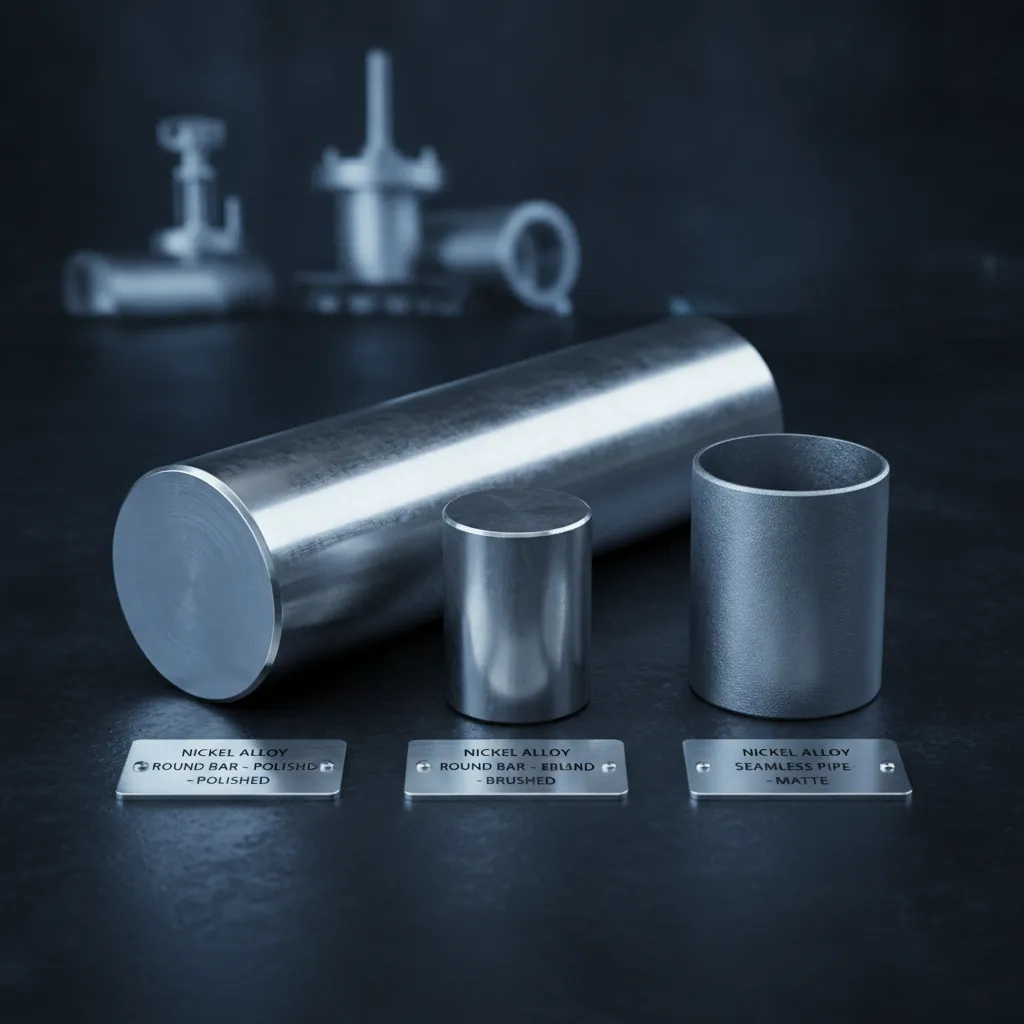
Monel, Inconel and Hastelloy are the three nickel-alloy families engineers reach for when stainless steel gives up — in seawater, hot acids, or jet-engine heat. They are often discussed as if interchangeable; they are not. Monel is a nickel-copper alloy built for seawater and hydrofluoric acid. Inconel is nickel-chromium, built for extreme heat. Hastelloy is nickel-chromium-molybdenum, built for the nastiest chemical environments. This guide compares them with actual numbers — composition, temperature limits, strength by grade, price and machinability — the data most comparison articles leave out.
| 蒙乃尔 | 铬镍铁合金 | Hastelloy | |
|---|---|---|---|
| Base system | Ni–Cu (~67% Ni, 28–34% Cu) | Ni–Cr (50–72% Ni, 14–23% Cr) | Ni–Cr–Mo (~57% Ni, 15–22% Cr, 13–16% Mo) |
| Signature strength | Seawater, brine, HF acid | High-temperature strength and oxidation | Universal wet corrosion: acids, chlorides, mixed media |
| Max service temp (approx.) | ~480 °C (900 °F) | ~980–1100 °C (1800–2000 °F) grade-dependent | ~870 °C (1600 °F), best below 650 °C in service |
| 常见等级 | 400, K-500, R-405 | 600, 625, 718, X-750 | C-276, C-22, B-3, X |
| Relative price (vs 316 SS = 1×) | ~3–5× | ~4–8× | ~6–10× |
| 等级 | Nominal composition | Tensile (annealed) | Yield | 说明 |
|---|---|---|---|---|
| Monel 400 | Ni 63–70%, Cu 28–34%, Fe ≤2.5% | 480–620 MPa | 170–350 MPa | The seawater workhorse; work-hardens only |
| Monel K-500 | 400 + Al 2.3–3.15%, Ti 0.35–0.85% | ~965–1100 MPa (aged) | ~690–790 MPa | Age-hardenable: pump shafts, valve stems |
| Inconel 600 | Ni ≥72%, Cr 14–17%, Fe 6–10% | 550–690 MPa | 240–345 MPa | Furnace and heat-treat fixtures |
| Inconel 625 | Ni ≥58%, Cr 20–23%, Mo 8–10%, Nb 3.15–4.15% | 830–1030 MPa | 415–655 MPa | Best all-rounder: strength + corrosion, weldable |
| 铬镍铁合金 718 | Ni 50–55%, Cr 17–21%, Nb ~5%, Mo ~3% | ~1240–1400 MPa (aged) | ~1035–1170 MPa | The aerospace standard; age-hardenable to ~700 °C service |
| Hastelloy C-276 | Ni ~57%, Cr 15–16.5%, Mo 15–17%, W 3–4.5% | 690–790 MPa | 283–410 MPa | The chemical-industry default |
| Hastelloy C-22 | Ni ~56%, Cr 20–22.5%, Mo 12.5–14.5%, W 2.5–3.5% | ~690–800 MPa | ~310–415 MPa | More chromium → better in oxidizing acids than C-276 |
| 合金 | Continuous service limit | Where it holds strength |
|---|---|---|
| Monel 400 | ~480 °C | Cryogenic to warm — loses little toughness at −200 °C |
| Inconel 600 | ~1090 °C (oxidation limit) | Structural to ~650 °C |
| Inconel 625 | ~980 °C | Structural to ~700 °C; creep-resistant |
| 铬镍铁合金 718 | ~700 °C (aged condition) | Highest strength of the group below 700 °C |
| Hastelloy C-276 | ~870 °C (oxidation) | Chemical service usually ≤450 °C where corrosion is the limit |
All three machine hard — they work-harden, run hot, and chew tools — but they rank differently:
We machine all three families routinely for 航天 and chemical-processing customers — see our 航空航天机械加工 capabilities and 精密机械加工 process.
Raw-material cost typically runs: Monel 400 < Inconel 600 < Inconel 625 ≈ 718 < Hastelloy C-276 < C-22. As a rough 2026 guide, Monel 400 bar trades around 3–5× the price of 316 stainless, Inconel 625/718 at 4–8×, and Hastelloy C-family at 6–10× — all swinging with nickel and molybdenum markets. Hastelloy’s defenders argue lifecycle cost: in severe chemical service it can outlast 316L many times over, making the expensive alloy the cheap option per year of service.
| If your environment is… | 选择 |
|---|---|
| Seawater hardware, desalination, HF service | Monel 400 (K-500 if you need shaft-grade strength) |
| Jet engines, turbochargers, furnace parts, hot fasteners | Inconel 718 (strength) or 625/600 (corrosion+heat) |
| Chemical reactors, scrubbers, wet chlorine, mixed acids | Hastelloy C-276 (C-22 for oxidizing media) |
| General marine + moderate chemistry on a budget | Try duplex or super-austenitic stainless first — the nickel premium may be unnecessary |
No. Monel is a nickel-copper alloy for marine and acid service at modest temperatures; Inconel is a nickel-chromium alloy whose purpose is strength and oxidation resistance at extreme heat. Their chemistries, properties and applications barely overlap.
Only above roughly 500 °C, where Monel cannot go. Below that, in seawater or hydrofluoric acid, Monel outperforms Inconel at two-thirds the price. “Better” is entirely environment-dependent.
It is roughly two-thirds nickel plus one-third copper — both exchange-traded metals — and it is produced in far smaller volumes than stainless steel. Machining difficulty adds further cost to finished parts.
Barely or not at all. Monel 400 is weakly ferromagnetic near room temperature (its Curie point sits around 20–50 °C, shifting with exact composition), so a magnet may faintly attract a cold part and ignore a warm one. Inconel and Hastelloy are reliably non-magnetic.
From Monel seawater fittings to Inconel 718 engine components, we deliver machined nickel-alloy parts with material certs and full dimensional reports through our 数控加工服务 和 contract machining programs. Send your drawing for a 24-hour quote.

作者:安迪,拓维模型制造工程师。. 安迪专攻数控加工、精密制造和生产工程领域,在从快速原型制作到大规模量产的整个项目过程中拥有丰富的实践经验。他与工程和制造团队紧密合作,共同评估材料、公差、加工工艺以及设计可制造性。 他的文章提供了实用且具有技术深度的见解,旨在帮助工程师和采购人员做出更明智的制造决策、优化生产效率,并确保零件质量的一致性。欢迎了解拓维模型的数控加工和定制制造解决方案,为您的下一个项目提供支持。.
从快速原型制作到可扩展的生产,Tuowei Precision 提供可靠的数控加工服务,在每个环节都确保精度与一致性。立即启动您的项目。.
阅读我们关于数控加工、材料、表面处理及行业趋势的最新指南,以做出更明智的生产决策。