Need expert machining solutions? Our team at Tuowei Proto is here to assist with all your manufacturing needs. Get in touch today for a quote on your ongoing or upcoming projects!

An injection mold quote is not a price for a block of steel. You are paying for engineering hours, precision machining time, hardened tool steel, a cooling system, an ejection system, hand finishing, and a sampling process that proves the tool makes acceptable parts. Machining and engineering labor usually account for the largest share of the total, not the raw material.
That matters because it tells you where the savings are. Negotiating on steel price moves almost nothing. Removing a side action, simplifying a texture, or relaxing a tolerance can move the number substantially. This breakdown covers each cost component, the factors that drive the price up, and the specific design decisions that reduce it.
A production injection mold is a precision assembly, not a single part. Molten plastic is injected into it at high pressure, thousands of times, and it has to produce dimensionally identical parts every cycle for the life of the program.
To do that it needs cavity and core inserts cut to the part geometry with shrinkage compensation, a mold base to hold everything in alignment, cooling channels to control how heat leaves the part, an ejection system to push the part out without damaging it, and mechanisms to release any feature that would otherwise lock the part in the tool.
Each of those is a cost line, and each responds differently to changes in your part design.
The standardized steel frame that holds the cavity and core inserts, along with the plates, guide pins, and bushings. Base cost scales with size and with the standard used. This is one of the few genuinely commoditized items in a mold quote.
The parts that form the plastic. These are cut from tool steel, then heat treated, ground, polished, and often textured. Steel grade is chosen for expected tool life and for the resin being run. Glass-filled and flame-retardant resins are abrasive and corrosive, and they require harder or stainless grades that cost more and machine more slowly.
Before any metal is cut, an engineer decides the parting line, gate type and location, runner layout, cooling circuit, ejection strategy, and shrinkage compensation for the chosen resin. Many programs also run mold flow simulation at this stage to predict fill, weld line position, air traps, and warp.
Skipping this step to save money is a false economy. Fill and warp problems discovered at first trial are corrected in steel, which costs far more than correcting them in software.
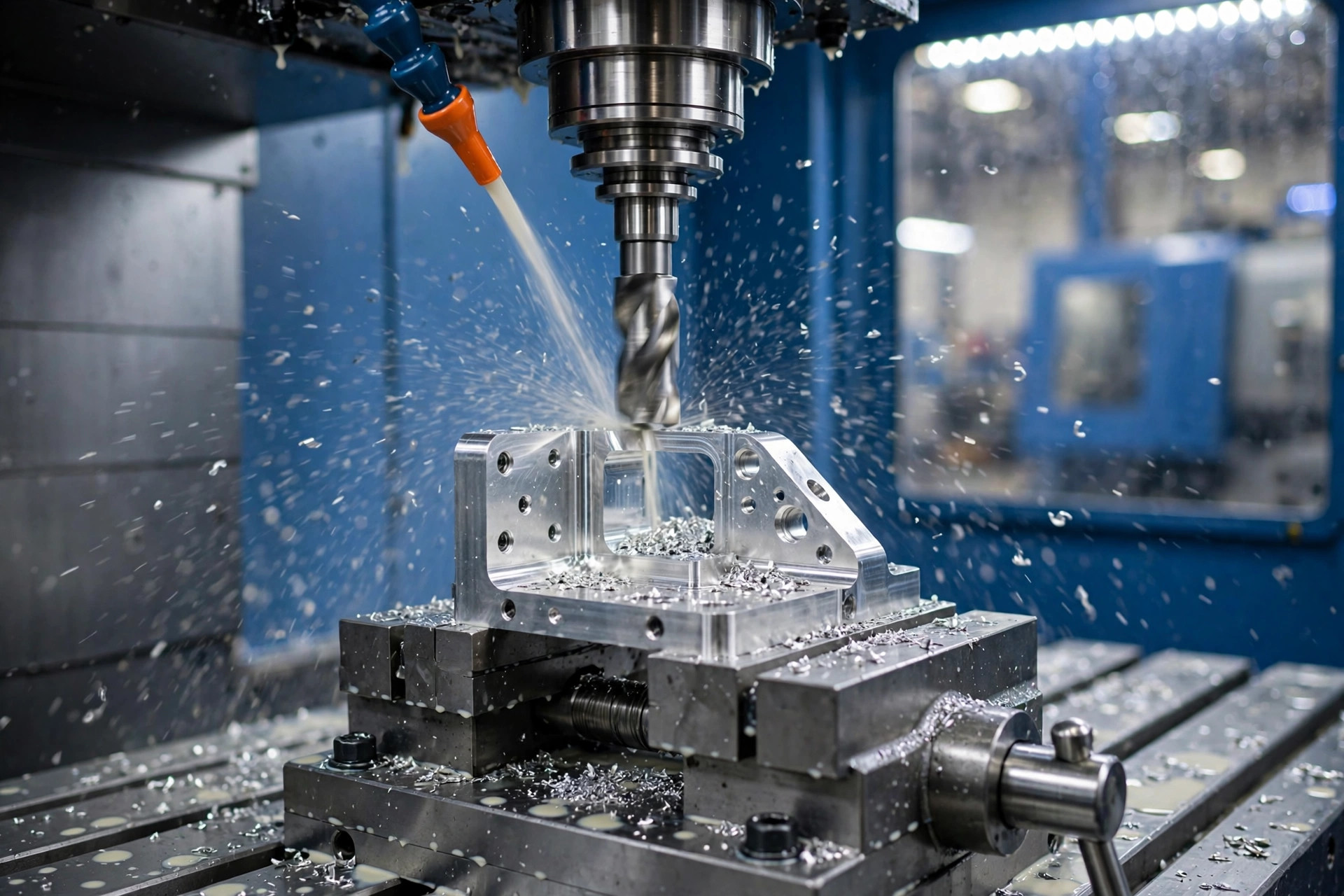
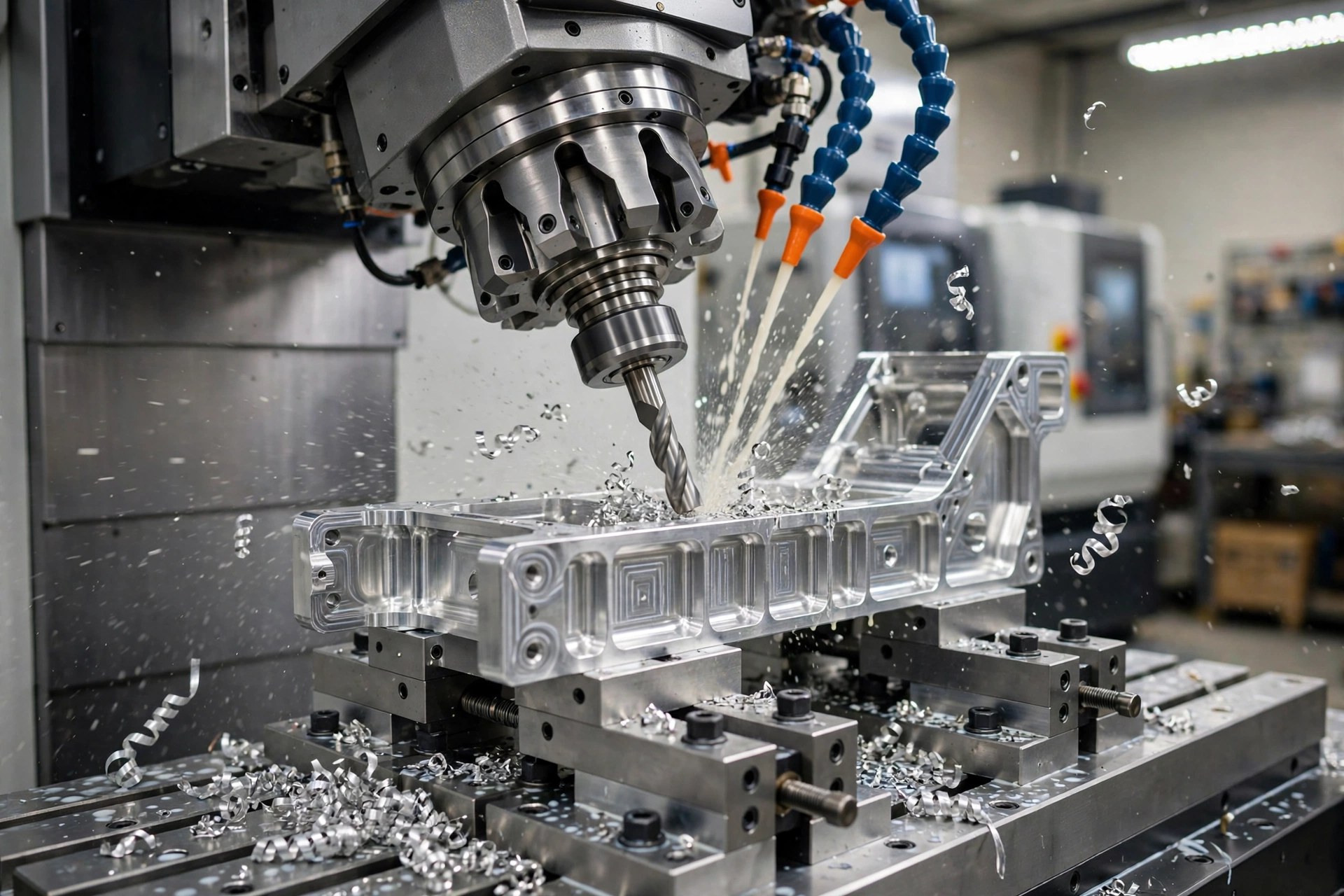
This is typically the single largest labor block. Cavities are roughed and finished on CNC machines, and features a rotating cutter cannot reach, such as sharp internal corners and deep narrow ribs, are produced by electrical discharge machining. EDM is accurate but slow, and it usually requires machining a separate graphite or copper electrode first, which is itself a machining job.
Hours accumulate quickly here. A part with many deep ribs, sharp corners, and fine detail may need dozens of electrodes.
Cavity surfaces are finished by hand to the required level, from a general machined finish through to optical polish. Texture is applied by chemical etching or laser to a specified standard.
Both are labor intensive and neither scales down easily. A high-gloss cosmetic surface on a large part can add a significant number of hand-finishing hours.
Drilled channels, baffles, bubblers, and in some cases conformal channels produced by additive manufacturing. Cooling determines cycle time and dimensional stability, so it is not a place to economize on a high-volume tool. A tool that runs two seconds slower per cycle costs real money across a million shots. Conformal approaches are worth evaluating where a standard drilled circuit cannot reach the hot area, and a detailed look at conformal cooling channels for injection molds explains where the payback usually comes from.
Ejector pins, sleeves, blades, stripper plates, or air valves, plus the plate assembly that drives them. Straightforward on simple parts. More complex on deep-draw parts, thin walls, and anything where pin marks are cosmetically unacceptable.
Any feature that is undercut relative to the direction the mold opens requires a mechanism to move out of the way before ejection. Side-action slides handle external undercuts such as side holes and snap features. Lifters handle internal undercuts. Threaded features may need an unscrewing unit.
These are among the most expensive items you can add. Each one adds design time, machining, moving components, wear surfaces, and maintenance obligations for the life of the tool.
A cold runner is simple and cheap to build, but produces a runner with every shot that must be regrinded or scrapped. A hot runner keeps the plastic molten in a heated manifold, eliminating that waste and improving gate quality, at a considerably higher tooling cost. Hot runners generally justify themselves on high-volume programs, expensive resins, and multi-cavity tools.
The mold is assembled, fitted, and run in a press. The first shots, often called T1, are inspected dimensionally against the drawing. Almost every tool needs adjustment after T1, and a second or third trial is normal, not a failure.
Ask what is included. Some quotes cover two trials and a defined amount of correction. Others treat every change as billable. This single line explains many quote differences that look like a cheaper tool.
Dimensional reports on sampled parts, material certificates for the tool steel, mold drawings, and a spare parts list. Regulated industries require more, and it should be priced in from the start rather than added later.
The proportions below are an illustrative structure, not a quotation. Real distributions vary widely by part.
| Cost element | Typical share of total |
| CNC machining, EDM, and grinding labor | Largest single block |
| Design and mold engineering | Significant, especially on complex parts |
| Tool steel and mold base | Moderate |
| Polishing and texturing | Moderate, rises sharply for cosmetic parts |
| Side actions, lifters, hot runner | Highly variable, can dominate |
| Trials, tuning, and documentation | Smaller but rarely zero |
| Factor | Effect on cost | Why |
| Part size | High | Larger cavities, larger base, larger press, more steel and machining |
| Undercuts | High | Each side action or lifter adds mechanisms and machining |
| Cavity count | High | Each additional cavity is close to a repeat of the cavity work |
| Tool steel grade and hardness | Medium to high | Harder steels last longer, cost more, and machine slower |
| Surface finish and texture | Medium to high | Hand polishing and etching are labor intensive |
| Part tolerance | Medium | Tight tolerances demand more precise cavity work and more trials |
| Expected tool life | Medium to high | A million-cycle tool is built differently from a 5,000-cycle tool |
| Resin selected | Medium | Abrasive or corrosive resins require upgraded steels |
| Geometry detail | Medium | Deep ribs, thin walls, and sharp corners increase EDM hours |
Note the pattern. Almost every high-impact factor is a design or specification decision, made by your team, before the mold shop quotes.
The SPI classification system is a useful shorthand when specifying tooling, because it ties construction quality to expected production volume.
| Class | Typical expected cycles | Common use |
| 101 | Over 1,000,000 | High-volume production, hardened steel throughout |
| 102 | Up to 1,000,000 | Medium to high volume, abrasive resins |
| 103 | Up to 500,000 | Medium volume production |
| 104 | Up to 100,000 | Low volume production |
| 105 | Up to around 500 | Prototype and pilot tooling |
Specifying a class higher than your program needs is a common way to overspend. Specifying one lower than you need is a more expensive mistake, because the tool wears out mid-program and you buy a second one.
Be honest about lifetime volume, including service and spare parts demand, before choosing.
| Factor | Aluminum tooling | Steel tooling |
| Tooling cost | Lower | Higher |
| Build time | Faster | Slower |
| Expected life | Thousands of cycles | Hundreds of thousands to millions |
| Cycle time | Often faster due to better heat transfer | Slower cooling, though controllable |
| Suitability for abrasive resins | Poor | Good with the right grade |
| Tolerance stability over life | Degrades sooner | Stable |
Aluminum tooling suits bridge production, market testing, and designs that are not yet final. It is a genuinely useful option when you need molded parts in the intended resin before committing to production steel, and it costs less than being wrong about a hardened tool.
The judgment call is honest volume forecasting. If the design is settled and demand is confirmed, aluminum tooling usually just delays the real expense. If either is uncertain, it buys valuable information cheaply. This is the same reasoning behind choosing between CNC machining and injection molding in the first place.
Adding cavities multiplies output per cycle but also multiplies most of the cavity-side tooling work.
The calculation is straightforward. Compare the additional tooling cost against the molding hours saved across the program lifetime. A four-cavity tool producing four parts per cycle needs roughly a quarter of the press time of a single-cavity tool for the same quantity.
Two constraints often override the math. Larger tools need larger presses, which carry higher hourly rates and may limit which suppliers can run the job. And multi-cavity tools need balanced filling, because unbalanced cavities produce parts that differ dimensionally from one another, which is a quality problem rather than a cost problem.
For most programs, cavity count should follow from an annual volume and cycle time calculation, not from a general preference.
None of these appear on a tooling quote. All of them appear in the program budget eventually.
The first item is usually the largest single saving available.
Quotes that look different often are not quoting the same tool. Before comparing, confirm every supplier has been given, and has priced against, the same:
A tooling quote that is substantially cheaper than the others usually reflects a lower tool class, softer steel, fewer included trials, or excluded documentation. Ask which, rather than assuming a better deal. Suppliers who handle both injection mold tooling and production molding under one roof reduce the risk of accountability gaps between the tool build and the parts it produces.
The failure pattern is consistent. A tool is bought below the sensible price for its application, then wears early, produces increasing molding defects as it degrades, requires repeated correction, and eventually gets replaced mid-program while production is running.
The replacement cost is only part of it. The rest is line stoppage, scrap, requalification, and schedule loss.
Judge tooling on cost per part across the program life, including maintenance and expected downtime, rather than on the tooling invoice alone. A tool that costs more and runs a full program without intervention is usually the cheaper option.
Decide the honest lifetime volume first, because it determines tool class, steel selection, and cavity count, and those three decisions drive most of the quote. Freeze the design before cutting steel. Spend the engineering hours on flow and cooling analysis before the machining hours begin.
Then review the part geometry specifically for cost drivers: undercuts, parting line complexity, texture area, and tolerances that are tighter than function requires. Most tooling budgets can be reduced meaningfully at this stage without changing what the part does.
Tuowei Precision provides design review before quoting tools, along with plastic injection molding and machined prototype parts, so a design can be validated in the intended material and then tooled without changing supplier or reworking the geometry for a different process.
Q: What makes one injection mold more expensive than another?
A: Part size, undercut features requiring side actions or lifters, cavity count, tool steel grade, cosmetic surface requirements, and expected tool life. Machining and engineering labor dominate the total, so complexity affects price far more than steel volume does.
Q: Do I own the injection mold I paid for?
A: That depends entirely on the contract. Confirm ownership, storage responsibility, maintenance obligations, and transfer conditions in writing before the tool is built, because retrieving a disputed tool mid-program is difficult and expensive.
Q: How long does an injection mold last?
A: It depends on construction class and resin. Prototype aluminum tooling may run a few thousand cycles, while a hardened production tool can exceed a million. Abrasive glass-filled resins shorten life considerably unless the steel is specified accordingly.
Q: Can an existing mold be modified after it is built?
A: Removing steel to enlarge a feature is usually straightforward. Adding material back requires welding or replacement inserts, which costs significantly more. This is why freezing the design before tooling saves money.
Q: Is a multi-cavity mold always cheaper per part?
A: Not always. Extra cavities reduce press time but increase tooling cost and often require a larger, more expensive press. Calculate the break-even against your annual volume rather than assuming more cavities is better.

Written by Andy, Manufacturing Engineer at TUOWEI Precision. Andy specializes in CNC machining, precision manufacturing, and production engineering, with hands-on experience supporting projects from rapid prototyping through full-scale production. He works closely with engineering and manufacturing teams to evaluate materials, tolerances, machining processes, and design manufacturability. His articles provide practical, technically informed insights to help engineers and buyers make better manufacturing decisions, optimize production efficiency, and achieve consistent part quality. Explore TUOWEI Precision’s CNC machining and custom manufacturing solutions for your next project.
From rapid prototypes to scalable production, Tuowei Precision delivers reliable CNC machining with accuracy and consistency at every step. Start your project today.
Keep updated on the real CNC machining, industry trends, and production insights in Tuowei Precision, but is installed to enable you to make better production decisions.