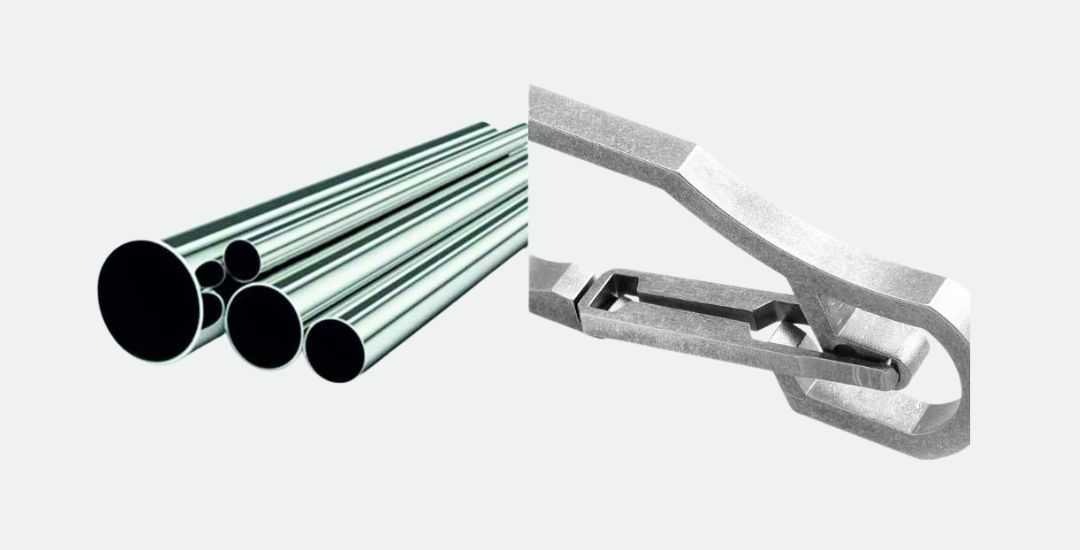
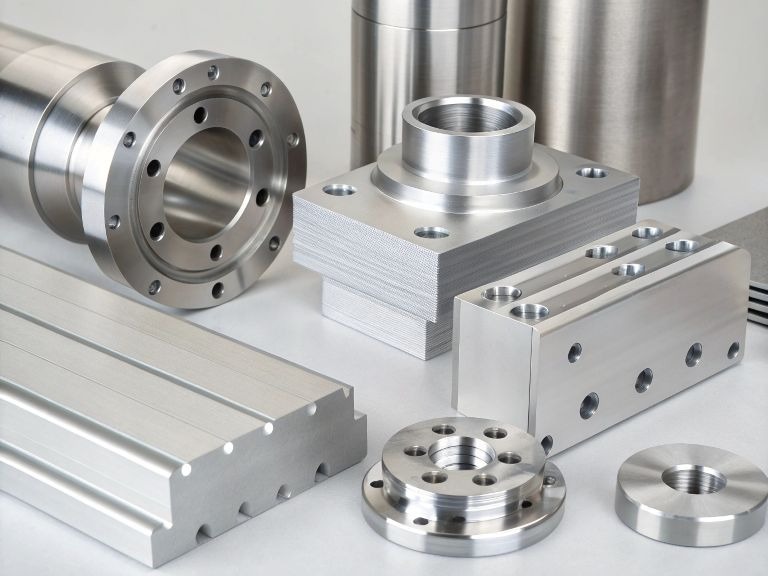
Need expert machining solutions? Our team at Tuowei Proto is here to assist with all your manufacturing needs. Get in touch today for a quote on your ongoing or upcoming projects!

Choosing a CNC machining manufacturer comes down to four questions: can they hold your tolerances, can they prove it, can they hold that capability at your volume, and will they tell you when your design is wrong. Certifications, machine lists, and website galleries help you shortlist. They do not answer those four questions on their own.
This guide is written for engineers and sourcing managers buying machined parts in the United States, whether the parts are made domestically or overseas. It covers what to verify, how to read a quote, the questions that separate serious suppliers from order-takers, and how to run a first order so that a bad fit costs you a sample rather than a program.
Most sourcing mistakes happen before a single supplier is contacted. Before you send an RFQ, write down five things:
That list determines which suppliers are even eligible. A shop that excels at one-off prototypes in three days is often the wrong choice for a repeating 5,000-piece order, and the reverse is equally true.
Certifications tell you a quality system exists and has been audited. They do not guarantee part quality on their own, but their absence in a regulated industry is disqualifying.
| Certification | What it covers | When you should require it |
| ISO 9001:2015 | General quality management system | Baseline for any production supplier |
| AS9100D | Aerospace quality management | Aircraft, space, and flight-critical hardware |
| ISO 13485 | Medical device quality management | Devices, instruments, and implantable components |
| IATF 16949 | Automotive quality management | Tier 1 and Tier 2 automotive production |
| ITAR registration | Handling of defense-related technical data | Parts covered by the U.S. Munitions List |
Two practical notes. First, ask for the certificate itself with the scope statement, not a logo on a website. The scope defines which processes and which facility are covered, and a certificate that covers assembly but not machining is not what you thought you were buying. Second, requirements shift by market and program, so confirm current expectations with your own quality team rather than assuming a certificate closes the issue.
For defense and controlled-technology work, also confirm how technical data is stored, who can access it, and whether the supplier can meet the cybersecurity requirements your prime contractor flows down. This is a common failure point with smaller domestic shops that are excellent machinists and unprepared administrators.
A list of 200 machines means very little without context. Ask instead:
Subcontracting is not a problem by itself. Undisclosed subcontracting is. Every outside process adds transit time and a hand-off where accountability can blur. If a supplier’s precision machining capability is in-house but its anodizing is not, you should know that before you set a lead time expectation. Reviewing a supplier’s published facilities and equipment is a reasonable starting point, but follow it with specific questions about your part.
Almost every shop advertises tight tolerances. Fewer can show they hold them repeatably.
Ask for a first article inspection report from a comparable part, with the tolerances left in and the identifying details redacted. What you are looking for is not perfection. It is where measured values sit inside the tolerance band. Values clustered near the middle suggest a controlled process. Values scattered against the limits suggest the shop is sorting rather than controlling.
For production work, ask whether they can report process capability indices such as Cpk on critical characteristics. A supplier that has never been asked this is probably not running production for a demanding customer. If tolerance callouts on your drawing are the main cost driver, it helps to understand how the CNC machining process works before you decide which ones to relax.
The measurement equipment determines what the supplier can honestly claim.
Also ask what documentation comes with the parts by default. Material certificates, Certificates of Conformance, and full dimensional reports are standard for regulated work and are often optional extras elsewhere. Confirm this at the quote stage, because adding it later usually means re-inspecting parts you have already paid for. A supplier’s quality assurance process should be documented and specific rather than described in general terms.
This is the criterion buyers underestimate most, and the one that returns the most money.
A capable supplier reviews your model and comes back with observations before quoting: an internal corner radius that forces an undersized tool, a pocket depth that will require a slow finishing pass, a tolerance stack across two setups that will be difficult to hold, a material choice that costs three times more than an equivalent grade.
A supplier that quotes your file without comment is either very confident or not reading it. You can find out which by asking one question: what would you change about this part to reduce its cost?
Ask directly where your order sits in their business. A shop whose typical order is 50 pieces will treat your 10,000-piece release as an unusual event, and unusual events go wrong. A high-volume production shop will price a five-piece prototype poorly because the setup dominates.
Suppliers offering on-demand manufacturing across a network of machines are usually better suited to variable order patterns, while a dedicated shop with fixed capacity suits stable, scheduled demand.
Response time to a technical question is a reliable proxy for how the relationship will run. So is whether the person answering understands machining or is forwarding your question to someone who does.
Before committing, establish who your point of contact is, what the escalation path is when a shipment slips, and how engineering changes are handled mid-order. Vague answers here reliably become problems later.
Comparing quotes on unit price alone is how buyers end up with the wrong supplier. Break each quote into its parts.
| Line item | What to check |
| Unit price | At which quantity, and does it hold on repeat orders |
| NRE, setup, or programming | One-time or charged per release |
| Tooling or fixturing | Who owns custom fixtures if you move the work |
| Material | Grade, temper, and whether certificates are included |
| Finishing | Included or quoted separately, and lead time impact |
| Inspection | Standard in-process checks or full dimensional report |
| Lead time | From order or from drawing approval |
| Freight and duties | Especially relevant on imported parts |
A quote that is significantly lower than the others usually reflects a different assumption, not a better shop. Common causes are a looser default tolerance standard, a cheaper material substitution, no inspection documentation, or freight excluded. Ask what assumptions were made rather than assuming a bargain.
The answers matter less than the manner. Specific, direct answers indicate a supplier that has thought about these things. Reassurance without detail indicates one that has not.
None of these is proof of a bad supplier. Two or three together usually is.
This decision is often framed as cost versus quality, which is not accurate. Both are available in both places. The real differences are structural.
| Factor | Domestic US supplier | Overseas manufacturer |
| Transit time | Days | Typically one to four weeks by sea, days by air |
| Unit cost at volume | Higher labor and overhead | Often lower, though the gap narrows on highly automated work |
| Prototype iteration speed | Faster for rapid design loops | Workable if the supplier ships samples by air |
| Controlled or defense work | Required for ITAR and many DFARS flow-downs | Generally not permissible for controlled technical data |
| Duties and trade policy | Not applicable | Tariff treatment varies by classification and changes over time |
| Time zone and communication | Same working day | Requires a supplier with an overlapping support window |
| Supply chain risk | Shorter, simpler chain | Requires inventory buffering against transit variability |
A few points that follow from this:
If the part is covered by ITAR or by a contract that restricts foreign involvement, the decision is already made. Verify registration and data handling rather than relying on a general assurance.
If you are iterating a design weekly, transit time dominates. A supplier three days away beats one three weeks away even at a higher unit price, because each lost week costs engineering time.
If you are running steady production of a stable design in reasonable volume, landed cost is the number that matters. Add freight, duties, inspection, inventory carrying cost, and the cost of the buffer stock you will need to hold. Compare that total, not the unit price.
Many companies use both. Domestic suppliers for controlled work, urgent revisions, and anything under NDA sensitivity. Offshore partners for stable production volume where the design has already been validated. The mistake is choosing one model for everything.
When comparing three or four shortlisted suppliers, score each criterion from 1 to 5 and weight it against your actual risk.
| Criterion | Suggested weight |
| Demonstrated tolerance capability on similar parts | High |
| Compliance and documentation fit | High for regulated work, low otherwise |
| Engineering feedback quality | High |
| Capacity fit at your volume | Medium to high |
| Landed cost | Medium |
| Lead time and responsiveness | Medium |
| Breadth of in-house processes | Medium |
The weighting is the exercise. A team that scores price at the top and capability at the bottom has already decided the outcome, and usually discovers the cost of that decision at the first production release.
Do not validate a new supplier with a critical, time-sensitive production order.
Start with a paid sample or a small pilot batch of a representative part, ideally one with a feature you know is difficult. Require a first article inspection report against your drawing. Measure the parts yourself on the critical dimensions rather than accepting the report at face value, at least the first time.
Then look at three things beyond the parts: whether they hit the promised date, whether the paperwork arrived complete, and how they handled any problem that came up. A supplier that reports an issue early and proposes a fix is more valuable long term than one that ships silently and hopes.
When the pilot passes, formalize the relationship. Agree pricing tiers, lead times, packaging, documentation, and the engineering change process in writing before volume begins.
Shortlist on capability and compliance, not on price. Test the shortlist with a real part. Weight engineering feedback heavily, because a supplier that improves your design pays for itself repeatedly while one that simply follows the file never will.
For companies buying machined components into the US market, Tuowei Precision works across prototype and production volumes with in-house machining, inspection, and finishing, and provides design review before quoting so that cost drivers are identified while changes are still cheap. You can review the available CNC machining services and capability range as a starting point for comparison against other suppliers on your list.
Q: What certifications should a CNC machining manufacturer have?
A: ISO 9001:2015 is the baseline for any production supplier. Add AS9100D for aerospace, ISO 13485 for medical devices, and IATF 16949 for automotive. Always request the certificate with its scope statement rather than accepting a website logo.
Q: How do I compare CNC machining quotes fairly?
A: Compare landed cost at the same quantity, tolerance standard, material grade, finish, and documentation level. A cheaper quote usually reflects different assumptions, such as looser default tolerances or excluded inspection reporting, rather than a genuinely better price.
Q: Should I choose a domestic or overseas CNC machining supplier?
A: Domestic suppliers suit controlled or ITAR work, rapid design iteration, and short supply chains. Overseas manufacturers often win on landed cost for stable, validated designs in volume. Many buyers use both, split by program type rather than exclusively.
Q: What is a first article inspection report and why does it matter?
A: It is a dimensional report measuring a sample part against every specified feature on your drawing. It proves the process produces conforming parts before a full batch runs, and it gives you a documented baseline for future orders.
Q: How much volume do I need to work with a production machining supplier?
A: There is no universal minimum, but pricing improves sharply between one and one hundred pieces because setup and programming are amortized. Below that, choose a supplier that quotes prototypes routinely rather than one built around long production runs.

Written by Andy, Manufacturing Engineer at TUOWEI Precision. Andy specializes in CNC machining, precision manufacturing, and production engineering, with hands-on experience supporting projects from rapid prototyping through full-scale production. He works closely with engineering and manufacturing teams to evaluate materials, tolerances, machining processes, and design manufacturability. His articles provide practical, technically informed insights to help engineers and buyers make better manufacturing decisions, optimize production efficiency, and achieve consistent part quality. Explore TUOWEI Precision’s CNC machining and custom manufacturing solutions for your next project.
From rapid prototypes to scalable production, Tuowei Precision delivers reliable CNC machining with accuracy and consistency at every step. Start your project today.
Keep updated on the real CNC machining, industry trends, and production insights in Tuowei Precision, but is installed to enable you to make better production decisions.