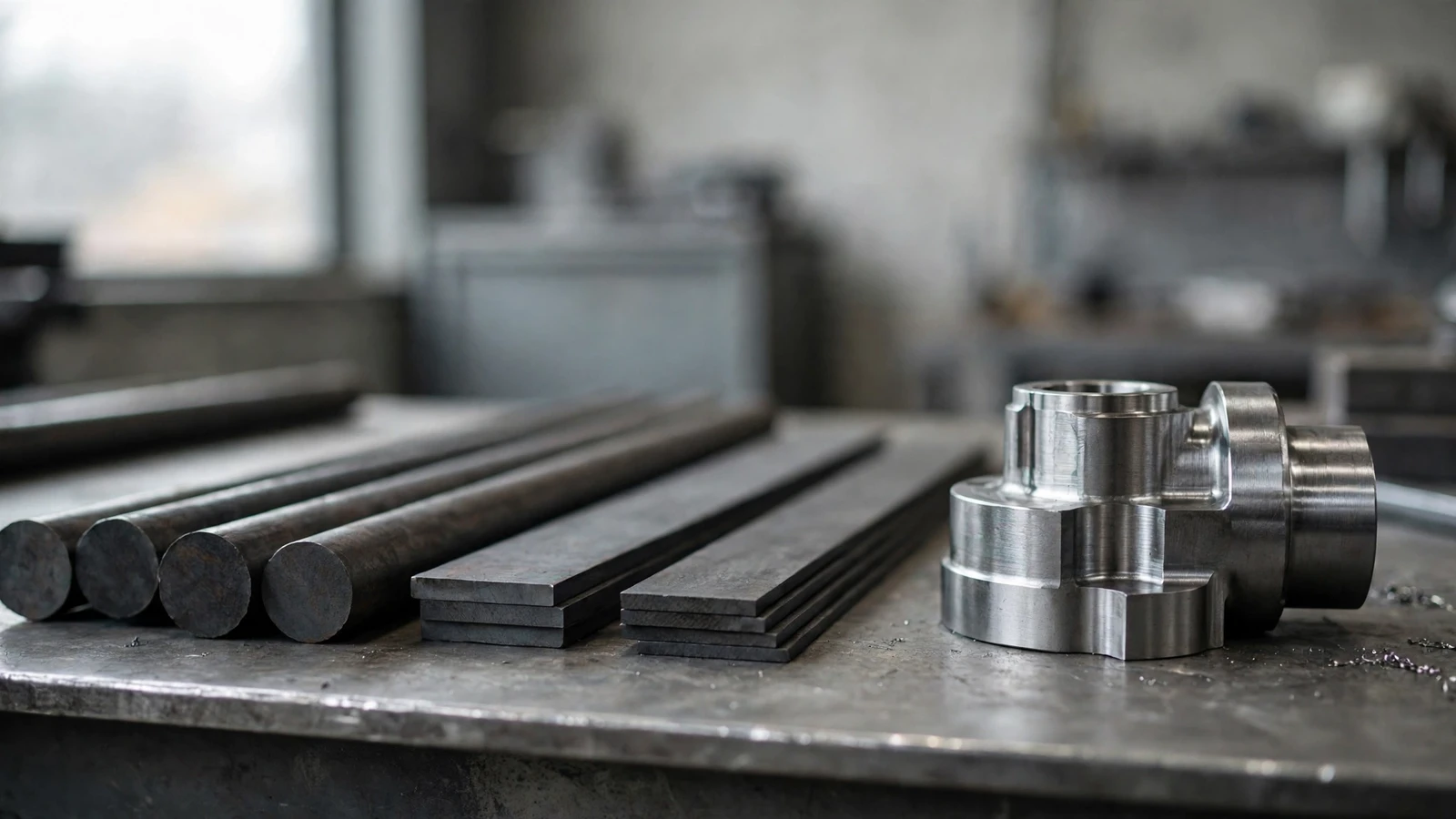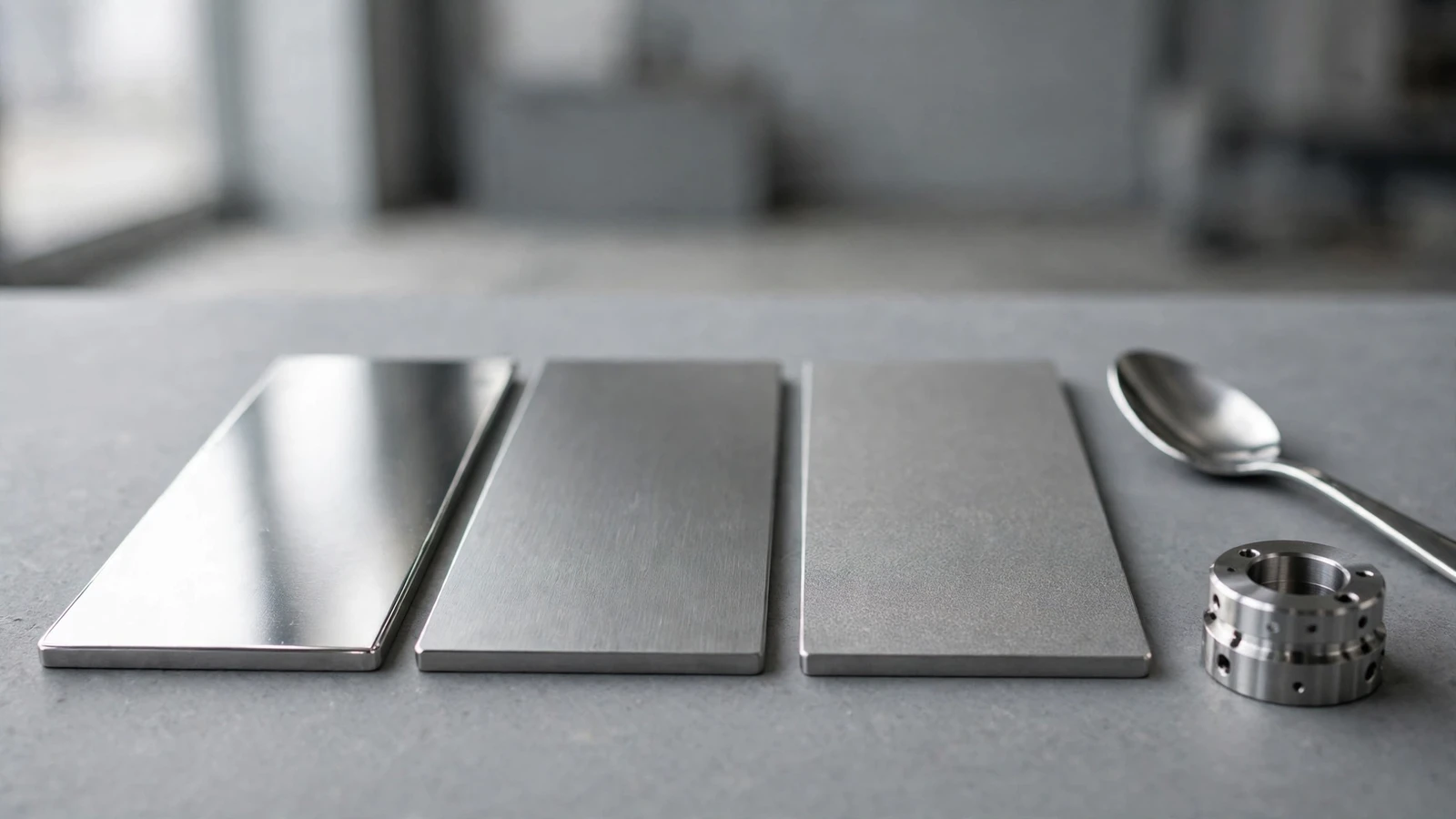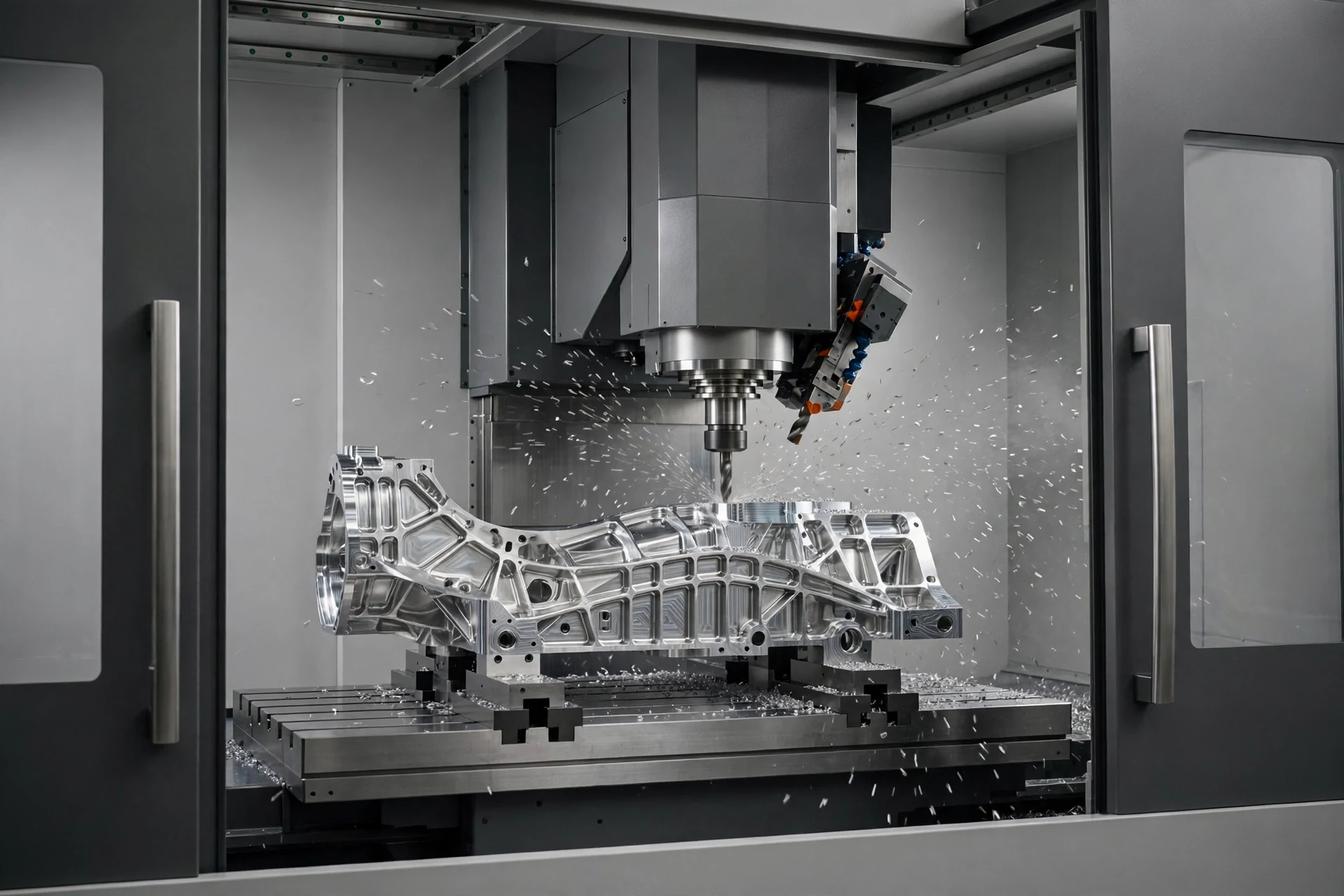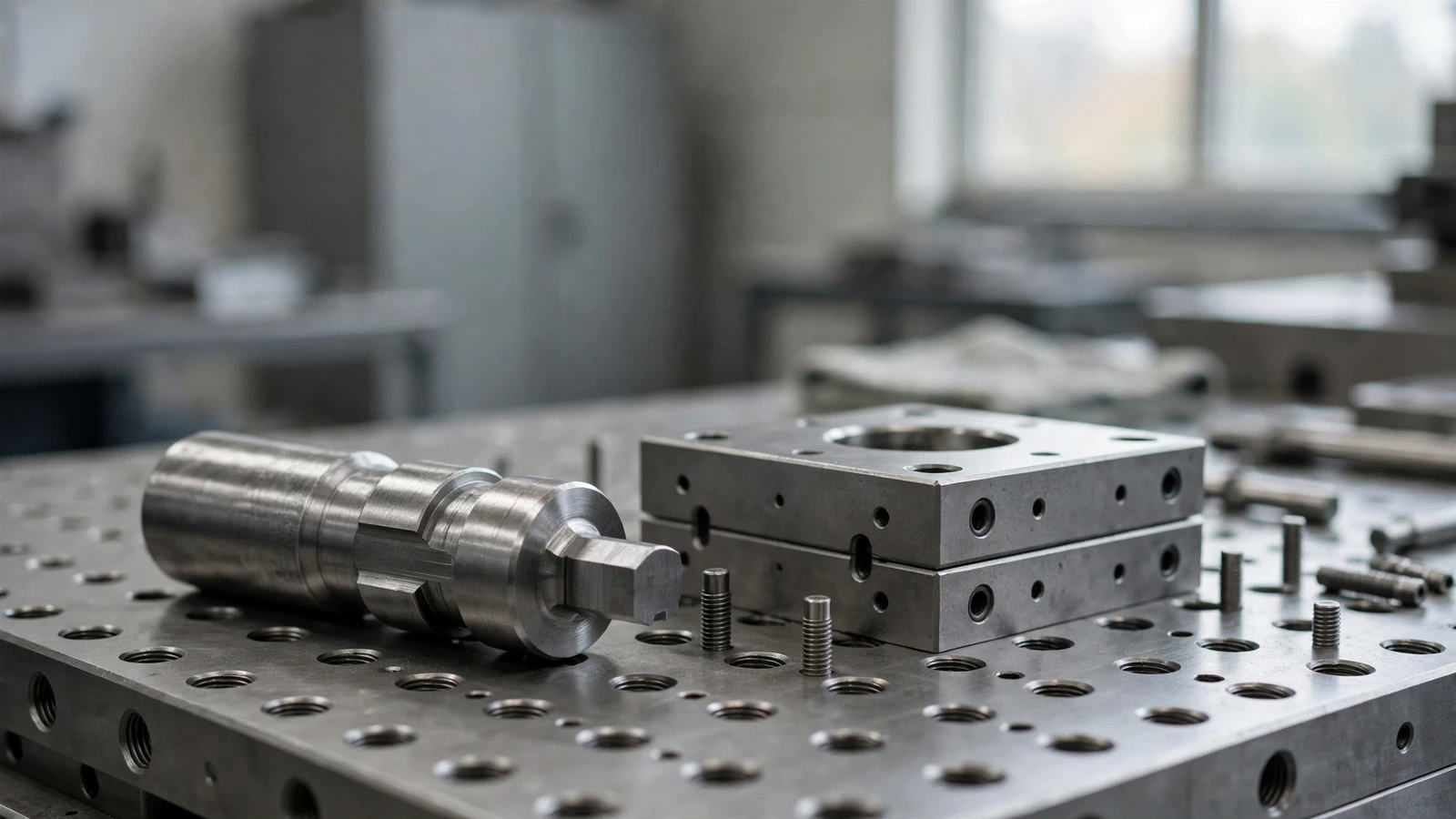
D2钢是一种高碳、高铬 冷作工具钢 碳含量约为1.5%,铬含量为12%。该材料在空气中淬火后硬度可达约58–62 HRC,因其出色的耐磨性而被广泛选用。这使其成为冲压模具、冲头、剪切刀片及耐磨刀具的标准材料。
简答: D2是一种空气硬化工具钢,以其极强的耐磨性和热处理过程中的良好尺寸稳定性而著称。其刀刃保持时间远超大多数不锈钢刀具钢,但韧性较差,磨刃难度较大,且仅具有半不锈钢特性。对于模具和易损件而言,它是目前最具成本效益的选择之一。
关于这种合金的大多数热门文章都是面向刀具购买者的。本指南虽然也涉及这一问题,但主要面向需要将D2材料制成的零件进行机加工、热处理并按图纸交付的工程师和采购人员。
AISI D2 属于冷作工具钢的“D”组,其中“D”代表高碳、高铬钢种。 “2”表示其在该组中的序号。大量硬质铬碳化物的存在赋予了这种高铬工具钢优异的耐磨性,且其空气淬火特性使其与水淬或油淬钢种相比,变形量更小。该钢种专为冷作模具而开发,旨在满足长期生产过程中对耐磨和抗磨损的要求。
同一种合金在世界各地有多种名称,这一点在采购材料或阅读其他国家的工厂证书时尤为重要。
| 系统 | 名称 |
|---|---|
| AISI / SAE(美国) | D2 |
| UNS | T30402 |
| ASTM | A681,D2级 |
| DIN / EN(德国、欧洲) | 1.2379,X153CrMoV12 |
| JIS(日本) | SKD11(近似等效材料) |
| GB(中国) | Cr12Mo1V1(近似等效;Cr12MoV 与之相似但并不完全相同) |
“近似等效材料”在该表格中确实发挥着实际作用。SKD11和Cr12Mo1V1的化学成分与D2存在重叠,但并不总是完全一致,因此请在图纸上明确标注所需的标准。
其化学成分以高碳含量为主要特征,通常约为1.55%(常四舍五入为1.5%),并具有接近12%的高铬含量。下文所列的d2钢成分符合ASTM A681标准中的典型限值。各钢厂通常会将成分控制在更严格的范围内。
| 元素 | 典型含量范围(质量百分比) | 功能介绍 |
|---|---|---|
| 碳(C) | 1.40–1.60 | 形成硬质合金;可实现高硬度 |
| 铬(Cr) | 11.00–13.00 | 硬质合金成型器;具有耐磨性和一定的耐腐蚀性 |
| 钼(Mo) | 0.70–1.20 | 加深淬火;提高回火韧性 |
| 钒(V) | 1.10 最大值(通常约为 0.9) | 形成非常坚硬的碳化钒;细化晶粒 |
| 锰(Mn) | 0.60(最大值) | 淬透性;为限制变形而保持较低水平 |
| 硅(Si) | 0.60(最大值) | 脱氧剂 |
| 铁(Fe) | 平衡 | 贱金属 |
12%的铬含量听起来与不锈钢相差无几,但这部分铬大多以碳化物的形式存在,而非溶解在钢中。 在淬火后的显微组织中,这种碳化物结构表现为回火马氏体基体中分布的大块铬碳化物,它同时决定了材料的耐磨性和韧性。这就是为什么这种工具钢比 真正的不锈钢等级 铬含量相似。
D2钢的硬度完全取决于其状态,因此应在图纸上与D2钢级一同注明。采购方有时只会给出一个数值,但该材料在退火、淬火和回火三种状态下,其性能表现得如同三种不同的金属。
| 物业 | 典型值 | 说明 |
|---|---|---|
| 硬度,退火后 | 约公元前217–255年 | 可加工状态,按供货状态 |
| 硬度、淬火和回火 | 58–62 HRC(典型值) | Depends on tempering temperature |
| 密度 | About 7.7 g/cm³ | Slightly lighter than plain carbon steel |
| 耐磨性 | 非常高 | Main reason to choose D2 |
| 韧性 | 低至中等 | Lower than A2, S7 or H13 |
| Dimensional stability in hardening | 非常好 | Air hardening keeps distortion low |
| Machinability (annealed) | 公平 | Roughly half that of a 1% carbon tool steel |
| 耐腐蚀性 | Fair, semi-stainless | Better than carbon tool steel, below 440C |
The hardness on your drawing should always name the scale and range, for example “58–60 HRC,” not just “hardened D2.” A range of two to three points is normal and lets the heat treater hit it reliably.
Hardness is measured on the Rockwell C scale at room temperature. Depending on tempering, the grade can land anywhere from about 55-62 HRC, and a few knife makers push blades to 62-63 HRC at the cost of chipping.
The balance between hardness and toughness is the central trade-off: compared to other steels in its class, D2 offers high wear resistance with low toughness, which is still adequate toughness for dies and blades that are not hammered. Because it is fully heat treatable, the same bar can be tuned toward wear resistance and toughness in different ratios.
Heat treatment is where parts in the D2 grade succeed or fail, and it is the topic most competing guides skip. The outline below is a typical sequence; the exact temperatures come from the steel supplier’s data sheet and the heat treater’s procedure.
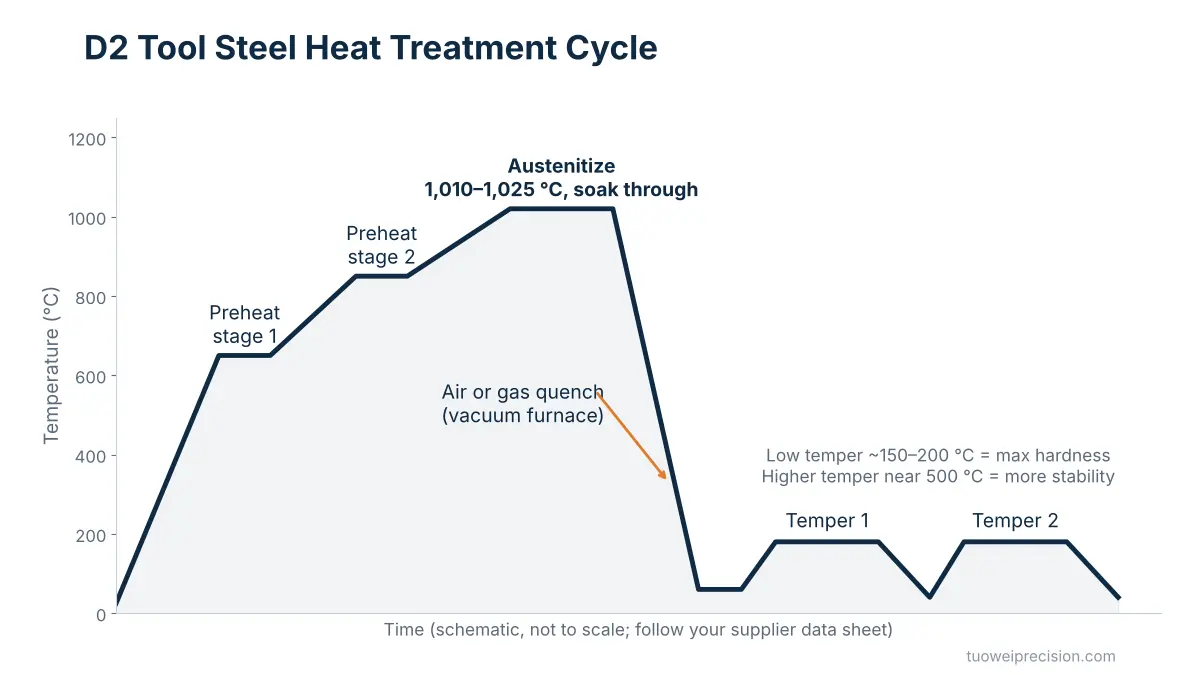
Vacuum hardening is our usual recommendation for precision D2 material because it avoids surface decarburization and scale. It costs more than open-furnace treatment, but it usually removes a grinding operation, so the total cost is often similar.
Forging is rarely worth it with this grade. The high wear material has a narrow hot-working range and cracks easily if forged too cold, so most parts are machined from annealed bar instead.
AISI D2 is machinable in the annealed condition, but it is not forgiving. These are the points our machinists watch on every job in D2 material.
Machine soft, finish hard. Do the heavy material removal in the annealed state, then finish critical features by grinding or hard milling after heat treatment. Trying to hold tight tolerances before hardening ignores the size change that comes with it.
Expect abrasive tool wear. The chromium carbides are harder than many cutting tool materials. Coated carbide works for annealed stock; CBN or ceramic tools and carefully controlled parameters are needed for hard milling and turning.
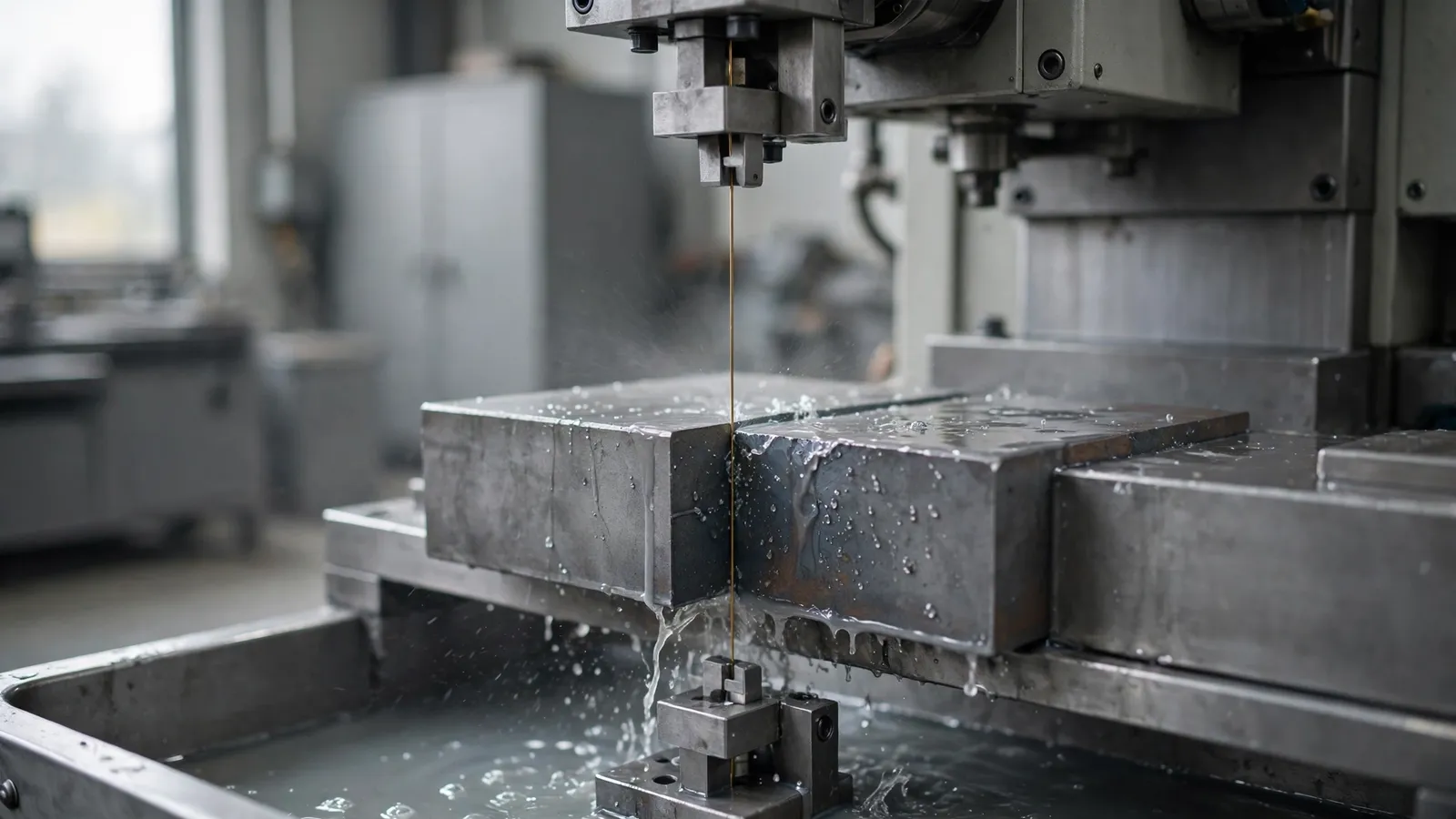
Use wire EDM with care. 线切割放电加工 cuts hardened D2 accurately, but it leaves a thin recast layer and can release residual stress, cracking thick sections. Several skim passes and a temper after EDM reduce the risk.
Watch for grinding burn. Aggressive grinding overheats the surface and can drop local hardness or cause cracks. Soft-grade wheels, plenty of coolant and light passes prevent it.
Design for heat treatment. Sharp internal corners, abrupt thickness changes and holes close to edges all concentrate stress during quenching. A generous radius at corners is one of the cheapest ways to avoid cracked dies.
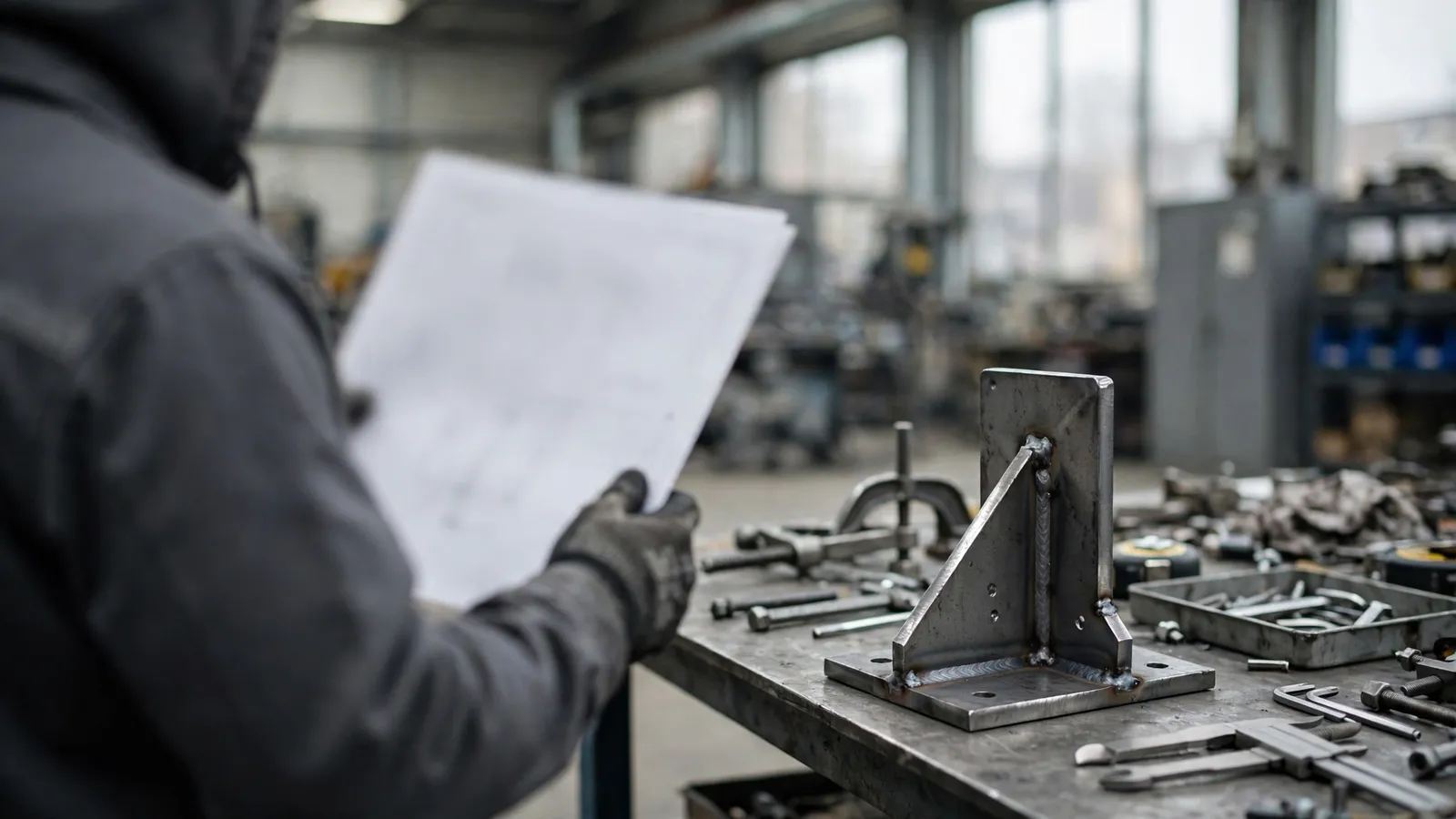
The most common mistake we see on drawings is a tight tolerance specified without saying whether it applies before or after hardening. That single ambiguity can turn a finished part into scrap.
A clear specification saves a round of questions and protects you if parts arrive out of tolerance. These are the lines we recommend adding to any drawing for AISI D2 parts:
If any line is missing, a supplier has to guess. Most will choose the cheapest valid interpretation, which may not be the one you intended.
CPM D2 is a powder-metallurgy version of the same chemistry. Its carbides are much finer and more evenly spread, which improves toughness and makes grinding easier, at a higher material price. DC53 is a modified D2-type steel developed in Japan with higher toughness and better wire EDM behavior. Both are worth considering when dies in the standard D2 grade chip early, but check availability and lead time before redesigning around them.
Engineers usually shortlist the D2 grade against a few familiar grades. This comparison table summarizes how they trade off.
| 等级 | 类型 | Typical hardness | 耐磨性 | 韧性 | 耐腐蚀性 | 最适合 |
|---|---|---|---|---|---|---|
| D2 | Cold-work, air hardening | 58–62 HRC | 非常高 | Low–moderate | 公平 | Dies, punches, slitters, wear plates |
| A2 | Cold-work, air hardening | 57–62 HRC | Moderate–high | Higher than D2 | 低 | Tooling that sees impact, forming dies |
| D3 | Cold-work, oil hardening | 58–64 HRC | 非常高 | Lower than D2 | 公平 | Simple, high-wear shapes |
| 440C | Martensitic stainless | 56–60 HRC | 高 | 中度 | 好 | Bearings, valve parts, stainless knives |
| 4140 | Low-alloy steel | About 28–32 HRC prehardened | Low–moderate | 高 | 低 | Shafts, holders, structural machine parts |
A2 vs D2: A2 contains about 5% chromium and fewer carbides, so it is tougher but wears faster. Choose A2 when chipping is the failure mode; choose the D2 grade when wear is.
D3 vs D2: D3 has more carbon and no significant molybdenum or vanadium, and it is usually oil hardened. It can wear slightly better in simple shapes, but D2’s air hardening makes it more stable and more widely stocked.
4140 vs D2: These are not competitors so much as partners. 4140 is a tough, inexpensive alloy steel for holders, shafts and fixtures; D2 goes where surfaces must resist wear. Many die sets combine both.
D2 is sometimes mistaken for a high speed steel such as M2, but it is not. High speed steel keeps its hardness at cutting temperatures, while D2 starts to soften once tempering temperatures pass roughly 500 °C.
Yes, if you value edge retention over ease of sharpening. That is why “is d2 steel good for knives” is one of the most searched questions about this alloy. At 59–61 HRC it holds an edge noticeably longer than common stainless knife steels, and it costs less than modern powder-metallurgy grades.
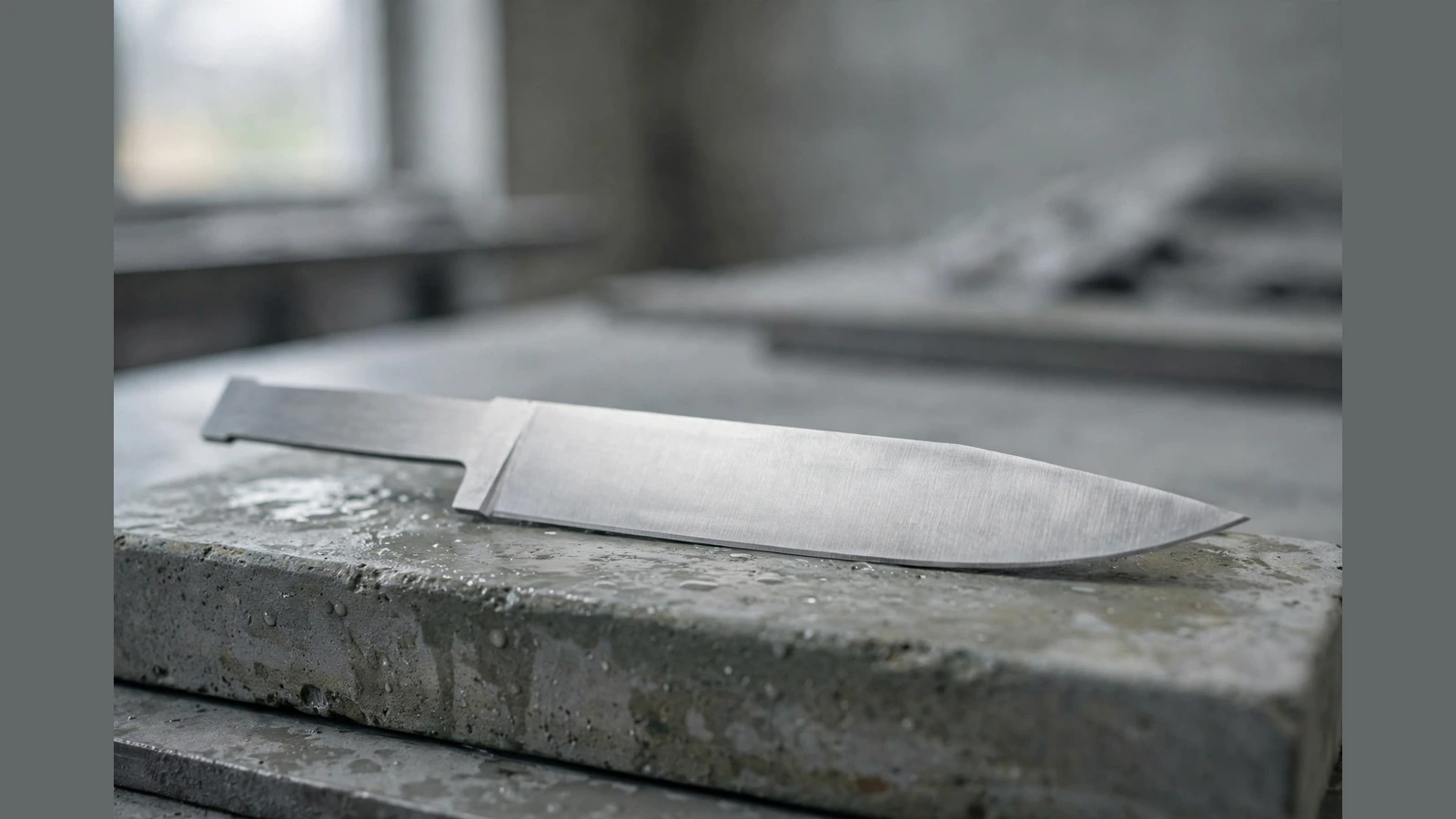
D2 knives became popular because the grade is inexpensive, widely stocked by steel suppliers, and responds consistently to heat treatment. In published edge retention testing, Larrin Thomas of Knife Steel Nerds reports that D2 performs well for its price in CATRA testing but trails high-vanadium powder steels such as S30V. Those CATRA edge retention results explain why the grade is so often used in knives at budget and mid-range prices.
The trade-offs are real, though:
Against 440C, D2 usually wins on edge holding while 440C wins on rust resistance and ease of sharpening. Neither is wrong; it depends on whether the knife lives in a dry pocket or a wet kitchen. The corrosion resistance of D2 sits between carbon steel and stainless, and 440C gives better corrosion resistance wherever moisture is constant.
No. D2 tool steel is often called semi-stainless because its 12% chromium gives better rust resistance than plain carbon tool steels, but not enough free chromium remains to make it a stainless steel. Expect surface rust in humid storage, on parts handled with bare hands, and in coolant that has gone stale.
For tooling, a light oil film, rust-preventive coating, or a PVD or nitride surface treatment solves most problems. For food or medical parts that must stay clean, choose a stainless grade such as 440C or a powder-metallurgy stainless instead.
| 应用 | Why D2 fits |
|---|---|
| Blanking and stamping dies | Keeps a sharp edge through long production runs |
| Punches and die buttons | High hardness and wear resistance |
| Shear and slitter blades | Edge retention on sheet and coil |
| Thread rolling dies | Resists abrasive wear and rolling pressure |
| Forming and trimming tools | Stable through heat treatment |
| Gauges and wear plates | Dimensional stability and surface hardness |
| Industrial and pocket knives | Long edge life at moderate cost |
Where impact dominates, such as heavy punching of thick plate with D2 material, a tougher grade like A2 or S7 often lasts longer even though it wears faster.
是的,对于最重视耐磨性的应用场景而言。D2是应用最广泛的冷作工具钢之一,因为它兼具高硬度、极佳的耐磨性以及稳定的热处理性能,且价格适中。其缺点是韧性有限、难以磨锐,且耐腐蚀性仅属一般,因此应根据具体工作需求加以选用。
大多数情况下选择D2。它属于空气淬火材料,因此在热处理过程中变形较小,且各种规格的货源更为丰富。D3的碳含量更高,在简单形状的工件上耐磨性略胜一筹,但通常采用油淬火工艺,稳定性较差。D3是一种适用范围较窄、更专业的选择。
是的,与大多数不锈钢刀具钢材相比确实如此。其大颗粒的铬碳化物能抵御普通磨料的磨损,因此在传统磨石上磨刀所需时间较长。使用金刚石或陶瓷磨刀器效果会好得多。这种磨刀难度带来的好处是刀刃保持性:一旦磨好,经过适当热处理的D2刀刃在切割测试中的耐用性明显更长。
这取决于具体需求。D2钢通常具有更高的硬度,耐磨性更佳;而440C钢的耐腐蚀性更强,且更易于磨锐。对于模具和工业耐磨件,通常更倾向于选用D2钢。对于刀具或会接触水分、食物或清洁化学品的部件,440C钢或其他不锈钢等级是更稳妥的选择。
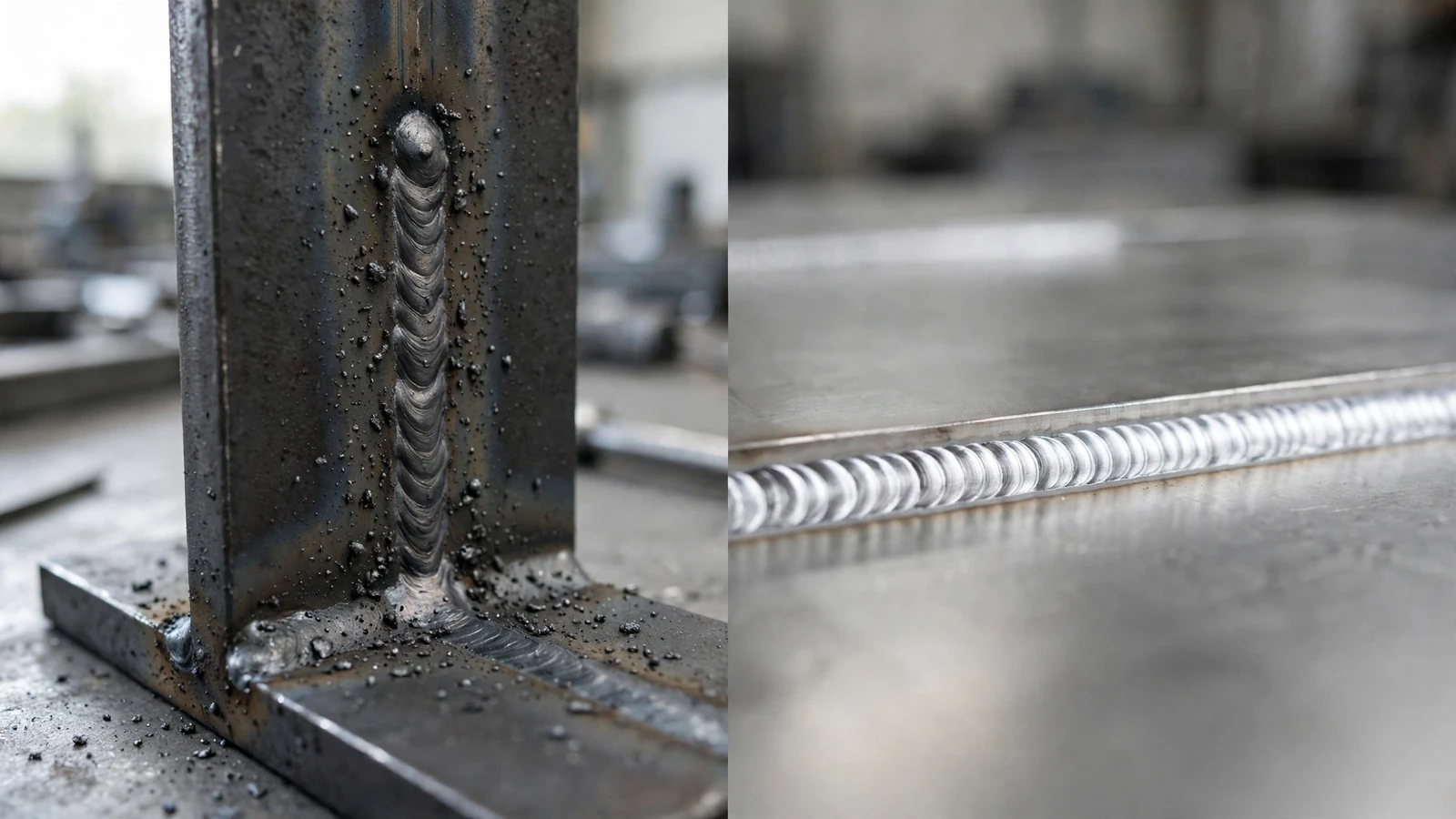
虽然可以,但难度较大,且需要遵循规范的工艺流程。由于碳和铬含量较高,该材料容易开裂,因此焊接时需要预热、选用合适的填充材料、缓慢冷却以及后续回火处理。D2模具的修复焊接在工具车间很常见,但这属于专业性工作,而非常规的制造工序。
D2 tool steel rewards careful planning. Name the condition and hardness on the drawing, allow grinding stock where tolerances are tight, add radii where the design permits, and decide early whether vacuum hardening is needed. Those four decisions control cost and scrap more than the machining itself.
We machine D2 steel in the annealed and hardened condition, finish hardened features by grinding and EDM, and coordinate heat treatment so the final part meets drawing. See our 钢材 CNC 加工服务, wire EDM capabilities 和 精密加工服务. For background, read how wire EDM works and our explainer on 抗拉强度与屈服强度.
To price a part in D2 material, upload your drawing for a quote 或访问 拓维精密 to see our full manufacturing range.
参考文献与延伸阅读
Composition, hardness and heat-treatment values are typical figures for reference. Always follow the steel supplier’s data sheet and your heat treater’s qualified procedure.