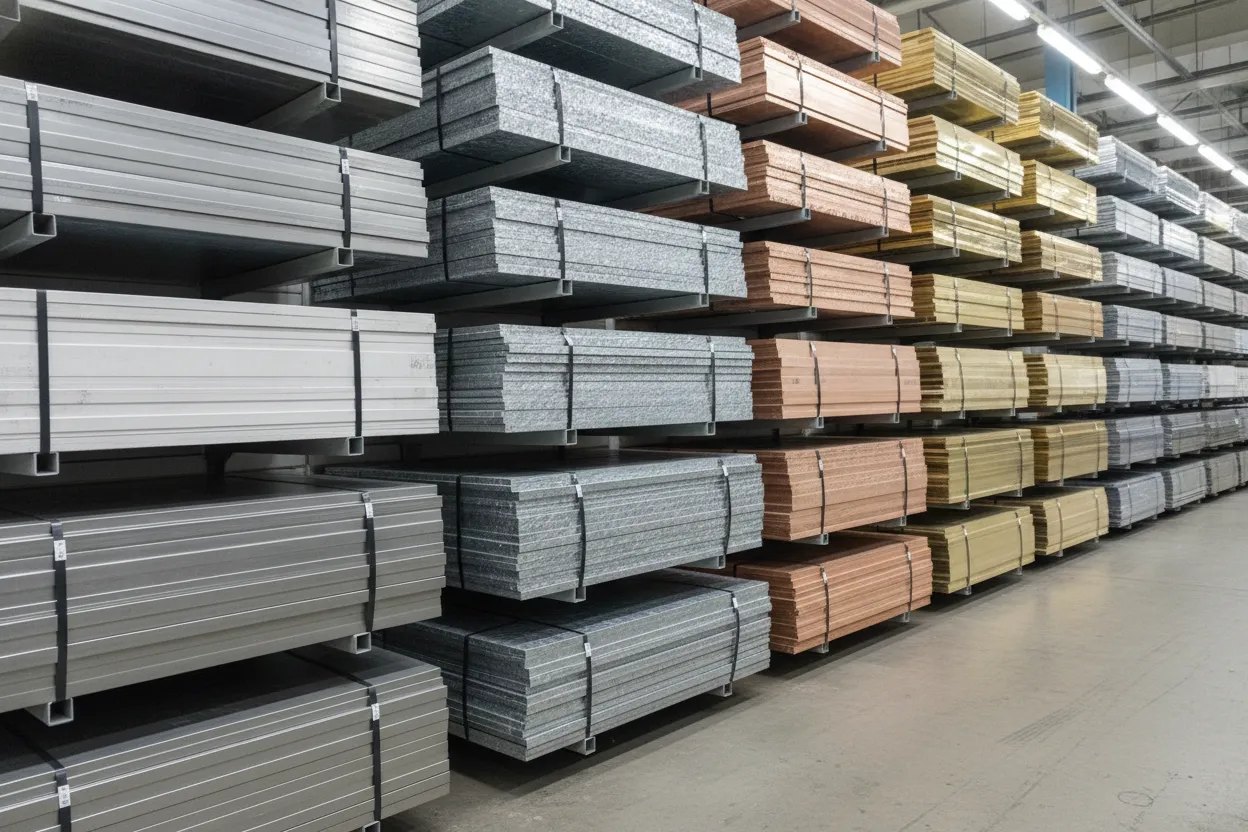
The main types of sheet metal are carbon steel (hot-rolled and cold-rolled), galvanized and other coated steels, stainless steel, aluminum, copper, brass and titanium. Each differs in strength, weight, corrosion resistance, formability and cost. This guide compares the different types of sheet metal in one table, explains where each is used and shows how to choose the right sheet metal material for a fabricated part.
What is sheet metal?
Sheet metal is metal rolled into thin, flat pieces that can be cut, bent and joined into parts. Thickness is what separates it from other forms:
| Form | Typical thickness | Typical use |
|---|---|---|
| Foil | below about 0.2 mm | Packaging, shielding, insulation |
| Sheet | about 0.5 mm to 6 mm | Enclosures, panels, brackets, ducts |
| Plate | above about 6 mm | Structural parts, machine bases |
Sheet metal is popular because it gives a high strength-to-weight ratio at low cost, and because sheet metal fabrication needs no molds. Parts go from flat sheet to finished shape by laser cutting, bending and welding.
The two broad categories: ferrous and non-ferrous
Every sheet metal type falls into one of two groups.
- Ferrous metals contain iron. Carbon steel, galvanized steel and stainless steel belong here. They are strong and economical. Plain carbon steel rusts unless it is coated.
- Non-ferrous metals contain no iron. Aluminum, copper, brass and titanium belong here. They do not rust, are usually lighter or more conductive, and cost more.
Types of sheet metal compared
| Type | Strength | Weight | Corrosion resistance | Formability | Relative cost | Typical uses |
|---|---|---|---|---|---|---|
| Hot-rolled steel | Good | Heavy | Low | Good | Lowest | Frames, structural brackets |
| Cold-rolled steel | Good, smoother and more accurate | Heavy | Low | Very good | Low | Enclosures, panels, appliances |
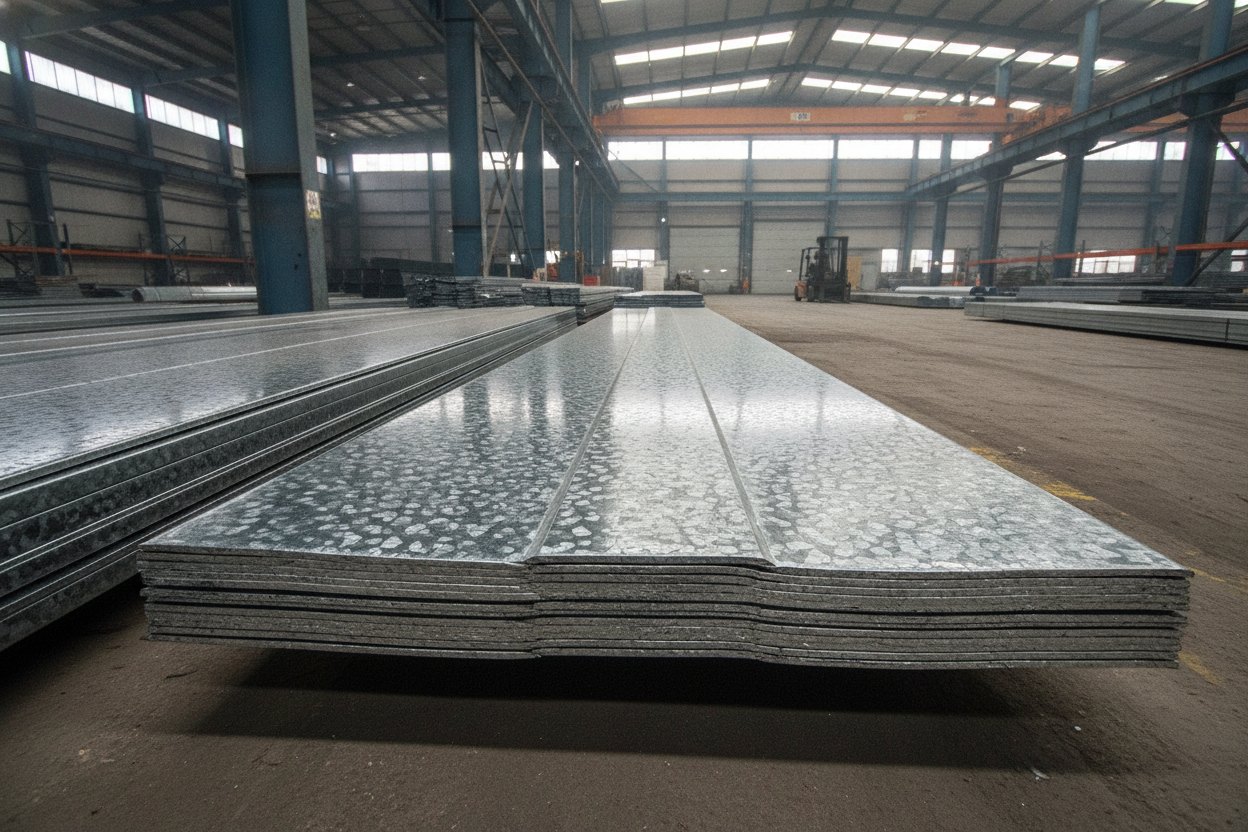
| Galvanized steel | Good | Heavy | Good | Good | Low | Ducts, outdoor cabinets, roofing |
| Stainless steel | High | Heavy | Excellent | Fair to good | High | Food, medical, marine equipment |
| Aluminum | Moderate | Light, about one third of steel | Very good | Very good | Medium | Electronics, aerospace, transport |
| Copper | Moderate | Heavy | Very good | Excellent | High | Bus bars, heat exchangers |
| Brass | Moderate | Heavy | Good | Good | High | Decorative parts, terminals |
| Titanium | Very high for its weight | Light to medium | Excellent | Difficult | Highest | Aerospace, medical |
Carbon steel sheet: hot-rolled and cold-rolled
Carbon steel, often called mild steel, is the most widely used and cheapest sheet metal. It is strong, easy to weld and easy to form.
- Hot-rolled steel is rolled at high temperature. It has a rough, scaled surface and looser thickness tolerance. It suits structural parts where appearance does not matter.
- Cold-rolled steel (CRS) is rolled again at room temperature. It has a smooth surface, tighter thickness tolerance and higher strength. It is the standard choice for enclosures and painted panels.
Both need a protective finish such as powder coating, paint or plating, because bare carbon steel rusts.
Coated steel: galvanized, galvannealed, aluminized and pre-plated
Coated steels solve the rust problem at the mill.
- Galvanized steel has a zinc coating that protects the steel even where it is scratched. It is the common choice for ducts and outdoor parts.
- Galvannealed steel is galvanized and then heat-treated. Its matte surface holds paint well and welds more easily.
- Aluminized steel has an aluminum-silicon coating that resists heat, useful for exhaust and oven parts.
- Galvalume combines aluminum and zinc for long outdoor life, widely used in roofing.
- Pre-plated steel is a general term for sheet coated before fabrication. Cut edges are left with less protection, so design matters.
Stainless steel sheet
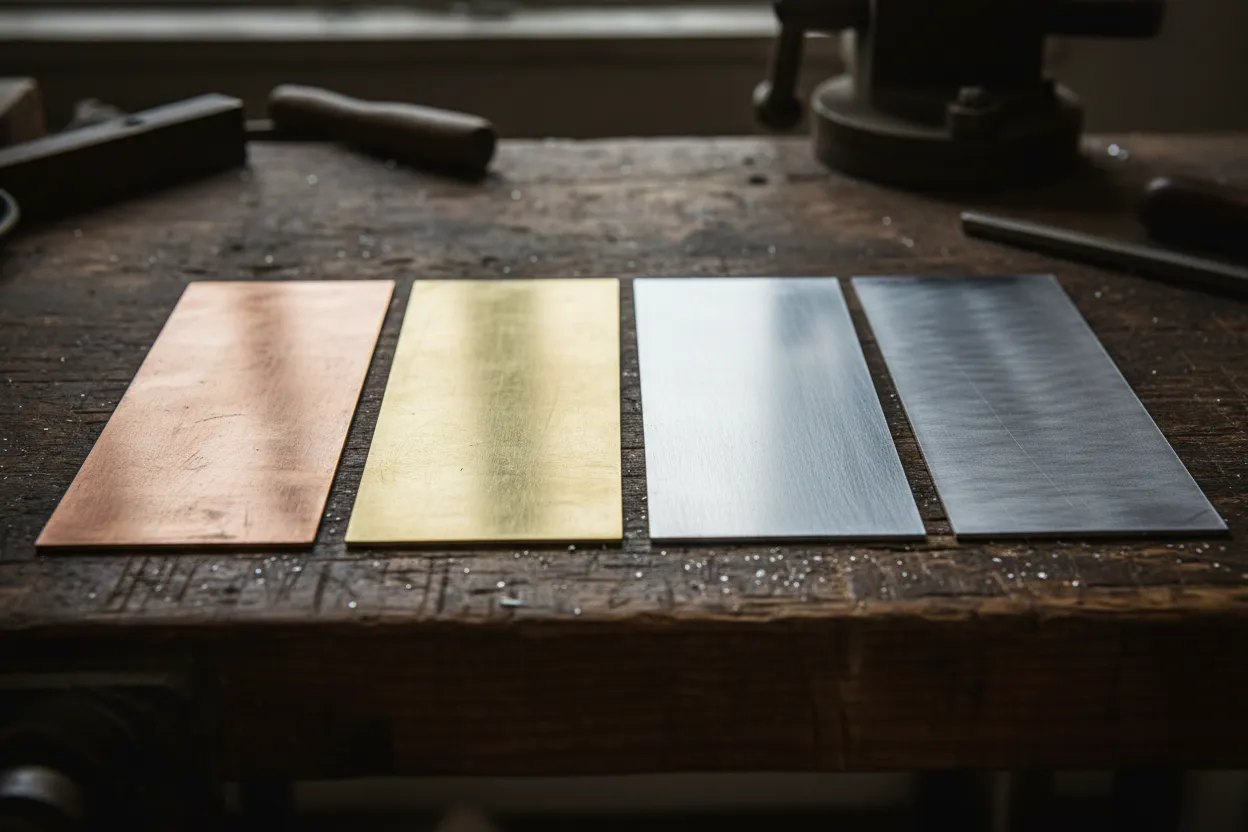
Stainless steel contains at least 10.5% chromium, which forms a self-healing oxide layer. It is strong, hygienic and corrosion-resistant without any coating.
| Grade | Family | Notes |
|---|---|---|
| 304 | Austenitic | The general-purpose grade; good formability and weldability |
| 316 | Austenitic | Added molybdenum for chloride and seawater resistance |
| 430 | Ferritic | Lower cost, magnetic, moderate corrosion resistance |
Stainless steel work-hardens when bent, needs more force to form than mild steel and costs more. It is chosen when corrosion resistance or cleanliness justifies that.
Aluminum sheet
Aluminum sheet is about one third the weight of steel, resists corrosion naturally and conducts heat and electricity well. Common types of aluminum sheet metal are:
| Alloy | Strength | Formability | Notes |
|---|---|---|---|
| 1100 | Low | Excellent | Nearly pure aluminum; very easy to form |
| 3003 | Low to moderate | Excellent | General-purpose sheet |
| 5052 | Moderate | Very good | The usual choice for bent sheet metal parts; good in marine environments |
| 6061 | High | Fair | Stronger, but tight bends can crack; often machined instead |
Aluminum can be anodized for a hard, colored surface. It is the default material for lightweight enclosures, heat sinks and aerospace panels.
Copper and brass sheet
Copper has the best electrical and thermal conductivity of the common sheet metals, and it forms very easily. It is used for bus bars, grounding straps, heat exchangers and roofing details. Brass, an alloy of copper and zinc, is harder, machines well and has a gold color, which makes it popular for decorative parts, terminals and instrument components. Both cost more than steel or aluminum.
Titanium sheet
Titanium offers the strength of steel at a little over half the weight, with outstanding corrosion resistance. It is expensive and difficult to form, so it is reserved for aerospace, medical and chemical applications where no other material will do.
Sheet metal thickness and gauge
Sheet metal thickness is given in millimeters or as a gauge number. With gauge, a lower number means thicker material, and the same gauge number means a different thickness for steel, stainless steel and aluminum.
| Gauge | Steel thickness (approx.) |
|---|---|
| 10 | 3.4 mm |
| 14 | 1.9 mm |
| 16 | 1.5 mm |
| 18 | 1.2 mm |
| 20 | 0.9 mm |
| 22 | 0.8 mm |
Because gauge is ambiguous across materials, specify thickness in millimeters or inches on drawings. Our sheet metal gauge chart lists the full range for steel, stainless steel and aluminum.
How to choose the right sheet metal
Work through these questions in order.
- What environment will the part see? Indoors and dry: cold-rolled steel with a coating. Outdoors or wet: galvanized steel, aluminum or stainless steel. Salt water or chemicals: 316 stainless steel.
- Does weight matter? If so, aluminum is the first choice, and titanium where strength is also critical.
- How strong does it need to be? Steel and stainless steel carry the highest loads for a given thickness.
- How complex is the forming? Tight bends favor mild steel, 5052 aluminum and copper. Hard alloys need larger bend radii.
- Does it need to conduct electricity or heat? Copper first, aluminum second.
- Is appearance important? Stainless steel, brass and anodized aluminum look good without paint.
- What is the budget? Carbon steel is cheapest, then galvanized steel, aluminum, stainless steel, copper and brass, with titanium the most expensive.
Common applications by sheet metal type
| Application | Usual material | Why |
|---|---|---|
| Electronic enclosures | Cold-rolled steel, aluminum | Low cost or low weight, easy to finish |
| HVAC ducts | Galvanized steel | Corrosion protection at low cost |
| Food and medical equipment | Stainless steel 304 / 316 | Hygiene and corrosion resistance |
| Automotive brackets | Carbon steel, aluminum | Strength, weldability, weight |
| Aerospace panels | Aluminum, titanium | Strength-to-weight ratio |
| Electrical bus bars | Copper | Conductivity |
| Decorative trim | Brass, stainless steel | Appearance |
How the material affects fabrication
- Cutting. Laser cutting handles all of these metals. Copper and brass reflect more energy and cut more slowly.
- Bending. Softer metals take tighter bends. Springback is greater in stainless steel and hard aluminum, so tooling and angles are adjusted.
- Welding. Carbon steel is easiest. Stainless steel and aluminum weld well with the right process. Zinc coatings must be managed when welding galvanized steel.
- Finishing. Steel needs coating. Aluminum is anodized or powder coated. Stainless steel is brushed, polished or left as it is.
Sheet metal materials at a glance: which is commonly available?
Not every sheet metal type is equally easy to source. Cold rolled steel, galvanized sheet, 304 stainless steel and 5052 aluminum are the most commonly available sheet metal materials, in the widest range of thicknesses. Copper, brass and titanium are available in fewer sizes and at higher prices. Choosing a common material and a standard thickness shortens lead time and lowers cost, however specialized the finished part is.
Surface finish also varies by type. Cold rolled steel arrives smooth and ready for coating. Hot-rolled steel carries mill scale. Stainless steel is supplied in mill, brushed or mirror finishes, and aluminum can be supplied bare or pre-anodized. If appearance matters, state the surface finish along with the steel grades or alloys on your drawing.