Packaging is expensive, and most of that expense never appears on a packaging purchase order. When companies set out to reduce packaging waste, they usually start with material prices, but the real drain sits in overpackaging, damage, returns, storage, and disposal. Our rapid prototyping guide shows the same pattern on the product side: problems found late cost far more than problems found early.
Packaging Systems, a packaging equipment supplier, reports that these hidden costs sometimes account for 20-30% of total packaging expenses. That range is an industry estimate, not a guarantee for any one company, but it explains why packaging waste deserves a proper audit rather than a quick glance at the materials bill.
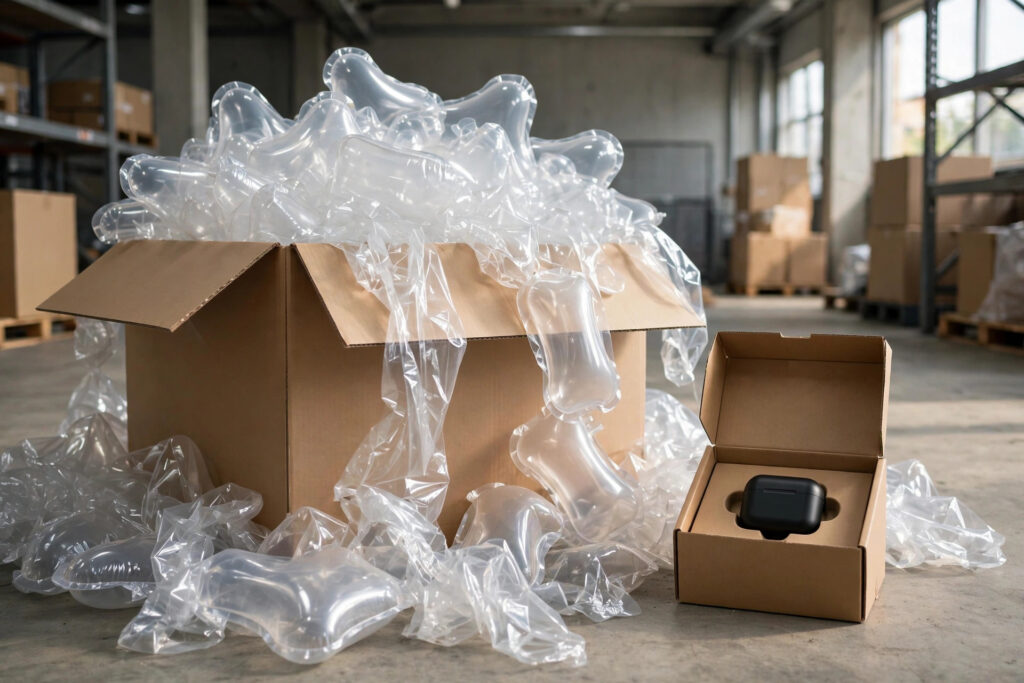
The most common leak is material used for no reason. Packaging Systems reports that companies often use 15-20% more material than necessary because specifications are outdated or never optimized. Overpackaging, oversized boxes, and heavy void fill all add material, weight, and shipping cost at once.
Trim waste shows how small percentages become large sums. Packaging Systems gives the example of a corrugated box maker with $10 million in annual materials: 2% trim waste alone costs $200,000 a year. Right-sizing and lightweighting attack exactly this leak, because a smaller, lighter pack uses less material on every single unit.
Poorly designed packaging also wastes time. Workers on badly designed packing tasks lose productive hours to adjustments, rework, and repacking, and Packaging Systems notes that replacing damaged products, retraining workers, and supervision can exceed 10% of direct labor costs. Training and simpler pack designs cut this cost directly.
Equipment downtime is the other quiet cost. Emergency repairs cost three to five times more than scheduled maintenance, according to Packaging Systems, and the bill does not stop at the repair: lost throughput, overtime, and expedited shipping follow. Preventive maintenance is therefore a packaging cost control, not just a maintenance task.
A pack that fails in transit creates a chain of costs: the damaged product, the return shipment, the replacement, and the customer who may not come back. Mono-material design helps here in a different way, because a simpler structure is easier to make consistently, and consistent packs fail less often than complicated ones.
Dimensional weight, or DIM pricing, is the shipping cost most teams overlook. Carriers charge by size as well as weight, so an oversized box ships air at parcel rates. Right-sizing, flat-pack formats, and better palletization all cut DIM charges and warehouse space at the same time, which is why they belong in any plan to reduce packaging waste.
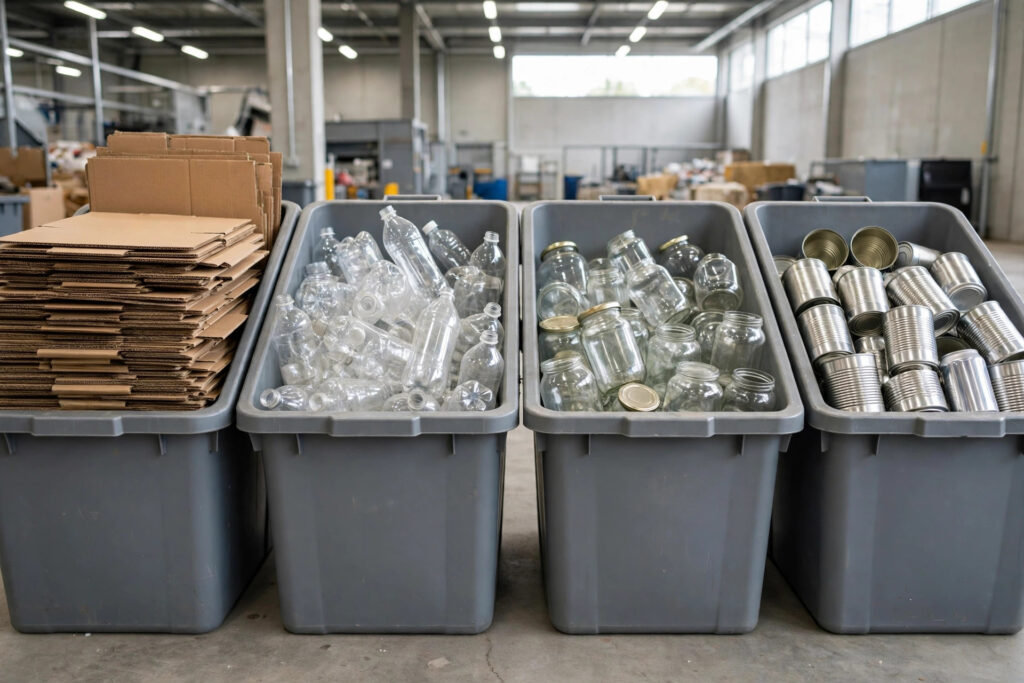
Material choice changes both the waste stream and the recycling outcome. Eurostat reports that the EU generated 83.4 million tonnes of packaging waste in 2022, with paper and cardboard the largest share. The table below uses Eurostat’s 2022 waste shares, with recycling rates from Eurostat for plastic and from the EPRC monitoring report for paper, metal, and glass.
| Material | Share of EU packaging waste, 2022 | EU recycling rate |
|---|---|---|
| Paper & cardboard | 41% | about 87% |
| Plastic | 19% | 41% (2022) |
| Glass | 19% | 74.9% |
| Wood | 16% | not verified |
| Metal | 5% | 77.2% |
Two lessons follow. First, plastic is the weak spot: less than half of EU plastic packaging waste was recycled in 2022, which is why mono-material design and reusable packaging matter most for plastic. Valet Packaging likewise notes that plastic’s low upfront cost hides disposal fees and brand damage. Paper, metal, and glass recycling rates above are EPRC monitoring figures as reported by ScrapMonster; plastic’s 41% is Eurostat 2022.
Start with right-sizing: the pack should fit the product securely with the least void fill that still protects it. Lightweighting, using thinner but still protective materials, cuts material and shipping weight together. Mono-material design then keeps the pack recyclable in practice, because mixed layers are hard for sorting plants to separate.
Reusable and returnable packaging suits closed loops, such as shipments between a factory and its own warehouses, where the same tote or pallet can cycle many times. Flat-pack and collapsible designs save warehouse and truck space for everything else. Good palletization, stacking patterns that protect the load without extra wrap, completes the same job in storage.
Obsolete inventory is packaging waste created before anything ships. When a product is discontinued or rebranded, every custom pack for it becomes waste, and Packaging Systems reports that obsolete inventory write-offs can represent 3-5% of annual material costs. Modular design, base formats shared across product lines, and removable labels instead of direct printing all reduce that exposure.
Order discipline matters just as much. Buying to a real demand forecast, rather than a wishful one, and accepting reasonable minimum order quantities from suppliers avoids months of stock sitting in warehouses. Fewer stock-keeping variants, each used across more products, also means fewer specs to manage and fewer packs to scrap when one product changes.
A recyclable pack that nobody knows how to dispose of still ends up in landfill, because a high recycling rate depends on the pack reaching the right stream. Clear disposal instructions printed on the pack, with QR codes for detailed guidance, raise that chance. Materials should be widely recyclable in the markets where customers actually live, not only technically recyclable somewhere.
Compliance is now a cost line of its own. Extended producer responsibility (EPR) makes producers fund the collection and recycling of the packaging they place on the market, and the EU’s Packaging and Packaging Waste Regulation (PPWR) tightens recyclability and waste-reduction duties. Landfill and disposal fees, plus EPR fees and possible fines, belong in the packaging budget, not outside it.
You cannot fix what you do not measure. Track material use per unit, damage and return rates, DIM charges, storage space, and disposal fees, then audit one product line at a time. Packaging Systems reports that operations addressing these hidden costs can typically reduce total expenses by 8-15%, but that range is an industry estimate, and your own audit is what turns it into a real number.
Train the people who pack. When operators know the right pack for each product and why it matters, damage falls and material use steadies. Cross-training keeps that standard alive when regular staff are away, and supplier partnerships focused on continuous improvement beat suppliers who simply sell more material.
Most packaging waste is preventable, and most of it is found by looking past the materials bill: overpackaging, damage, DIM charges, obsolete stock, and disposal fees. Pick one area, measure it, fix it, and move to the next. Small improvements compound, and the money they free funds growth instead of landfill.
Tuowei Precision manufactures custom parts by CNC machining, injection molding, sheet metal fabrication, and 3D printing, and those parts still need protection in transit. If you need parts built to specification, request a quote from Tuowei Precision and use the checklist above to audit the packaging choices around them.
Teams still choosing a production method can compare options in our SLA vs DLP guide, which covers speed, cost, and quality for 3D printed parts.
Companies reduce packaging waste by right-sizing packs, cutting void fill, switching to mono-material designs, and reusing returnable packaging in closed loops. They audit material use per unit, track damage and DIM charges, and set reduction targets by product line. Training packers and working with suppliers on lighter, simpler designs keeps the savings permanent.
Manufacturers cut packaging waste in production by designing packs alongside the product, standardizing base formats across product lines, and using flat-pack or collapsible designs. They control inventory with demand forecasts, prevent overproduction of custom packs, and maintain equipment so lines run at full efficiency without excess trim or rework.
Sustainable packaging design creates packs that protect the product with the least material, the least waste, and the lowest environmental impact. It favors right-sized, mono-material, and widely recyclable structures, plus reusable formats where loops exist. Good design also prints clear disposal instructions, so the pack reaches the correct recycling stream after use.
Sustainable packaging matters because packaging waste costs money as well as resources: disposal fees, damage, returns, and compliance charges all grow with wasteful packs. It also affects brand reputation, since customers notice excessive packaging and regulators keep tightening EPR and recyclability rules. Lighter, simpler packs cut both costs and environmental harm.
Packaging costs are mostly variable, because material, labor, and shipping spend rise and fall with the number of units packed and shipped. Some elements behave like fixed costs, such as warehousing, equipment, and tooling for custom packs. The hidden costs in this article, including damage, DIM charges, and disposal fees, move with volume too.
Hidden packaging costs are expenses beyond the materials bill: excess material from overpackaging, labor lost to poor pack design, emergency repairs, damage and returns, DIM shipping charges, obsolete inventory, storage space, and landfill or disposal fees. Packaging Systems reports they can reach 20-30% of total packaging expenses.
Every figure in this guide comes from one of the sources below. Where a figure is an industry estimate rather than a measured result, the article says so, and the wood recycling rate is left as not verified rather than filled with a guess.
Reviewed by Leon Xu, Engineer, Tuowei Precision. Last updated: November 2026. This guide gives general packaging-cost guidance for manufacturers shipping parts; Tuowei Precision’s own services are CNC machining, injection molding, sheet metal fabrication, and 3D printing, and no packaging service is claimed here.