
Tuowei Precision provides electronic enclosure manufacturing for consumer devices, IoT products and portable gadgets. We make plastic and metal enclosures by machining, molding, die casting and fabrication, from the first sample housing to full production volume, all from one factory in Shenzhen.
An electronics enclosure does three jobs. It is there to protect sensitive circuit boards and electronic components from drops, dust, moisture and electromagnetic interference. It holds everything in the right place, from screw bosses and display windows to cable entries and buttons. And for consumer products, it is the part the customer sees and judges. The same thinking applies to housings we build for industrial automation and medical equipment, where reliable protection of electrical systems matters most.
Standard enclosure boxes from catalogue brands such as Hammond Manufacturing or Polycase work for test rigs, electrical enclosures and industrial enclosures. A consumer product needs its own design: a shape that matches your brand, openings that line up with your printed circuit board, and a finish that feels right in the hand. Unlike many enclosure suppliers that specialise in one material, we work with both under one roof, so the process is chosen to fit the product.
Volume, material selection and appearance decide which process is right. Here is a quick comparison.
| Process | Typical volume | Materials | Strengths | Limits |
|---|---|---|---|---|
| CNC machining | 1 to a few hundred | Aluminum, stainless steel, ABS, PC | No tooling, tight tolerances, premium finish | Higher cost per part at volume |
| Injection molding | Thousands and up | ABS, PC, PC/ABS, nylon | Lowest cost per part, fine detail, textures | Mold cost and longer lead times |
| Die casting | Thousands and up | Aluminum, zinc, magnesium | Strong metal housings with complex shapes | High tooling cost, needs draft |
| Sheet metal | 1 to thousands | Aluminium, steel, stainless | Low tooling, fast, strong | Simpler shapes, visible bends |
| Vacuum casting | 10 to 50 | Polyurethane (ABS-like, PP-like) | Production-like parts without a steel mold | Short runs only |
| 3D printing | 1 to tens | Nylon, resins | Fastest, any shape | Finish and strength vary |
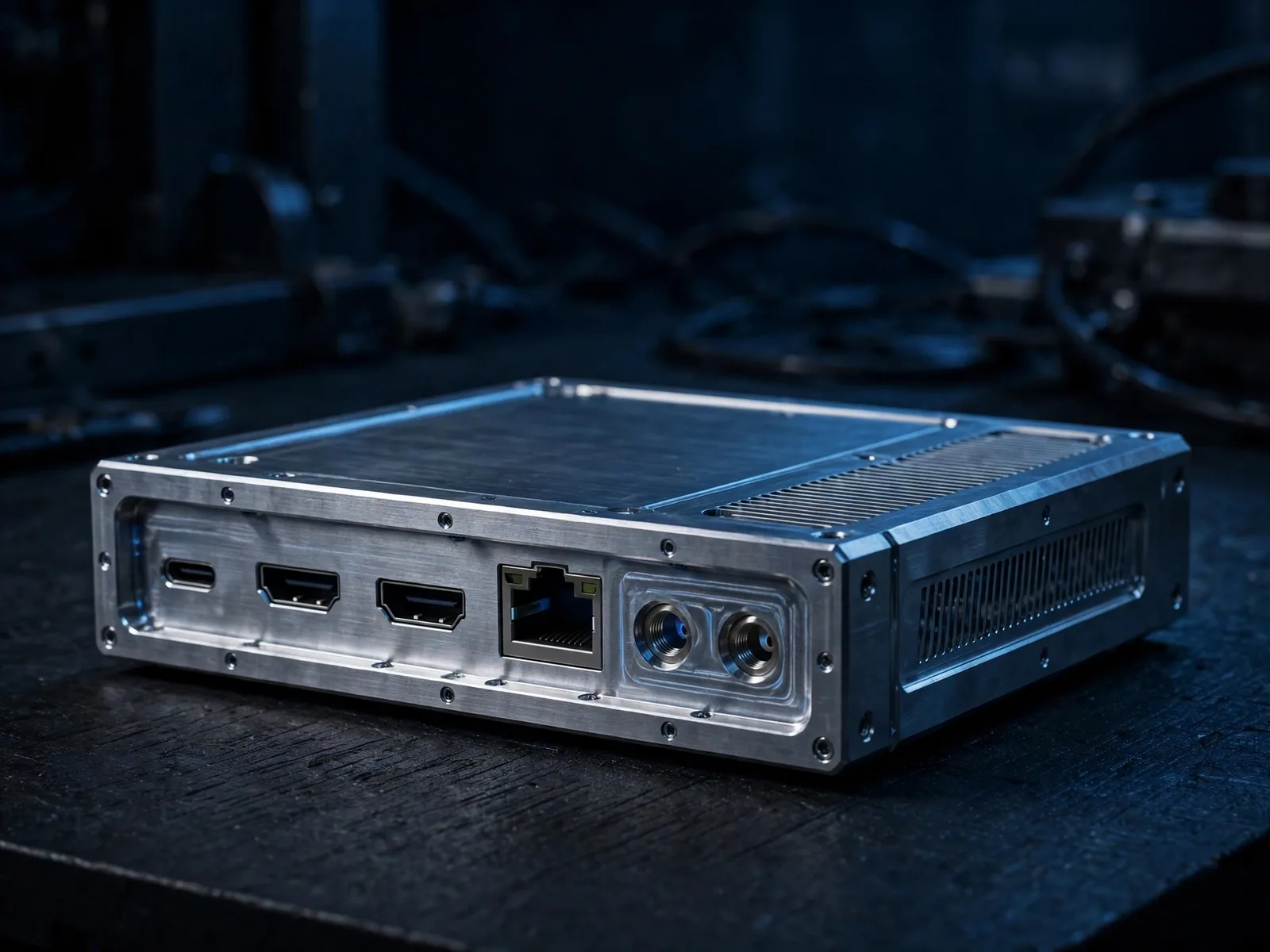
These parts are cut from solid aluminum or engineering polymer billet. They give the premium unibody look found on high-end audio gear, camera accessories and laptop docks, with crisp edges and tolerances down to ±0.005 mm on small features. Because there is no tool, it is also the best prototype route: you can change a port position on Monday and have new parts days later.
The limit is cost at volume. Machining a housing from a block wastes material and machine time, and light tool marks may need bead blasting for a matte finish. For runs in the thousands we usually move the design to die casting or molding. Learn more about our CNC machining services.
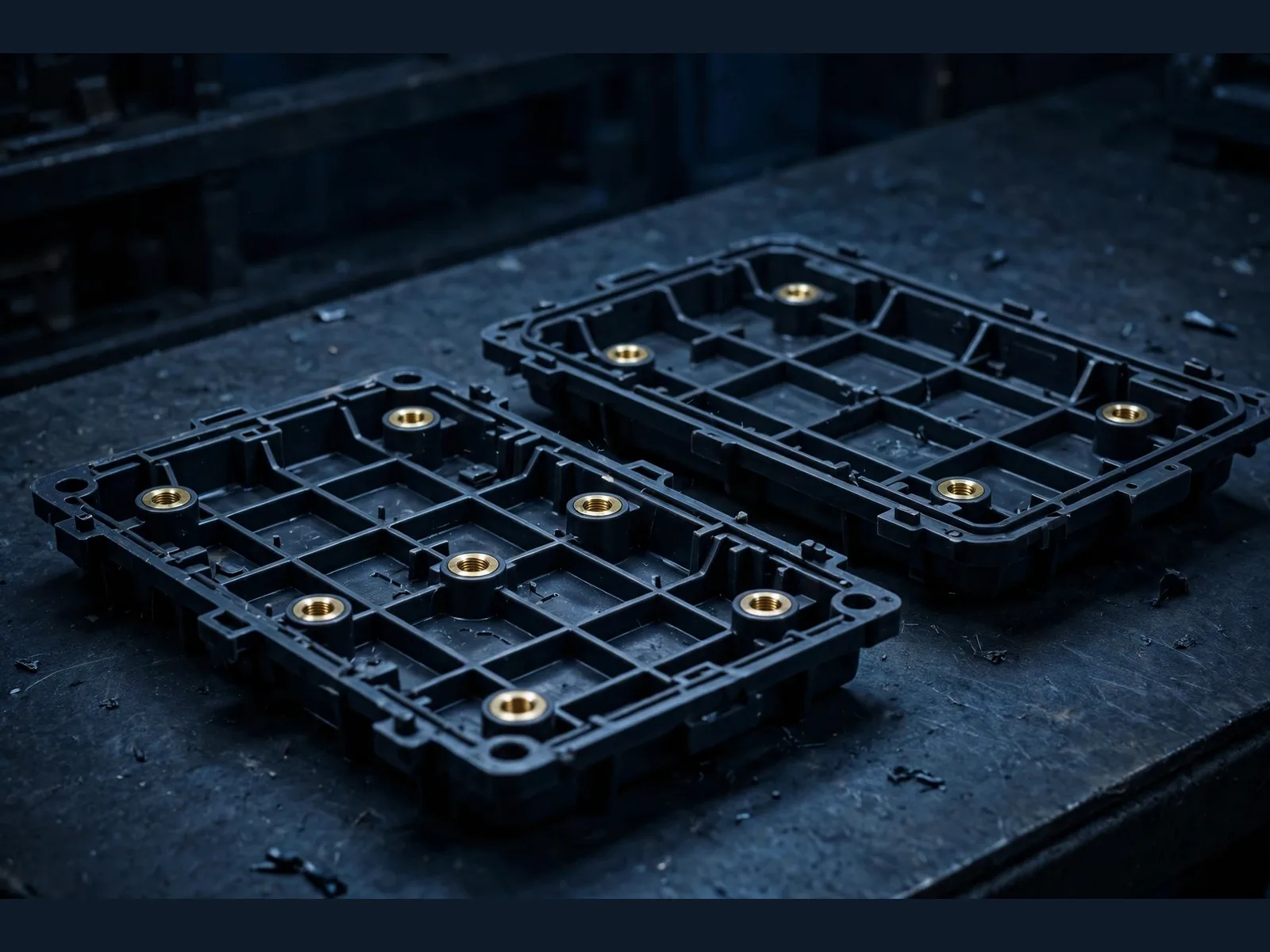
Plastic electronic enclosures are the most common choice for handheld devices, remote controls, smart speakers and IoT sensors. They are light, cost-effective at volume, and do not block wireless signals, which matters for Bluetooth and Wi-Fi products. Plastic enclosure molding uses ABS, polycarbonate, PC/ABS or nylon, with textures or gloss formed straight into the surface.
Good results depend on design for manufacturability: even wall thickness to avoid sink marks, draft on vertical faces, ribs instead of thick sections, and bosses that accept brass inserts. We review these before cutting steel and run a free mold flow analysis. See our plastic injection molding service and overmolding for soft-touch grips.
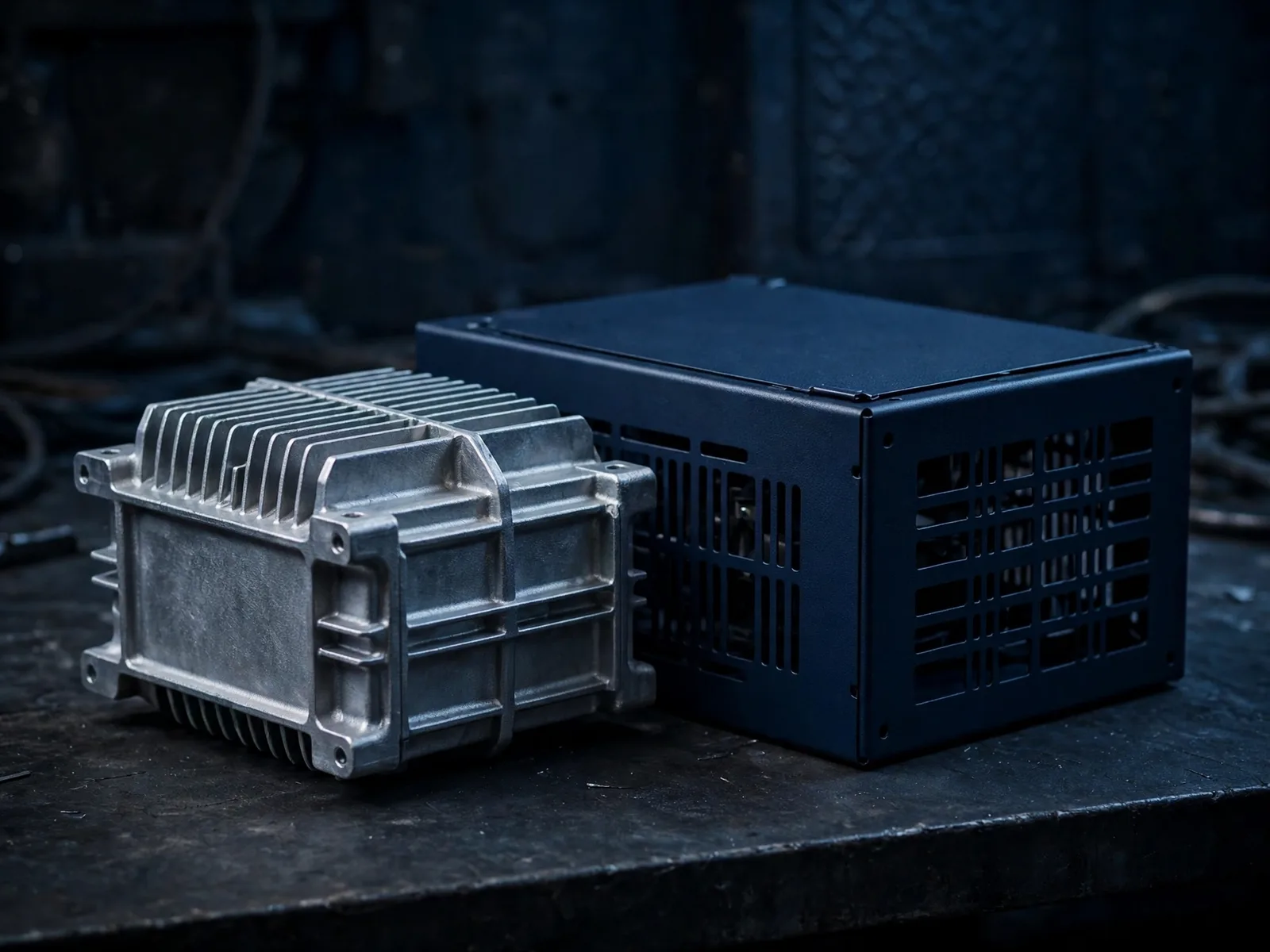
Metal has better mechanical properties, offers more durability in outdoor applications and harsh environments, and shields circuits from interference. It can also work as a heat spreader, pulling heat from the electronics into the case.
Die casting makes strong, corrosion-resistant aluminum, zinc and magnesium housings with walls, bosses, ribs and cooling fins in one part. We cast A380 and ADC12 aluminum for router housings, loudspeaker enclosure frames and projector bodies, and offer magnesium for very light designs. Sealing faces and screw holes are then CNC machined. See die casting services.
These metal parts are laser cut and press brake bent from flat aluminum, steel or stainless steel. They suit computer chassis, power supplies, amplifiers and rackmount boxes for 19-inch racks, with ventilation slots cut in the same step. Tooling cost is low, parts can ship in as little as 3 days, and powder coating gives a lasting colour. Read more on our sheet metal fabrication page.
| Factor | Plastic enclosure | Metal enclosure |
|---|---|---|
| Weight | Lighter | Heavier, except magnesium |
| Wireless signals | Passes signals | Blocks signals unless a window is added |
| EMI shielding | Needs conductive coating | Shields naturally |
| Heat | Insulates | Spreads heat |
| Feel | Warm, can be textured | Cool, premium |
| Cost at volume | Lowest | Higher |
Many consumer products combine both: a die cast or machined metal frame for strength and heat, with polymer covers where antennas sit. If your device has Wi-Fi, Bluetooth or cellular radios, decide the antenna location first.
One mistake we see often: a prototype machined from solid looks perfect, but the design has no draft or has undercuts, so it cannot be molded or cast without changes. If volume is the goal, design for molding first and machine the prototypes to that design.
The surface finish turns a functional box into a consumer product. Anodizing and bead blasting give aluminum enclosures a soft matte look, powder coating protects steel and die cast parts, and laser etching adds logos and regulatory labels. Molded parts can be textured, painted or given a conductive coating to shield electronics. See our surface finishes page.
Enclosures for hot electronics often include a thermal part. We make both: see our custom heat sink manufacturer page. For prototyping methods, materials and the full product range, visit consumer electronics manufacturing.