需要专业的机械加工解决方案吗?拓维模型的团队随时准备为您提供全方位的制造支持。立即联系我们,获取您正在进行或即将开展的项目的报价!
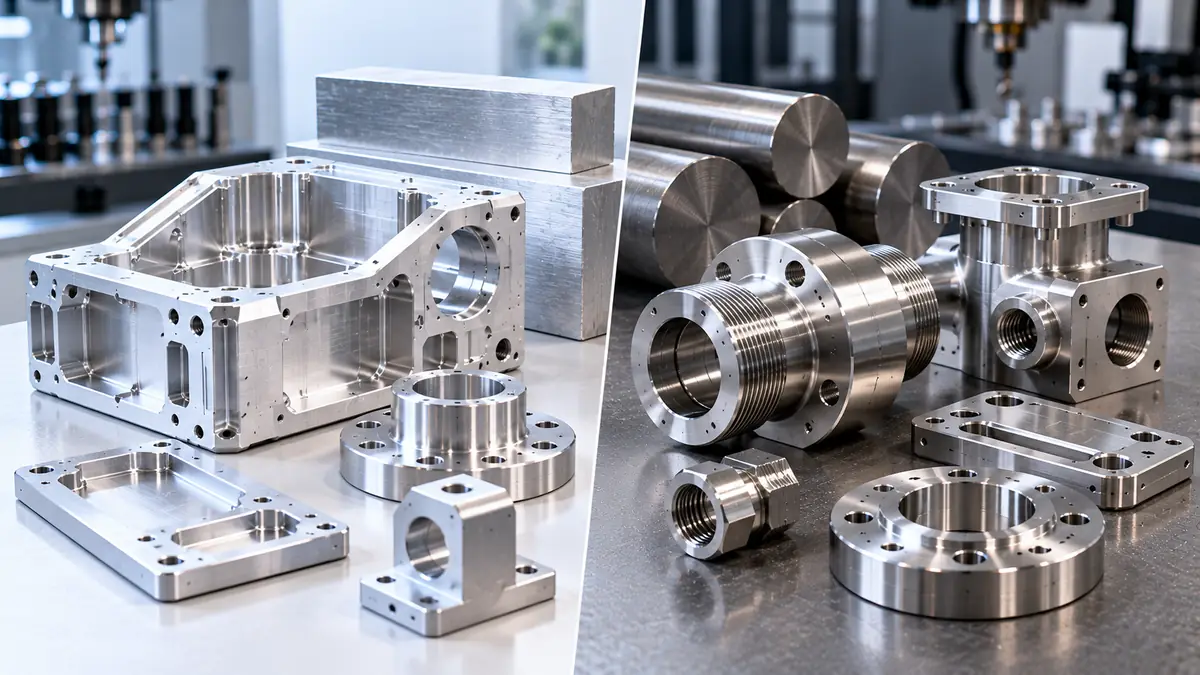
Most material decisions for machined parts get made on one property. Usually that is corrosion resistance or price, and the rest gets discovered when the first batch arrives. That is how a bracket ends up three times heavier than it needed to be, or an outdoor enclosure starts to pit. Aluminum vs stainless steel for CNC machined parts is a decision with several variables, and it is worth settling before the drawing is released.
简短回答: 当重量、成本和交货周期是零件设计的主要考量因素,且零件在室内或温和环境下使用时,应选择铝合金,通常为6061-T6。当零件需要接触氯化物、经受灭菌处理、持续受热、承受滑动磨损或在狭小空间内承受高负荷时,应选择不锈钢,通常为304或316L。 铝材加工速度更快,成本更低。不锈钢则能承受更恶劣的使用环境。
本指南针对会影响零件和报价的各项属性,对这两种材料进行了对比。随后,它还探讨了大多数对比分析中常被忽略的内容:更换材料会对公差、螺纹、表面处理以及从原型制作到量产的过程产生何种影响。
以下是铝材与不锈钢在决定数控零件选择时最常被参考的各项参数上的对比。
| 物业 | 6061-T6 铝合金 | 304不锈钢(退火) |
| 密度 | 2.70 克/立方厘米(0.098 磅/立方英寸) | 8.00 克/立方厘米(0.289 磅/立方英寸) |
| 屈服强度 | 276 MPa(40 ksi),典型值 | 205 MPa(30 ksi),最低值 |
| 抗拉强度 | 310 MPa(45 ksi),典型值 | 515 MPa(75 ksi),最低值 |
| 弹性模量 | 69 GPa(10 Msi) | 193 GPa(28 Msi) |
| 导热性 | 167 W/m·K | 16.2 W/m·K |
| 热膨胀 | 23.6 µm/m·°C | 17.3 µm/m·°C |
| 电导率 | 约43%的IACS | 约2.5% IACS |
| 可加工性 | 优秀 | 公平;劳动使人坚韧 |
| 耐腐蚀性 | 适合室内使用;在恶劣环境下使用时需进行阳极氧化处理 | 非常好;316L 适用于氯化物环境 |
| 每个部件的成本 | 较低 | 更高 |
| 焊接性 | Harder; TIG or MIG, oxide must be cleaned first | Easier; control heat input to avoid sensitization |
| 磁性 | 非磁性 | Non-magnetic when annealed (304/316); slightly magnetic if cold-worked |
以下是这些热处理等级的典型手册值。热处理等级、坯料形状和供应商都会影响这些数值,因此请根据您所用材料的钢厂证书确认关键数值。
Cost needs the same care as strength: it depends on how you measure it. By weight, aluminum can cost more than stainles steel, but by volume it is cheaper, because one kilogram of aluminum makes almost three times as much part. On the quote, though, machine time matters more than either metal price.
这要看你指的是哪种强度,而答案往往会让人感到惊讶。
屈服强度是指零件开始发生永久变形时的应力。以此为标准,退火304的屈服强度实际上低于6061-T6。 不锈钢在极限抗拉强度、硬度和耐磨性方面更胜一筹。在刚度方面,它也占据绝对优势。其弹性模量(即在载荷作用下抵抗弯曲的能力)约为铝材的2.8倍,因此同等厚度的不锈钢板挠度远小于铝板。 若需要极高的强度,H900状态下的17-4 PH材料的最小屈服强度可达约1,170 MPa(170 ksi)。
Aluminum’s advantage is strength per unit of weight. 7075-T6 reaches roughly 572 MPa (83 ksi) tensile at under 2.9 g/cm³, which is why it shows up in robot arms, drone frames and anything with a motor that has to accelerate the part. That weight saving is what makes aluminum the usual choice for moving mechanisms. See our robot arm manufacturing service for machined arms, joints, and frames built for speed and payload.
有一个细节很容易被忽略。将刚度除以密度,这两种材料的数值几乎不相上下。因此,在“刚度高且轻”这一点上,铝与不锈钢几乎不分伯仲。当零件必须在固定尺寸内保持刚度时,不锈钢更具优势;而当质量是限制因素时,铝则更具优势。
是的,差距很大。正是这一差距解释了铝制零件与不锈钢零件之间价格差异的大部分原因。
铝材质地柔软,切削时会碎成短屑,且其将热量从切削刃带走的速率约为不锈钢的十倍。加工车间可以采用高主轴转速和大进给量进行加工,且刀具寿命较长。而加工不锈钢则截然不同:
加工厂采取的应对措施包括使用锐利的涂层硬质合金刀具、降低表面切削速度、保持稳定的切屑负荷、采用高压切削液以及使用刚性夹具。所有这些措施都会增加机加工时间。在大多数报价中,机加工时间对数控加工成本的影响远大于棒材成本。
Aluminum commonly runs at three to five times the cutting speed of stainless steel, with longer tool life and cleaner chips. That speed gap is the main reason machine time, not bar stock, drives most of the price difference between the two metals.
有一点例外值得注意。303不锈钢的硫含量至少为0.15%,这会导致切屑断裂,因此其加工难度明显低于304不锈钢。在大批量生产中, 数控车削 配件和轴。其取舍在于,303的焊接性能较差,且耐氯化物性能不如304。如需了解金属和塑料的更全面排名,请参阅我们的指南 按可加工性分类的数控加工材料。
<!– IN-CONTENT IMAGE: corrosion-anodized-vs-passivated.webp | ALT: Anodized 6061 aluminum part beside a passivated 316L stainless steel part after salt exposure –>
不锈钢之所以耐腐蚀,是因为其铬含量至少为10.5%。铬会形成一层薄薄的钝化膜,当这层膜被划伤时,它能自行修复。304不锈钢适用于大多数室内、食品接触及大气环境中的应用。 来自海水、道路融雪盐或清洁化学品的氯化物会导致304不锈钢产生点蚀,而316不锈钢通过添加2%至3%的钼来抵抗这种腐蚀。
在加工过程中,工具中的游离铁可能会嵌入不锈钢表面,从而在后期形成锈斑。根据 ASTM A967/A967M 可去除该污染物,对于任何用于湿式工况的不锈钢部件,均应在图纸上予以标注。
铝会自行形成氧化层,在室内环境下已足够。若用于室外、需冲洗或接触海水的情况,则需要进行阳极氧化处理或施加转化涂层。
将这两者结合起来需要谨慎。 当铝制和不锈钢部件在潮湿环境下接触时,铝会优先发生腐蚀。美国国家航空航天局(NASA)针对飞行硬件制定的防腐标准, NASA-STD-6012A, 要求对像这样的异种金属组件进行电化学腐蚀评估并采取防护措施。常见的解决方法包括使用尼龙垫圈、密封剂或涂层紧固件。
在高温条件下,铝合金会在不锈钢通常工作温度下失去大部分强度。如果零件长期处于高温状态,应基于高温数据而非室温数据进行设计。关于导热性,下表给出了明确答案:对于散热器、汇流排和电磁干扰(EMI)屏蔽罩,铝是切实可行的选择。
The limits are far apart. Aluminum softens markedly above about 200 °C (400 °F) and melts at 660 °C (1,220 °F), while 304 stainless melts around 1,400 to 1,450 °C. In the cold the picture flips: aluminum gains tensile strength as temperature falls, while steel turns brittle. In hot chloride solutions above roughly 60 °C, both 304 and 316 risk stress corrosion cracking, and a duplex grade such as 2205 is the usual step up.
No single test is conclusive on its own, so use two or three together. The weight test is the fastest: an aluminum part feels strikingly light next to the same size in stainless. The magnet test needs care, because cold working can make 304 slightly magnetic, and a magnet cannot separate 304 from 316 at all. For certified parts, only a positive material identification check with an XRF analyzer, backed by the mill certificate, counts.
| Test | 铝质 | 不锈钢 |
| Weight, same size piece | Much lighter, about one third the weight | About three times heavier |
| Magnet | 非磁性 | Usually non-magnetic when annealed (304/316); magnetic if ferritic or heavily cold-worked |
| Scratch (Mohs hardness) | About 2.2, scratches easily | 5.5 to 6.3, resists scratching |
| Spark test on a grinder | Few or no sparks | Bright, numerous sparks |
| Sound when struck | Dull thud | Clear ring |
确定选用铝还是不锈钢,这只是决策的一半。“不锈钢”这一术语若仅出现在图纸上,会让加工厂根据其库存情况随意选择合适的牌号,因此务必明确指定合金种类和状态。
| 等级 | 最适合 | 请注意 |
| 6061-T6 铝合金 | 支架、外壳、固定件、散热器 | 需要一种适用于恶劣环境的表面处理 |
| 7075-T6 铝合金 | 轻质、高承重结构部件 | 可焊性差;耐腐蚀性不如6061 |
| 303不锈钢 | 大批量车削件和轴 | 焊接性能较差;在氯化物环境中的耐腐蚀性弱于304 |
| 304不锈钢 | 食品设备、通用机柜 | 氯化物中会产生坑洼;会发生冷作硬化 |
| 316L不锈钢 | 船舶、化工、医疗零部件 | 加工速度比304慢 |
| 17-4 PH 不锈钢 | 轴、销、高负荷部件 | 热处理会增加一个工序和交货周期 |
6061铝合金是大多数工作的默认选择,且阳极氧化处理效果均匀。挤压型材通常供应给 ASTM B221,因此请在引用规格时注明合金和状态。请参阅我们的 铝材数控加工 库存和表面处理选项页面。如果您正在两种常见的奥氏体钢级之间进行选择,我们的 304与316不锈钢对比 更深入地探讨。
| 元素 | 6061 铝合金 | 7075 aluminum | 304不锈钢 | 316L不锈钢 |
| 铬 | 无 | 无 | 18–20% | 16–18% |
| Nickel | 无 | 无 | 8–10.5% | 10–14% |
| 钼 | 无 | 无 | 未指定 | 2–3% |
| 镁 | 1.0% | 2.5% | 无 | 无 |
| Silicon | 0.6% | 无 | 无 | 无 |
| 锌 | 无 | 5.6% | 无 | 无 |
| 铜 | 无 | 1.6% | 无 | 无 |
Stainless values are ASTM A240 ranges (as published on Tuowei’s own 18/8 stainless steel page); aluminum values are nominal compositions (Kloeckner).
The chemistry explains the grade table. The 2 to 3% molybdenum in 316L is the whole difference in chloride
在未重新审查图纸的情况下更改图纸上的材料,是导致首件检验不合格的最常见原因之一。
铝的热膨胀系数比304不锈钢高约36%。一个150毫米长的铝制零件,如果在从加工机到检测室的过程中温度升高5 °C,其长度会增加约0.018毫米。同等尺寸的不锈钢零件长度则会增加约0.013毫米。 对于公差为±0.01毫米的特征,这种热膨胀可能耗尽大部分公差带。对于公差要求严格的工件,请在图纸上注明:在20 °C下进行检测。
不锈钢螺栓在不锈钢攻丝孔中可能会发生咬合,即在组装过程中螺纹发生冷焊并卡死。使用防卡死剂、涂层螺栓或混合等级的螺栓可防止此现象。 铝材则存在相反的问题:当螺钉反复拧入和拧出时,攻丝螺纹会磨损,因此在使用或维护过程中,凡是可能发生这种情况的地方,均应指定使用螺旋螺纹嵌件。
硬阳极氧化(III型)通常形成约0.05毫米(0.002英寸)的氧化层,其中大约一半向外延伸至原始表面之外。内孔、过盈配合和螺纹需要进行遮蔽处理,或预先加工至最终尺寸。 钝化处理几乎不会去除任何材料,因此不锈钢件的尺寸基本上保持在机加工后的状态。
Aluminum is the harder of the two to weld. Its high thermal conductivity pulls heat away from the joint, its oxide layer melts far above the base metal, and the heat-affected zone loses strength after welding. TIG or MIG with an inert gas shield is the usual route, and the joint must be cleaned of oxide first.
Stainless steel welds more easily with standard methods, but it brings its own risk. Too much heat can cause sensitization, where chromium carbides form at the grain boundaries and the joint loses corrosion resistance, so heat input must be controlled. Welded stainless also needs passivation afterward to restore the passive film at the weld.
先用6061铝合金制作原型,随后转用不锈钢进行量产,这种做法很常见,通常也颇为明智。铝制零件的制造速度更快、成本更低,而铝与不锈钢之间的差异往往要到后期才会显现,而这些差异在原型阶段通常可以被掩盖。
明确该原型能证明什么很有帮助。几何形状、配合度和装配顺序都能很好地转移。但重量却无法转移:不锈钢部件的重量几乎是原部件的三倍。刚度也无法转移,因为不锈钢部件的刚度约为原部件的2.8倍,这会导致运动装配体的固有频率发生偏移。 成本方面则完全无法转移。在6061材料中成本较低的深窄凹槽和薄壁结构,在316L材料中会使循环时间成倍增加。
我们的原则是,在发布设计之前,至少对生产材料进行一次试制;或者在订购原型之前,先对不锈钢材料进行DFM审查。我们的 快速原型制作服务 可以从一张图纸中并排引用这两种材料。
对于大多数用于室内、对重量要求较高或以成本为导向的零件而言,6061-T6铝合金是更优的默认选择,因为它加工速度快、报价低且易于表面处理。 当零件需要应对氯化物、灭菌、持续受热或严重的滑动磨损时,应直接选用不锈钢,而且在大多数情况下应选用316L而非304。
无论如何,在选择数控加工零件所用的铝材还是不锈钢时,最终决定应基于使用条件,而非首先想到的材料特性。请在图纸上明确标注具体的材质等级、表面处理方式及检测温度。
| Typical part or service | Usual pick |
| Indoor brackets, housings, fixtures | 6061-T6 铝合金 |
| Heat sinks, bus bars, EMI enclosures | 铝质 |
| Food equipment, general indoor enclosures | 304不锈钢 |
| Marine, chemical, medical, autoclave | 316L不锈钢 |
| Small envelope, high load, sliding wear | Stainless, often 17-4 PH |
| Prototype before production | 6061 aluminum, then one iteration in the production material |
如果您想征求第二意见,请将您的图纸发送至 拓维精密. 我们的工程师会在每个项目中审查材料、公差和表面处理,作为 数控加工服务 引用:从单件原型到批量生产。
For corrosion-resistant parts in 304 and 316, see our 不锈钢数控加工 服务。

作者:安迪,拓维模型制造工程师。. 安迪专攻数控加工、精密制造和生产工程领域,在从快速原型制作到大规模量产的整个项目过程中拥有丰富的实践经验。他与工程和制造团队紧密合作,共同评估材料、公差、加工工艺以及设计可制造性。 他的文章提供了实用且具有技术深度的见解,旨在帮助工程师和采购人员做出更明智的制造决策、优化生产效率,并确保零件质量的一致性。欢迎了解拓维模型的数控加工和定制制造解决方案,为您的下一个项目提供支持。.
从快速原型制作到可扩展的生产,Tuowei Precision 提供可靠的数控加工服务,在每个环节都确保精度与一致性。立即启动您的项目。.
阅读我们关于数控加工、材料、表面处理及行业趋势的最新指南,以做出更明智的生产决策。