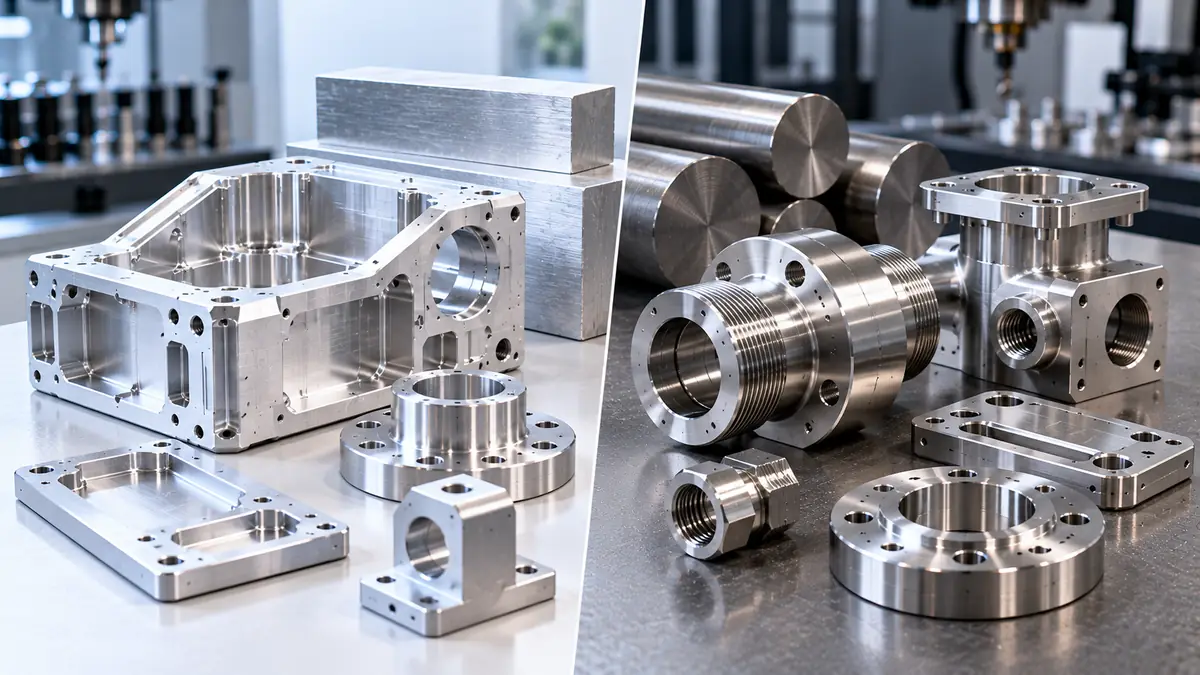
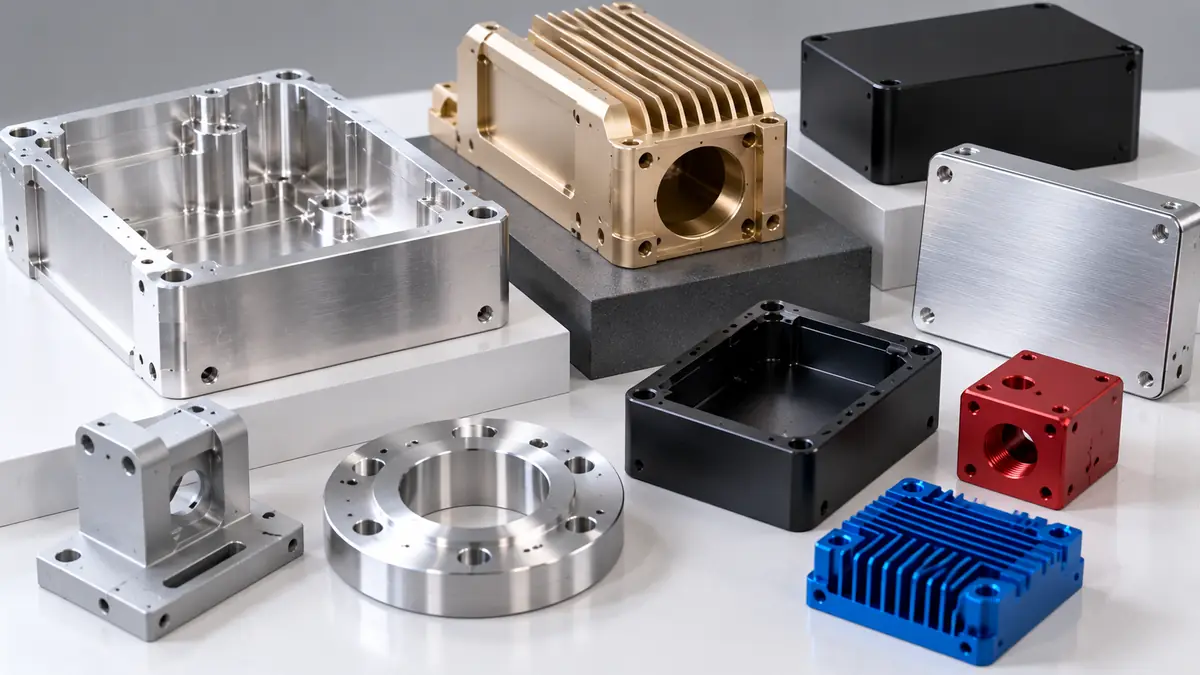
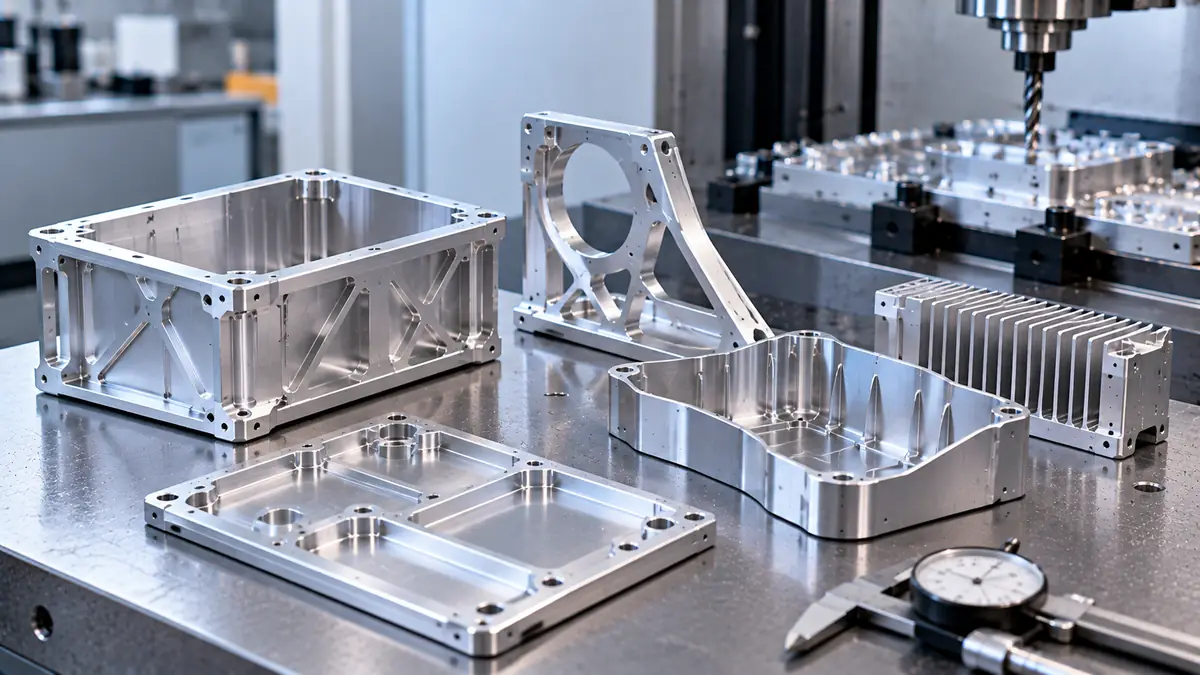
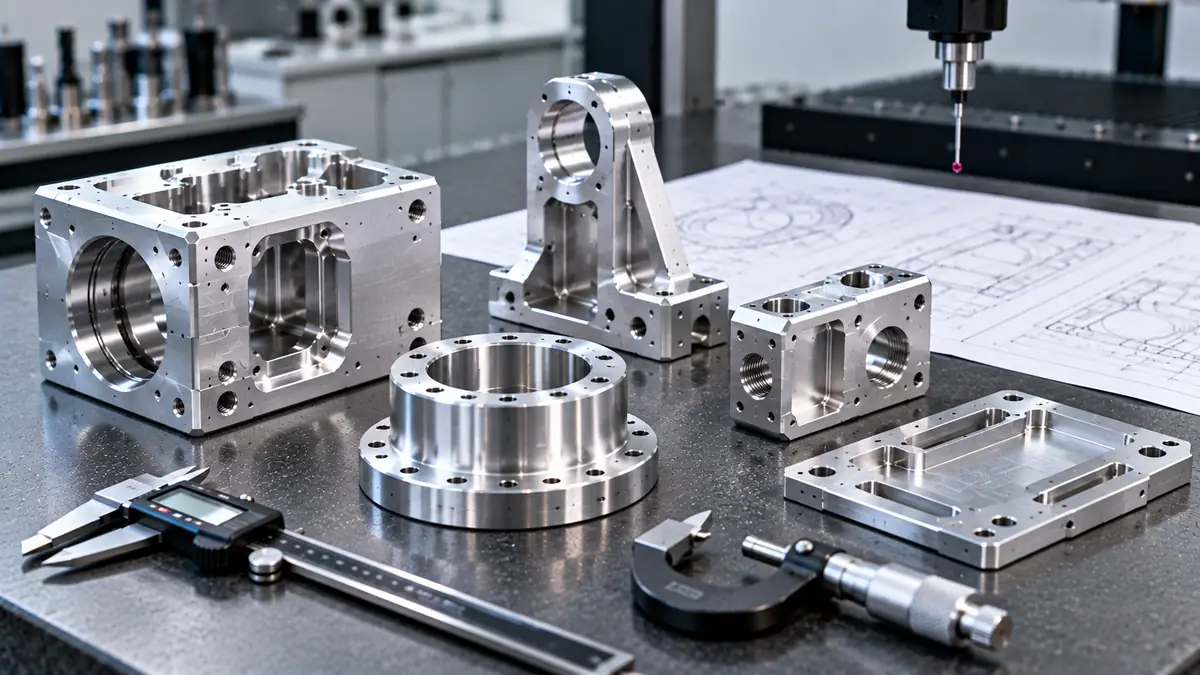
需要专业的加工解决方案?拓维 Proto 团队可满足您的所有加工需求。现在就联系我们,为您正在进行或即将进行的项目报价!
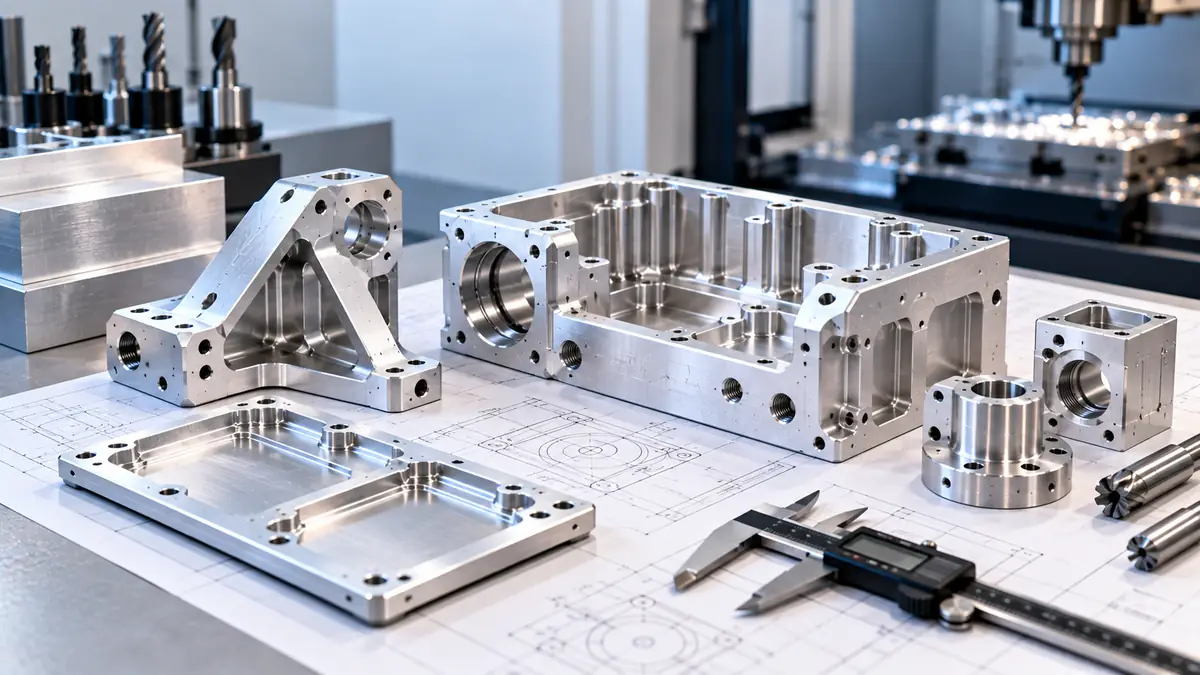
5-axis CNC machining for aluminum is worth the higher hourly rate when a part would otherwise need about four or more setups on a 3-axis mill, when features on different faces must line up tightly, or when the part has angled holes, undercuts, or sculpted surfaces. For flat, prismatic parts, 3-axis is usually cheaper.
Quick answer: A tilting-axis machine costs more per hour, but it can finish a multi-sided part in one or two setups instead of several. Fewer setups mean less handling, less re-clamping error, and often a lower cost per part. Most “5-axis” aluminum work is actually 3+2 positional machining, which is cheaper than full simultaneous cutting.
A standard mill moves the tool along three linear axes: X, Y, and Z. A five-axis machine adds two rotary axes, usually called A, B, or C, that tilt and rotate the part or the spindle. The tool can then reach almost any face of the part without taking it out of the vise.
Two machine layouts are common:
The rotary axes have to be calibrated so the machine knows exactly where their centers of rotation are. ISO 230-7 is the international test code for the geometric accuracy of axes of rotation, and a serious shop checks its rotary axes regularly. That calibration is part of why machine time on these centers costs more.
There are two ways to use the extra axes, and the difference matters for your quote.
| 3+2 positional machining | 同步5轴 | |
| How it works | Rotary axes tilt the part, lock, then the tool cuts with X, Y, Z | All five axes move together during the cut |
| Best for | Multi-sided parts, angled holes and faces | Sculpted surfaces, impellers, blades, complex blends |
| Programming | Close to 3-axis programming | Complex, needs full 5-axis CAM and collision checking |
| 费用 | 较低 | 更高 |
Most machined aluminum housings, brackets, and manifolds need only 3+2 positional machining, not continuous motion. If your part has no free-form surfaces, you probably do not need simultaneous motion, and you should not pay for it.
The hourly rate on a five-axis machine is higher than on a 3-axis mill for several reasons:
That is the cost side. The saving comes from what the machine removes: extra setups, extra fixtures, handling time, and the scrap that comes from re-clamping errors.
These are the situations where the higher rate usually pays for itself.
1. The part needs many setups on a 3-axis mill. Each setup means unclamping, flipping, re-indicating, and re-probing. Once a part needs roughly four or more setups on a 3-axis machine, the tilting machine usually wins on total cost.
2. Features on different faces must line up. Every time a part is re-clamped, a small positioning error creeps in. If a bore on one face must hold a tight true position relative to a datum on another face, cutting both in one setup removes that error. Position and datum rules are defined in ASME Y14.5.
3. The part has angled holes or compound angles. On a 3-axis mill these need special angle fixtures. A 5-axis machine simply tilts the part.
4. Deep features need a short tool. Tilting the part lets a short, stiff tool reach a deep wall or pocket that would otherwise need a long tool. Short tools chatter less, which matters in aluminum where thin walls vibrate easily.
5. The part has sculpted or blended surfaces. Impellers, ergonomic housings, and molds need simultaneous 5-axis for a good finish without hand polishing.
6. You can combine several parts into one. A single 5-axis part can sometimes replace a welded or bolted assembly, cutting assembly time and tolerance stack-up.
A quick way to judge whether multi-axis work is worth quoting is to count setups yourself before you ask.
Take a manifold with ports on four sides plus one angled port. Counting the final operation, that is six setups on a 3-axis mill, which makes it a clear candidate for a tilting machine.
If the count is one or two, a 3-axis quote will almost always be lower. At three it is worth asking for both quotes. At four or more, the part is a strong candidate for tilting-axis work.
More axes are not always the answer, and a good supplier will tell you so.
Our position: do not specify “5-axis” on a drawing. Specify the geometry and tolerances you need, and let the shop choose the process. Asking for a process can raise your price without improving the part.
Aluminum brings a few specific advantages to multi-axis work.
A few design choices make multi-axis parts faster and cheaper:
Two quotes for the same aluminum part can look very different because they assume different processes. Before comparing prices, ask each supplier:
The lowest price is only useful if it covers the same scope.
Paying premium rates for 3-axis parts. If every feature is on the top and bottom faces, a 3-axis quote will almost always be lower.
Assuming more axes fix every tolerance problem. It removes re-clamping error, but it does not remove heat, tool wear, or stress in the stock. Those still need controlling.
Forgetting the last operation. If the part is held by a tab, the face where the tab is removed usually needs a second, simpler operation. Budget for it.
Asking for simultaneous motion when 3+2 is enough. Simultaneous programming costs more and rarely improves a prismatic part.
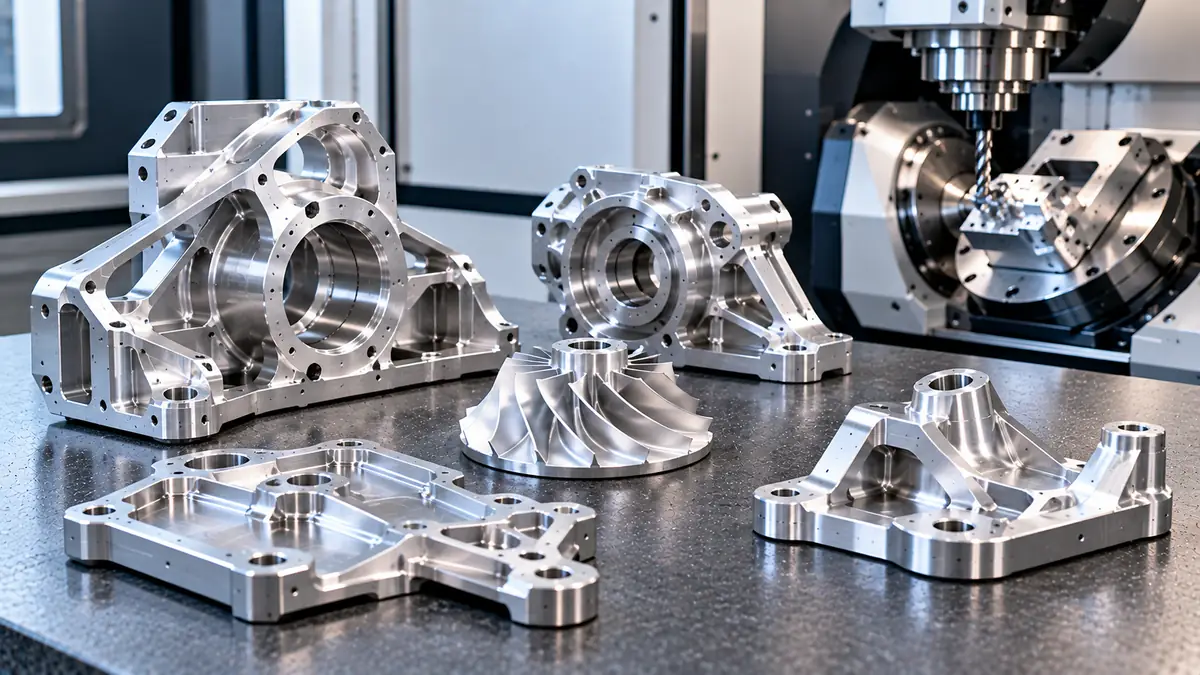
5-axis machining is used for parts with features on many faces, angled holes, undercuts, and sculpted surfaces. Common aluminum examples include aerospace brackets, robot arms, manifolds, impellers, and electronics housings. It reduces the number of setups, which improves accuracy between faces and often lowers the total cost per part.
Not on a single feature. A good 3-axis mill holds the same tolerance on one face. 5-axis is more accurate between features on different faces, because they are cut in one setup without re-clamping. That makes it the better choice when true position between faces is critical.
No. The hourly rate is higher, but for multi-sided parts the total cost can be lower because setups, fixtures, and handling drop. For simple parts with features on one or two faces, 3-axis is usually cheaper. Compare the total quoted price, not the machine rate.
In 3+2 machining, the rotary axes tilt the part, lock in place, and the tool cuts using only three linear axes. In simultaneous 5-axis, all five axes move together during the cut. 3+2 suits most multi-sided aluminum parts. Simultaneous motion is needed for free-form surfaces like impellers.
Often, yes. Tilting the part lets the tool reach features that face away from the spindle on a 3-axis mill. Very deep or enclosed undercuts may still need special tools such as lollipop cutters or a second operation. Ask your supplier to review the model before finalizing the design.
Choose 5-axis CNC machining for aluminum when the part has many faces, tight relationships between faces, angled features, or sculpted surfaces. Choose 3-axis for simple prismatic parts and very high volumes. When you are not sure, send the model and ask for both quotes.
Tuowei Precision runs 3-axis, 4-axis, and five-axis 数控铣削 and will recommend the process that gives the lowest total cost for your geometry. Learn more about 5轴数控加工服务, see how parts are checked on the 质量保证 page, or send your drawing through the Tuowei Precision homepage.

Written by Andy, Manufacturing Engineer at TUOWEI Precision. Andy specializes in CNC machining, precision manufacturing, and production engineering, with hands-on experience supporting projects from rapid prototyping through full-scale production. He works closely with engineering and manufacturing teams to evaluate materials, tolerances, machining processes, and design manufacturability. His articles provide practical, technically informed insights to help engineers and buyers make better manufacturing decisions, optimize production efficiency, and achieve consistent part quality. Explore TUOWEI Precision’s CNC machining and custom manufacturing solutions for your next project.
From rapid prototypes to scalable production, Tuowei Precision delivers reliable CNC machining with accuracy and consistency at every step. Start your project today.
随时了解拓维精工的真实数控加工、行业趋势和生产见解,安装拓维精工是为了让您做出更好的生产决策。.