Automotive 3D Printing for Prototypes, Tooling and End-Use Parts
Tuowei Precision offers automotive 3D printing for engineers who need parts fast, without paying for a mold. We 3D print functional prototypes, jigs, fixtures and short production runs in nylon, engineering plastics, resin and metal, then machine critical features when a drawing calls for tighter tolerances than printing can hold.
Why 3D Printing in the Automotive Industry Speeds Product Development
Every week counts in a vehicle program. An industrial 3D printer builds a part layer by layer from an STL or STEP file, so there is no tool to wait for and no mold to pay off. Engineers can print a part on Monday, test it on Wednesday and iterate to the next version by Friday. That rapid iteration is why 3D printing is widely used in the automotive world, from startups to automotive giants such as General Motors and Toyota, and it cuts both time and cost in early development.
Printing also lets you produce complex geometries that are hard to machine or mold, such as internal channels, lattice structures and parts that combine several pieces into a single print. The limit is volume and material: printed parts cost about the same at part 10 as at part 1, and their properties are close to, but not the same as, molded or machined parts. For high volumes, automotive injection molding usually wins on cost.
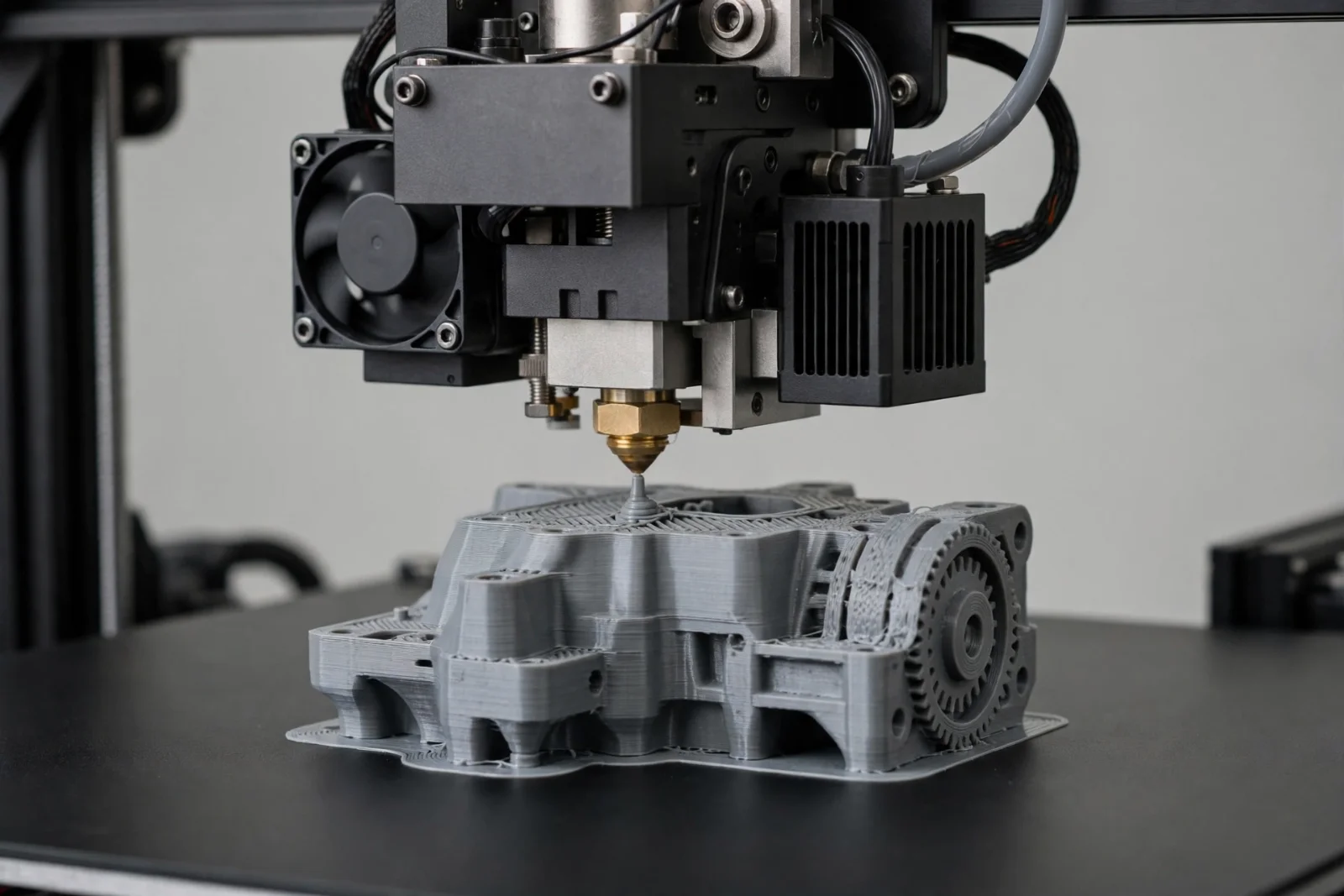
Industrial 3D Printing Technologies for Car Parts
Each printing technology suits different work. The right choice depends on whether the part must look right, fit precisely or carry load.
| Technology | Best use | Common materials | Typical accuracy |
|---|---|---|---|
| FDM (fused filament fabrication) | Jigs, fixtures, large parts | ABS, PC, nylon, carbon-filled filament | ±0.5% (min ±0.5 mm) |
| SLA (stereolithography) | Show models, transparent parts, trim pieces | Standard, tough and clear resins | ±0.1 mm |
| SLS (selective laser sintering) | Functional ducts, clips, housings | Nylon PA12, PA11, TPU | ±0.3 mm |
| MJF | Small batches of finished parts | Nylon PA12 | ±0.2 mm |
| DMLS / SLM | Metal brackets, manifolds, heat exchangers | Aluminum, stainless steel, titanium | ±0.1 mm |
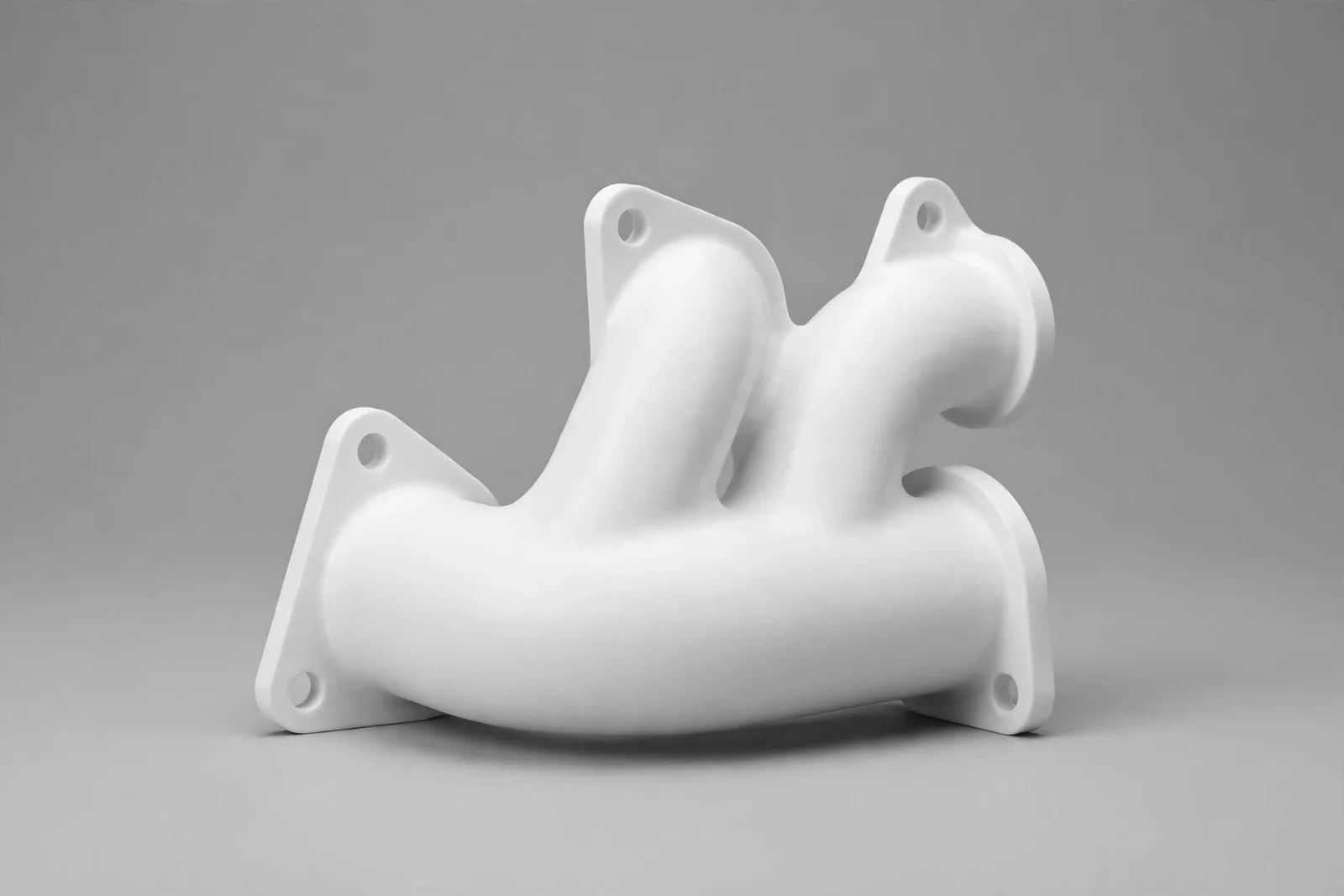
Typical values. Final tolerance is confirmed in your quote.
FDM machines with a large build volume handle bumper-size fixtures, while SLA gives the best surface finish. For details on each process, see our 3D printing services page.
How Automotive Manufacturing Uses 3D Printing to Produce Parts
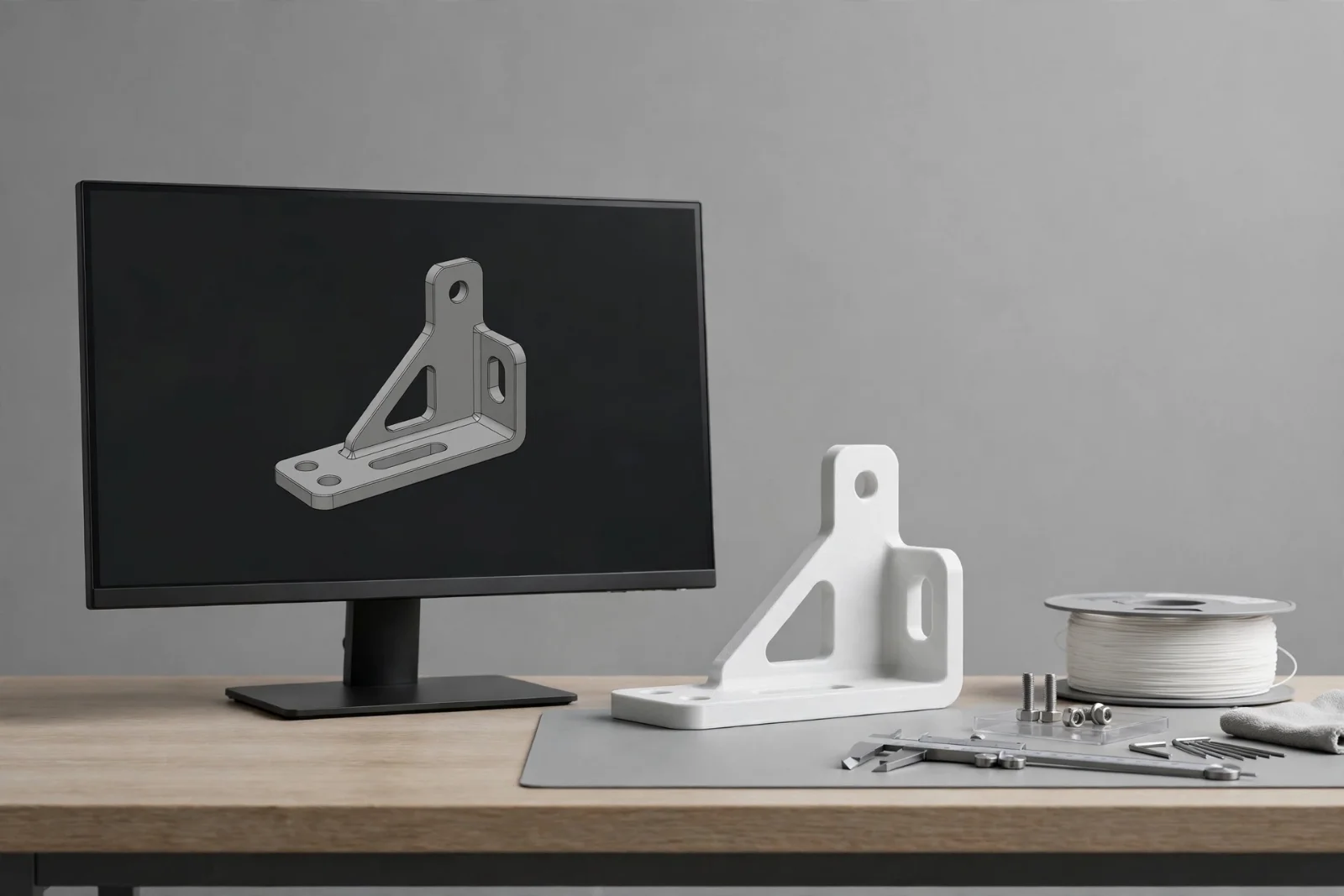
Functional Prototypes
Printed test parts check fit, packaging and assembly long before tooling, enhancing automotive design reviews with real parts instead of screens. Nylon parts from SLS or MJF can go into a test vehicle for vibration and heat checks, and a concept car can be built from printed panels and trim.
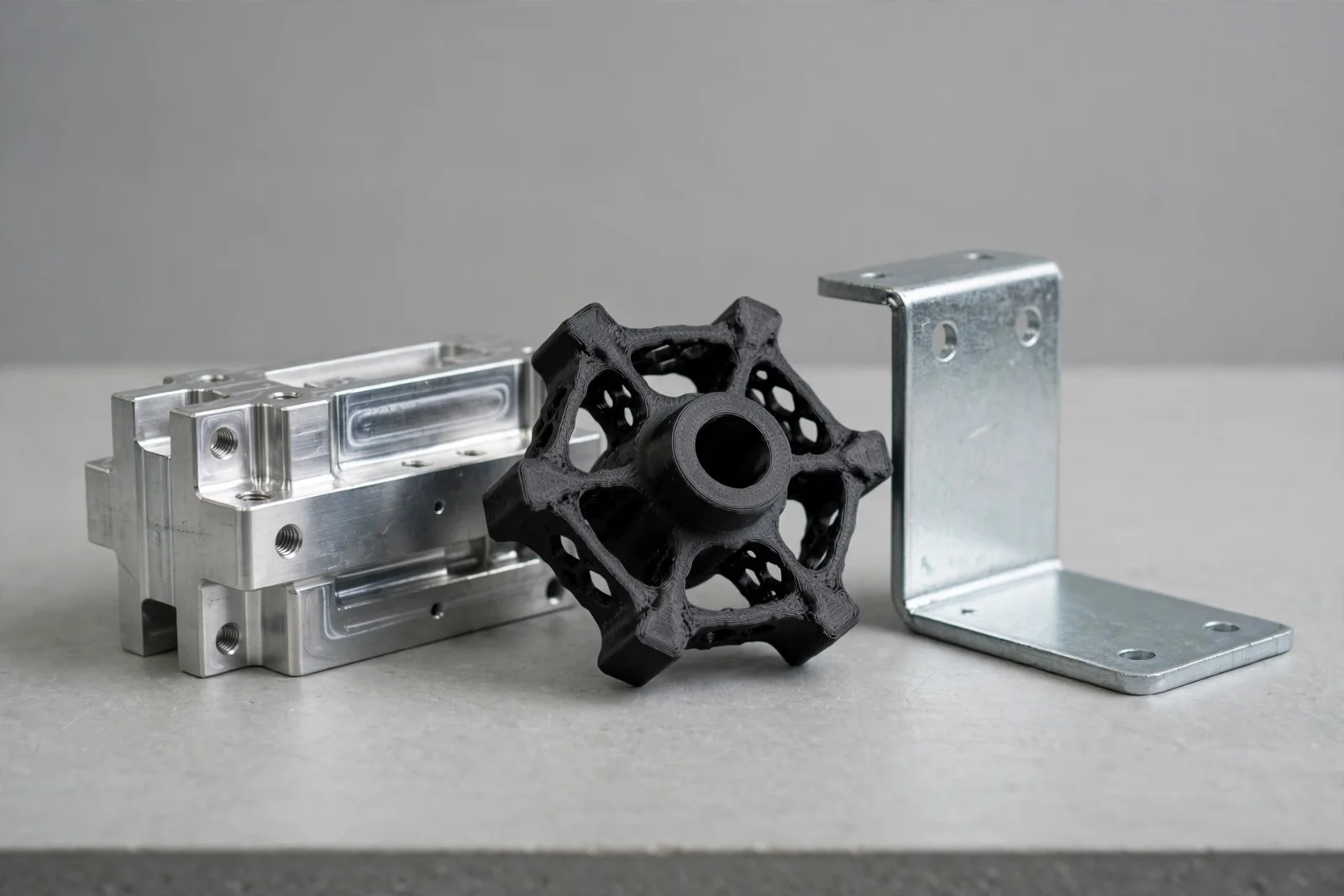
Jigs, Fixtures and Assembly Tools
A printed jig or fixture can be made in a day and shaped exactly to the part it holds. Assembly lines use printed drill guides, check gauges and tool holders because they are light and cheap to replace.
Finished Parts and Low-Volume Production
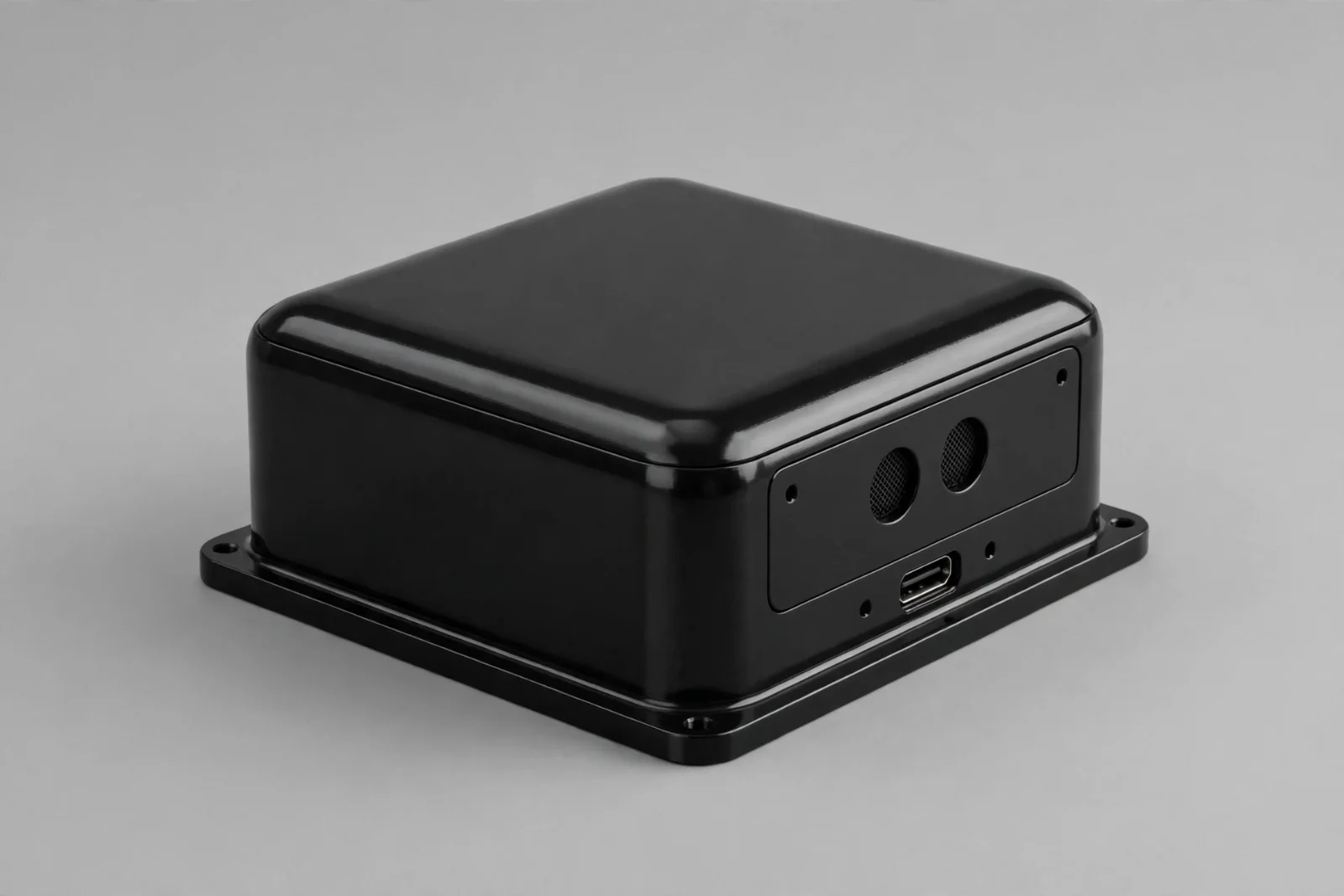
For specialty vehicles, motorsport and motorcycle parts, 3D printing offers a way to produce finished components without mold costs, so 3D printed car parts can ship within days. Air ducts, brackets, clips and interior trim are common examples, and many teams keep a digital parts library of custom parts so they can print them on-demand. It is not a way to make parts at scale, but for small runs it is hard to beat.
Spare Parts and Classic Car Parts
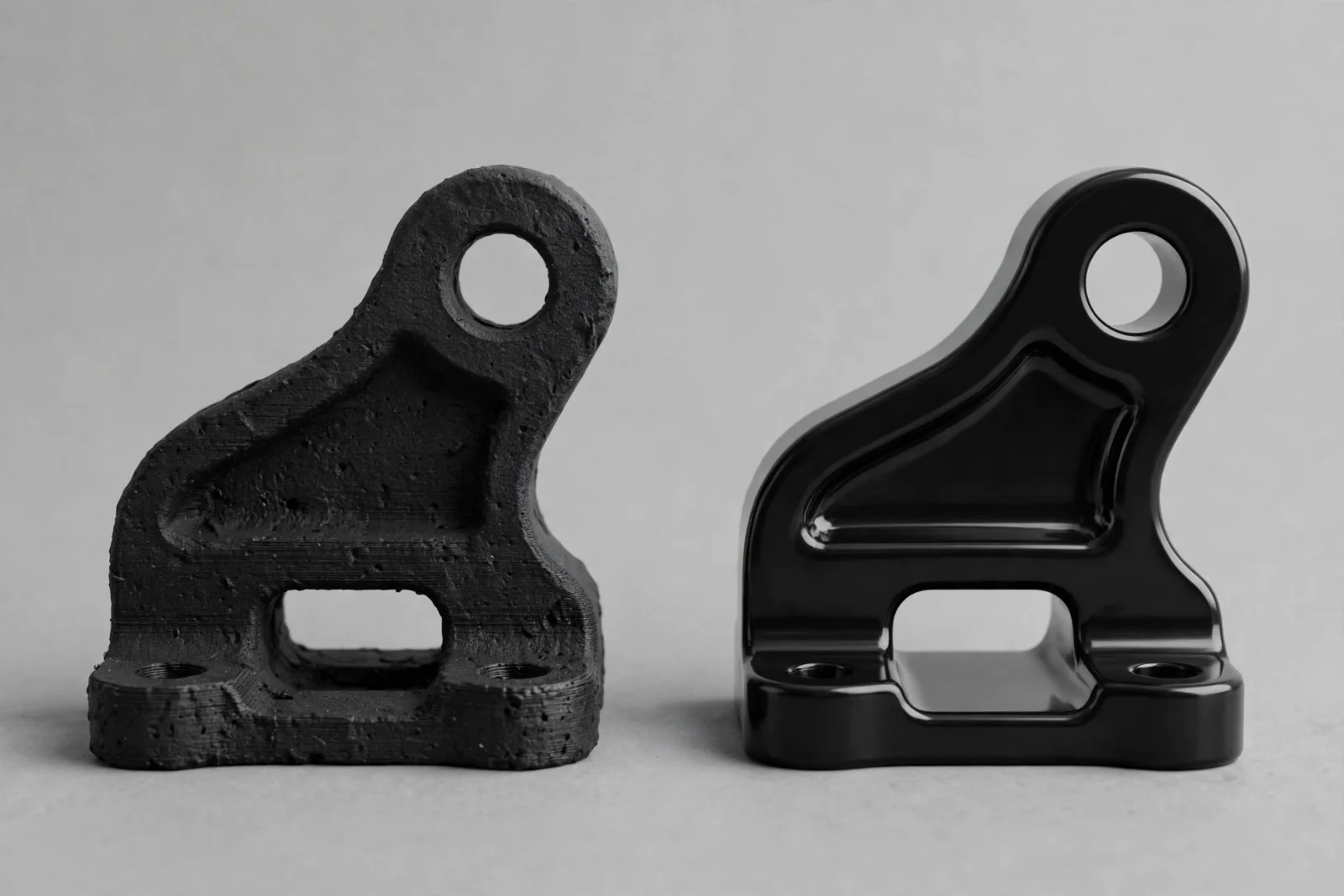
When the original mold is gone, printing makes replacement component parts from a scan or a drawing, the way some carmakers now supply parts for their classic cars. Restorers and aftermarket brands use this for parts that no longer justify tooling, which also shortens the supply chain.
Rapid Tooling
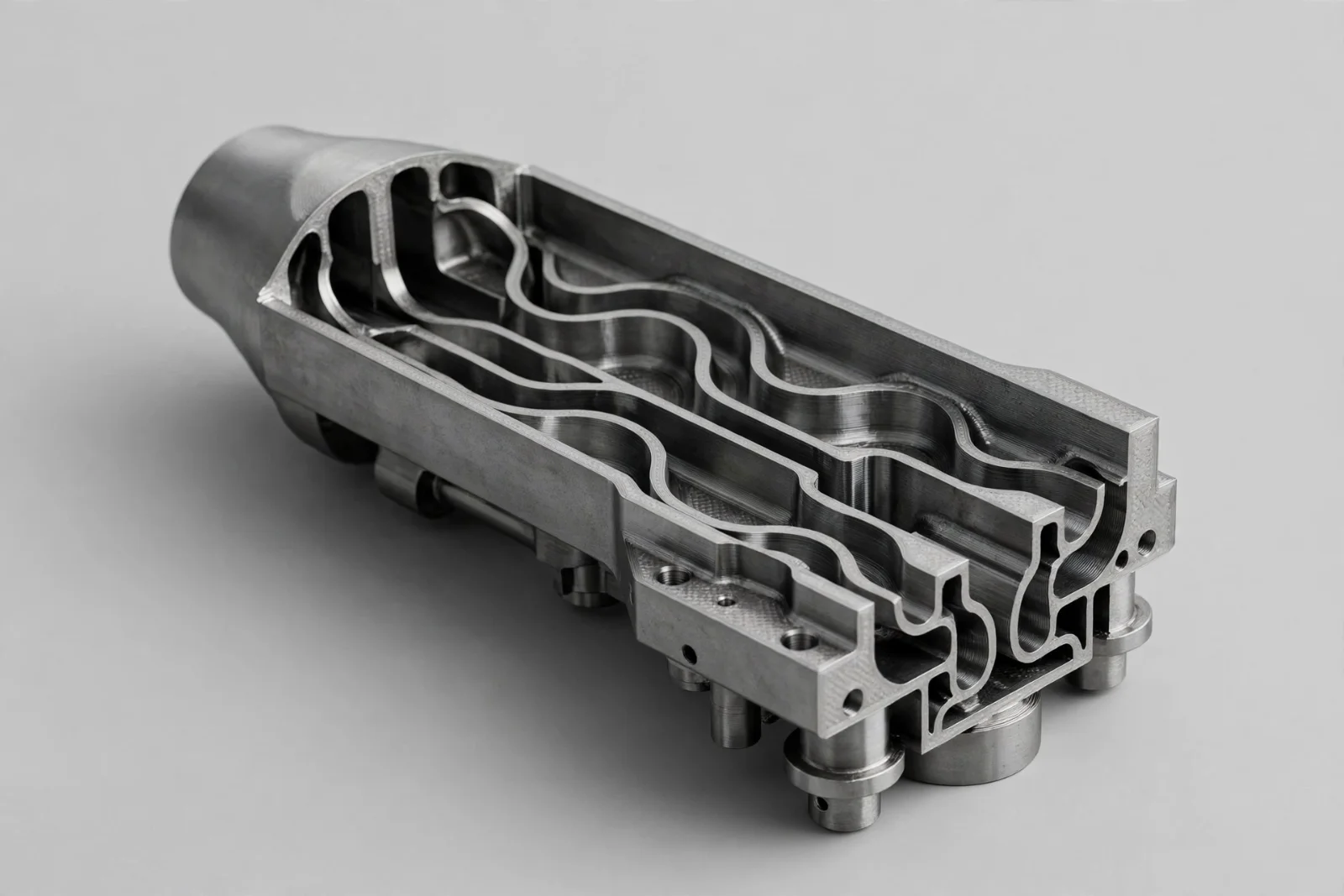
Printed mold inserts and casting patterns let teams make a small batch of molded or cast parts before investing in production tooling.
Materials for 3D Printed Car Parts
Each team uses 3D printing to create something different. Material choice decides whether a printed part is a model, a tool or a working component, and it affects vehicle performance in testing. Parts near heat need high-performance materials such as PC, nylon or metal rather than standard resin. We confirm the exact grade in your quote.
Additive Manufacturing vs CNC Machining vs Injection Molding
| Factor | 3D printing | CNC machining | Injection molding |
|---|---|---|---|
| Best quantity | 1 to a few hundred | 1 to thousands | Thousands and up |
| Tooling | None | Fixtures only | Mold required |
| Typical tolerance | ±0.1 to ±0.3 mm | Down to ±0.005 mm | About ±0.1 mm |
| Production time | Days | Days | Weeks for the mold |
| Geometry | Internal channels, lattices | Prismatic and turned shapes | Thin walls, ribs, clips |
Our rule of thumb: print to learn, machine when the part carries load or needs tight tolerances, and mold when the design is frozen and volume is high. Many programs use all three. For metal parts that need precise bores, see our automotive machined parts page.
Printed and Machined: Tolerance Where It Matters
A common mistake is expecting a printed part to hold a bearing bore or sealing face straight off the printer. Printed surfaces are rougher and complex parts can shift slightly as they cool. For these parts we leave machining stock on critical features, 3D print the shape, then finish bores, threads and mating faces on CNC machines. You get the freedom of a printed shape with machined accuracy where it counts.
Quality Control on Every 3D Printer
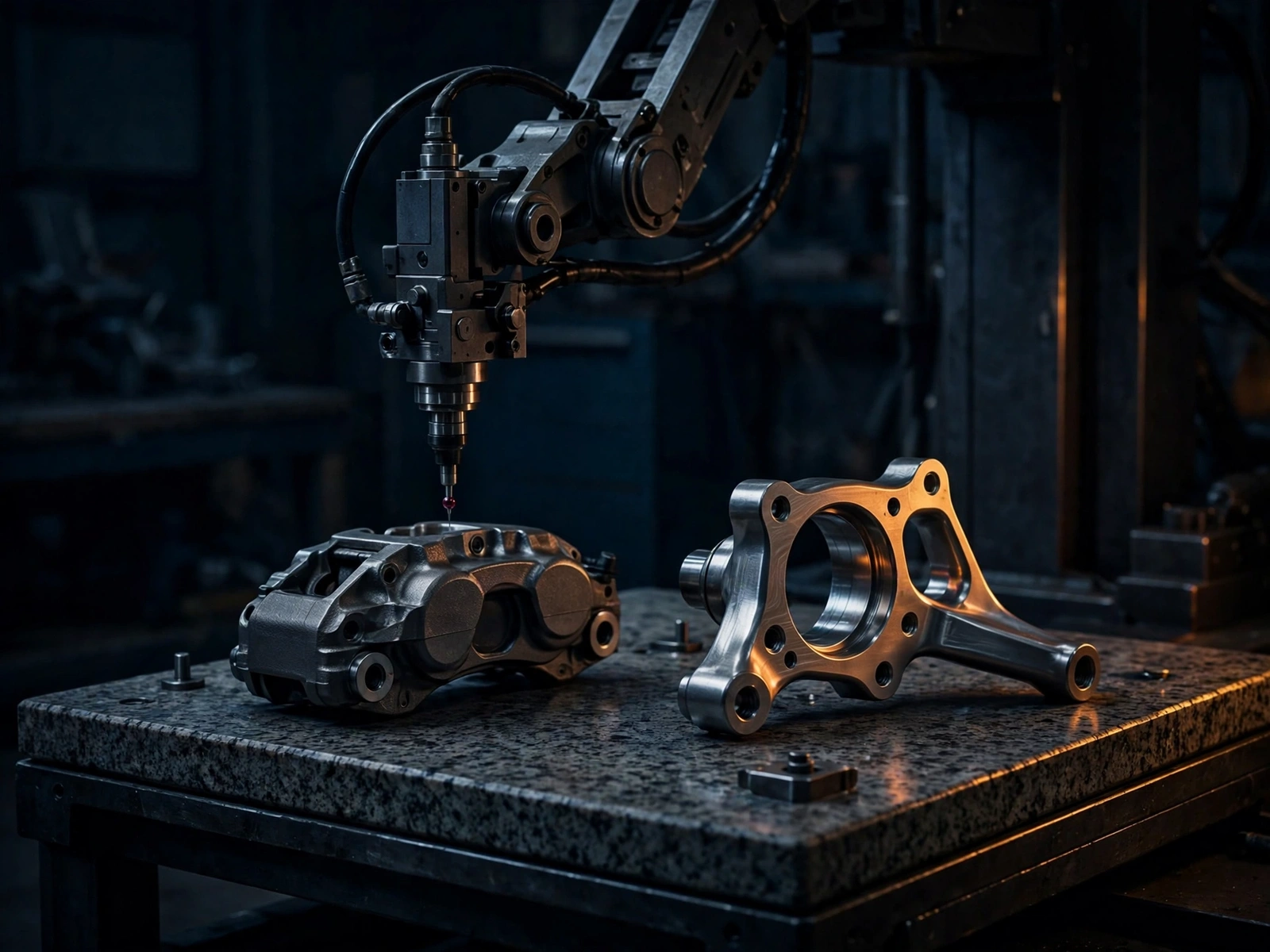
3D-printed parts run under the same IATF 16949 and ISO 9001:2015 quality system as our machined and molded parts. Every file gets a printability review for thin walls, trapped powder and unsupported overhangs. Critical dimensions are measured before shipping, and material certificates are available on request.
From Printed Prototype to Production Parts and Better Automotive Designs
Printing is usually the first step. When the design is proven, we move it to the process that fits your volume:
Start Your 3D Printing Project
Upload your STEP file and tell us the material, quantity and critical features. Our engineers will recommend a technology, flag anything that needs machining and send a quote with a clear lead time, helping you bring products to market faster.
Get Instant QuoteFrequently Asked Questions
How is 3D printing used in the automotive industry?
Carmakers and suppliers use 3D printing for automotive applications such as test parts, jigs and fixtures, rapid tooling, replacement parts and short runs of finished parts. Printing needs no tooling, so designs can change within days. High-volume parts still move to molding or machining once the design is frozen.
Can 3D printed parts be used on real vehicles?
Yes, for the right applications. Nylon and carbon fiber parts are used for ducts, brackets, clips and interior trim, especially in specialty and low-volume vehicles. Safety-critical and high-volume parts usually move to molding, casting or machining after testing.
What materials are best for 3D printing automotive parts?
Common choices are nylon PA12 for tough functional parts, a material like ABS for housings and trim, carbon-filled nylon for stiff fixtures, TPU for flexible parts, and aluminum or titanium for metal parts. The right choice depends on heat, load and finish needs.
How accurate are printed parts?
Typical accuracy is about ±0.1 mm for SLA and metal printing, ±0.2 mm for MJF and ±0.3 mm for SLS. When a feature needs tighter tolerance, such as a bore or sealing face, we leave stock and machine it after printing.
Is 3D printing cheaper than injection molding?
For a few hundred parts or fewer, printing is usually cheaper because there is no mold cost. For thousands of identical parts, injection molding has a much lower cost per part. We can show you where the crossover sits for your design.