需要专业的机械加工解决方案吗?拓维模型的团队随时准备为您提供全方位的制造支持。立即联系我们,获取您正在进行或即将开展的项目的报价!
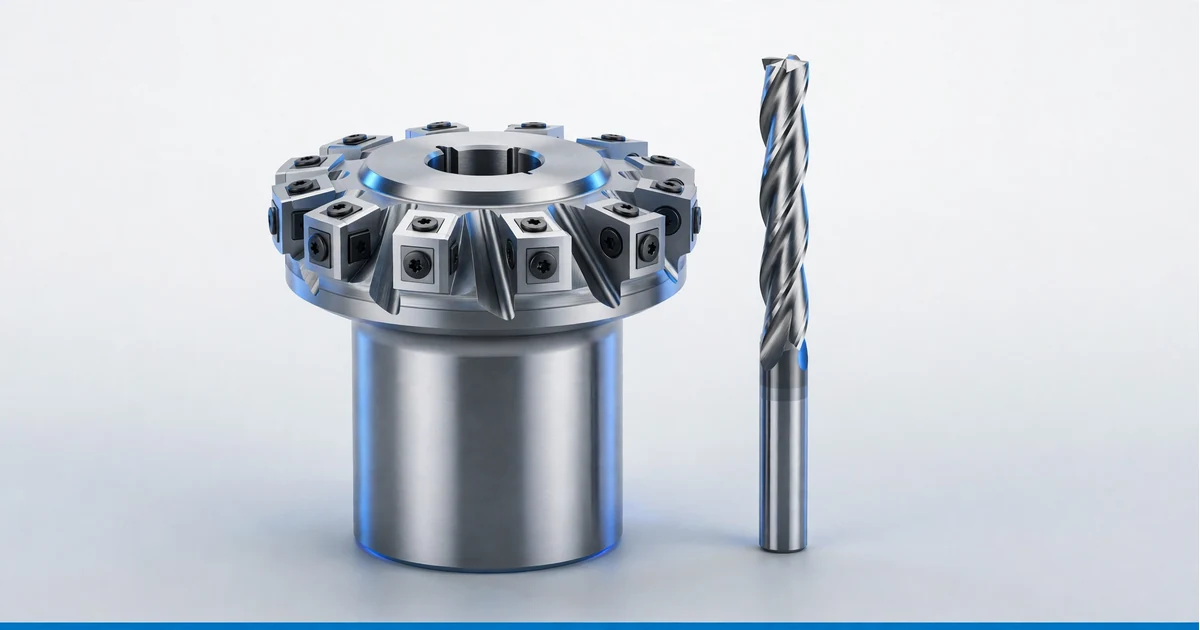
Reaming is the finishing operation that turns a drilled hole into a precision hole. A reaming tool — a multi-fluted cutter with a slight lead chamfer — removes a small, controlled amount of stock from a pre-drilled hole, bringing it to exact size with a fine finish. If a drawing says Ø8 H7, a drill alone will not get you there; a reamer will. This guide defines the process, covers the tool types, and gives the working numbers: stock allowances, speeds, feeds and tolerances.
Reaming is a sizing and finishing process in which a rotary multi-edge cutting tool (the reamer) enlarges an existing hole by a small amount — typically 0.1–0.5 mm on diameter — to achieve accurate diameter (IT6–IT8), good roundness, and surface finish of Ra 0.4–1.6 µm. Because the reamer follows the existing hole, it improves size and finish but, like honing, cannot correct hole position — that is boring’s job.
| Reamer type | 字符 | Use case |
|---|---|---|
| Chucking (machine) reamer | Straight or spiral flute, fixed size | Standard production reaming on drill press, lathe, CNC |
| Hand reamer | Long lead taper, square drive end | Bench fitting; the long taper self-aligns in the hole |
| Adjustable reamer | Sliding blades, size range | Repair work, odd sizes; lower precision |
| Taper pin reamer | 1:50 taper | Taper pin holes in assemblies |
| Bridge/car reamer | Long taper, aggressive | Aligning structural bolt holes |
| Carbide / coated reamer | Solid carbide or TiAlN coated | Hardened steels, abrasive alloys, high-volume CNC |
Spiral-flute reamers deserve a note: left-hand spiral pushes chips forward (through holes), right-hand spiral pulls chips back (blind holes), and spiral flutes bridge interrupted cuts like keyways without chatter.
| 孔径 | Reaming allowance (on Ø) |
|---|---|
| Under 4 mm | 0.1 mm |
| 4–11 mm | 0.15–0.2 mm |
| 11–25 mm | 0.2–0.3 mm |
| 25–50 mm | 0.3–0.5 mm |
Too little stock and the reamer burnishes and rubs — glazed, work-hardened, undersize holes. Too much and it acts like a drill — oversize, poor finish, short tool life. For an H7 hole, the standard chain is: drill → (bore if position matters) → ream.
| 材料 | Speed (HSS) | 源 |
|---|---|---|
| 铝质 | 25–30 m/min | 0.3–0.8 mm/rev |
| 普通钢 | 12–18 m/min | 0.2–0.5 mm/rev |
| Alloy steel (treated) | 6–10 m/min | 0.15–0.3 mm/rev |
| Stainless (304/316) | 5–8 m/min | 0.15–0.3 mm/rev |
| Cast iron | 10–15 m/min | 0.3–0.6 mm/rev |
| Brass / bronze | 20–30 m/min | 0.3–0.8 mm/rev |
Rule of thumb: ream at half the drilling speed and twice the drilling feed. High speed glazes and chatters; generous feed keeps the edges cutting. Carbide tooling roughly doubles these speeds.
| 系数 | Reaming | Boring | Honing |
|---|---|---|---|
| Corrects position | 没有 | 是 | 没有 |
| Size accuracy | IT6–IT8 | IT6–IT9 | IT5–IT6 |
| Finish (Ra) | 0.4–1.6 µm | 0.8–3.2 µm | 0.05–0.8 µm |
| Speed/cost | Fastest, cheapest | Flexible, slower | Highest precision, costliest |
| 最适合 | Standard fit holes (H7) | Located/large/odd-size holes | Sliding-seal bores |
| 问题 | 可能原因 | 修复 |
|---|---|---|
| Oversize hole | Misalignment, built-up edge, excess speed | Floating holder, lower speed, proper coolant |
| Undersize / glazed | Too little stock, worn reamer | Increase allowance, sharpen or replace |
| Poor finish | Chip packing, high speed, low feed | Spiral flutes, halve speed, double feed, cutting oil |
| Chatter / lobing | Rigidness lacking, even flute spacing | Shorter stickout, unequal-spacing reamer |
| Bell-mouthed entry | Spindle/hole misalignment | Floating reamer holder |
A finishing operation where a multi-fluted reaming tool removes 0.1–0.5 mm from a pre-drilled hole to deliver precise diameter (typically H7), roundness, and a fine Ra 0.4–1.6 µm finish.
Drilling creates the hole but holds only ±0.05–0.1 mm with a rough finish; reaming refines that hole to within ~±0.01 mm with a near-polished wall. Drill first, ream second — a reamer cannot start its own hole.
No. A reamer follows the existing hole’s axis. If true position matters, single-point bore the hole to correct location, then ream to final size.
Typically 0.15–0.3 mm on diameter for common sizes (see table above) — enough that every flute cuts, little enough that the reamer sizes rather than hogs.
H7 dowel fits, press-fit bearing bores, taper pin holes — reamed holes are routine callouts in the parts we ship daily through our 数控加工服务 和 精密机械加工 lines, including CNC turned parts with on-axis reamed bores. Upload your drawing — we quote within 24 hours with full dimensional reports available.

作者:安迪,拓维模型制造工程师。. 安迪专攻数控加工、精密制造和生产工程领域,在从快速原型制作到大规模量产的整个项目过程中拥有丰富的实践经验。他与工程和制造团队紧密合作,共同评估材料、公差、加工工艺以及设计可制造性。 他的文章提供了实用且具有技术深度的见解,旨在帮助工程师和采购人员做出更明智的制造决策、优化生产效率,并确保零件质量的一致性。欢迎了解拓维模型的数控加工和定制制造解决方案,为您的下一个项目提供支持。.
从快速原型制作到可扩展的生产,Tuowei Precision 提供可靠的数控加工服务,在每个环节都确保精度与一致性。立即启动您的项目。.
阅读我们关于数控加工、材料、表面处理及行业趋势的最新指南,以做出更明智的生产决策。