専門的な機械加工ソリューションをお探しですか?Tuowei Precisionのチームが、お客様のあらゆる製造ニーズにお応えします。現在進行中または今後予定されているプロジェクトのお見積もりについては、ぜひ今すぐお問い合わせください!
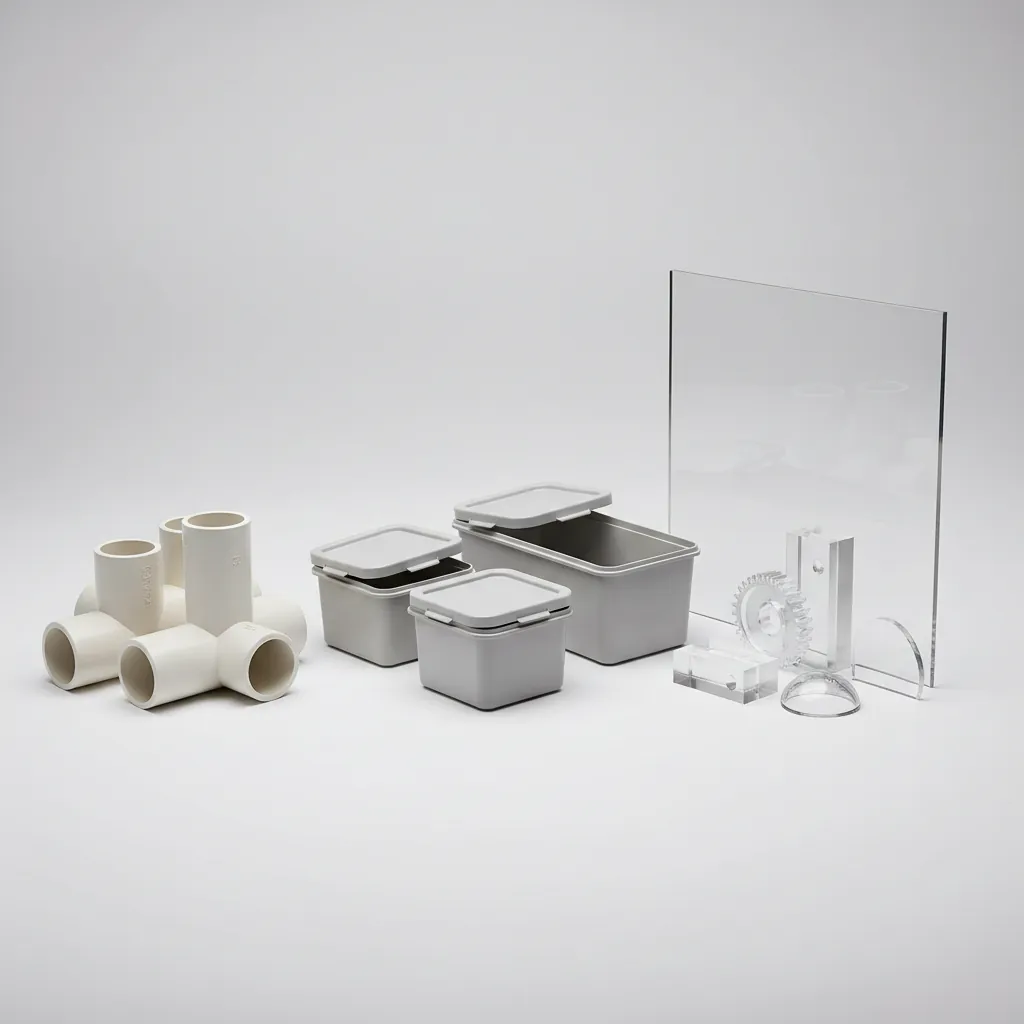
PVC, polypropylene (PP) and polycarbonate (PC) are three of the most used thermoplastics on earth, and they get confused constantly because all three show up in pipes, housings and containers. They could hardly be more different: PVC is the cheap, flame-resistant chemical workhorse; polypropylene is the light, fatigue-proof, food-safe one; polycarbonate is the transparent tank. This guide compares all three with complete property data — including the density and modulus numbers most comparisons omit — plus cost and processing guidance for molding and machining.
| プロパティ | PVC (rigid) | ポリプロピレン(PP) | ポリカーボネート(PC) |
|---|---|---|---|
| 密度 | 1.38–1.45 g/cm³ | 0.90–0.92 g/cm³ (floats!) | 1.20–1.22 g/cm³ |
| 引張強度 | 40–55 MPa | 25–40 MPa | 55–70 MPa |
| 引張弾性率 | 2.4–3.3 GPa | 1.1–1.6 GPa | 2.2–2.4 GPa |
| Izod impact (notched) | 2–10 kJ/m² | 3–8 kJ/m² (copolymer higher) | 60–85 kJ/m² — virtually unbreakable |
| Max continuous temp | 60 °C (CPVC ~95 °C) | 100 °C | 115–130 °C |
| Heat deflection (0.45 MPa) | ~70 °C | ~85–100 °C | ~140 °C |
| Transparency | Clear grades hazy | Translucent at best | Water-clear, 88–91% transmission |
| Flammability | Self-extinguishing (UL94 V-0 typical) | Burns (HB) | V-2 to V-0 grades |
| Water absorption (24 h) | 0.04–0.4% | <0.02% — best of the three | 0.15–0.35% |
| Typical resin cost | ~$0.9–1.3/kg | ~$1.0–1.4/kg | ~$2.5–4.0/kg |
Polyvinyl chloride owes its career to chlorine: inherent flame resistance, broad chemical resistance (acids, bases, salts, oils) and the lowest price of the three. Rigid PVC (uPVC) builds pipes, fittings, window frames and tanks; plasticized PVC becomes cable insulation, hose and seals. Weaknesses: low service temperature (softens near 80 °C), brittle in cold, attacked by many solvents (ketones, chlorinated solvents), and it releases HCl when burned — which is why machining it calls for ventilation and why some shops decline it.
PP is the lightest major engineering plastic — it floats — with outstanding fatigue resistance: a molded-in PP living hinge survives millions of flex cycles, which neither PVC nor PC can do. It shrugs off acids and bases even better than PVC, absorbs almost no water, and is FDA-friendly in food-contact grades. Weaknesses: UV degradation unless stabilized, poor bonding and painting (low surface energy), soft surface that scratches, and brittleness below 0 °C (copolymer grades fix this partially). See our polypropylene CNC machining service for tolerances and design notes.
PC is the impact champion of common thermoplastics — riot shields, machine guards, safety glasses — with glass-like clarity and the highest temperature capability of the three. It machines beautifully and molds into precise, stable parts. Weaknesses: scratches without hard-coating, stress-cracks in contact with many chemicals (ammonia, ketones, some oils), hydrolyzes in hot water over time, and costs 2–4× the other two. More in our polycarbonate injection molding guide そして PC machining service.
| ミディアム | PVC | PP | PC |
|---|---|---|---|
| Dilute acids | 素晴らしい | 素晴らしい | フェア |
| Strong bases | 良好 | 素晴らしい | Poor (attacked) |
| Alcohols | 良好 | 素晴らしい | フェア |
| Ketones / chlorinated solvents | 不良 | 良好 | Poor (crazing) |
| Fuels and oils | 良好 | Fair (swells warm) | Poor–Fair |
| Hot water / steam | 不良 | Good (to ~100 °C) | Poor (hydrolysis) |
No in tension and stiffness — rigid PVC is roughly 40% stronger and twice as stiff. But PP wins on fatigue (flex cycles), impact at matching grades, strength-to-weight, and chemical breadth. “Stronger” depends on the load you mean.
UV sensitivity unless stabilized, poor paintability and bondability, a soft easily-scratched surface, cold-temperature brittleness, flammability, and high mold shrinkage (1–2.5%) that demands good tooling for tight tolerances.
Polycarbonate, decisively: 88–91% light transmission, 10–30× the impact resistance, and nearly double the temperature capability. Clear PVC exists but is hazier, more brittle and limited to ~60 °C — its advantage is price and flame rating.
PVC and PP resins are close (roughly $1–1.4/kg in 2026), with PVC usually slightly cheaper and PP cheaper per part by volume thanks to its low density. Polycarbonate runs 2–4× either. For machined parts, material is a minor cost next to machine time, so choose by properties first.
We machine and mold PVC, PP, PC and 20+ other engineering plastics — prototypes without tooling via plastic machining, production via 射出成形. Material selection help is free: send your part’s environment and loads with your drawing for a 24-hour quote.

執筆:TUOWEI Precisionの製造エンジニア、アンディ。. アンディは、CNC加工、精密製造、生産工学を専門としており、ラピッドプロトタイピングから本格生産に至るまでのプロジェクト支援において、実務経験を有しています。彼は、エンジニアリングチームや製造チームと緊密に連携し、材料、公差、加工プロセス、および設計の製造適性を評価しています。 彼の記事は、実用的かつ技術的な知見に裏打ちされた洞察を提供し、エンジニアや購買担当者がより適切な製造上の意思決定を行い、生産効率を最適化し、一貫した部品品質を実現できるよう支援しています。次回のプロジェクトには、TUOWEI PrecisionのCNC加工およびカスタム製造ソリューションをご検討ください。.
ラピッドプロトタイピングから量産に至るまで、Tuowei Precisionは、あらゆる工程において精度と一貫性を兼ね備えた信頼性の高いCNC加工を提供します。今すぐプロジェクトを始めましょう。.
CNC加工、材料、仕上げ、業界の動向に関する最新のガイドをご覧いただき、より適切な生産判断を行ってください。