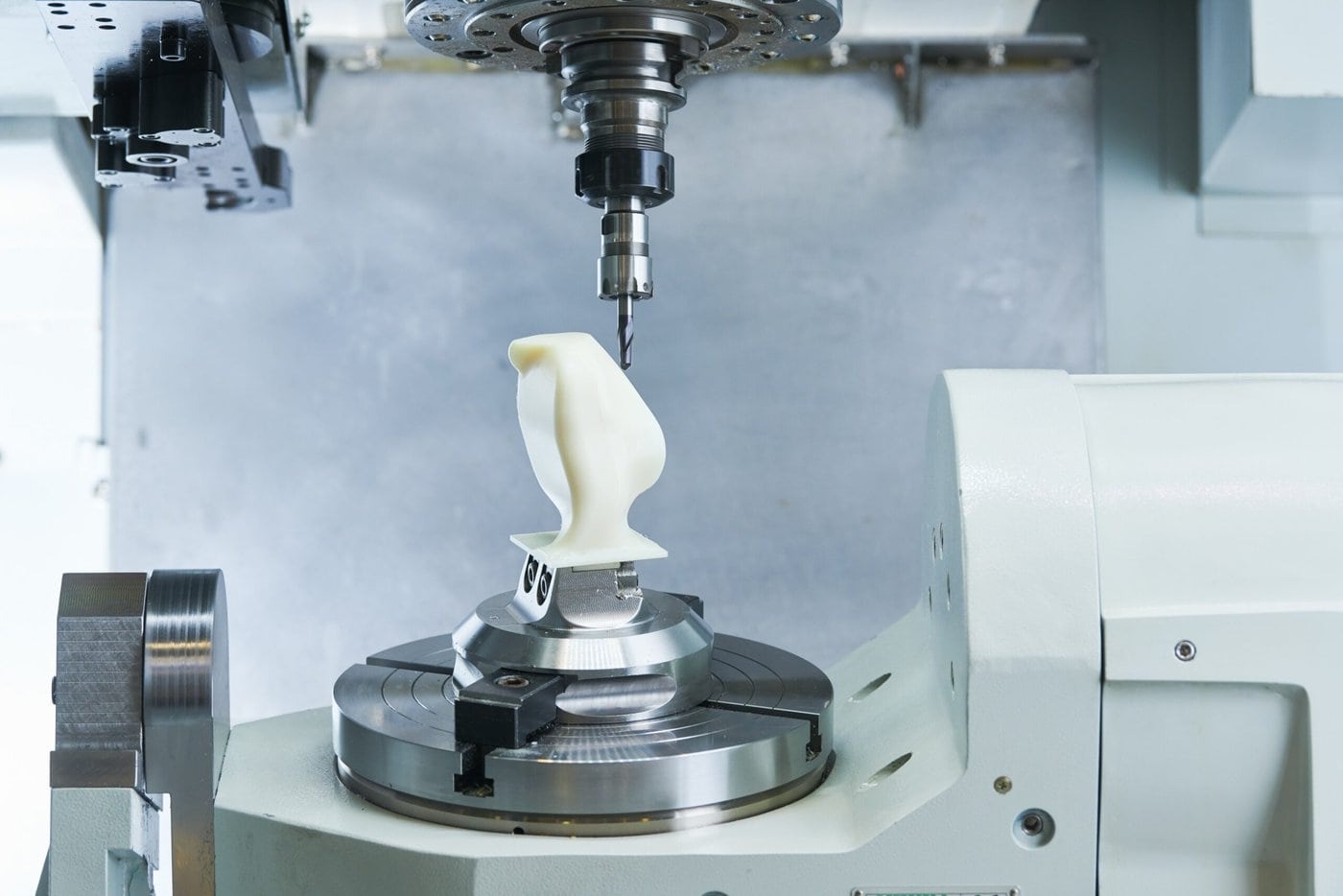
専門的な機械加工ソリューションが必要ですか?私たちTuowei Protoのチームは、あなたのすべての製造のニーズを支援するためにここにいる。現在進行中または今後のプロジェクトのお見積もりについては、今すぐご連絡ください!
By Andy, Manufacturing Engineer at Tuowei Precision · Published 16 October 2026 · Updated 16 October 2026
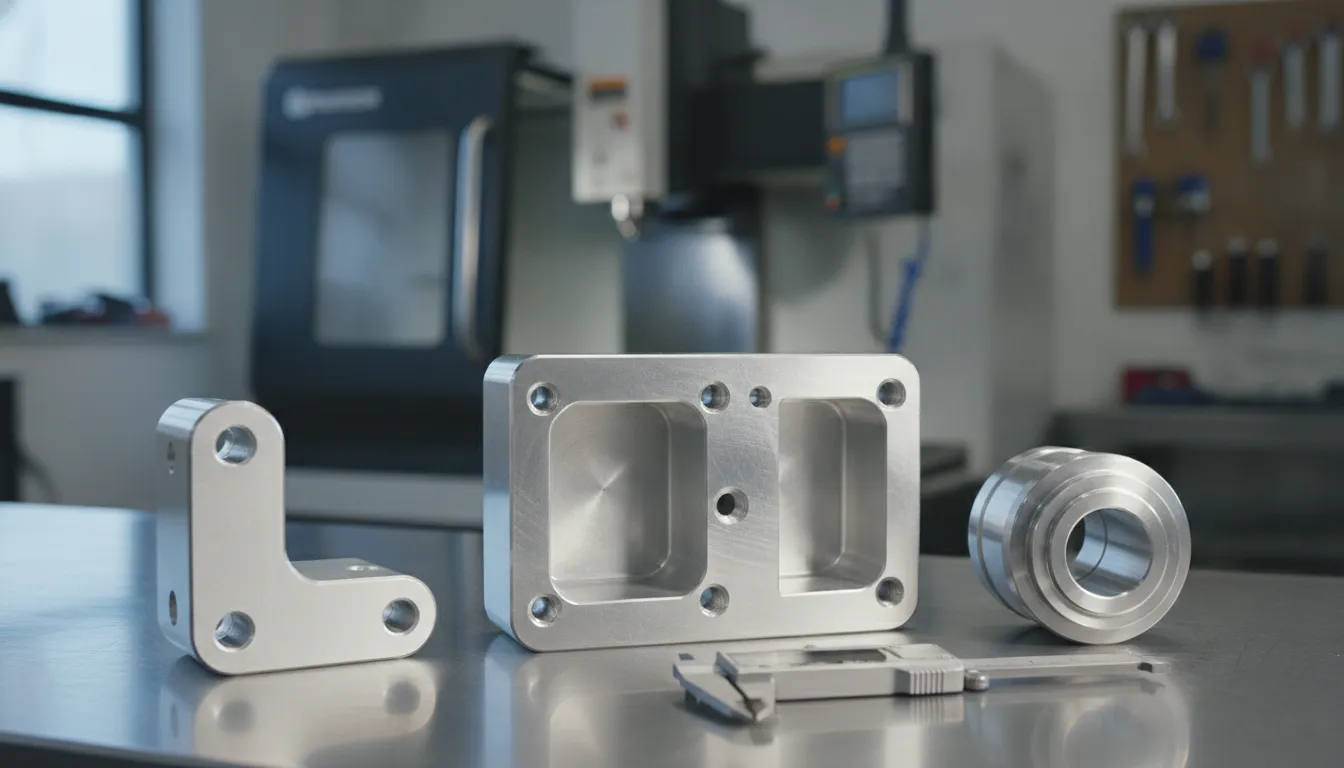
簡単な答え: Aluminum prototype machining means cutting a test part from solid aluminum bar or plate on a CNC machine, straight from your 3D model. Most parts start in 6061-T651, hold ±0.005 in on standard features, and cost more per piece than production parts because programming and setup are spread over very few parts.
This guide covers the route from CAD file to finished part: grade choice, the machining process, realistic limits, cost, timing, and the mistakes that cost a second build. For the bigger picture at any volume, start with our complete guide to aluminum CNC machining.
Aluminum machining is where most CNC shops start, and for good reason. The metal cuts fast, it is light, and a machined prototype behaves like real metal parts when you bolt it into an assembly and load it. That is why so many teams use it for parts and prototypes alike.
There are limits. The metal scratches and dents easily, and it expands more with heat than steel alloys do (23.6 µm/m per °C, per Kaiser’s data).
A metal test part also tells you little about how molded plastic parts will behave. If the production part is plastic, a machined plastic or 3D printed rapid prototype is usually the better test.
Our position: start in 6061-T651 unless the part has a specific reason to need something else. It machines cleanly, anodizes evenly and is easy to buy in plate and bar. The “51” in T651 means the plate was stretched after quenching to relieve stress, which helps it stay flat after heavy material removal.
| グレード | Pick it when | Watch out for |
|---|---|---|
| 6061-T651 | Brackets, housings, fixtures, enclosures, most first builds | Moderate strength only |
| 7075-T651 | High-strength aluminum for heavy loads and parts used in the aerospace industry. Typical tensile strength 83 ksi (572 MPa), Brinell hardness 150 | Not weldable by gas or arc methods; anodized color is less even (Kaiser’s 7075 data sheet rates its anodize response B vs A for 6061) |
| 2024 | 疲労荷重を受ける部品 | Needs a protective finish in wet or outdoor use |
| 5052 | Corrosion-exposed covers, parts that are also bent | Soft and gummy to cut; better suited to sheet |
| 6063 | Cosmetic parts and designs based on aluminum extrusion | Lower strength than 6061 |
One trade-off matters more than most engineers expect. If the build exists to prove strength, machine it in the same aluminum alloy and temper you will use for mass production. A 6061 part that passes a load test proves nothing about a 7075 production part.
Choosing an aluminum grade is covered in more depth in our grade-by-grade alloy guide.
A typical build on a CNC machine goes through seven steps:
Two shop-floor details decide whether a machined aluminum prototype comes out right.
The first is chip evacuation. Chips that are not cleared get recut, weld to the cutting edge as built-up edge, and tear the surface. Shops use sharp, polished-flute end mills, flood coolant or air blast, and climb milling to keep chips moving.
The second is deformation from residual stress. When you remove most of the material from a plate, the stress left inside can bow the part. Experienced machinists rough the part first, release the clamps so it can relax, then re-clamp lightly and take the finish passes.
CNC is not the only way to make metal prototype parts. Here is how the main options compare for one to a few dozen pieces.
| 方法 | こんな方に最適 | Main limitation |
|---|---|---|
| CNC machining from billet | Functional parts, high dimensional accuracy, production grades | Internal channels and undercuts are hard or impossible |
| Metal 3D printing (DMLS, direct metal laser sintering) | Complex internal geometry, lattice structures | Printed aluminum differs from wrought 6061/7075; needs post-machining for precise faces |
| Sheet metal fabrication | Brackets, panels, enclosures made from flat stock | Limited to formable shapes and constant wall thickness |
| Aluminum casting (sand or die cast) | Near-production cast aluminum parts at higher volume | Needs a pattern or tool, so slow and costly for one-offs |
For most functional builds, machining wins on accuracy and material realism. Printing still has a place in aluminum rapid prototyping when geometry rules out a cutter, while high-volume parts manufacturing usually moves to casting or extrusion.
私たちの rapid prototyping options page covers the other processes and custom manufacturing routes.
Tuowei’s published figures for milled aluminum are ±0.005 in (±0.127 mm) for standard features and ±0.001 in (±0.025 mm) for high-precision features such as bearing bores and sealing faces.
On precision aluminum CNC parts, anything without its own callout usually falls under a general note. ISO 2768-1 sets four classes; the two used most on precision parts are below.
| Nominal size (mm) | ISO 2768-f (fine) | ISO 2768-m (medium) |
|---|---|---|
| 0.5 to 6 | ±0.05 mm | ±0.1 mm |
| over 6 to 30 | ±0.1 mm | ±0.2 mm |
| over 30 to 120 | ±0.15 mm | ±0.3 mm |
| over 120 to 400 | ±0.2 mm | ±0.5 mm |
Our advice: put tight limits only on the features that mate with something. A drawing with ±0.001 in on every dimension costs more and rarely works better.
The right finish depends on the test. An as-machined surface is fine for fit checks; a customer-facing sample usually gets bead blasting plus Type II anodizing for an excellent surface finish. Anodizing adds material to every surface, including bores and threads, so tell the shop which features must be measured after finishing.
Our post on realistic tolerances for aluminum parts goes further.
Price depends on the part, not on a per-kilo rate, and the same logic holds across custom CNC work and CNC machining services in general. For a one-off, setup and programming time often outweigh the cost of the metal. The main drivers are:
| コスト要因 | Why it matters for a first build |
|---|---|
| プログラミングと設定 | Fixed cost per order, shared by only one or a few parts |
| セットアップ数 | Every time the part is flipped or re-fixtured adds time and risk |
| Machining time | Deep pockets, small machine tools and thin walls slow the cycle |
| Precision callouts | Tight features need finishing passes and inspection time |
| 仕上げ | Anodizing and other finishes on machined parts often carry a minimum lot charge |
| グレード | 7075 plate generally costs more than 6061 |
| Inspection documents | A CMM report or first article inspection adds engineering time |
Ordering two or three pieces instead of one often costs only a little more in total, because the setup is already paid for. That spare is useful if the first part is damaged in testing. To see how these drivers add up on a real bracket, read our worked cost example.
At Tuowei, CNC prototypes of 1 to 100 pieces typically ship in 1 to 5 business days, and small batch production of 101 to 10,000 pieces in 5 to 15 business days. The clock usually breaks down like this:
It depends on the part. A five-face 7075 part with ±0.001 in bores and hard anodizing will take longer than a flat bracket, so confirm the date with the shop before you lock a test schedule.
Most delays come from missing information, not machine time. Engineers in the UK and EU may call the part an aluminium prototype; either way, send these with the quote request:
Medical device and aerospace builds usually need the material certificate and inspection report from the first piece, so ask for them up front.
The same handful of problems causes most remakes:
Automotive and consumer parts are often prototyped from billet and then die cast in production. That works for fit and assembly checks, but a machined 6061 part is not a cast part. Die casting aluminum grades can have porosity, need draft angles, and differ in strength and ductility from wrought plate.
If the route from prototype to mass production is die casting, give the machined part the draft, wall thickness and fillets the casting will need, and treat strength results as indicative only. Plan a short run of cast samples before you sign off the design.
It depends on setups, machining time, callouts and finish more than on the metal. A single part carries the full programming and setup cost, so the price per part drops sharply as quantity rises.
It is one of the easier metals to cut, and the machinability of aluminum is a big reason precision CNC machining shops quote it quickly. The main challenges are chip evacuation, built-up edge on the tool and distortion of thin or heavily machined parts.
Yes, though machinability varies by grade. 6061 and 7075 cut well. Softer grades such as 5052 are gummy, and Kaiser Aluminum notes that 6061 machines with more difficulty than free-machining grades.
Titanium, nickel superalloys such as Inconel and hardened tool steels are generally the hardest. They resist cutting, hold heat at the tool and wear tools quickly.
Usually, yes. Wrought plate and bar are denser and more uniform than most castings, which can contain porosity. Exact figures depend on the grade, temper and casting process.
Good aluminum prototype machining starts before any metal is cut. Choose 6061-T651 unless the test needs another grade, put tight limits only on mating features, and send a STEP file plus a drawing with the finish called out.
When you are ready to quote, upload a STEP file and drawing for custom aluminum parts and our engineers will review it. Learn more about 卓偉精密.
執筆:TUOWEI Precisionの製造エンジニア、アンディ。. Andy specializes in CNC machining, precision manufacturing, and production engineering, with hands-on experience supporting projects from rapid prototyping through full-scale production. He works closely with engineering and manufacturing teams to evaluate materials, tolerances, machining processes, and design manufacturability.

執筆:TUOWEI Precisionの製造エンジニア、アンディ。. アンディは、CNC加工、精密製造、生産工学を専門としており、ラピッドプロトタイピングから本格生産に至るまでのプロジェクト支援において、実務経験を有しています。彼は、エンジニアリングチームや製造チームと緊密に連携し、材料、公差、加工プロセス、および設計の製造適性を評価しています。 彼の記事は、実用的かつ技術的な知見に裏打ちされた洞察を提供し、エンジニアや購買担当者がより適切な製造上の意思決定を行い、生産効率を最適化し、一貫した部品品質を実現できるよう支援しています。次回のプロジェクトには、TUOWEI PrecisionのCNC加工およびカスタム製造ソリューションをご検討ください。.
ラピッドプロトタイピングから量産に至るまで、Tuowei Precisionは、あらゆる工程において精度と一貫性を兼ね備えた信頼性の高いCNC加工を提供します。今すぐプロジェクトを始めましょう。.
Tuowei精密の実際のCNC加工、業界動向、生産洞察力を常に更新しますが、より良い生産の意思決定を行うことができるようにインストールされています。.