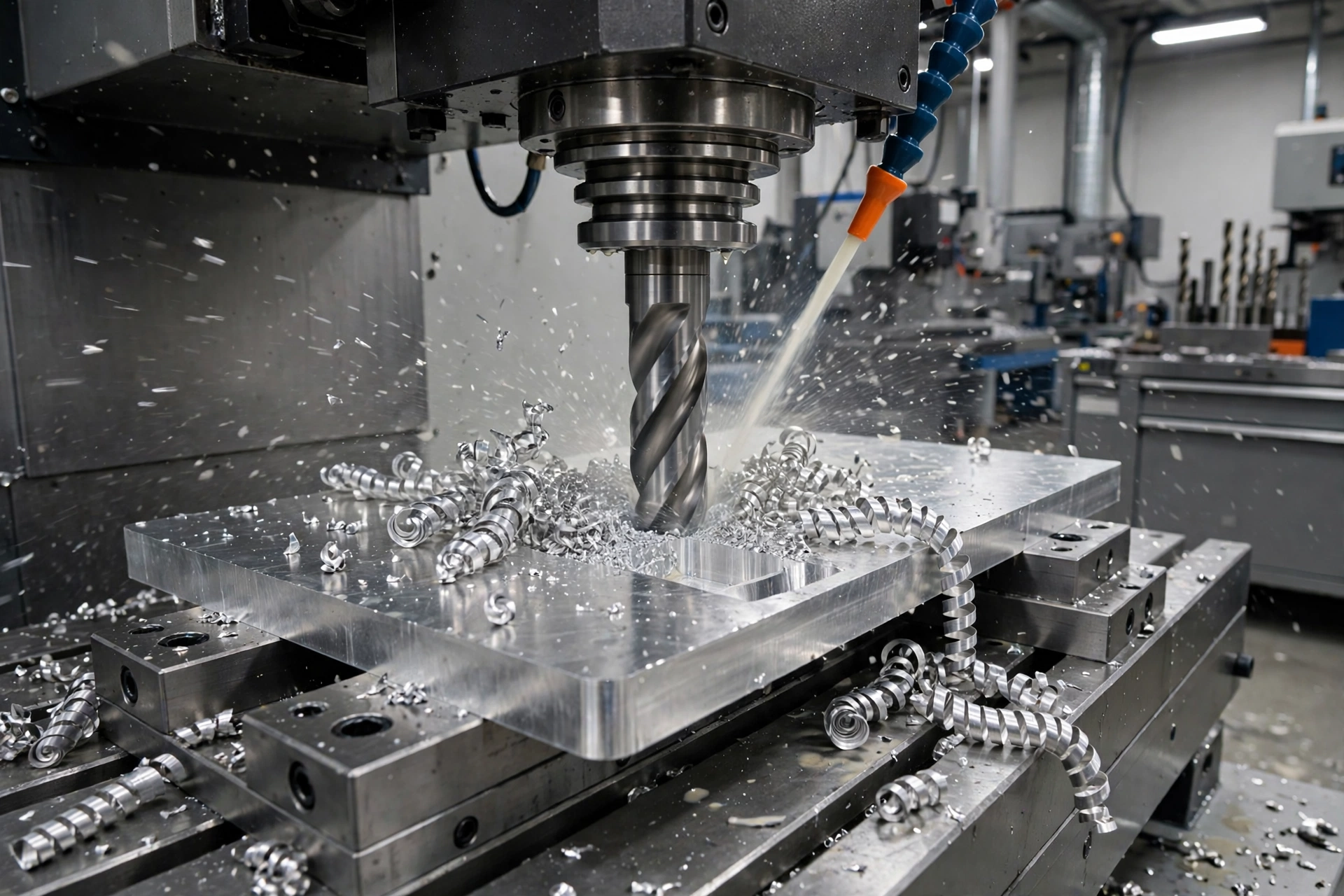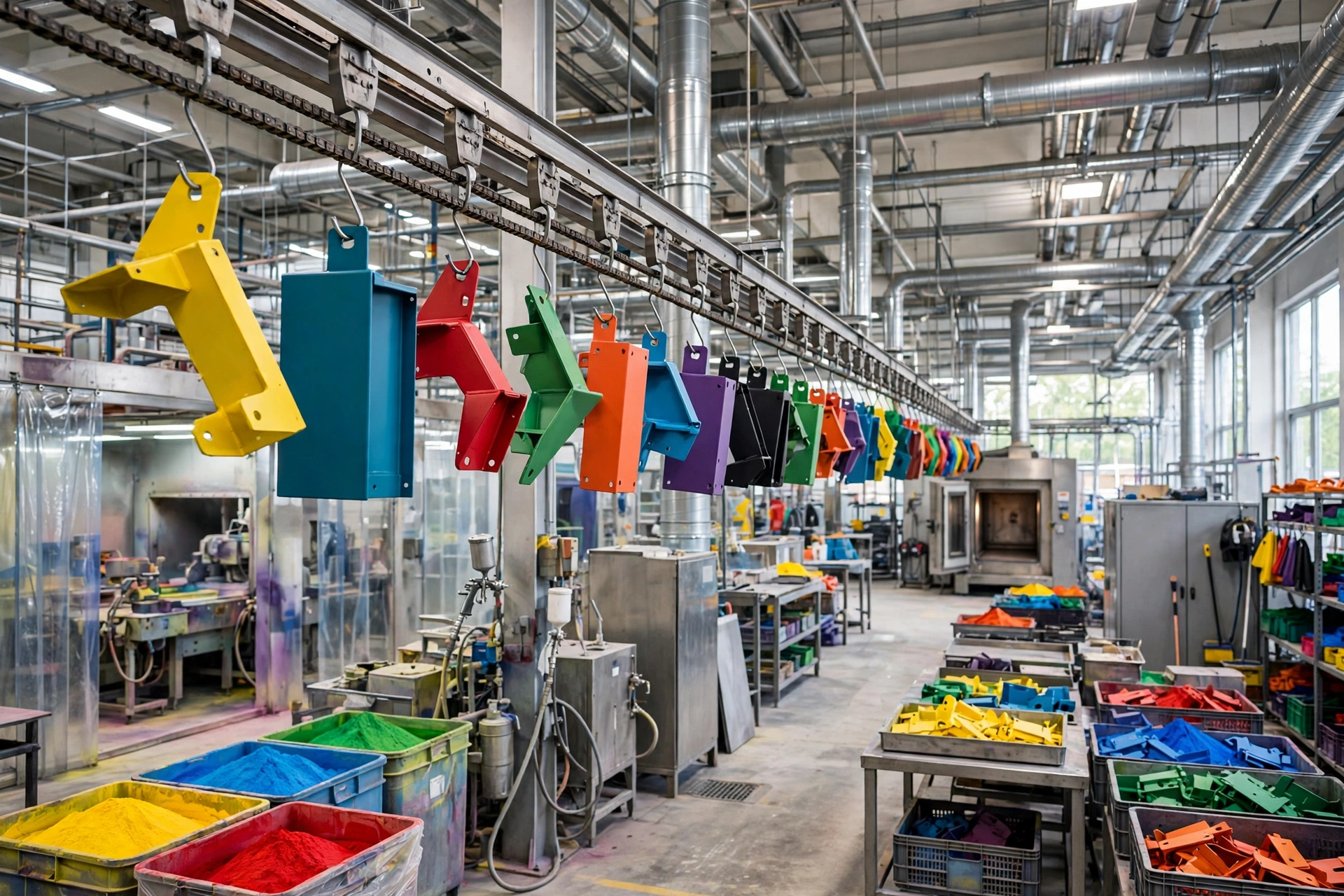
Powder coating is a dry finishing process that applies a finely ground polymer powder to a metal surface using an electrostatic charge, then cures it in an oven to form a continuous, hard film. It produces a thicker, more uniform and more impact-resistant layer than most liquid paints, with almost no volatile organic compound (VOC) emissions.
简短回答: Powder coating works by spraying electrostatically charged powder onto a grounded metal part, then baking the part at around 200 °C (390 °F) for 10 to 20 minutes. The powder melts, flows and cross-links into a tough, colored layer typically 2 to 6 mils (50 to 150 μm) thick. It is widely used on aluminum, steel and other metals for corrosion protection, color and abrasion resistance.
This guide explains how the process works, compares the main powder types, and covers how long powder coating lasts under real-world conditions. It is written for engineers and buyers who specify finishes on machined or fabricated metal parts.
The powder coating process has three stages: surface preparation, powder application and heat curing. Each stage affects the final result, and skipping or rushing any one of them is the most common cause of coating failure.
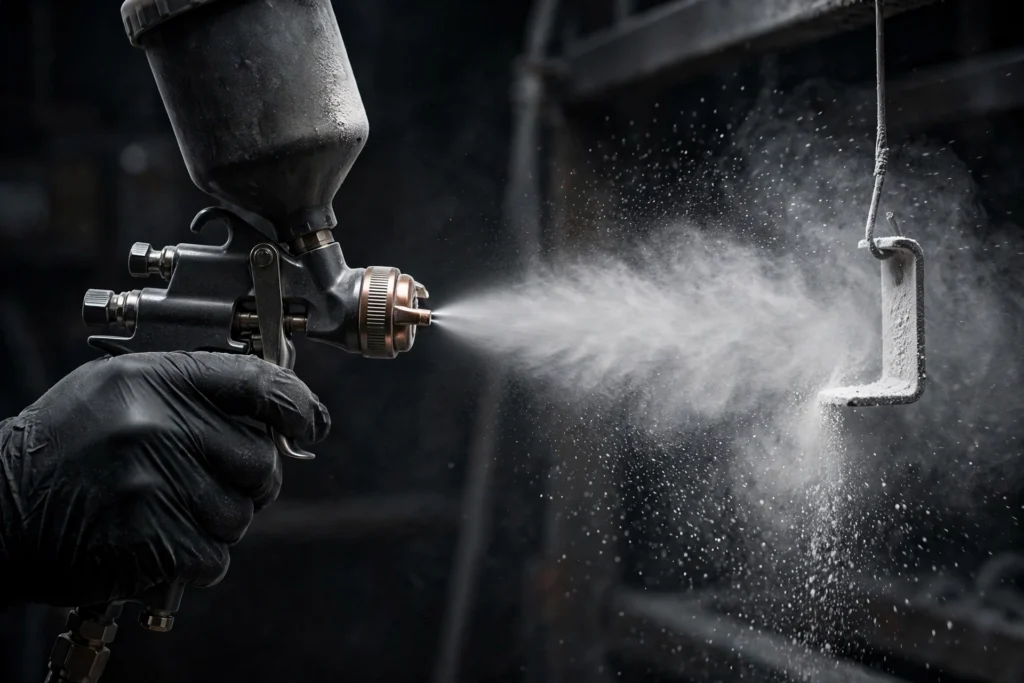
Before any powder touches the part, the surface must be clean and chemically ready to bond. For metal parts, preparation usually follows this sequence:
Cleaning. Alkaline wash or solvent wipe removes oils, greases and machining fluids. Any residue left behind causes fisheyes or adhesion loss in the cured film.
Mechanical prep. Abrasive blasting with aluminum oxide, glass bead or steel grit removes mill scale, rust and old coatings while creating a surface profile for the powder to grip. Blasting is especially important on raw steel and on aluminum parts that will be used outdoors.
Chemical pretreatment. A conversion coating, typically iron phosphate for steel or chromate-free zirconium or titanium treatment for aluminum, adds a thin layer that improves adhesion and underfilm corrosion resistance. On aluminum, this step matters more than on steel, because bare aluminum can form a weak oxide that lets the coating lift over time.
The pretreatment chosen depends on the base metal, the end environment and any regulatory requirements. For parts that must meet RoHS or REACH restrictions, chromate-free pretreatments are the standard choice. Our guide to 数控加工铝件的表面处理 compares conversion coatings in more detail.
The most common method is electrostatic spray. A spray gun charges the dry powder particles, usually to a negative polarity of 60 to 100 kV, and the part is electrically grounded. The charged particles are attracted to the grounded surface and cling to it uniformly, even wrapping around edges and into recesses better than wet spray paint.
Two gun types exist:
Corona guns use a high-voltage electrode at the tip to charge the powder. They are fast, widely available and handle most jobs. On deep recesses or Faraday-cage shapes, back-ionization can limit film build.
Tribo guns charge the powder by friction inside the gun barrel. They avoid back-ionization and reach into recesses better, but they require powder formulated for triboelectric charging and build film more slowly.
A third method, fluidized bed dipping, preheats the part and dips it into a bed of aerated powder. It produces much thicker coatings (typically 8 to 25 mils) and is used on items like dishwasher racks, wire shelving and pipe fittings rather than precision machined parts.
Overspray powder that does not stick to the part is collected in the booth and can be recycled back into the feed, which gives powder coating a material efficiency of 95% or higher. Liquid paint, by comparison, cannot recover its overspray in most setups.
The coated part enters a cure oven where heat melts the powder, allows it to flow into a smooth film and triggers a chemical cross-linking reaction (for thermoset powders) that locks the coating into its final properties.
Standard cure schedules call for a metal temperature of about 200 °C (390 °F) held for 10 minutes, though many European and Asian lines now run at 180 °C. Low-temperature powders cure at 150 to 160 °C and are used on heat-sensitive substrates or to save energy. The oven type is usually convection (gas or electric), but infrared panels are sometimes added to speed the heat-up on heavy parts.
Undercuring leaves the film soft and chemically incomplete, which shows up as poor adhesion in cross-hatch testing. Overcuring can yellow light colors and reduce flexibility. Both are avoided by confirming that the part, not just the oven air, reaches the specified temperature for the specified time. An oven data logger attached to a sample part is the standard check.
Powder coatings divide into two families by how they cure, and within each family, several chemistries are available.
Thermoset powders contain a resin and a cross-linker that react during curing to form a permanent chemical network. Once cured, they cannot be remelted. This makes them harder, more chemical-resistant and more heat-stable than thermoplastics at comparable thickness.
Polyester (TGIC or HAA cured): The most widely used outdoor powder. Excellent UV and weather resistance. TGIC (triglycidyl isocyanurate) polyester is the traditional outdoor choice; HAA (beta-hydroxyalkylamide) is a TGIC-free alternative gaining ground in markets where TGIC is restricted. Both resist chalking and color fade better than any other powder chemistry.
Epoxy: Outstanding corrosion and chemical resistance, excellent adhesion, good electrical insulation. The trade-off is poor UV resistance: epoxy powders chalk and yellow in sunlight, so they are used indoors or under a topcoat. Common on electrical enclosures, rebar (fusion-bonded epoxy) and automotive primers.
Epoxy-polyester hybrid: Blends the adhesion and corrosion resistance of epoxy with better overbake tolerance than straight epoxy. Still not suitable for outdoor exposure. Used on office furniture, shelving, appliances and general indoor metalwork. Typical ratios are 50:50 or 60:40 polyester to epoxy.
Polyurethane: A polyester resin cured with a blocked isocyanate. Produces a smooth, thin-film finish with strong chemical and mechanical resistance. Used in automotive clear coats and on parts where appearance and outdoor durability both matter.
Thermoplastic powders melt and flow during heating but do not cross-link. They can be remelted if reheated, which makes them repairable but also limits their heat resistance compared to thermosets.
Nylon (polyamide): Very tough, with strong chemical and solvent resistance. Applied by fluidized bed at higher thickness (typically 8 to 25 mils). Used on dishwasher racks, automotive underbody parts and valve bodies.
PVC and polyolefin: Thick, flexible coatings for wire goods, tool handles and outdoor furniture. Lower cost than nylon.
For most CNC machined parts, thermoset polyester or epoxy-polyester hybrid is the practical choice. Thermoplastics build too thick for close-tolerance features and are harder to source for short production runs.
Powder coating is one of the most durable painted finishes available on metal parts. A properly applied and cured thermoset powder coat resists chipping, scratching, fading and chemical attack better than most liquid paints at the same thickness.
How long does powder coating last? That depends on the environment and the powder chemistry:
Indoor parts: 15 to 20+ years. Equipment housings, electrical enclosures, furniture and fixtures in climate-controlled spaces can go decades without visible degradation.
Outdoor, sheltered: 10 to 15 years. Parts under overhangs, in partially enclosed structures or in mild climates with moderate UV exposure.
Outdoor, full exposure: 5 to 10 years for general-purpose polyester powders in temperate climates. Superdurable polyesters, formulated for higher UV resistance, extend this to 10 to 15 years. Coastal, tropical or high-UV desert environments shorten any finish life.
Architectural (AAMA 2604 / 2605): Fluoropolymer-based powders tested to AAMA 2605 are warranted for 10 years with minimal chalk, fade or erosion. These are the standard for aluminum curtain walls and window frames.
Is powder coating durable enough for a given application? That depends on these variables:
Pretreatment quality. The single largest factor. A multi-stage pretreatment with a conversion coating extends corrosion life by years compared to a simple wash. For aluminum, a zirconium or chromate-free conversion coating under the powder is the minimum for outdoor use.
Film thickness. Thicker film protects longer, up to a point. Standard thermoset powder is applied at 2 to 4 mils (50 to 100 μm). Going below 2 mils risks pinholes and incomplete coverage on edges; going above 6 mils adds cost and can cause orange peel or sagging.
UV exposure. Sunlight degrades all organic coatings over time. Polyester and fluoropolymer powders resist UV far longer than epoxy. If an epoxy-coated part is used outdoors, expect visible chalking within one to two years.
Powder chemistry. TGIC polyester holds color and gloss better than HAA polyester in accelerated weathering tests, though the gap has narrowed as HAA formulations improve.
Cure integrity. An undercured film loses hardness, flexibility and chemical resistance. Spot-checking cure with a solvent rub test (MEK double rubs) or differential scanning calorimetry (DSC) catches problems before parts ship.
For CNC machined parts, the combination of a proper pretreatment, the right powder chemistry and a verified cure schedule is what makes a powder coat last. Skipping pretreatment to save cost is the fastest way to halve the coating life.
Both finishes protect and color metal, but the process differences lead to different performance profiles.
Thickness and coverage. Powder coating builds a thicker film in a single pass (2 to 6 mils typical) without runs or sags. Liquid paint needs multiple coats to reach the same thickness, and each coat adds drying time.
Impact and chip resistance. The cross-linked polymer film of a thermoset powder is tougher and more flexible than most air-dried or baked liquid paints. In direct impact testing, powder coatings routinely pass 160 in-lb reverse impact where liquid enamels fail at 60 to 80 in-lb.
Environmental compliance. Powder coatings emit essentially zero VOCs because they contain no solvents. Liquid paints can be 30% to 60% solvent by weight, requiring ventilation, emission controls and hazardous waste handling.
Material efficiency. Overspray recovery pushes powder utilization to 95%+. Liquid paint overspray is mostly waste.
Color matching and touch-up. Liquid paint is easier to touch up in the field and easier to match exactly across suppliers. Powder-coated parts are harder to repair on site: damaged areas usually need stripping and recoating. Custom color matching in powder is possible but requires a minimum batch of powder to be manufactured.
Thin films. Liquid paint wins when a very thin coating (under 1 mil) is needed, for example on electronic contacts or precision fits. Standard powder cannot be applied that thin reliably.
For most machined metal parts that need a colored protective finish, powder coating is the better choice. It costs less per square foot at production volumes, lasts longer and avoids the environmental burden of solvents. Liquid paint is reserved for field touch-up, very thin coatings and situations where exact color matching across different suppliers is critical.
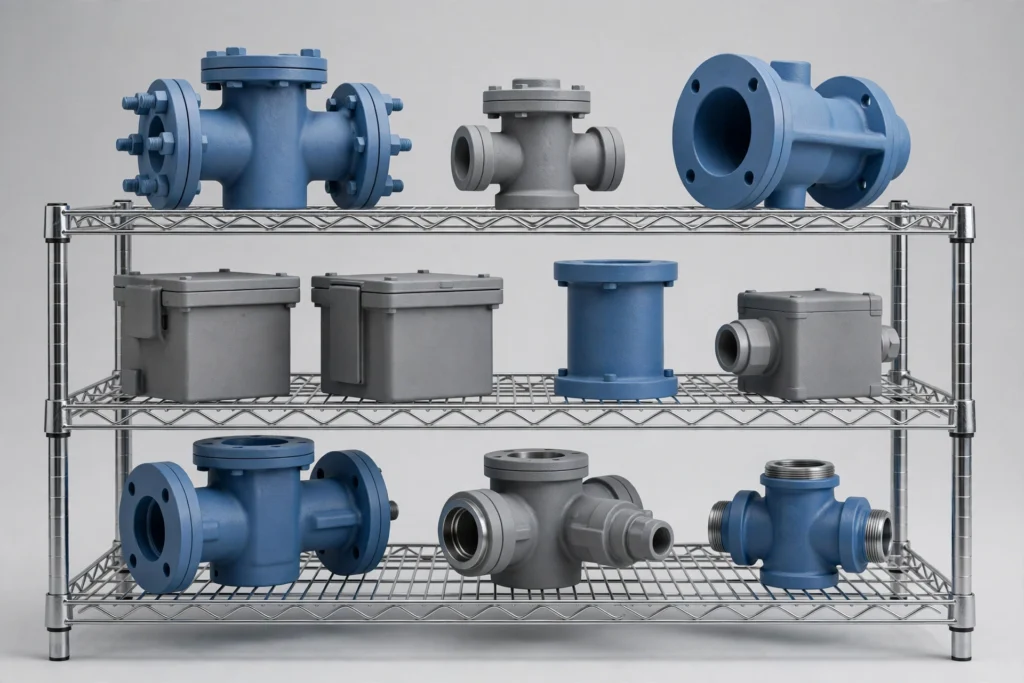
Powder coating is a common finish on machined and fabricated parts, but it is not the right finish for every feature. The coating thickness, typically 2 to 6 mils, is the main design constraint.
Threads. Powder builds on thread flanks and changes the pitch diameter. Internal and external threads are almost always masked before coating.
Tight-tolerance bores and shafts. A 3-mil coating on a bore shrinks the diameter by about 6 mils total. Mask any feature where the fit matters.
Sharp edges. Powder pulls away from sharp external corners, leaving them thinner and more vulnerable. A small radius or chamfer (0.5 mm minimum) helps the powder cover evenly.
Electrical grounding surfaces. Powder coat is an electrical insulator. Grounding pads, EMI shielding contacts and connector interfaces must be masked. For parts that need both a colored finish and conductivity, anodizing with selective masking or chromate conversion coating may be a better option.
Outgassing. Cast parts and porous metals can release trapped gas during curing, which causes pinholes and bubbles in the coating. A pre-bake at cure temperature before powder application drives off the gas. Wrought aluminum alloys machined from solid stock rarely have this problem.
The practical rule: add radii to external edges, mask everything with a tolerance, and call out masking on the drawing. Tuowei offers powder coating services as part of its finishing options, and our engineers review masking and dimensional allowances when quoting.
A complete set of powder coating specifications on a machined part drawing removes ambiguity and prevents rework:
Send your drawing and finish specification to Tuowei Precision, and our team will confirm the powder type, masking plan and pricing with your quote.
粉末涂装广泛应用于汽车、家电、家具及建筑等行业,用于保护金属部件并赋予其色彩。常见的应用包括铝型材、钢制外壳、支架、框架、户外家具以及需要坚固彩色涂层的数控加工外壳。.
喷枪使粉末带上静电荷,而工件则接地。带电粒子被接地的金属表面吸引,并通过静电力附着在其上。这种结合力足够强,足以在搬运和转移至烤箱的过程中将粉末固定在原位。.
Yes. Aluminum is one of the most commonly powder-coated metals. It requires a chromate-free conversion coating or other pretreatment for proper adhesion and corrosion resistance under the powder. Wrought aluminum alloys like 6061 and 7075 coat well. Cast alloys may need a pre-bake to prevent outgassing pinholes.
They solve different problems. Anodizing grows a thin, hard oxide from the aluminum surface and adds minimal thickness, making it better for tight-tolerance parts. Powder coating applies a thicker polymer layer with broader color options and better impact resistance. Use anodizing for precision and conductivity, powder coating for thick outdoor protection and custom color.
Powder coating cost depends on part size, lot quantity, color, masking complexity and pretreatment. Small parts in production lots typically cost $2 to $10 per part. Prototypes and one-off parts cost more because of lot charges. Our 数控铣削服务 quote machining and finishing together to keep the total cost transparent.
粉末涂层提供多种颜色和表面处理效果。颜色通常通过RAL色号、潘通色卡或经批准的生产样品来指定,光泽度范围从哑光(低于20 GU)到缎面、半光泽,再到高光(高于70 GU)。 此外还提供皱纹、砂面和锤纹等纹理表面处理;光滑表面为默认选项。.
不锈钢只要经过适当的预处理,就可以进行粉末喷涂,就像碳钢和铝一样。镀锌钢也可以进行喷涂,但锌层需要进行适当的预处理并注意排气,因为困住的气体会在固化过程中导致针孔。 大多数常见塑料无法承受固化炉的高温,因此只有耐热塑料或涂覆了低温粉末的零件才适合进行粉末喷涂。.
热固性粉末涂料一旦固化,就能很好地承受正常使用条件下的热量,因为交联作用使涂膜锁定了其最终性能。它们在约200 °C下固化,但该固化温度并不代表连续使用温度——涂料能耐受多少热量取决于其化学成分。 对于排气部件等高温部件,聚酯和环氧粉末涂料并非理想选择;此类部件需要专用的高温涂料。.
典型的粉末涂层厚度为 2 至 6 mils(50 至 150 μm),其中标准热固性粉末的涂层厚度为 2 至 4 mils(50 至 100 μm)。 如果厚度低于2密尔,可能会出现针孔和边缘涂层不完整的问题;而如果超过6密尔,则会增加成本,并可能导致橘皮纹或流挂。图纸上会标明合适的厚度范围,包括最小值和最大值。.
Yes, but with limits. Painting over powder coating requires thorough cleaning and scuffing so the new paint can grip, and adhesion is never as strong as the original cured bond. Removing powder coating usually means chemical stripping or abrasive blasting, since the cross-linked film does not dissolve like liquid paint.