Medical Devices · Prototyping

Services de prototypage de dispositifs médicaux

Tuowei Precision helps medical device manufacturers turn a medical device concept into functional prototypes they can test, show to clinicians and use to validate the design. Our service combines machining, additive manufacturing, vacuum casting and rapid tooling, so each stage of medical device development gets the right prototype in the right material. Most CNC medical prototypes ship within 5–7 business days.
Tous les téléchargements sont sécurisés et confidentiels
ISO 13485
CNC prototypes in 5–7 days
Real medical materials
Vérification DFM pour chaque devis
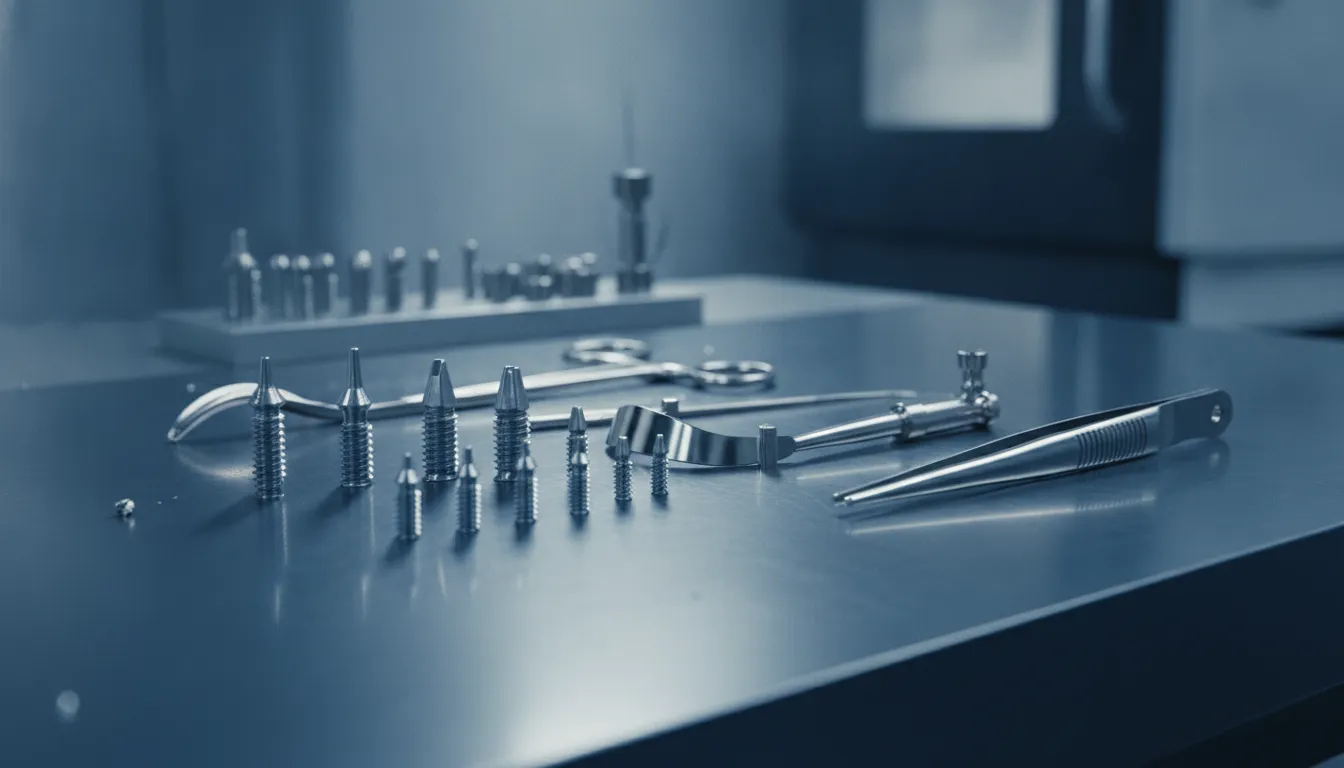
Fabrication de dispositifs médicaux : vis osseuses en titane et pièces d'instruments chirurgicaux en acier inoxydable usinées par CNC
Definition

What Is Medical Device Prototyping?

Medical device prototyping is the process of building physical models of a device or its components to test an idea before committing to production. A prototype can be a rough printed mockup for a usability discussion, a functional prototype that runs on a bench, or a near-production part used to check the final product against its requirements.

Prototyping is essential in a highly regulated field. Design changes after an FDA submission are slow and expensive, so the goal is to refine the design early, while a change still means a new CAD file rather than a new validation. Good prototyping accelerates medical device innovation and gets the product to market sooner.

Étapes

Stages of Medical Device Prototyping and Product Development

1. Concept and FeasibilityEarly-stage models check size, shape and the basic idea. Printing is ideal here: cheap, fast and easy to change.
2. Proof of Concept and Functional PrototypesThe mechanism has to work. Functional prototypes are machined or printed in materials close to the final choice, so you can test loads, fits and movement in real-world conditions.
3. Usability and ErgonomicsClinicians and users handle the device before clinical use. Prototypes with realistic weight, finish and colour give honest feedback on grip, controls and workflow.
4. Design Verification and ValidationNear-production prototypes, made by the intended process where possible, are tested against the design requirements. Records from this stage often support regulatory testing and submission.
5. Pilot and Pre-ProductionRapid tooling and pilot runs check that the design can be made consistently before you invest in production tooling.
Méthodes

Prototyping Capabilities and Prototyping Techniques

MéthodeIdéal pourMatériauxDélai de livraison habituel
Usinage CNCFunctional and verification prototypesTitanium, stainless steel, aluminum, PEEK, POM, PC5–7 business days for most medical parts
3D printing (SLA, SLS)Concept models, complex internal shapesResins, nylonQuelques jours
TôlerieBrackets, frames and equipment panelsStainless steel, aluminumÀ partir de 3 jours seulement
Moulage sous vide10–50 housings for usability studiesPolyurethane (ABS-, PP- or rubber-like)Simple parts in under 5 days
Fabrication rapide d'outilsHundreds of molded parts in the final resinMedical-grade thermoplasticsFrom about 5 business days for molded parts

Machining is often the best choice for a medical prototype because it uses the real material. A machined titanium or PEEK prototype behaves like the final part in mechanical tests, which a printed part cannot promise. Printing remains the most cost-effective prototyping route for early shapes. Our medical precision machining page explains the machining options, and the general prototypage rapide page compares every method we offer.

Matériaux

Material Selection for Medical Prototyping

Choose prototype materials based on what the test needs to prove. For a look-and-feel model, any printable resin works. For mechanical or functional testing, use the production material or the closest machinable equivalent. For sterilization trials, the material must match production exactly.

A common mistake is testing a prototype in one plastic and launching in another. Polycarbonate and ABS behave differently after repeated cleaning with hospital disinfectants, so a design that passed with one may crack with the other. We help you choose materials that match your final manufacturing process.

Regulatory

Prototype Development, Validation and Regulatory Requirements

Prototypes themselves are not cleared by the FDA, but the records from verification prototypes support your design history and submission. Our quality system is certified to ISO 13485, so even prototype orders can come with material certificates and inspection reports when you need them to validate device performance.

Challenges

Common Challenges in the Prototyping Process

  • Designing for the prototype process, not the production process: plan the production method early
  • Tolerances tighter than needed: they slow every iteration and add cost
  • Skipping usability prototypes: clinicians often find problems engineers miss
  • Too many changes at once: in iterative design, change one variable per round to learn what worked
  • Late supplier involvement: manufacturability feedback during the development process prevents redesign before tooling
Du prototype à la production

From Rapid Prototyping to Production With One Partner

Because we also mold and machine production parts, your prototype supplier can become your production supplier. That keeps the same engineers, materials and inspection methods through product development, which shortens the path to commercialization of your medical product.

Pourquoi Tuowei ?

Why Medical Device Companies Choose Tuowei for Prototyping

  • Machining, printing, vacuum casting and rapid tooling in one place
  • Most CNC medical prototypes ship in 5–7 business days
  • Real medical materials: titanium, 316L, PEEK and medical-grade plastics
  • ISO 13485 certified quality system and inspection reports on request
  • DFM feedback with every quote
Demander un devis

Start Your Medical Device Prototype

Upload your 3D file and drawing, tell us the quantity, material and what the prototype will be tested for. Our engineers will recommend a method and return a quote with lead times.

Obtenir un devis immédiat
🔒 Tous les fichiers téléchargés sont sécurisés et confidentiels
Prenez contact avec nous !
Réponse rapide garantie dans les 24 heures
🔐 Tous les téléchargements sont sécurisés et confidentiels
— Foire aux questions —

Questions fréquemment posées

Dispositifs médicaux
Combien de temps faut-il pour réaliser le prototype d'un dispositif médical ?

Pour les pièces individuelles, la plupart des prototypes médicaux CNC sont expédiés sous 5 à 7 jours ouvrés, et les modèles imprimés peuvent l'être encore plus rapidement. Un dispositif complet fait généralement l'objet de plusieurs cycles de prototypage s'étalant sur plusieurs mois, en fonction de sa complexité, des essais et des exigences réglementaires. La rapidité d'exécution des pièces permet de limiter la durée de chaque itération.

Quelles sont les étapes du prototypage des dispositifs médicaux ?

Les étapes habituelles du développement sont les suivantes : conception et étude de faisabilité, prototypes fonctionnels, tests d'ergonomie, vérification de la conception, puis phase pilote ou pré-production. Chaque étape fait appel à une méthode différente, allant de la fabrication rapide de pièces imprimées à celle de pièces usinées ou moulées proches du produit final.

Which prototyping method is best for medical devices?

Use 3D printing for early concepts, machining for functional prototypes in real materials, vacuum casting for small batches of housings for user studies, and rapid tooling when you need molded parts in the final resin. Most projects combine two or three methods.

Can you make prototypes in titanium and PEEK?

Yes. We machine prototypes in titanium Grade 2 and Grade 5, PEEK, 316L stainless steel and other medical materials. Using the production material at the prototype stage gives test results you can trust.

Do medical device prototypes need FDA clearance?

Prototypes used for bench and lab testing do not need FDA clearance. Devices used in clinical studies on people may need an Investigational Device Exemption (IDE). Either way, test records support your design history file and submission, so documented materials and inspection reports from your prototype supplier are useful.