
Tuowei Precision helps medical device manufacturers turn a medical device concept into functional prototypes they can test, show to clinicians and use to validate the design. Our service combines machining, additive manufacturing, vacuum casting and rapid tooling, so each stage of medical device development gets the right prototype in the right material. Most CNC medical prototypes ship within 5–7 business days.
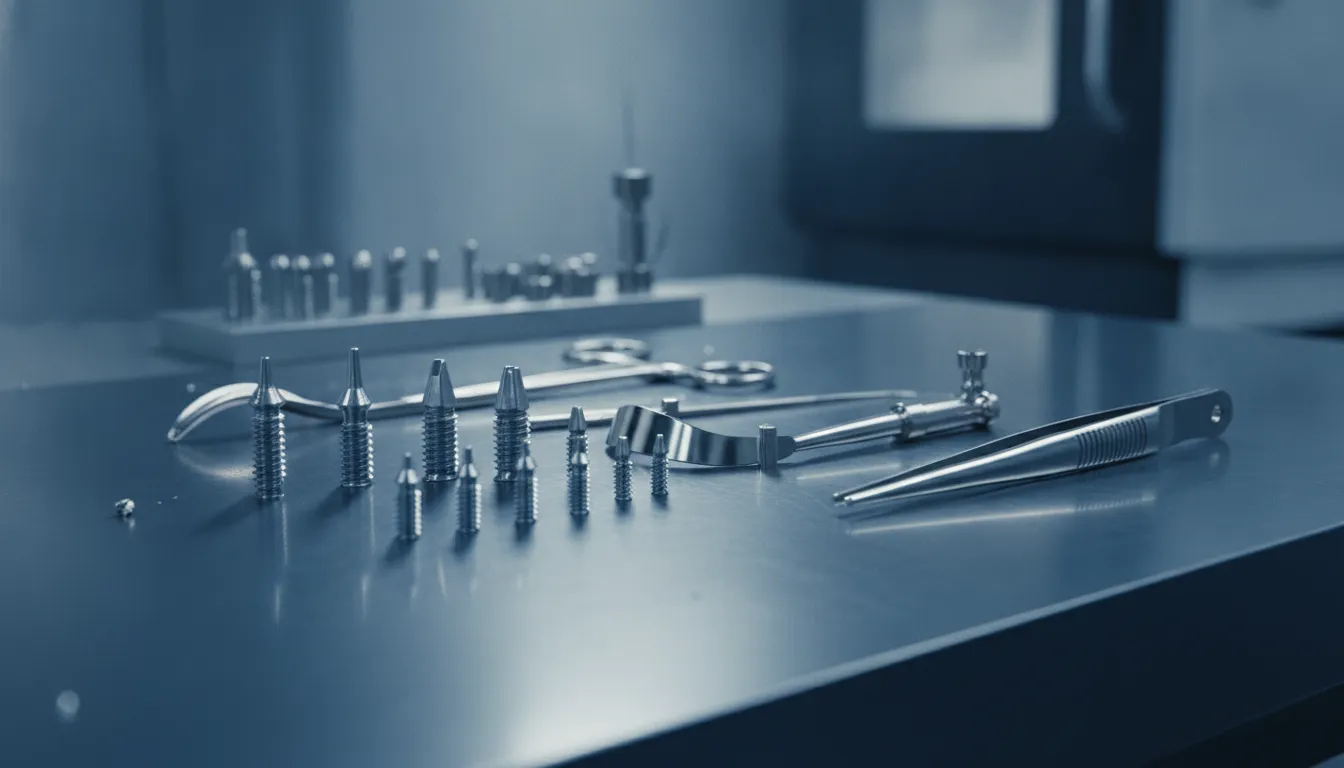
Medical device prototyping is the process of building physical models of a device or its components to test an idea before committing to production. A prototype can be a rough printed mockup for a usability discussion, a functional prototype that runs on a bench, or a near-production part used to check the final product against its requirements.
Prototyping is essential in a highly regulated field. Design changes after an FDA submission are slow and expensive, so the goal is to refine the design early, while a change still means a new CAD file rather than a new validation. Good prototyping accelerates medical device innovation and gets the product to market sooner.
| Método | Ideal para | Materiales | Plazo de entrega habitual |
|---|---|---|---|
| Mecanizado CNC | Functional and verification prototypes | Titanium, stainless steel, aluminum, PEEK, POM, PC | 5–7 business days for most medical parts |
| 3D printing (SLA, SLS) | Concept models, complex internal shapes | Resins, nylon | Unos días |
| Chapa metálica | Brackets, frames and equipment panels | Stainless steel, aluminum | En tan solo 3 días |
| Moldeo al vacío | 10–50 housings for usability studies | Polyurethane (ABS-, PP- or rubber-like) | Simple parts in under 5 days |
| Fabricación rápida de utillaje | Hundreds of molded parts in the final resin | Medical-grade thermoplastics | From about 5 business days for molded parts |
Machining is often the best choice for a medical prototype because it uses the real material. A machined titanium or PEEK prototype behaves like the final part in mechanical tests, which a printed part cannot promise. Printing remains the most cost-effective prototyping route for early shapes. Our medical precision machining page explains the machining options, and the general prototipado rápido page compares every method we offer.
Choose prototype materials based on what the test needs to prove. For a look-and-feel model, any printable resin works. For mechanical or functional testing, use the production material or the closest machinable equivalent. For sterilization trials, the material must match production exactly.
A common mistake is testing a prototype in one plastic and launching in another. Polycarbonate and ABS behave differently after repeated cleaning with hospital disinfectants, so a design that passed with one may crack with the other. We help you choose materials that match your final manufacturing process.
Prototypes themselves are not cleared by the FDA, but the records from verification prototypes support your design history and submission. Our quality system is certified to ISO 13485, so even prototype orders can come with material certificates and inspection reports when you need them to validate device performance.
Because we also mold and machine production parts, your prototype supplier can become your production supplier. That keeps the same engineers, materials and inspection methods through product development, which shortens the path to commercialization of your medical product.