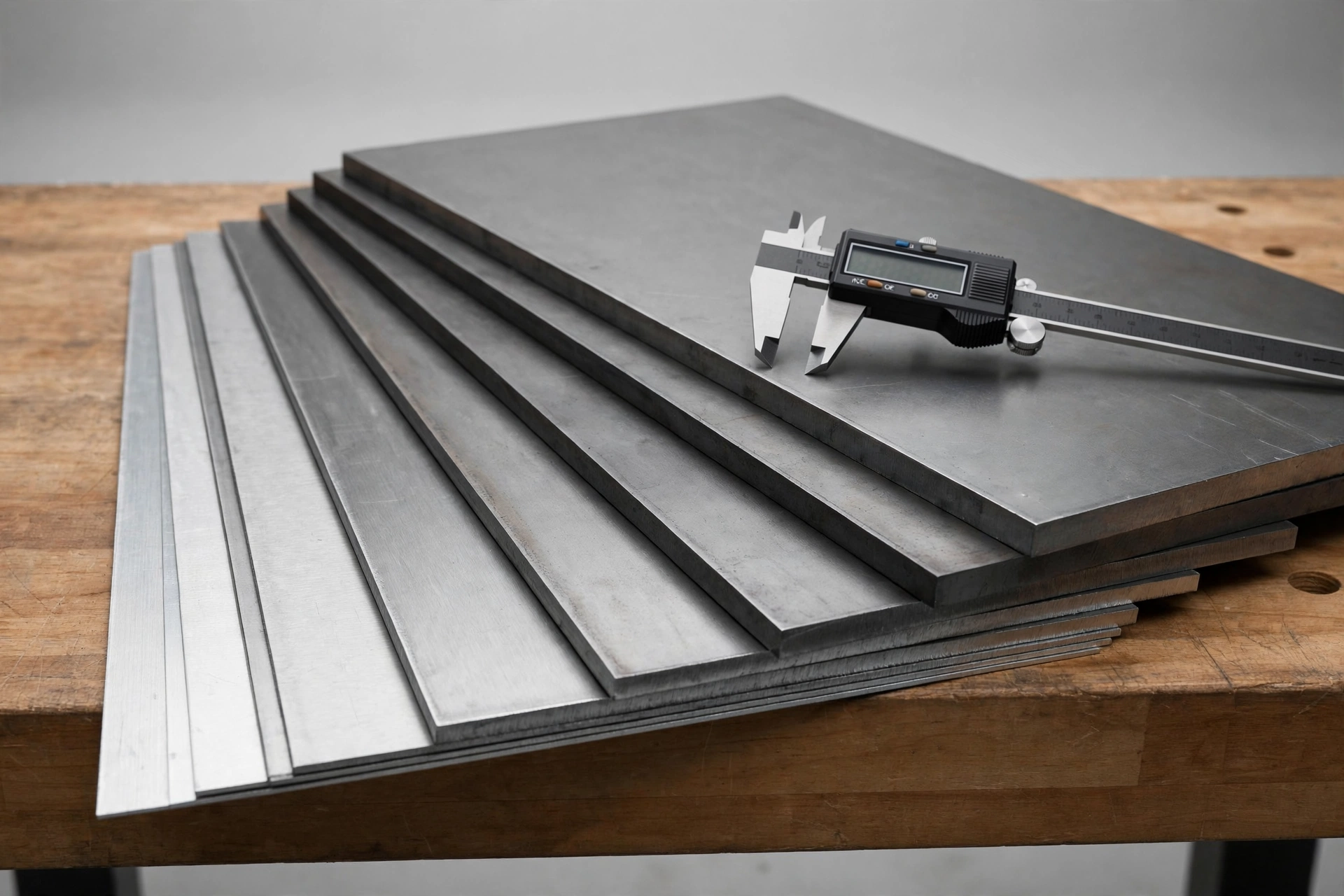
26ゲージの太さはどれくらいですか 板金? 標準的な鋼材の場合、26ゲージは0.0179インチ(0.455 mm)です。 一方、アルミニウムの場合、同じゲージ番号でも0.0159インチ(0.404 mm)と、より薄いシートになります。この違いが生じるのは、鋼板とアルミニウムでそれぞれ異なるゲージ規格が採用されているためであり、注文ミスの多くはここから始まります。.
板金ゲージ表は、ゲージ番号をインチおよびミリメートル単位の実際の厚さ値に変換するものです。このガイドでは、鋼、ステンレス鋼、アルミニウム、亜鉛メッキ鋼の10から30までのすべてのゲージを網羅し、同じゲージ番号でも金属によって厚さが異なる理由を解説するとともに、設計図面で板金を正しく指定する方法を示しています。.
板金ゲージとは、金属板の厚さを示す番号体系のことです。ゲージ番号が小さいほど板は厚く、大きいほど板は薄くなります。この逆相関の関係は、この体系に初めて接する購入担当者や技術者を戸惑わせることがあります。.
ゲージシステムは、金属製造や線材生産の分野において歴史的に発展してきました。現代のゲージ番号は、公表されている材料別の厚さ表を参照したものであり、直接的な測定値や圧延回数の信頼できる数値ではありません。.
普遍的に通用する単一のゲージ規格は存在しません。鋼材には、1平方フィートあたりの板材重量に基づく「製造業者標準ゲージ(MSG)」が用いられます。アルミニウムや非鉄金属には、「ブラウン・アンド・シャープ・ゲージ」、別名「アメリカン・ワイヤー・ゲージ(AWG)」が用いられます。.
ステンレス鋼には、鋼のMSG値とよく似ているが、まったく同じではない独自の規格が用いられています。金属ごとに独自のゲージ体系があるため、16ゲージの鋼と16ゲージのアルミニウムでは、厚さが異なります。.
だからこそ、図面に材質名を明記せずにゲージのみを指定すると、間違った部品が届いてしまう可能性が高いのです。これについては後述します。.
以下の板金ゲージ表は、標準鋼、ステンレス鋼、アルミニウム、および亜鉛メッキ鋼の10ゲージから30ゲージまでの公称厚さを比較したものです。各セルにはインチ/ミリメートル単位が記載されており、素材ごとの違いを簡単に確認することができます。.
| ゲージ | 鋼材(インチ/mm) | ステンレス(インチ/mm) | アルミニウム(インチ/mm) | 亜鉛メッキ(インチ/mm) |
|---|---|---|---|---|
| 10 | 0.1345 / 3.416 | 0.1406 / 3.571 | 0.1019 / 2.588 | 0.1382 / 3.510 |
| 11 | 0.1196 / 3.038 | 0.1250 / 3.175 | 0.0907 / 2.304 | 0.1233 / 3.132 |
| 12 | 0.1046 / 2.657 | 0.1094 / 2.779 | 0.0808 / 2.053 | 0.1084 / 2.753 |
| 13 | 0.0897 / 2.278 | 0.0938 / 2.381 | 0.0720 / 1.829 | 0.0934 / 2.372 |
| 14 | 0.0747 / 1.897 | 0.0781 / 1.984 | 0.0641 / 1.628 | 0.0785 / 1.994 |
| 15 | 0.0673 / 1.709 | 0.0703 / 1.786 | 0.0571 / 1.450 | 0.0710 / 1.803 |
| 16 | 0.0598 / 1.519 | 0.0625 / 1.588 | 0.0508 / 1.290 | 0.0635 / 1.613 |
| 17 | 0.0538 / 1.367 | 0.0563 / 1.429 | 0.0453 / 1.151 | 0.0575 / 1.461 |
| 18 | 0.0478 / 1.214 | 0.0500 / 1.270 | 0.0403 / 1.024 | 0.0516 / 1.311 |
| 19 | 0.0418 / 1.062 | 0.0438 / 1.111 | 0.0359 / 0.912 | 0.0456 / 1.158 |
| 20 | 0.0359 / 0.912 | 0.0375 / 0.953 | 0.0320 / 0.813 | 0.0396 / 1.006 |
| 21 | 0.0329 / 0.836 | 0.0344 / 0.874 | 0.0285 / 0.724 | 0.0366 / 0.930 |
| 22 | 0.0299 / 0.759 | 0.0313 / 0.794 | 0.0253 / 0.643 | 0.0336 / 0.853 |
| 23 | 0.0269 / 0.683 | 0.0281 / 0.714 | 0.0226 / 0.574 | 0.0306 / 0.777 |
| 24 | 0.0239 / 0.607 | 0.0250 / 0.635 | 0.0201 / 0.511 | 0.0276 / 0.701 |
| 25 | 0.0209 / 0.531 | 0.0219 / 0.556 | 0.0179 / 0.455 | 0.0247 / 0.627 |
| 26 | 0.0179 / 0.455 | 0.0188 / 0.477 | 0.0159 / 0.404 | 0.0217 / 0.551 |
| 27 | 0.0164 / 0.417 | 0.0172 / 0.437 | 0.0142 / 0.361 | 0.0202 / 0.513 |
| 28 | 0.0149 / 0.378 | 0.0156 / 0.396 | 0.0126 / 0.320 | 0.0187 / 0.475 |
| 29 | 0.0135 / 0.343 | 0.0141 / 0.358 | 0.0113 / 0.287 | 0.0172 / 0.437 |
| 30 | 0.0120 / 0.305 | 0.0125 / 0.318 | 0.0100 / 0.254 | 0.0157 / 0.399 |
これらの数値は公称値です。製鋼所からの実際の厚さは、本記事の後半で説明する許容誤差の範囲内で変動する場合があります。.
まず「材質」の列を選び、次にゲージ番号を探してください。各値は公称インチ/ミリメートルで表示されています。 例えば、26ゲージの標準鋼板は0.0179インチ/0.455ミリメートルですが、26ゲージのアルミニウム板は0.0159インチ/0.404ミリメートルです。これらは参考となる厚さであり、保証された実測寸法ではありません。.
ゲージ換算値は、業界で一般的に用いられている板厚ゲージ表に基づく公称の参考値です。 実際に発注する厚さおよび公差については、サプライヤーの製品仕様書および製鋼所証明書と照合して確認する必要があります。鋼、ステンレス鋼、およびアルミニウム製品については、すべての材料が同一のゲージスケールを共有していると仮定するのではなく、該当するASTM材料規格を確認してください。本ガイドは予備的な選定を支援するものであり、製造要件は設計図面および発注書によって管理されます。.
10ゲージの鋼板の厚さは0.1345インチ(3.416 mm)です。この厚さの場合、鋼板の重量は1平方フィートあたり約5.625ポンドになります。これは、プレートではなく鋼板として一般的に入手可能なものの中では最も厚いゲージであり、構造用ブラケット、重機用ガード、トレーラーの荷台、工業用床材などに使用されます。.
10ゲージのステンレス鋼は、0.1406インチ(3.571 mm)とわずかに厚くなっています。 10ゲージのアルミニウムは0.1019インチ(2.588 mm)と明らかに薄く、アルミニウムの密度が低いため、同じゲージの鋼鉄に比べて1平方フィートあたりの重量はおよそ4分の1になります。.
について CNC加工 そして レーザー切断, 、10ゲージは、多くの工場で板金とみなされる範囲の上限に近いものです。これより厚い素材は通常「プレート」に分類され、治具の取り付け、切断速度、工具の選定において異なる扱いとなります。.
12ゲージの鋼板の厚さは0.1046インチ(2.657 mm)です。これは、自動車のボディパネル、家電製品の筐体、および一般的な構造用加工部品に広く用いられています。10ゲージのような重量や切断の難しさがなく、強度と成形性のバランスに優れています。.
12ゲージのステンレス鋼の厚さは0.1094インチ(2.779 mm)です。12ゲージのアルミニウムの厚さは0.0808インチ(2.053 mm)です。.
よく聞かれる質問として、「12ゲージの鋼板は厚さが1/8インチなのか」というものがあります。答えは「いいえ」です。 1/8インチは0.125インチであり、これは11ゲージ(0.1196インチ)と10ゲージ(0.1345インチ)の中間に位置します。図面に「1/8インチ」と指定して12ゲージを想定すると、不一致が生じることになります。.
14ゲージの鋼板の厚さは0.0747インチ(1.897 mm)です。これは板金加工において最も広く使用されているゲージの一つであり、筐体、ブラケット、HVACダクト、軽量構造部材、家具のフレームなどに用いられています。.
14ゲージのステンレス鋼の厚さは0.0781インチ(1.984 mm)です。14ゲージのアルミニウムの厚さは0.0641インチ(1.628 mm)です。.
もうひとつよく聞かれる質問があります。「14ゲージの鋼板は厚さ1/4インチですか?」いいえ、違います。1/4インチは0.250インチであり、これは14ゲージよりもはるかに厚いものです。その厚さは、おおよそ3ゲージに相当し、これはすでに鋼板の領域に入ります。この混同は、通常、分数と小数での換算値を混同してしまうことから生じます。.
16ゲージの板金の厚さはどれくらいですか? 鋼の場合、16ゲージは0.0598インチ(1.519 mm)です。 ステンレス鋼の場合、0.0625インチ(1.588 mm)です。アルミニウムの場合、16ゲージは0.0508インチ(1.290 mm)です。.
16ゲージは、板金加工において主力となる厚さです。パネルやシャーシ部品などの荷重を支える部品には十分な厚さでありながら、特殊な金型を使わずに標準的なプレスブレーキで曲げ加工や成形ができるほど薄くなっています。多くの工場では、冷間圧延鋼板、304ステンレス、および5052または6061アルミニウム製の16ゲージを常備しています。.
急曲げを行う場合は、材料のグレード、焼き戻し状態、結晶粒方向、金型、および曲げ方法に基づいて、最小内曲げ半径を評価する必要があります。16ゲージのアルミニウム部品が、必ずしも鋼よりも曲げやすいとは限りません。例えば、5052-H32と6061-T6では、その挙動が異なります。.
18ゲージの鋼板の厚さは0.0478インチ(1.214 mm)です。18ゲージのステンレス鋼板の厚さは0.0500インチ(1.270 mm)です。アルミニウム板の厚さは0.0403インチ(1.024 mm)です。.
これは、建築用板金、屋根のアクセント、装飾パネル、電気機器の筐体、厨房機器などに最も一般的に使用される厚さです。曲げ加工が容易で、溶接の仕上がりがきれいで、レーザー切断も迅速に行えます。構造強度よりも重量が重視される場合、18ゲージが多くの場合、標準的な出発点となります。.
20ゲージの鋼板の厚さは0.0359インチ(0.912 mm)です。20ゲージのステンレス鋼板の厚さは0.0375インチ(0.953 mm)です。アルミニウム板の厚さは0.0320インチ(0.813 mm)です。.
20ゲージの金属板の厚さはインチでどれくらいですか? 鋼板の場合、1/32インチをわずかに超える程度です。この厚さであれば、鋼板はダクト、照明カバー、装飾用トリム、電子機器の筐体などに十分な柔軟性を持ちます。成形部品として形状を保つのに十分な強度はあるものの、それ単体では荷重を支える構造物には適していません。.
26 gauge steel is 0.0179 inches (0.455 mm). It is a frequently searched sheet thickness and a common gauge for metal roofing panels, flashing, HVAC duct liner and lightweight enclosures.
26 gauge stainless steel is 0.0188 inches (0.477 mm). 26 gauge aluminum is 0.0159 inches (0.404 mm). Galvanized steel at 26 gauge is 0.0217 inches (0.551 mm), noticeably thicker because the galvanized gauge standard accounts for the zinc coating weight.
Is 26 gauge steel thick? No. It is thin enough to flex by hand and dent under moderate pressure. For reference, 26 gauge steel is a little over half the thickness of a credit card. It is appropriate for non-structural applications where light weight and low cost matter more than rigidity.
Is 26 gauge or 30 gauge thicker? 26 gauge is thicker. Lower gauge numbers always mean thicker material. The difference is 0.0179 inches (26 gauge) versus 0.0120 inches (30 gauge) in steel.
The gauge number is not a direct measurement. It is a reference to a standard that was originally tied to the weight and density of the specific metal.
Steel gauge (Manufacturers’ Standard Gauge) is defined by US federal law (15 USC 206) and is based on the weight of steel sheet per square foot. The standard assigns each gauge a specific weight in ounces, and the corresponding thickness falls out of the density. Since steel, stainless steel and galvanized steel have slightly different densities and coating weights, the same gauge number maps to slightly different thicknesses.
Aluminum sheet commonly uses a Brown & Sharpe-derived gauge scale rather than the steel sheet scale. The gauge-to-thickness relationship is defined by the relevant table; material density alone does not determine the conversion.
This is why ordering “16 gauge sheet metal” without specifying the material is a problem. 16 gauge steel is 0.0598 inches. 16 gauge aluminum is 0.0508 inches. That is a 15 percent difference in thickness, which changes bend allowance calculations, weight estimates and part stiffness.
The gauge chart gives nominal values. The sheet that arrives from the mill may not match those numbers exactly, for three reasons.
Actual sheet thickness can differ from nominal gauge values. Applicable limits depend on the ordered thickness, width, material grade, processing condition and relevant specification, such as ASTM A568 for certain steel sheet products. Check the actual tolerance table and mill certificate; do not assume a single universal range for all 16-gauge steel.
Galvanized steel runs thicker than bare steel at the same gauge because the gauge designation includes the zinc coating. A 26 gauge galvanized sheet (0.0217 inches) is measurably thicker than 26 gauge bare steel (0.0179 inches). If you strip the zinc, the base steel underneath is thinner than the chart number.
Surface treatments can change final part dimensions. With Type II anodizing, part growth depends on coating thickness and the proportion of oxide formed above and below the original surface. For tight-fitting features, specify dimensions and inspection requirements after finishing.
When tolerances matter, specify the thickness in decimal inches or millimeters on the drawing, not the gauge number. The gauge is a shorthand for ordering; the decimal is what the part actually needs to be.
For precision parts and CNC machined components, call out sheet metal thickness in decimal inches or millimeters with a tolerance. Gauge numbers are useful for purchasing raw material but ambiguous on a manufacturing drawing.
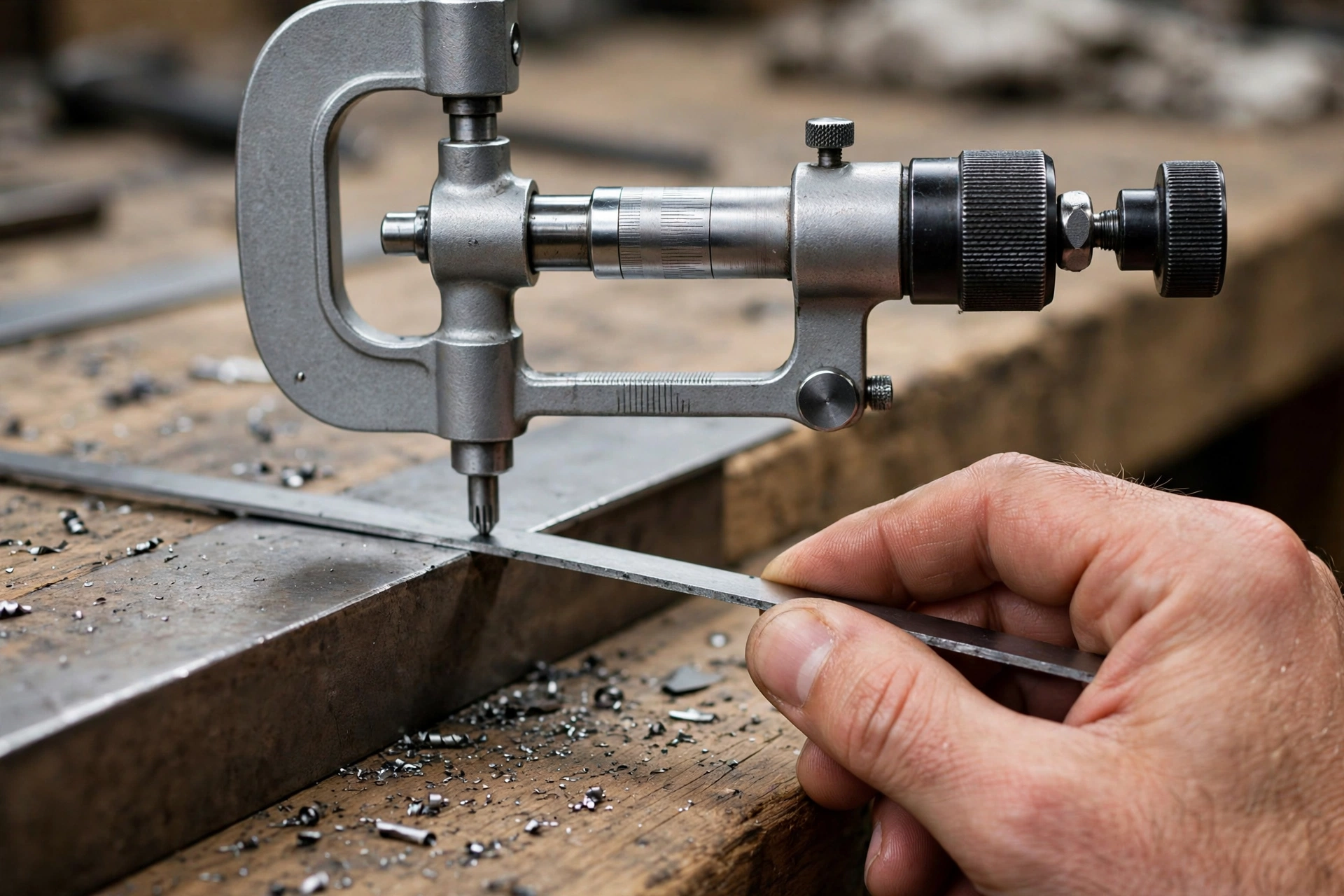
A clear callout looks like this: “Material: 304 Stainless Steel, 0.0625 in. (1.588 mm) nominal, per ASTM A240.” That removes all ambiguity about which gauge standard applies and tells the shop exactly what to measure with a micrometer.
If you must use gauge, always pair it with the material: “16 gauge 304 stainless steel.” Never write just “16 gauge” without the metal name. And always confirm the decimal equivalent with your supplier before production, because some suppliers reference slightly different gauge tables.
When requesting a quote from Tuowei, provide the material grade, nominal thickness in inches or millimeters, tolerance, finish and part drawing. Tuowei’s sheet metal fabrication and CNC machining teams can use those details to discuss manufacturability and quotation requirements.
Gauge selection depends on four factors: structural requirement, weight limit, formability and cost.
Thicker gauge stock costs more per square foot, takes longer to cut and bend, and requires heavier tooling. Thinner stock saves weight and cost but may need stiffening features like ribs, flanges or hems to hold its shape. The right gauge is the thinnest one that meets the structural and stiffness requirements of the part.
で CNC加工 and precision 板金加工, gauge selection directly affects process planning.
Thickness affects cutting speed, edge quality and gas consumption, but actual results depend on laser power, metal grade, assist gas, nozzle setup and quality requirements. Confirm production rates with a qualified process plan instead of using universal inches-per-minute figures.
Minimum inside bend radius, bend allowance and K-factor depend on the alloy, temper, thickness, grain direction, tooling and forming process. Use material-specific guidance and trial bends for critical work. For example, 5052-H32 generally tolerates tighter bends than 6061-T6 at comparable thickness.
Thin gauges (24 to 30) are prone to burn-through, especially in steel. TIG welding with low amperage or pulse settings is standard for these thicknesses. Thicker gauges (10 to 14) may need joint preparation and multiple passes.
Incoming sheet thickness variation can affect formed and machined feature dimensions. Critical drawings should define the required finished dimensions, datum scheme and inspection method. Review how stock tolerance and fixturing affect the final part before production.
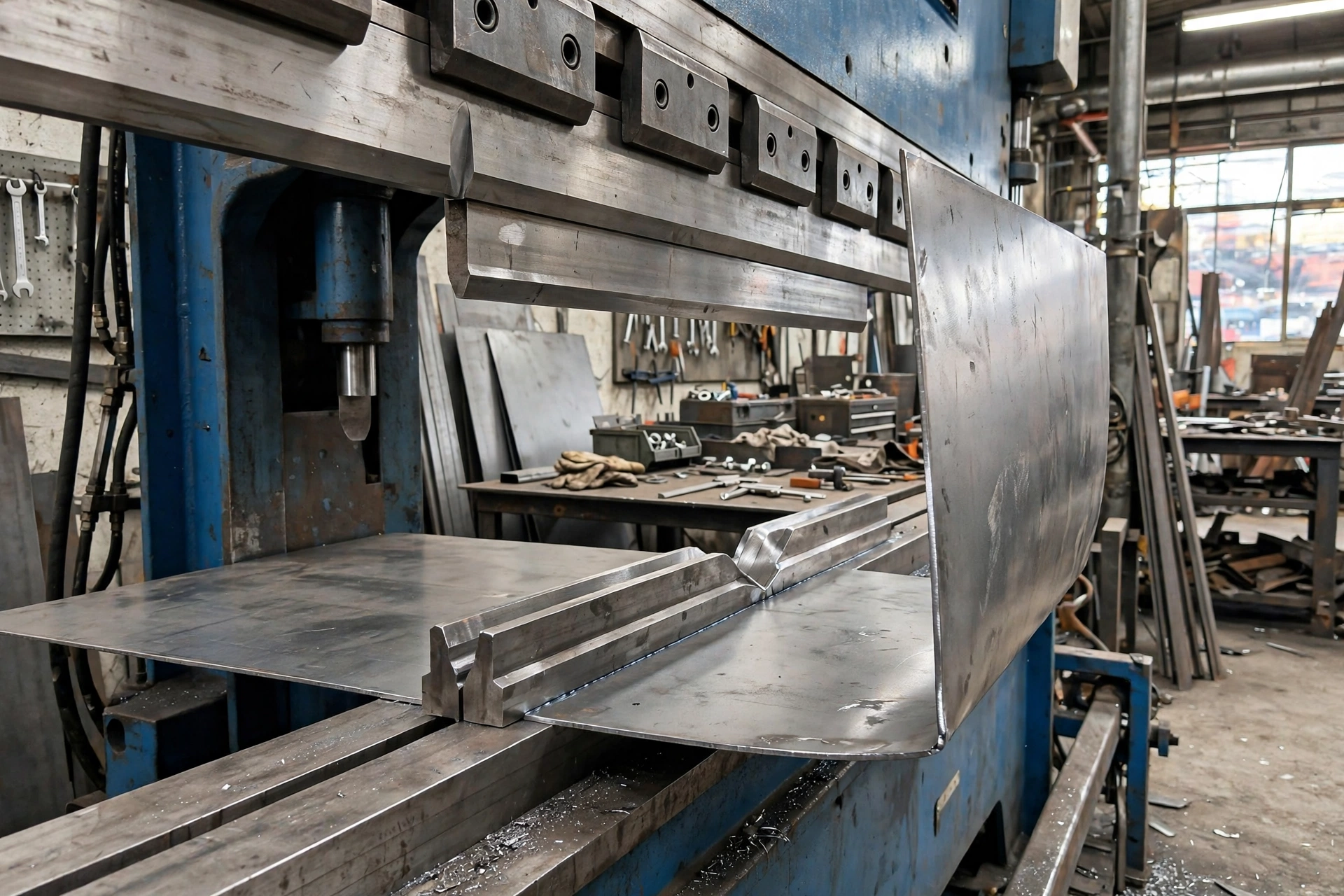
14ゲージの方が厚いです。鋼の場合、14ゲージは0.0747インチ(1.897 mm)、18ゲージは0.0478インチ(1.214 mm)です。 ゲージの数値が小さいほど、材料は厚くなります。これは、鋼、ステンレス鋼、アルミニウム、およびゲージ制度を採用しているその他のあらゆる金属に当てはまります。.
20ゲージの鋼板の厚さは0.0359インチで、これは1/32インチをわずかに上回ります。20ゲージのステンレス鋼板の厚さは0.0375インチ、20ゲージのアルミニウム板の厚さは0.0320インチです。 この厚さであれば、標準的な設備で板金を容易に曲げ加工や成形することができ、ダクト、照明器具の筐体、装飾パネルなどに広く使用されています。.
11ゲージの鋼板の厚さは0.1196インチ(3.038 mm)です。 ステンレス鋼の場合、11ゲージは0.1250インチ(3.175 mm)、アルミニウムの場合は0.0907インチ(2.304 mm)、亜鉛メッキ鋼の場合は0.1233インチ(3.132 mm)です。.
3/32インチは0.09375インチです。鋼材の場合、これは13ゲージ(0.0897インチ)と12ゲージ(0.1046インチ)の間に位置し、13ゲージに近い値となります。 ステンレス鋼の場合、13ゲージ(0.0938インチ)と12ゲージ(0.1094インチ)の間に位置します。3/32に正確に一致する標準ゲージは存在しないため、ゲージ番号に無理に当てはめるよりも、厚さを小数点付きのインチで指定する方がより正確です。.
ゲージ番号が大きいほど、板金は薄くなります。この表では、30ゲージ(鋼板の場合0.0120インチ)が最も薄く、10ゲージ(0.1345インチ)が最も厚いです。 この逆の番号付けの慣習は、歴史的なゲージ体系に由来するものですが、現代の厚さは、材料ごとのゲージ表と照らし合わせて確認する必要があります。.
26ゲージの方が厚いです。鋼板の場合、26ゲージは0.0179インチ(0.455 mm)、30ゲージは0.0120インチ(0.305 mm)です。 どちらも屋根材やフラッシングに使用するのに十分な薄さですが、26ゲージは形状保持性に優れ、へこみに強いことから、金属製屋根パネルには26ゲージがより一般的に選ばれています。.