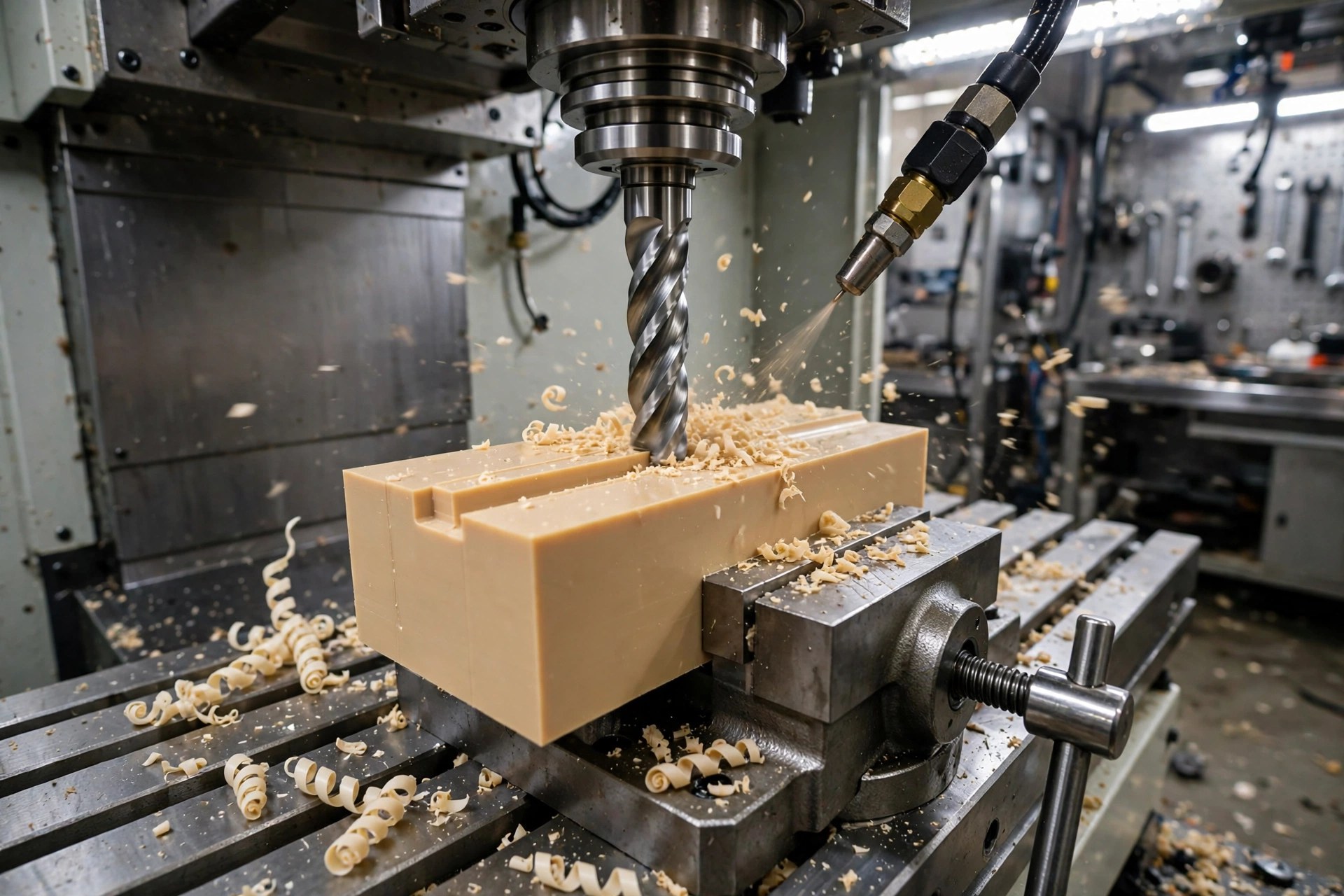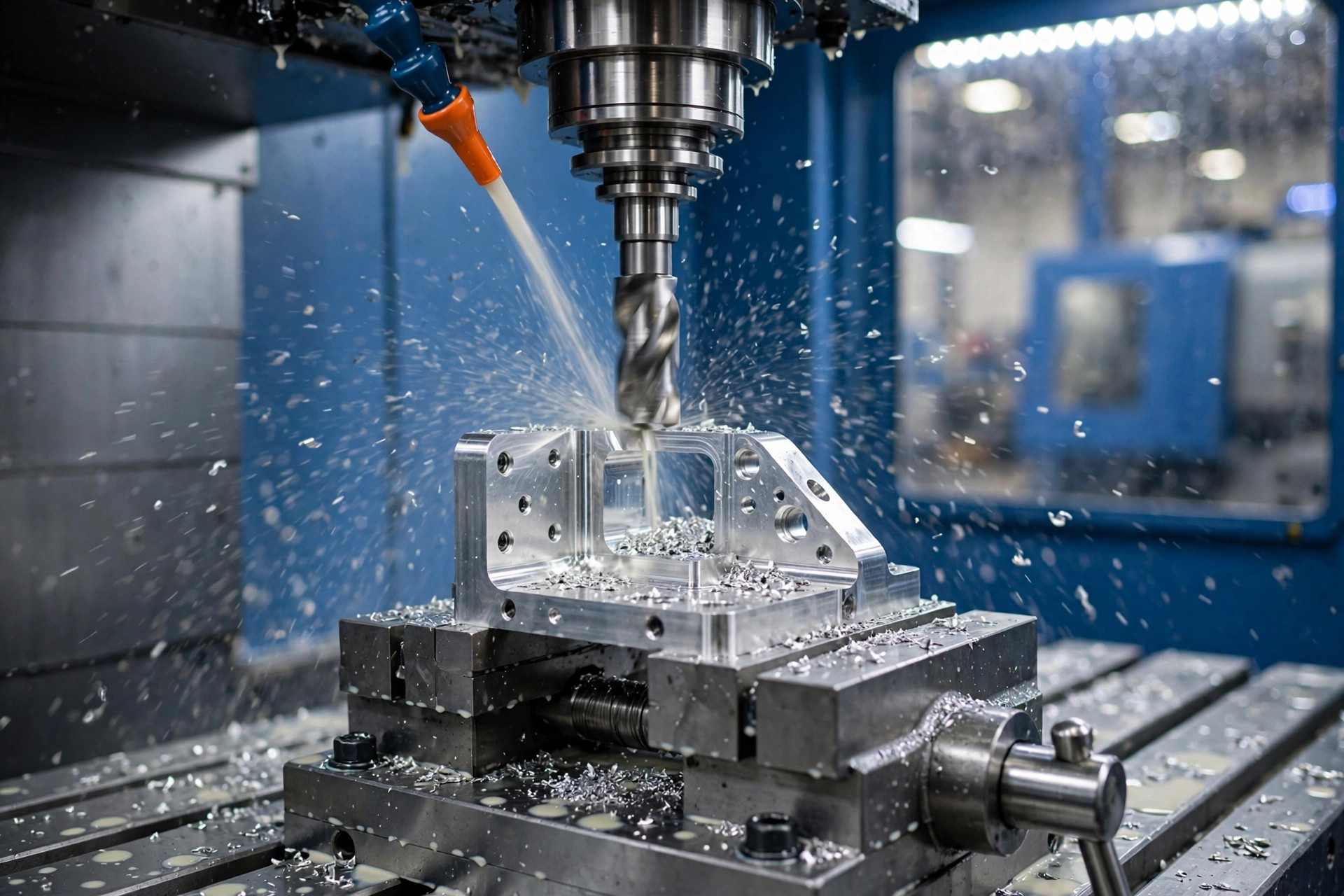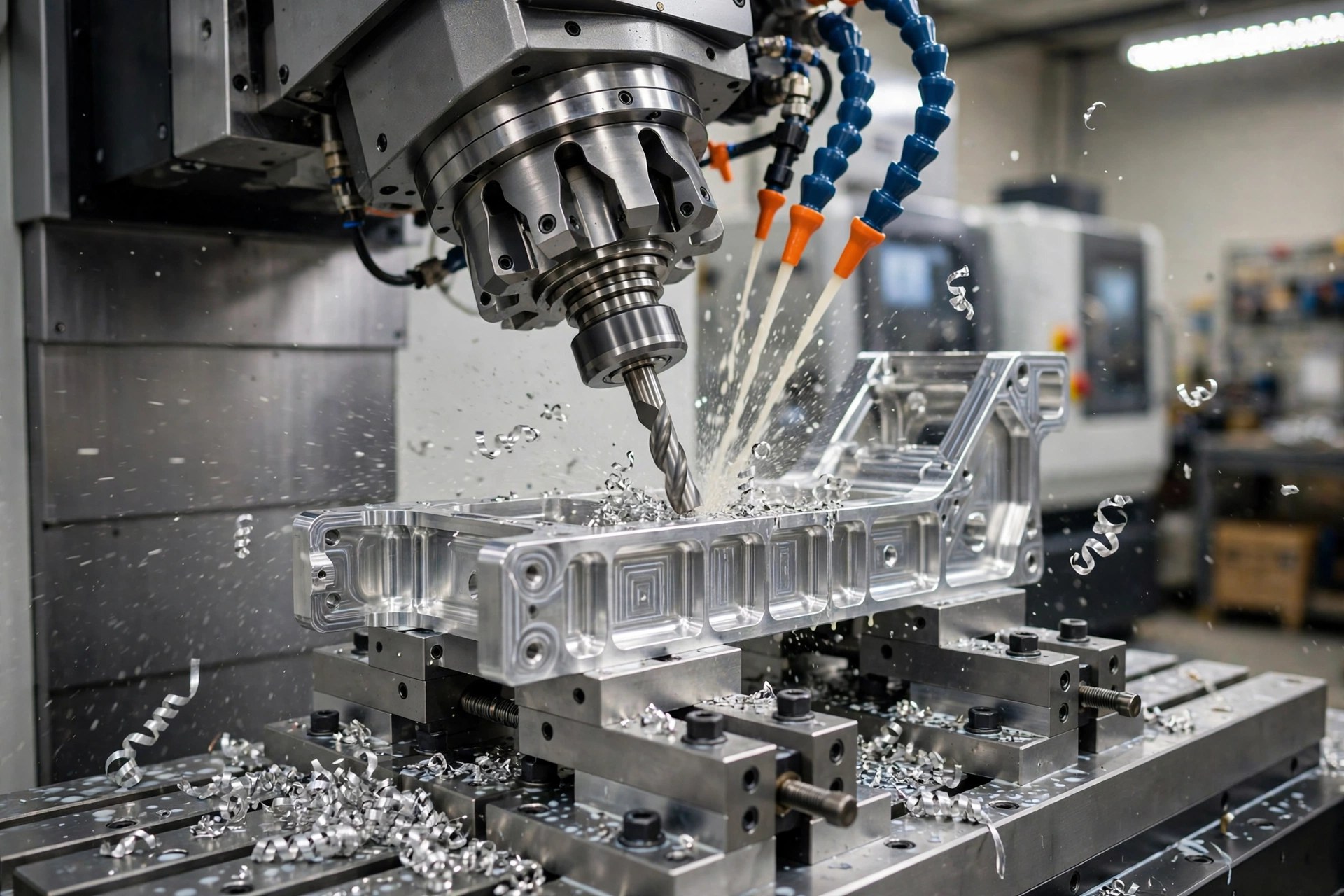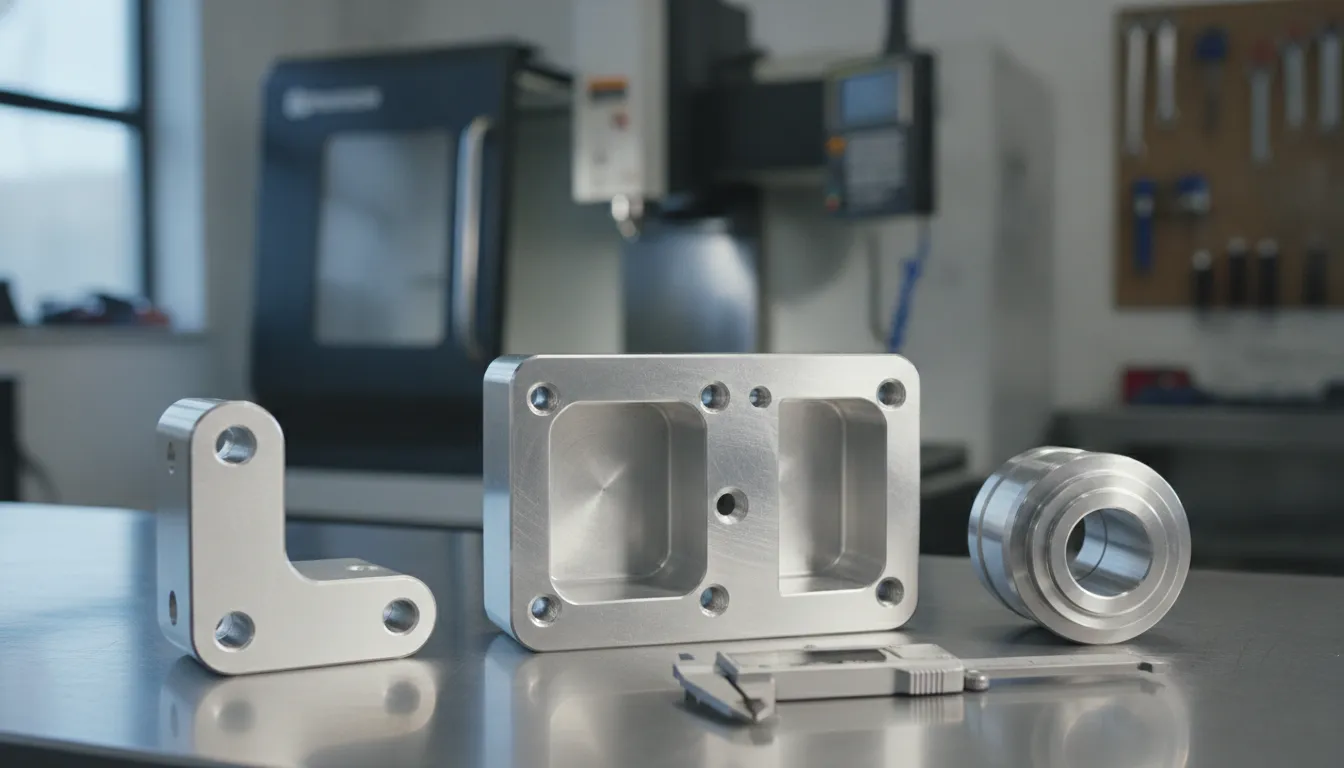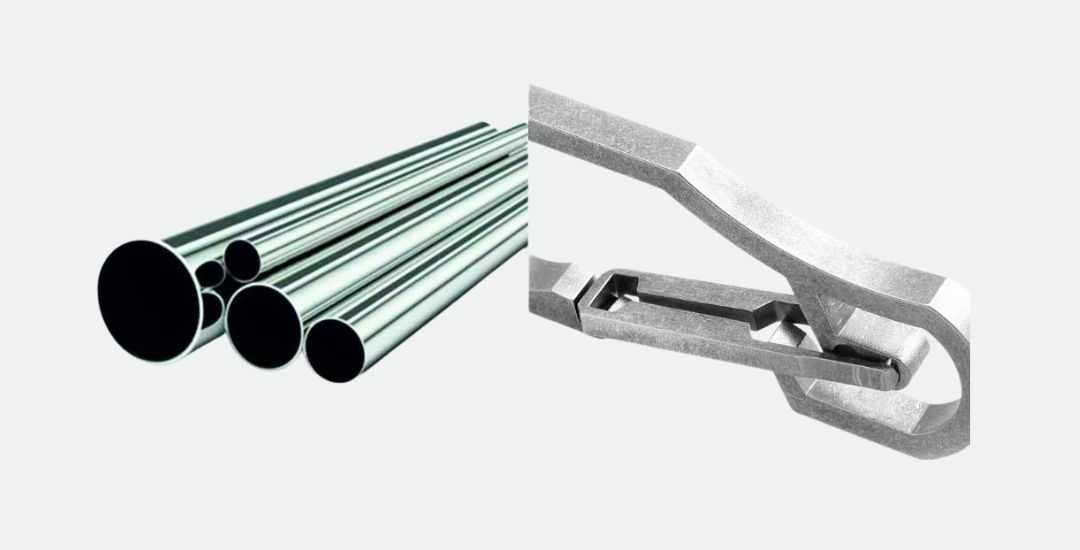
Titanium should be the perfect engineering metal. The titanium alloy Grade 5 (Ti-6Al-4V) delivers strength comparable to steel at roughly 60% of the weight, an outstanding strength-to-weight ratio, and corrosion resistance that shrugs off saltwater, while keeping its strength at temperatures that soften aluminum. Titanium alloys, due to their strength-to-weight ratio and corrosion resistance, fill aircraft structures, jet engines, and medical implants. Yet on the shop floor, titanium machining has a very different reputation: it eats cutting tools, springs away from the cutter, and punishes anyone who tries to machine titanium with steel habits.
So why is machining of titanium difficult, exactly? Titanium is not hard in the way a file is hard: annealed Ti-6Al-4V measures only around 36 HRC. The difficulty is physics. Titanium conducts heat poorly, flexes under the tool, and its alloys work harden as they are cut, while hot titanium chemically bonds to the tool. Together, these shrink your process window to a fraction of what aluminum or steel allows, which is why titanium is called a difficult material to machine.
This guide explains the five physical reasons, walks through how the CNC machining process for titanium works when it is done well, and gives you the tooling choices, starting speeds and feeds, and fixes experienced shops rely on. If you would rather hand the part to a shop that machines titanium weekly, our Servicio de mecanizado CNC de titanio covers everything below in production.
Ask five machinists why titanium is hard to machine and you will hear five complaints: burned tools, chattering thin walls, stringy chips, galled threads, and parts that measure differently after unclamping. Machining of titanium is difficult due to a handful of material properties, and all five complaints trace back to them. Here they are, in the order they usually bite.
Cutting any metal generates heat, and where that heat goes decides tool life. With steel, most of it leaves with the chip. Titanium cannot do that trick: its low thermal conductivity keeps heat concentrated in the cutting zone instead of spreading into the chip and the titanium workpiece. Ti-6Al-4V conducts heat at about 6.7 W/m·K, roughly seven times slower than carbon steel.
The edge therefore runs far hotter than the bulk temperature suggests, so it softens, deforms, and wears at a pace that surprises anyone coming from aluminum. Tool supplier Kyocera SGS quantifies the trap: increasing cutting speed by 30% can shorten tool life by as much as 80%. Excessive heat is the failure titanium punishes out of all proportion, which is why every credible guide starts by telling you to slow down and feed harder instead.
The elasticity of titanium alloys is about half that of steel: an elastic modulus of roughly 114 GPa for Grade 5, compared to steel at about 200 GPa. The workpiece flexes away from the edge under pressure, then springs back as the edge passes. Instead of a clean shear you get rubbing contact, which generates more heat, invites vibration and chatter, and ruins surface finish.
Springback is worst exactly where titanium parts live: thin walls and slender features. The wall deflects during the pass and relaxes afterward, so the dimension you cut is not the dimension you keep, and dimensional accuracy suffers. Shops counter it with rigid setups, short tools, reduced radial engagement, and spring passes, covered in the tips below.
Like austenitic stainless steel, titanium alloys are prone to work hardening: as the cut deforms the surface, titanium becomes harder and more abrasive for the next pass. The signature failure is notch wear, a groove worn into the tool exactly at the depth-of-cut line, where the edge meets the hardened skin of the previous pass.
The rule follows directly: never let the tool dwell. A paused feed or a dull, rubbing edge makes the surface work harden almost instantly and spikes the heat. Keep the cutter moving and engaged, and cut beneath the hardened layer on every pass.
Titanium’s high chemical reactivity is the fourth problem. At cutting temperature, titanium has a strong tendency to weld itself to tool material. The result is built-up edge, galling, and smearing: workpiece material micro-welds to the edge, tears away, and takes tool material with it, while smeared titanium drags across the finished surface.
Kyocera SGS flags a subtler danger: smearing threatens surface integrity, because smeared material can close over small cracks and hide them from inspection. Galling is also why titanium threads seize and tapping is dreaded when working with titanium. Titanium requires sharp tools, effective coatings, and coolant aimed exactly at the cutting point.
Titanium produces long, thin, stringy chips that wrap around tools, mark surfaces, and carry little heat away, while the small chip-tool contact area concentrates pressure and temperature on a tiny edge section. Titanium is also a metal that retains its high strength at high temperature, so forces stay high where the tool is hottest. Aim instead for short, thick, well-broken chips through tool geometry, feed, and toolpath strategy.
| Propiedad | Grade 2 (commercially pure titanium) | Grado 5 (Ti-6Al-4V) | acero inoxidable 304 | Carbon steel |
|---|---|---|---|---|
| Thermal conductivity (W/m·K) | 16.4 | 6.7 | ~16 | ~50 |
| Elastic modulus (GPa) | ~103 | ~114 | ~193 | ~200 |
| Tensile strength (MPa, typical) | ~345 | ~950 | ~515 | ~400–550 |
Read the table row by row and the problem comes into focus: the most used titanium alloy pairs steel-like strength with the worst heat conduction in the row and half of steel’s stiffness. Choosing between the two common grades? Our Grade 2 vs Grade 5 titanium comparison covers strength, cost, and machinability in depth.
Machining titanium uses the same milling and turning operations used on metals such as steel. What changes is how deliberately the process is managed: machining titanium requires special attention to heat, engagement, and rigidity. A well-run titanium job looks like this.
The machine runs slow and strong. Cutting titanium happens at low spindle speeds with high torque: this is not high-speed machining, it is high-torque machining. Around 3,000 RPM covers most milling, because surface speed is the binding constraint. Machine tool rigidity matters as much as the machine itself, because any flexibility becomes chatter on a material that already wants to deflect.
The toolpath keeps engagement constant. Sudden full-width engagement slams the edge with heat and load. Modern toolpaths use dynamic or trochoidal strategies: deep axial cuts with small radial step-over, engagement angle low and constant (Seco suggests under 30 degrees), arcing in and out instead of plunging into corners. Constant engagement means constant temperature and chip thickness, which is what a tool needs to survive machining titanium alloys.
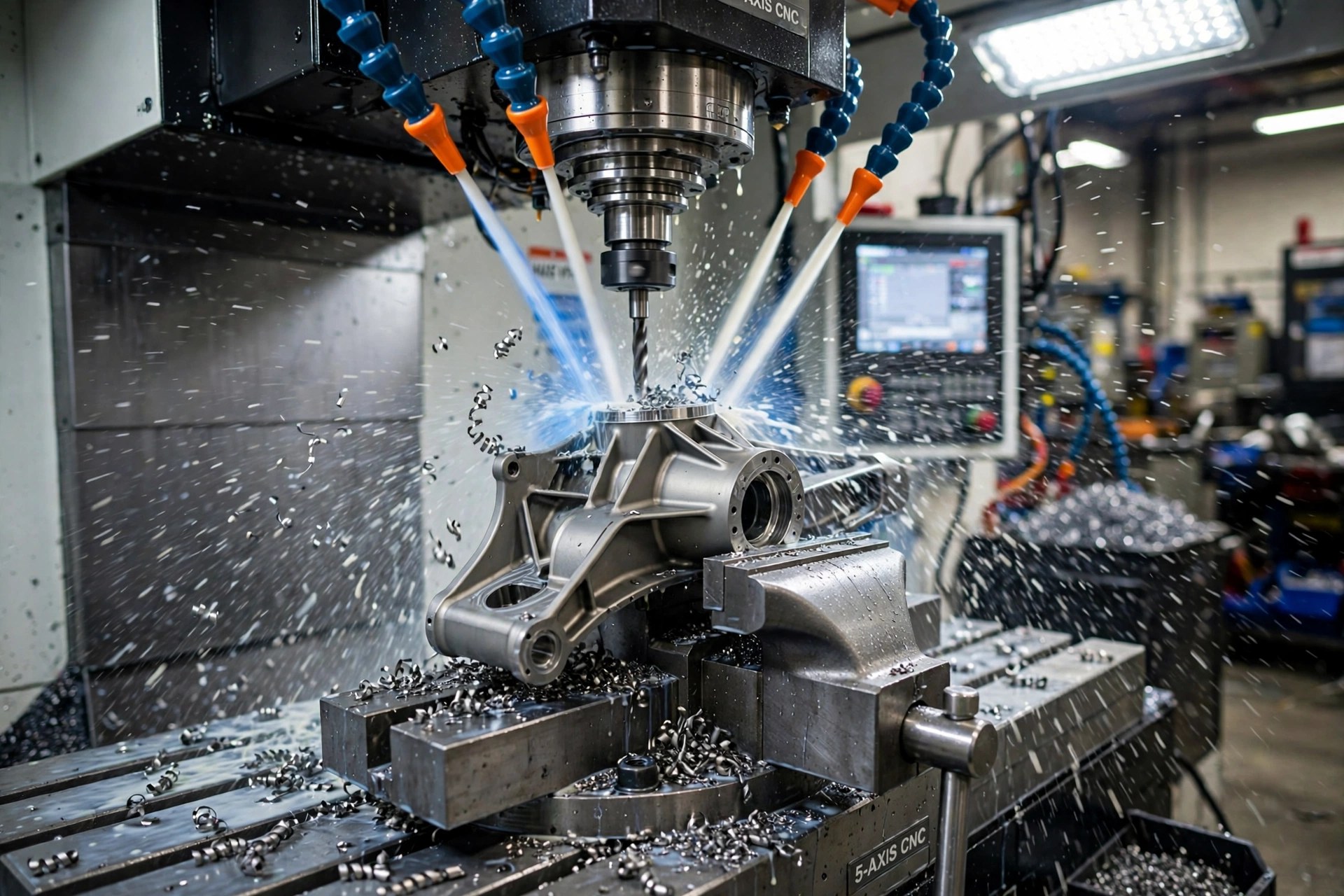
Coolant is a cutting tool, not an accessory. High-pressure coolant delivery, ideally through the tool and aimed precisely at the cutting point, extracts heat the chip cannot carry, blasts chips out before they can be re-cut, and suppresses galling. The cutting fluid is typically a 10% emulsion, and placement matters as much as pressure: a stream that misses the edge cools almost nothing. For finish turning, shops ease the pressure slightly to avoid material redeposition.
The part is prepared and supported. Forged and rolled titanium carries residual stress that redistributes as material comes off, so stress-relieving before finishing is standard on precision work. Thin sections get dedicated workholding, and finish passes are light, consistent cuts with spring passes to absorb deflection.
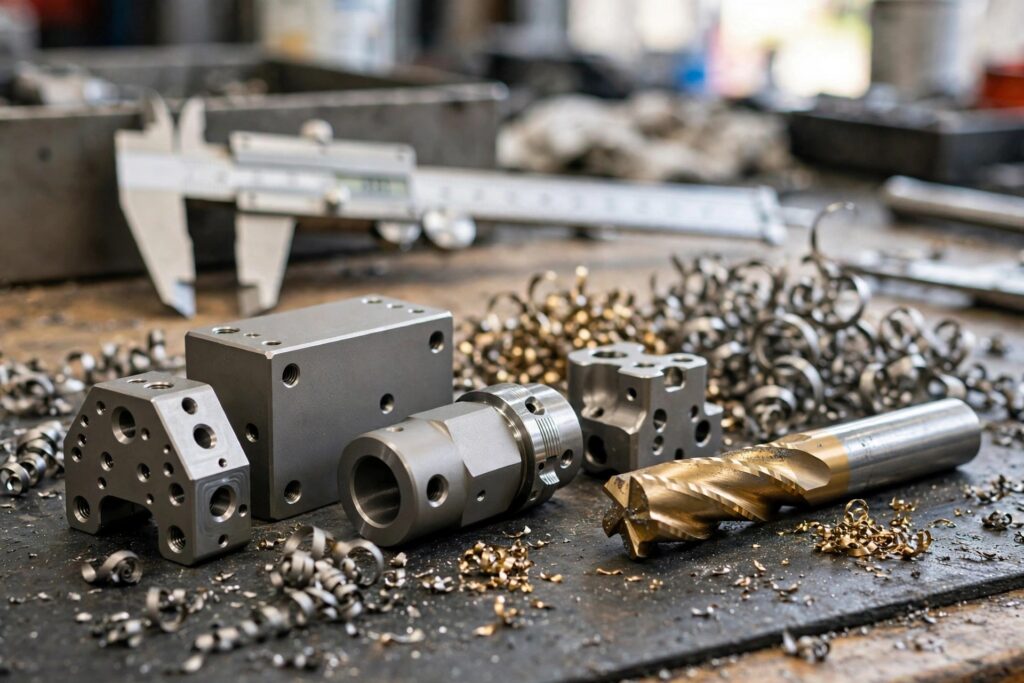
The best tools to machine titanium are sharp solid-carbide tools with a heat-resistant PVD coating, run in a rigid holder with through-tool coolant. Here is how that breaks down by element.
Substrate: carbide, not high-speed steel. Tungsten carbide’s hot hardness is what survives titanium’s edge temperatures. High-speed steel survives only in slow, forgiving operations and dulls quickly, and a dull tool in titanium is worse than no tool: it rubs, hardens the surface, and overheats in seconds.
Coating: TiAlN first, TiCN for speed. TiAlN (titanium aluminum nitride) is the default across toolmakers, because its oxide layer resists the heat titanium generates. TiCN is the alternative Fictiv’s engineers cite for higher speeds. Both are PVD coatings thin enough to keep the edge sharp.
Geometry: sharp, positive, and chip-friendly. A sharp edge with positive rake shears titanium instead of plowing it, minimizing heat and hardening. Polished, open flutes help stringy chips evacuate, and variable-helix end mills break up the harmonics that excite chatter in a springy part. Shorter, smaller-diameter tools deflect less.
By operation: milling titanium alloys favors 4- to 5-flute variable-helix end mills; turning favors sharp, positive-rake inserts with jets aimed at the edge; drilling favors internally cooled drills that clear chips before they pack; tapping demands spiral-flute taps and respect for galling, because a seized tap in a titanium grade part usually means scrap.
Published parameters vary by toolmaker, because grade, tool, and coolant delivery all change the answer. Two anchors bracket the sane range: Seco Tools puts carbide cutting speeds for titanium at 45–100 m/min, while Fictiv offers a conservative 60–100 SFM (about 18–30 m/min) for milling. The table converts that guidance into starting windows for coated carbide with effective coolant: entry points to tune against your tool supplier’s data, not guarantees.
| Operation (coated carbide) | Grade 2 starting range | Grade 5 (Ti-6Al-4V) starting range | Feed guidance |
|---|---|---|---|
| Milling | 55–90 m/min | 40–70 m/min | 0.05–0.15 mm/tooth; keep the tool engaged, favor feed over speed |
| Turning | 60–100 m/min | 45–75 m/min | 0.1–0.3 mm/rev; vary depth of cut between passes to spread notch wear |
| Drilling | 30–50 m/min | 25–40 m/min | Steady feed; clear chips before they pack and weld |
Three rules matter more than any number in the table. First, when tool life disappoints, reduce speed before feed: a 30% speed increase can cost up to 80% of tool life, while a healthy feed barely raises tool temperature. Second, pure titanium and the softer CP grades buy you the top of each range; Ti-6Al-4V lives at the bottom. Third, coolant delivery to the edge moves your ceiling more than tool brand does.
Because titanium concentrates several wear mechanisms in one cut, machining challenges in this metal usually announce themselves on the spent tool first. Diagnosing the failure pattern tells you exactly which property beat you. Use this table before changing anything.
| Symptom on the tool | Likely cause | Fix |
|---|---|---|
| Notch wear at the depth-of-cut line | The work-hardened skin from the previous pass abrading the edge | Vary depth of cut between passes; choose a tougher tool material; keep feed engaged so the edge cuts under the hardened layer |
| Rapid flank wear | Heat overload at the edge from low conductivity and too much speed | Cut surface speed first; verify the stream actually reaches the edge; switch to TiAlN-coated tooling |
| Built-up edge and galling | Reactivity welding titanium to the tool; edge too dull or feed too light | Sharper geometry and polished flutes; raise feed so the tool shears instead of rubbing; increase coolant pressure |
| Edge chipping | Interrupted cuts, vibration, or dwelling that hardens the surface mid-cut | Constant-engagement toolpaths; stiffer setup and shorter tools; never pause the feed in the cut |
| Crater wear on the rake face | High-temperature diffusion where the chip slides | Coated tooling; reduce speed; improve delivery to the chip-tool interface |
| Smeared, torn surface on the part | Material micro-welding and dragging across the finish | Fresh sharp tooling; vary the cut depth; inspect carefully, because smearing can mask small cracks on flight-critical parts |
Never dwell, never hesitate. Program entries, exits, and corners so the tool never stops in the cut. Every pause hardens the spot you are standing on.
Climb mill and keep engagement light and constant. Dynamic toolpaths with small radial step-over and deep axial cuts spread heat and load evenly and produce the short, thick chips titanium prefers.
Aim coolant like it matters, because it does. A high-pressure stream pointed at the edge, not the general area. Check the aim at every tool change; titanium machining requires that precision.
Build rigidity everywhere. Short tools, quality holders, solid workholding, and support for thin walls. Leave even stock, alternate sides where the design allows, and finish with light spring passes that hold size. Our guide to machining 7075 aluminum covers the same thin-wall discipline, and the principles transfer directly.
Stress-relieve before you finish. Titanium stock carries residual stress; rough, relieve, then finish. Skipping the middle step is how flat parts become potato chips after unclamping.
Change tools early. A tool run to visible failure has usually cut the last several parts with a rubbing edge, quietly destroying surface finish. Scheduled changes protect parts and spindles.
Respect the fire risk. Fine titanium chips and dust are flammable: dust can ignite around 450 °F, bulk titanium at roughly 2,200 °F in air. Keep a Class D extinguisher at the machine, never use water on a titanium fire, and keep chip pans clean; Kyocera SGS’s titanium resource pages carry the full hazard data.
Stainless steel is the comparison machinists reach for: 304 conducts heat at about 16 W/m·K and work-hardens aggressively, so it also burns tools run with carbon-steel habits. Titanium still wins the difficulty contest: it is simply difficult to cut cleanly at production speed. Ti-6Al-4V conducts heat less than half as well as 304, springs back far more, retains strength and hardness at temperature, and adds galling that stainless does not match. Machinability ratings relative to free-cutting steel at 100% put austenitic stainless around 45% and the common titanium alloys nearer 20–25%. For the grade decision behind most jobs, see our Grade 2 vs Grade 5 breakdown; for parts mixing materials like titanium with steels and plastics, our materials library lists what runs on the same floor.
The challenges of machining titanium are physical, measurable, and manageable: heat that will not leave the edge, a part that flexes and springs back, a surface that hardens as you cut it, chemistry that welds it to your tools, and chips that refuse to help. All of them yield to one formula: sharp coated tooling, conservative speeds with confident feeds, constant engagement, precisely aimed high-pressure coolant, and a rigid setup.
Run titanium that way and it becomes what it is for aerospace and medical manufacturers: a routine, profitable material. If you need to machine titanium parts to tolerance, send the drawing to our Servicio de mecanizado CNC de titanio for a quote with a free DFM review, or browse the wider Servicios de mecanizado CNC it sits inside.
Five properties combine against the tool: low thermal conductivity concentrates heat at the cutting edge; a low modulus lets the part deflect and spring back; the surface hardens during the cut; hot titanium bonds to tool material, causing galling and built-up edge; and stringy chips carry little heat away while strength stays high at temperature. Together they make titanium alloys one of the most difficult material groups in the shop.
Honestly: titanium is one of the most difficult common engineering metals, and it is unforgiving of aluminum or steel habits. But it is not exotic: with sharp coated tooling, low speeds, firm feeds, constant-engagement toolpaths, and well-aimed coolant, the machining of titanium alloys is routine work for equipped shops.
Nickel superalloys such as Inconel 718, hardened tool steels, and tungsten- and cobalt-based alloys generally rank harder to machine than titanium; Inconel is often called the most difficult production metal. Titanium sits just below them, and its challenge is unusual: annealed Ti-6Al-4V is only about 36 HRC, so heat and springback, not hardness, cause the trouble.
The same properties follow it into other processes, as anyone working with titanium and its alloys learns quickly. Springback complicates forming; welding demands inert-gas shielding because hot titanium absorbs oxygen and embrittles; and galling makes unlubricated titanium fasteners seize. Machining is simply where most shops meet these traits first.
Yes, relative to aluminum or steel: slow speeds stretch cycle time, tools wear fast (30% more speed can cost up to 80% of tool life), the raw material is costly, and aerospace buy-to-fly ratios turn much of an expensive billet into chips. Process planning reduces all four, which is most of what an experienced titanium shop sells.
TiAlN (titanium aluminum nitride) is the standard recommendation, because the oxide layer it forms resists the temperatures titanium generates at the edge. TiCN is the common alternative when higher speeds are required. Both are thin PVD films that preserve the sharp edge titanium demands.