¿Necesita soluciones de mecanizado expertas? Nuestro equipo de Tuowei Proto está aquí para ayudarle con todas sus necesidades de fabricación. Póngase en contacto con nosotros hoy mismo para obtener un presupuesto para sus proyectos en curso o futuros.
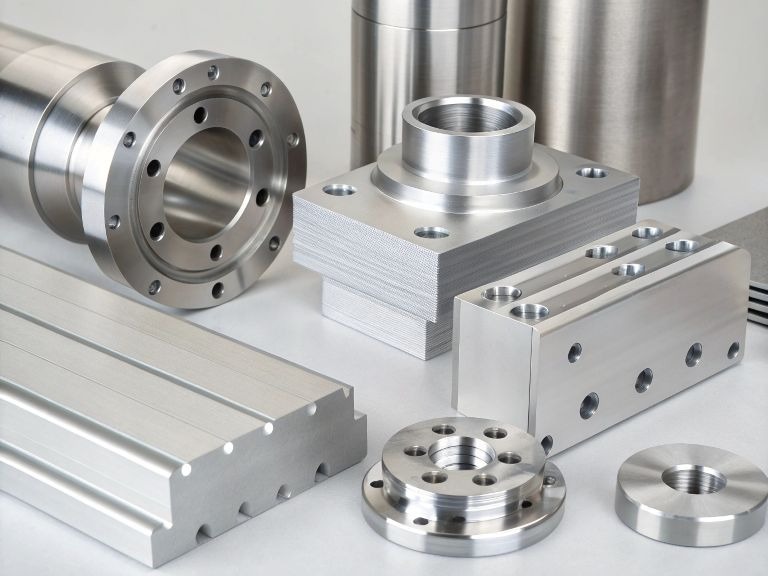
The best aluminum alloy for CNC machining, for most parts, is 6061-T6 or 6061-T651, which offers an excellent balance of strength and workability. It cuts cleanly, anodizes evenly, welds, and costs less than the high-strength grades, making it ideal for CNC parts. Other alloys earn their place only when a part needs something 6061 cannot give: more strength (7075), better fatigue life (2024), salt-water resistance (5083), flatness without stress (MIC-6), or very fast turning (2011).
Short answer: Start with 6061. Move to 7075-T651 when a load calculation shows 6061 is too weak, to 2024-T351 for cyclic tension loads, to 6082 when a European drawing calls for it, to MIC-6 for flat plates and fixtures, and to 5052 or 5083 for formed or marine parts. Avoid choosing a stronger alloy “just in case”.
Below we go through ten aluminum grades, including 6xxx series alloys, one by one, then show which one to pick for common part types, what to write on the drawing, and the grades that cause the most trouble in practice.
Under the system maintained by The Aluminum Association, the first digit of a wrought alloy number tells you its main alloying element:
| Series | Main alloying element | Heat treatable? | Examples for machining |
| 1xxx series alloys are known for their excellent corrosion resistance. | Pure aluminum (99%+) | No | 1100 |
| 2xxx | Cobre | Sí | 2011, 2014, 2017A, 2024 |
| 5xxx | Magnesium | No | 5052, 5083 |
| 6xxx | Magnesium and silicon | Sí | 6061, 6063, 6082 |
| 7xxx | Zinc | Sí | 7050, 7075 |
The letters and digits after the dash are the temper, and they matter almost as much as the aluminum alloy series itself. T6 means solution heat-treated and artificially aged. T651 adds a stretch to relieve internal stress, which keeps plate flatter after heavy machining. H32 is a strain-hardened and stabilized temper used on non-heat-treatable 5xxx alloys. A drawing that says only “6061” leaves the supplier to guess.
This table ranks the ten grades against each other. It is a relative guide, not a property sheet.
| Grado | Strength is a key factor when selecting popular aluminum alloys for various projects. | Mecanizabilidad | Cosmetic anodizing | Soldabilidad | Resistencia a la corrosión | Relative cost |
| 6061-T6/T651 | Medio | Very good for use in CNC parts. | Very good | Bien | Bien | Bajo |
| 6082-T6/T651 is a part of the 6xxx series alloys known for their versatility. | Medio | Bien | Bien | Bien | Bien | Bajo |
| 6063-T5/T6 | Low to medium | Fair (gummy) | Excelente | Bien | Bien | Bajo |
| 7075-T6/T651, known for its superior strength-to-weight ratio. | Muy alto | Bien | Good, slightly different color | Not recommended for applications requiring excellent machinability. | Feria | Alta |
| 7050-T7451 | Muy alto | Bien | Bien | Not recommended | Good for a 7xxx series aluminum alloy. | Alta |
| 2024-T3/T351 | Alta | Bien | Pobre | Not recommended | Poor when bare | Medium to high-strength alloy |
| 2011-T3 | Medio | Excellent (free-machining) properties make it a preferred choice for CNC parts. | Pobre | Pobre | Pobre | Medio |
| 5052-H32 | Low to medium | Fair (gummy) | Bien | Excelente | Very good | Bajo |
| 5083-H111/H321 | Medio | Fair (gummy) | Feria | Excelente | Excellent in salt water | Medio |
| MIC-6 cast plate | Bajo | Very good | Pobre | Feria | Bien | Medio |
Notice that no grade wins every column. That is the whole point of selecting the right aluminum alloy.
For the four aluminum alloys we are asked about most, here are the published figures our comparison articles use, particularly focusing on their suitability for CNC parts:
| Propiedad | 6061-T6 | 7075-T6 | 2024-T3 | 5052-H32 |
| Resistencia a la tracción | 310 MPa (45 ksi) | 531 MPa (77 ksi), design value | 503 MPa (73 ksi), NACA test sheet | 228 MPa (33 ksi) |
| Yield strength is critical when selecting the right alloy series for machining applications. | 276 MPa (40 ksi) | 455 MPa (66 ksi), design value | 372 MPa (54 ksi), NACA test sheet – aluminum plate | 193 MPa (28 ksi) |
| Densidad | 2.70 g/cm³ | 2.80 g/cm³ | Similar to 7075 | 2.68 g/cm³ |
| Conductividad térmica | About 167 W/m·K | About 131 W/m·K | Lower than 6061 | 138 W/m·K |
| Heat treatable | Sí | Sí | Sí | No |
Values differ between sources and between plate, bar and sheet, so always design to the minimum values in the governing specification rather than to typical figures.
Aluminum is soft compared with steel, so hardness is rarely the problem. The real issue is how each aluminum alloy forms a chip, and that comes down to chemistry and temper.
Built-up edge can affect the excellent machinability of the aluminum parts. Soft aluminum tends to weld onto the tool’s edge under heat and pressure. The welded lump changes the tool geometry, tears the surface and drags size off. Annealed and non-heat-treatable grades such as 5052, 5083 and 6063 are most prone to it, because their soft matrix flows instead of shearing. That is what machinists mean by “gummy”.
Hardness from heat treatment. In the T6 and T651 tempers, 6061 and 7075 are hard enough to shear cleanly. The chip breaks away instead of smearing, which is why both machining processes give good finishes. 7075, being harder still, often leaves a brighter surface than 6061 with fewer burrs.
Chip breakers in chemistry. 2011 contains small, soft particles of lead and bismuth. They act as weak points in the chip, so it snaps into short curls instead of forming long strings. On an unattended bar-fed lathe, that is the difference between a clean run and a bird’s nest around the part.
Tool wear. High-silicon casting alloys such as A356 wear carbide faster than wrought plate, because hard silicon particles are abrasive. For machined parts that start as castings, polycrystalline diamond (PCD) tools are often worth their price on long runs due to their excellent mechanical properties.
The practical result: for milled parts, the heat-treated grades (6061, 6082, 7075, 7050, 2024) are the best aluminum grade family to machine, and the soft non-heat-treatable grades cost more in finishing time.
6061-T6 has a typical tensile strength of 310 MPa (45 ksi) and yield of 276 MPa (40 ksi), according to the data our 6061 vs 7075 comparison draws from the NASA materials handbook for 6061. It forms short chips, holds tolerance well, and gives an even anodized color. Thermal conductivity is about 167 W/m·K, which makes it a good heat-sink material too.
For housings, brackets, enclosures, fixtures, manifolds and heat sinks, it is usually the best aluminum for CNC machining on cost and finish. Order T651 plate for pocketed or thin-walled parts; order T6 or T6511 bar and extrusions for turned parts.
6082 is the most common structural 6xxx aluminum alloy in Europe and is often slightly stronger than 6061 in equivalent tempers. It machines and welds in much the same way. If your drawing came from a European design office and says EN AW-6082, keep it. Swapping to 6061 may be acceptable, but that decision belongs to the designer, not the machine shop.
6063 is an extrusion alloy made for complex profiles. It anodizes beautifully and conducts heat better than 6061, which is why many extruded heat sinks use it. It is softer, though, and tends to smear rather than cut cleanly during precision machining. We would not pick 6063 for a machined block; choose it only when the part starts life as an extrusion.
7075-T6 reaches a design tensile strength of about 531 MPa (77 ksi) and yield of about 455 MPa (66 ksi), based on its performance in aerospace and automotive applications. NASA 7075 handbook. That is roughly 1.7 times 6061. It machines well, often with a better surface finish than 6061, and it is the standard choice for aerospace aluminum fittings, drone arms, robot links and high-load clamps.
The costs are real, though they can vary significantly when choosing the right alloy. 7075 is not recommended for fusion welding, it is less corrosion resistant than 6061, and in the T6 temper it can suffer stress corrosion cracking under sustained load. Where that risk exists, the overaged T73 or T7351 tempers trade some strength for much better resistance in aluminum machining. Both alloys are almost equally stiff (about 69 to 71 GPa), so 7075 does not make a part bend less.
7050 is the aerospace aluminum built for thick plate and forgings, where 7075 loses properties through the thickness. In tempers such as T7451, it combines high strength with good stress corrosion resistance, making it suitable for precision CNC applications. It costs more and is less widely stocked, so specify it only when the part is thick, highly loaded and in aerospace service.
2024 has lower static strength than 7075, but cracks grow through it far more slowly under cyclic load. NASA crack-growth data shows 2024 taking two to four times as many load cycles to reach the same crack length. That is why 2024 aluminum is still used for fuselage skins and tension-loaded fittings. Our 2024 vs 7075 for aerospace The article explains the trade-off in detail regarding machining aluminum alloys.
The weakness is corrosion. Bare 2024 corrodes readily, it anodizes poorly because of its copper content, and it should not be fusion welded. Plan for a protective finish from the start.
2011-T3 is the aluminum grade closest to free-cutting brass. Small additions of lead and bismuth break chips into tiny curls, so it runs at high speed on Swiss-type and bar-fed lathes with almost no chip tangling. It suits screw-machine parts, fittings and small turned components made in large volumes.
It does not suit parts that need corrosion resistance, welding or a decorative anodize. Its lead content also matters if the product must meet RoHS limits. Lead-free free-machining aluminum grades exist; ask your supplier which ones they stock before you design around 2011.
5052-H32 is a non-heat-treatable alloy with a tensile strength of about 228 MPa (33 ksi), commonly used in aerospace and automotive applications. It bends without cracking, welds very well, and resists salt water, characteristics that are essential for automotive parts. On a mill, though, it is gummy. Chips stick to the tool and burrs are larger than on 6061. Our 5052 vs 6061 guide covers when it is still the right call.
5083 is the strongest common non-heat-treatable alloy. It keeps its strength after welding, resists sea water and stays tough at very low temperatures, so it shows up in boat fittings, pressure vessels and cryogenic equipment. Like 5052, it machines with a gummy chip and needs sharp, polished tools.
MIC-6 is not a wrought aluminum alloy at all. It is a cast plate, machined flat on both faces at the mill, and it has almost no residual stress. You can take a large pocket out of one side and the plate stays flat. That makes it ideal for fixture plates, vacuum plates, inspection bases and machine tables.
Its strength is low compared with 6061, and because it is cast, anodizing comes out gray and uneven. Use it where flatness matters and appearance does not.
Most material decisions come down to one dominant requirement. Find yours in the left column:
| If your part needs | Specify | Evite |
| General strength, low cost, clean anodize | 6061-T651 plate or 6061-T6 bar | 7075 “just in case” |
| Maximum strength for its weight | 7075-T651 | 6061 if the load case is close to its limit, but consider aluminum 7075 for more demanding machining applications. |
| Long fatigue life under cyclic tension | 2024-T351 (with a finish) | Bare 2024 outdoors |
| Thick, highly loaded aerospace part | 7050-T7451 or 7075-T7351 | 7075-T6 under sustained load is often compared to other alloys used in aerospace and automotive applications. |
| Flatness after heavy pocketing | MIC-6 or 6061-T651 are popular aluminum alloys for various applications. | 6061-T6 bar, 2024-T3 |
| High-volume small turned parts | 2011-T3 or a lead-free free-machining grade | 5052, 5083 |
| Salt water or marine exposure | 5083 or 5052 | 2024, 7075 unprotected |
| Welded frame or assembly | 6061 aluminum or 5052/5083 are commonly used in various applications. | 7075, 2024 aluminum, and 2011 are popular choices among common aluminum alloys. |
| Best heat transfer is often achieved with widely used aluminum alloys, particularly in aerospace and automotive applications. | 6063 (if extruded) or 6061 are both part of the widely used aluminum alloys. | 7075, 2024 |
| Even black or colored anodize | 6061 | 2024, 2011, MIC-6 |
If two requirements pull in different directions, such as high strength and marine exposure, the usual answer is the stronger aluminum alloy with a good protective finish, not a compromise grade. Good alloy selection starts from the one requirement you cannot give up, especially when considering the right alloy for precision machining.
Specifying the temper avoids most surprises. These are the ones we see on CNC drawings most often: 5052 aluminum alloy and 7075-T6.
For plate, citing the grade of aluminum is essential. ASTM B209 on the drawing together with the alloy and temper tells the supplier exactly which product standard and property limits apply. Ask for a mill test certificate with the material so the temper can be checked.
The aluminum grade you choose affects the price of a machined part in three ways:
On a typical part, machine time costs more than the material, so switching from 7075 to 6061 saves less than people expect. It saves the most on large, heavy parts where material is a big share of the price.
These aluminum grade mistakes are the ones we see most often on drawings that arrive for quotation:
Drawings arrive from all over the world, so knowing the aluminum equivalents saves time when a grade name looks unfamiliar:
| Aluminum Association (US) | EN designation | Werkstoff number | Chemical symbol |
| 6061 | EN AW-6061 | 3.3211 | AlMg1SiCu |
| 6082 | EN AW-6082 | 3.2315 | AlSi1MgMn |
| 6063 | EN AW-6063 | 3.3206 | AlMg0.7Si |
| 7075 | EN AW-7075 | 3.4365 – aluminum machining | AlZn5.5MgCu |
| 7050 | EN AW-7050 | 3.4144 | AlZn6CuMgZr |
| 2024 | EN AW-2024 | 3.1355 | AlCu4Mg1 |
| 2017A | EN AW-2017A | 3.1325, which indicates the mechanical properties of the top aluminum material. | AlCu4MgSi(A) |
| 2011 | EN AW-2011 | 3.1655 | AlCu6BiPb – top aluminum for aerospace and automotive applications. |
| 5052 | EN AW-5052 | 3.3523 – primary alloying element | AlMg2.5 |
| 5083 | EN AW-5083 is known for its high strength-to-weight ratio and dimensional stability. | 3.3547 is a common aluminum alloy used in various applications, including CNC parts. | AlMg4.5Mn0.7 |
The chemistry of these pairs matches closely, but temper names and property limits can differ between ASTM and EN standards. Treat these aluminum equivalents as a guide for quoting, and confirm against the governing standard for anything safety-critical.
2011-T3 is the easiest on a lathe because it breaks chips into small curls, making it ideal for high-volume turned parts. For milled parts, 6061 aluminum and 7075-T6 both cut cleanly. The soft, non-heat-treatable grades such as 5052 and 5083 are the hardest to finish well, because chips stick to the tool.
Not much. 7075 is harder and stronger, but it often gives a better surface finish than 6061 because it is less gummy. It does wear tools slightly faster and the stock costs more. The bigger differences are elsewhere: 7075 is not recommended for welding and has lower corrosion resistance.
For cosmetic anodizing, 6061 and 6063 give the most even, consistent color. 7075 anodizes well but can show a slightly different shade from 6061 in the same assembly. Copper-rich 2024 and 2011, and cast MIC-6, give poor or uneven results and are better painted or chromate coated instead.
Usually slightly. 6082 is often a little stronger than 6061 aluminum alloy in equivalent tempers and is the most common structural 6xxx alloy in Europe. In practice, the two are close enough that the choice usually follows the drawing and local supply rather than strength, particularly among widely used aluminum alloys. Confirm exact minimum values against the governing EN or ASTM standard.
Among common stocked grades, 7075-T6 and 7050 tempers are the strongest, with 7075-T6 reaching a design tensile strength of about 531 MPa, making it a preferred choice in high strength-to-weight ratio applications. Some specialty 7xxx alloys go higher but are rarely stocked. Remember that strength is not stiffness: every aluminum alloy has nearly the same elastic modulus.
Yes, but it is not ideal. 5052 is soft and gummy, so chips stick to the cutter and burrs are larger than on 6061. Sharp, polished tools and good chip evacuation help. Choose 5052 when the part needs its bending, welding or salt-water performance, and 6061 aluminum alloy when it is purely machined.
If you are unsure which aluminum is best for a new part, start from the requirement, not the alloy, especially when choosing the right alloy for CNC applications. Tell your supplier what the part must do: the load, the environment, whether it is welded, anodized or flat-critical, and the quantity. A good shop will then recommend the cheapest grade that meets it.
When you send a drawing, include:
En Precisión Tuowei, our engineers review alloy and temper as part of free DFM feedback, and we machine every grade in this guide. Browse our aluminum CNC machining options. full list of materials, including high-strength alloys like 7075 aluminum., see the finishes on our automotive components. anodizing service page, or upload your drawing through our Servicios de mecanizado CNC page for a quote.

Escrito por Andy, ingeniero de fabricación en TUOWEI Precision. Andy está especializado en mecanizado CNC, fabricación de precisión e ingeniería de producción, y cuenta con experiencia práctica en el apoyo a proyectos que abarcan desde la creación rápida de prototipos hasta la producción a gran escala. Trabaja en estrecha colaboración con los equipos de ingeniería y fabricación para evaluar materiales, tolerancias, procesos de mecanizado y la facilidad de fabricación de los diseños. Sus artículos ofrecen información práctica y con base técnica para ayudar a ingenieros y compradores a tomar mejores decisiones de fabricación, optimizar la eficiencia de la producción y lograr una calidad constante de las piezas. Descubre las soluciones de mecanizado CNC y fabricación a medida de TUOWEI Precision para tu próximo proyecto.
Desde prototipos rápidos hasta la producción a gran escala, Tuowei Precision ofrece un mecanizado CNC fiable, con precisión y uniformidad en cada paso. Empieza tu proyecto hoy mismo.
Manténgase al día sobre el mecanizado CNC real, las tendencias del sector y las perspectivas de producción en Tuowei Precision, pero se instala para permitirle tomar mejores decisiones de producción.