Medical Devices · Contract Manufacturing

医疗器械合同制造服务

Tuowei Precision is a medical device contract manufacturer for OEMs and medtech startups that want to outsource component production without losing control of quality. We machine, mold, fabricate, finish, assemble and pack high-quality components for medical devices under a certified quality system, from first prototypes to repeat device production orders.
所有上传内容均安全保密
ISO 13485
ISO 9001:2015
Material certificates
每份报价单均进行DFM审查
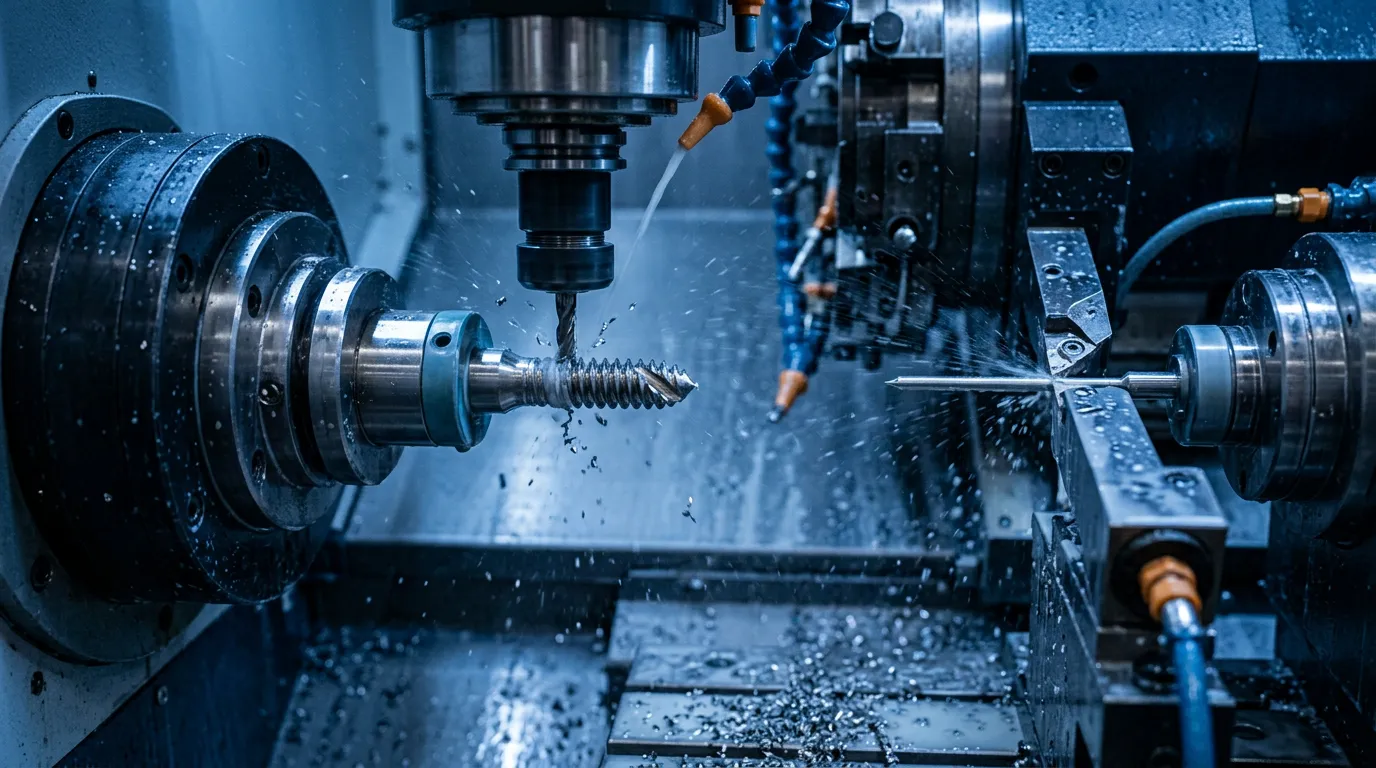
Medical precision machining: Swiss-turned titanium bone screw and 5-axis machined stainless steel instrument part
Definition

What Is Medical Device Contract Manufacturing?

Medical device contract manufacturing means a medical device company, the original equipment manufacturer (OEM), hires an outside partner to produce some or all of its parts and sub-assemblies. The OEM keeps the device design, the regulatory submission and the brand. The contract manufacturer brings machines, process know-how and quality control that can document every lot. That split lets medical device companies focus on medical device design and development while manufacturing experts handle the production process.

Contract manufacturing organizations range from full-service medical partners that design, assemble and sterilize finished medical products with cleanroom assembly, to specialist component suppliers. The medical device contract manufacturing market keeps growing as more OEMs outsource production to focus on innovation. Tuowei is the second type: we make precision metal and plastic components and sub-assemblies, and we do it with the records a regulated supply chain needs.

能力

Contract Manufacturing Solutions and Manufacturing Capabilities

Our capabilities cover most components inside a Class II medical device or Class I device, and many machined parts for Class III instruments and implants.

Precision CNC Machining

3-, 4- and 5-axis milling and Swiss-type turning for instruments, implant components, housings and fittings, in titanium, stainless steel, aluminum and PEEK. See medical precision machining.

注塑成型

Thermoplastic, overmolded, liquid silicone rubber and micro parts for connectors, handles, housings and disposables. See medical device injection molding.

Sheet Metal, Die Casting and 3D Printing

Formed stainless steel and aluminum for equipment frames and enclosures, die cast housings for larger devices, and 3D printing for fixtures and early prototypes.

Finishing, Assembly and Packaging

Passivation, electropolishing, anodizing and laser marking, followed by light assembly, kitting and packaging to your specification.

优势

Why an Original Equipment Manufacturer Outsources Production

  • Lower capital cost: no need to buy 5-axis machines, presses or CMMs for every new product
  • Faster development: one partner takes parts from prototype to production without a supplier change
  • Scalability: volumes can grow from 10 pieces to tens of thousands without new in-house lines
  • Focus: your engineers spend time on device design, clinical trials and regulatory work, not on machining
  • Fewer suppliers to qualify: machining, plastic parts and finishing under one audit, an end-to-end approach to your manufacturing needs

Outsourcing is not risk-free. Losing direct control over manufacturing, communication delays across time zones and weak documentation are the usual problems. The fix is a clear contract manufacturing agreement, an agreed inspection plan, protection of your intellectual property and a partner that shares data without being chased.

质量

ISO 13485, Quality Standards and Regulatory Support

Our quality system is certified to ISO 13485, ISO 9001:2015, AS9100D and IATF 16949, the International Organization for Standardization benchmarks for regulated industries. For medical device contract manufacturing that means:

  • Contract and drawing review before every new part
  • Material certificates that trace each part to its raw material lot
  • First article inspection (FAI), CMM reports and dimensional records
  • Calibrated measuring equipment and controlled work instructions
  • Change control: no process or material change without your approval

The Food and Drug Administration (FDA) expects device makers to control their suppliers, and its regulation now references the same international standard. A compliant supplier with clean records makes your supplier qualification, regulatory compliance and audits simpler. Read more on our 质量保证 页面。.

To be clear about scope: we are not FDA registered as a device maker, and we do not run sterilization or finished-device cleanroom assembly. If your device needs those steps, we supply cleaned, inspected and packed components to the partner who does.

过程

How Our Contract Manufacturing Process Works for Medical Device Development

Request for quoteSend drawings, 3D models, quantities, material and finish requirements, and any inspection or packaging specification.
DFM and quality planningEngineers review manufacturability and tolerances, then agree critical features and the inspection plan with you.
Prototypes and first articlesPrototype parts and a first article inspection report for your approval.
生产Controlled production with in-process checks, final inspection and lot traceability.
Delivery and repeat ordersParts ship with certificates and reports; repeat orders use the same approved process.

New to outsourcing? Our 医疗器械原型设计 service is a low-risk way to test us on a small order first.

How to Choose

Evaluating Medical Device Contract Manufacturing Companies

When evaluating medical device contract manufacturers, look past the equipment list. The right contract manufacturer answers these questions clearly:

  • Is the quality system certified to regulatory standards, and can you see the certificate?
  • Which processes are in-house, and which are subcontracted?
  • What records come with each lot, and how is traceability handled?
  • How are changes to material, process or sub-suppliers controlled?
  • Can the supplier scale from prototypes to your forecast volume?
  • How quickly do engineers answer technical questions?

A partner that answers these clearly, before you place an order, is usually the one that handles problems well later.

应用

Types of Devices and Complex Medical Components We Produce

  • Surgical instrument handles, jaws and shafts
  • Orthopedic and dental implant components
  • Diagnostic and imaging medical equipment housings and brackets
  • Catheter connectors, valves and fluid delivery fittings
  • Patient monitoring device casings
  • Prosthetic and rehabilitation device parts

See the full range on our 医疗器械制造 页面。.

为什么选择图威

Why OEMs Choose Tuowei as a Medical Device Manufacturer Partner

  • Manufacturing since 2002, with 10,000+ m² of production space in Shenzhen
  • 130+ three-, four- and five-axis CNC machines and a 230-person technical team
  • Certified quality management system for custom medical parts
  • Machining, plastic parts, fabrication and finishing in one place
  • CNC prototypes in 5–7 business days for medical parts
获取报价

Start Your Medical Contract Manufacturing Project

Send drawings, quantities, material and finish requirements, and any inspection or packaging specification. Our engineers will review manufacturability and return a quote with DFM feedback.

获取即时报价
🔒 所有上传内容均安全且保密
与我们联系!
保证在24小时内及时回复
🔐 所有上传内容均安全保密
— 常见问题 —

常见问题

医疗设备
什么是医疗器械合同制造商?

医疗器械合同制造商为拥有设计和监管批准的医疗器械公司生产零部件、子组件或成品器械。图威是一家专注于零部件生产的合同制造商,为医疗器械行业生产机加工件、注塑件和钣金件。

医疗器械合同制造商应具备哪些认证?

ISO 13485 是医疗器械制造领域的关键认证,因为它涵盖了监管机构所要求的設計、生产和可追溯性控制。 请核对证书的适用范围和有效期。图威同时持有 ISO 13485、ISO 9001:2015、AS9100D 和 IATF 16949 认证。

合同制造有风险吗?

如果质量要求不明确,确实可能出现这种情况。大多数问题源于未记录的变更、沟通不畅或记录缺失。在进入全面量产之前,可通过签订质量协议、制定经双方认可的检验计划、进行首件验收以及下达小批量试生产订单来降低风险。

医疗器械合同制造的成本是多少?

Cost depends on material, geometry, tolerances, finish, inspection requirements and volume. Tight tolerances and full inspection add cost, while larger batches lower the price per part. Send your drawings and quantities for a quote with DFM feedback that often finds savings.

Can you help scale a medical device from prototype to production?

Yes. We make prototypes in 5–7 business days, then move the same parts to small batches and production on locked processes. Keeping one supplier through the whole development process avoids re-qualification and changes in part quality between stages.