Injection molding is a manufacturing process that makes parts by forcing molten material into a precision-machined metal mold, letting it cool, and ejecting the finished part. One mold can repeat that cycle thousands or millions of times, which is why most products you handle every day, from phone cases to bottle caps, were made this way. In the UK and Europe the same process is spelled injection moulding.
الإجابة المختصرة: Injection molding melts polymer pellets in a heated barrel, injects the melt into a closed steel or aluminum mold under high pressure, holds it while it cools, then opens the mold and pushes the part out. The mold is expensive and takes weeks to build, but each part after that costs very little and comes out nearly identical to the last.
So what is injection molding in practice, and when does it make sense for your part? This guide explains how the injection molding process works step by step, what the machine and mold do, which materials you can use, and where the real costs and risks sit. It is written for engineers and buyers deciding whether a part should be molded, machined or printed.
When people ask what is plastic injection molding, they usually mean thermoplastic molding, which covers the vast majority of molded plastic parts. Thermoplastics such as ABS, polypropylene and nylon soften when heated and harden when they cool, so they can be melted, shaped and set again without changing their chemistry.
Three things work together in every molded part:
The mold is the expensive and slow piece. Once it exists, the press can manufacture a new part every few seconds to a few minutes, depending on part size and wall thickness. That trade-off, high upfront tooling cost and a very cost-effective price per part, shapes almost every decision about the process.
The method is not limited to thermoplastics. Metal injection molding uses metal powder mixed with a binder, a thermoset such as epoxy cures with heat instead of melting, and liquid silicone rubber (LSR) is molded in a similar way. This guide focuses on thermoplastics, since that is where most buyers start.
If you want to understand how does injection molding work, follow one molding cycle from closed mold to finished part. Every cycle repeats the same five steps.
The two halves of the mold close and the clamping unit locks them together. Clamping forces, measured in tons, have to be high enough to keep the mold shut while molten plastic pushes against it. Too little force and material leaks out at the parting line as thin flash, a common defect. Picking the right press size is its own calculation, based on the projected area of the part and the pressure the material needs.
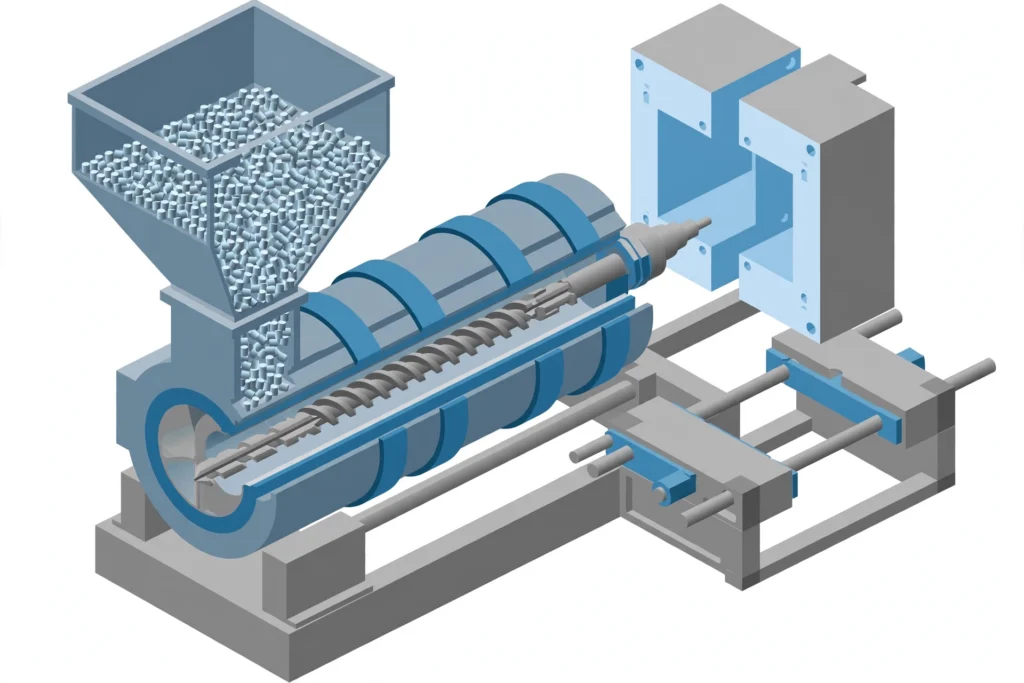
A rotating screw inside a heated barrel melts the pellets and builds up a measured volume of melt, called the shot. The screw then moves forward like a plunger to inject the melt through the nozzle and sprue, along the runners and through the gate into the cavity. A resin’s flowability decides how easily it fills thin walls and long flow paths.
Plastic will shrink as it cools. To make up for that, the machine keeps pressure on the melt after the cavity fills, pushing in a little more material. This packing stage prevents sink marks and voids in thicker areas. It ends when the gate freezes and no more material can enter.
Cooling is usually the longest part of the cycle. Water flows through channels inside the mold and pulls heat out until the part is rigid enough to eject. Wall thickness controls cooling time more than anything else, which is why designers keep walls thin and even. Meanwhile, the screw is already melting material for the next shot.
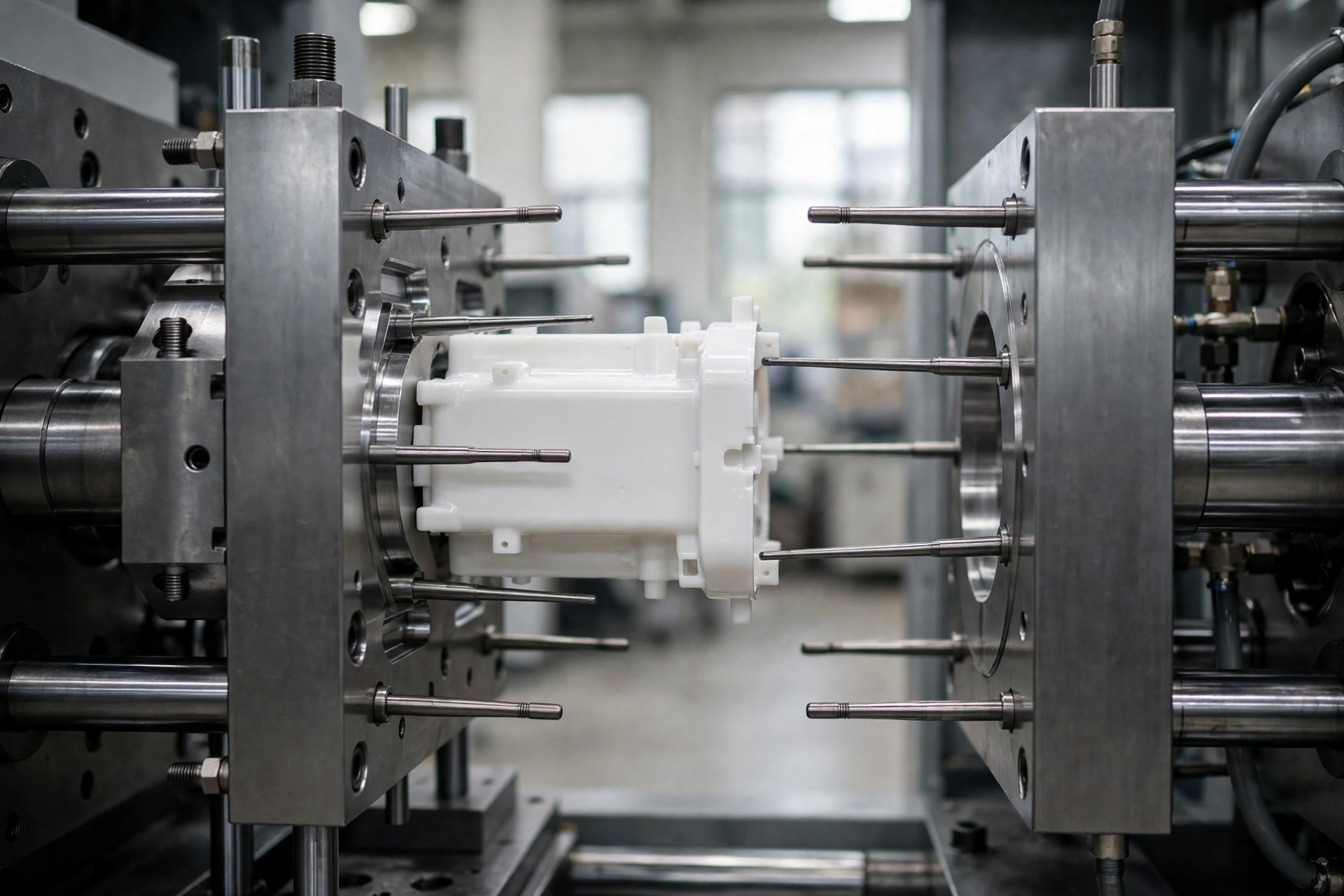
The mold opens and an ejector pin, usually several, pushes the part off the core. The mold closes again and the next cycle begins. The material left in the runners is either reground and reused or, in a hot runner mold, never solidifies in the first place.
That is how injection molding works on the shop floor: the same five steps, repeated with tight control of temperature, pressure, speed and time. Small changes to any of them change the part, so process settings are recorded and locked once the first samples pass inspection. Some engineers group the cycle into two stages, filling and cooling, but the five steps above give a clearer picture of where problems start.
Most presses have the same three main sections:
| Section | Main parts | وظيفته |
|---|---|---|
| Injection unit | Hopper, barrel, reciprocating screw, heater bands, nozzle | Melts pellets and injects the shot |
| Clamping unit | Platens, tie bars, hydraulic or electric clamp | Opens, closes and holds the mold shut |
| Mold (tool) | Cavity, core, runners, gates, cooling channels, ejector pins | Gives the part its shape and cools it |
Knowing how injection molding works at the tool level explains most quality issues. The mold deserves more attention than it usually gets, because nearly every problem with dimensions or surface finish traces back to mold design. Gate locations decide the material flow and where weld lines form. Cooling channel layout decides how evenly the part cools and whether it warps. Draft angles decide whether the part releases cleanly.
Molds are typically made from aluminum or hardened tool steel:
Mold life is often described with the SPI mold classes. A Class 101 mold is built for over 1,000,000 cycles, while a Class 105 prototype mold may be good for only a few hundred. If you want to see where tooling money goes, our injection mold cost breakdown walks through each cost driver.
Material selection affects strength, stiffness, heat resistance, chemical resistance, appearance, shrinkage and price. These are the materials used most often for producing plastic parts:
| المواد | Key properties | الأجزاء النموذجية |
|---|---|---|
| ABS | Tough, easy to mold, good part surface | Housings, enclosures, consumer products |
| البولي بروبلين (PP) | Low cost, chemical resistant, flexible | Caps, closures, living hinges, containers |
| Polycarbonate (PC) | Clear, very high impact resistance | Lenses, covers, safety parts |
| Nylon (PA) | Strong, wear resistant, often glass-filled | Gears, bushings, structural clips |
| POM (acetal) | Stiff, low friction, stable dimensions | Precision gears, snap fits |
| Polyethylene (HDPE, LDPE) | Low cost, tough, moisture resistant | Containers, tanks, packaging |
| TPE and TPU | Rubber-like, high elongation | Grips, seals, overmolded handles |
Unfilled grades flow more easily and give a better surface. Glass-filled grades raise stiffness and heat resistance but wear the mold faster and can warp if fibers line up unevenly.
Our view: pick the material from the part’s operating conditions and required mechanical properties first, then check moldability. A resin that looks perfect on a datasheet can still cause warpage or long cycle times if the part design does not suit it.
The standard process has several variants, each solving a specific design problem:
So what are the uses of plastic injection molding in real products? Almost any part needed in volume is a candidate, which gives the process a huge range of applications:
The common thread is repeatability. When you need to produce thousands of identical parts with the same dimensions and surface, this process is hard to beat. One mold with several cavities can even make multiple parts per cycle, which cuts the cost of production further.
Every process has trade-offs. These are the ones that matter most when deciding:
| المزايا | العيوب |
|---|---|
| Very low cost per part at volume | High upfront tooling cost |
| Fast cycle times, often seconds per part | Mold build takes several weeks |
| Excellent repeatability between parts | Design changes after tooling are costly |
| Complex geometry with a rib, boss or snap fit | Design rules limit wall thickness and each undercut |
| Wide range of materials and colors | Uneconomical for very small quantities |
| Little material waste, little post-processing | Part size is limited by press size |
The biggest disadvantage is the one buyers underestimate: a design change after the mold is cut means modifying hardened steel. Adding material to a part is often a simple matter of machining away more of the mold. Removing material can mean welding and recutting the tool. That is why design reviews before tooling save so much money.
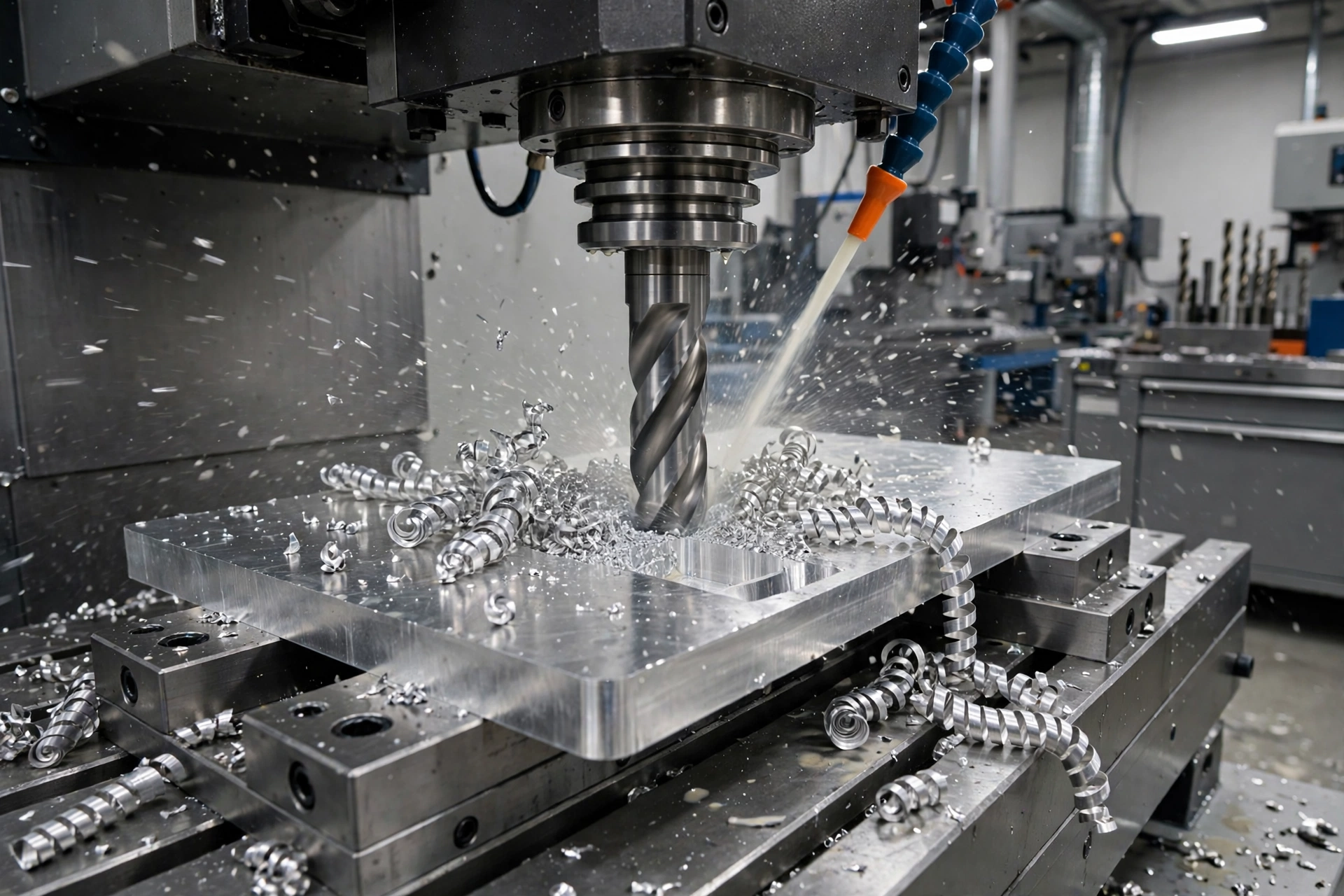
Injection molding is rarely the only option. Other manufacturing processes like CNC machining and additive methods often compete for the same part, and the right choice depends mostly on the number of parts, material and how settled the design is.
| العامل | القولبة بالحقن | التصنيع الآلي | الطباعة ثلاثية الأبعاد |
|---|---|---|---|
| Best quantity | Hundreds to millions | من 1 إلى بضعة آلاف | 1 to a few hundred |
| Upfront cost | High (mold) | منخفضة | Very low |
| التكلفة لكل جزء | Very low at volume | متوسطة إلى عالية | متوسطة إلى عالية |
| المهلة الزمنية لإنتاج القطعة الأولى | Weeks | الأيام | الأيام |
| تغييرات التصميم | باهظة الثمن | سهولة | سهولة |
A practical rule: prototype by machining or printing until the design stops changing, then move to a mold. For a deeper comparison, read our guide on CNC machining vs injection molding.
Most molding problems are designed in long before the first shot. These guidelines reflect what Tuowei engineers check during design for manufacturability (DFM) reviews:
When parts do go wrong, the usual suspects are sink marks, warpage, short shots, flash and weld lines. Our article on عيوب القولبة بالحقن الشائعة explains the cause and fix for each.
Total cost has two parts: the mold and the parts.
The break-even point comes earlier than many people expect. Once you need a few hundred to a few thousand identical parts, the mold often pays for itself compared with machining or printing every piece.
في دقة تووي, molding projects start with a free DFM review and mold flow analysis before any steel is cut. Our خدمات القولبة بالحقن للبلاستيك cover prototype runs through full production, with presses from 90 to 830 tons. We build aluminum and steel molds through our أدوات حقن القوالب بالحقن team. Typical timelines are first samples in about 2 weeks and production in about 4 weeks.
Quality checks run at three stages: mold trials before production, in-process monitoring of temperature, pressure and speed, and final inspection with CMMs and colorimeters. If you are unsure whether your part should be molded at all, send the CAD file. An engineer will tell you honestly if machining or printing is the better first step.
Injection molding is like filling a precise metal shape with melted plastic. The plastic is pushed in under pressure, cools until it is solid, and pops out as a finished part. The same mold then makes the next identical part.
The main disadvantage is the upfront mold cost and lead time. A production mold can take several weeks to build, and design changes after that are expensive. For very small quantities, machining or 3D printing is usually cheaper.
Mold life depends on the material and build quality. Under the SPI classes, a Class 101 steel mold is built for over one million cycles, while aluminum prototype molds may last a few hundred to several thousand shots.
The most common plastics are polypropylene, ABS, polyethylene, polycarbonate, nylon and acetal. Each balances cost, strength, heat resistance and appearance differently, so the right choice depends on how and where the finished part will be used.
There is no fixed number, but molding usually starts paying off from a few hundred to a few thousand parts. Below that, the mold cost per part is high, so machining or printing often works out cheaper overall.